No products in the cart.
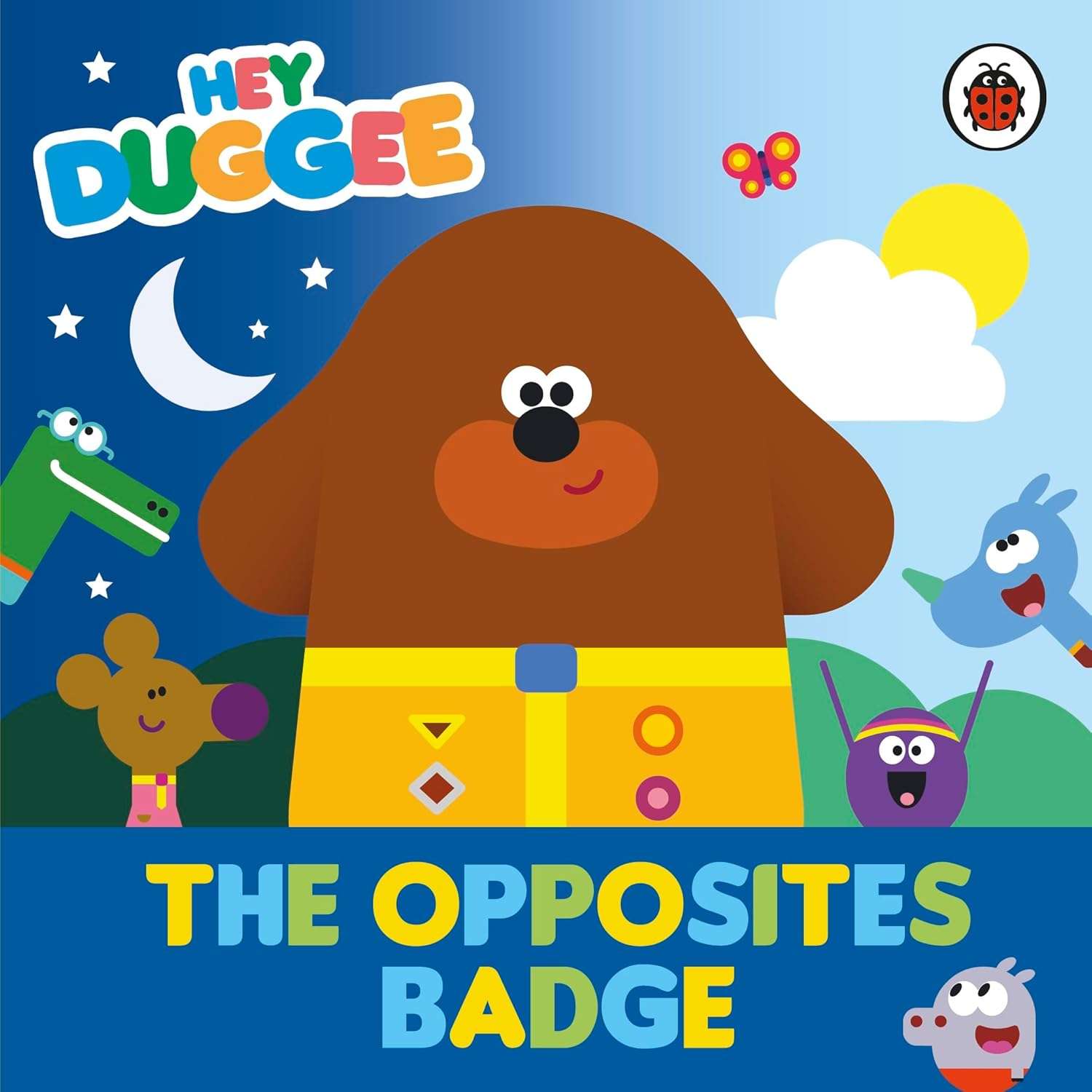

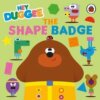
Hey Duggee: The Opposites Badge
රු2,750.00
3 X Rs. 916.67 or 8% Cashback with


or 3 X රු916.67 with


or up to 4 X රු687.50 with


| Feature | Details | |
|---|---|---|
| Title | Hey Duggee: The Opposites Badge | |
| Series | Hey Duggee | |
| ISBN | 9781405960212 (Australia edition) | |
| Format | Board book / picture board book | |
| Pages | 16 pages | |
| Publication Date | 11 June 2024 (Australia) | |
| Recommended Age Group |
| |
a
2 in stock
Hey Duggee: The Opposites Badge
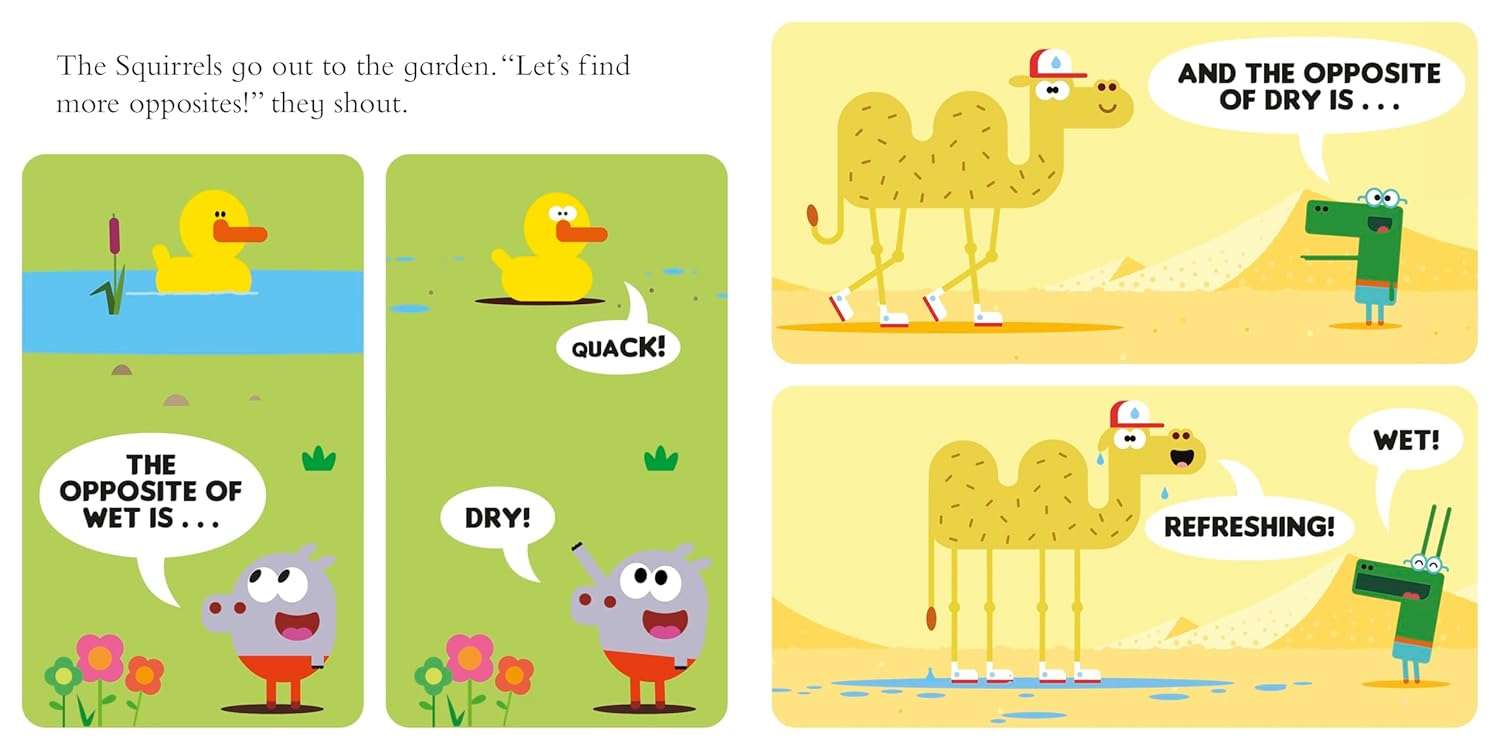
Hey Duggee: The Opposites Badge is a colourful early-learning board book that introduces preschool children to opposite words through a funny story featuring Duggee and the Squirrels. Children can discover the difference between quiet and loud, open and closed, young and old, big and small, and many other contrasting ideas.
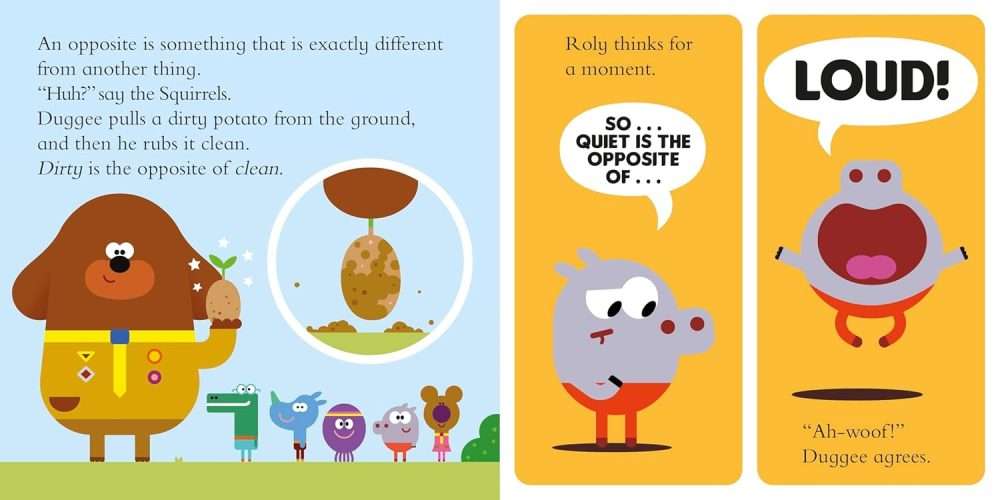
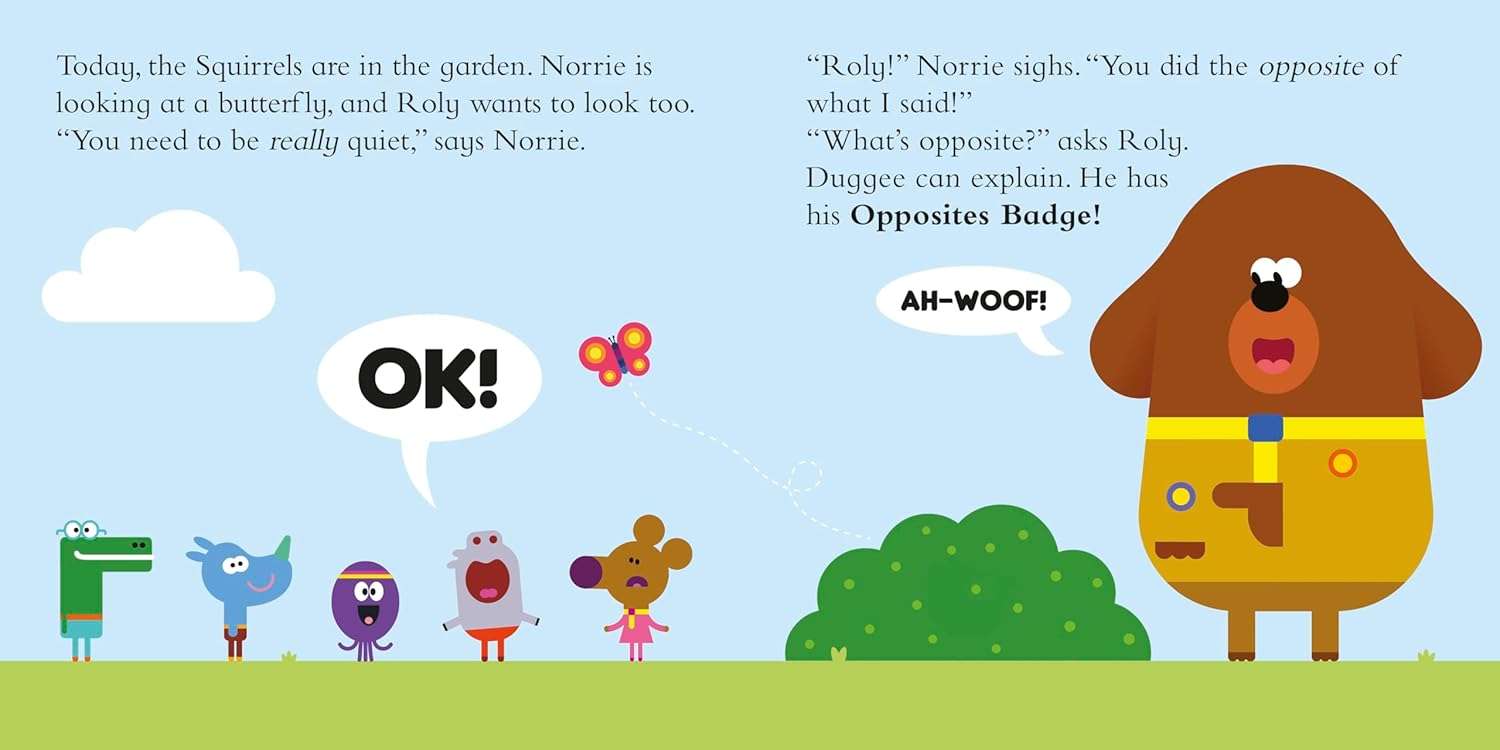
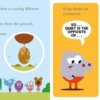
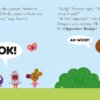
Norrie is quietly admiring a beautiful butterfly in the garden when Roly arrives. She tells him that he must be very quiet—but Roly does exactly the opposite and shouts very loudly! The Squirrels become curious about opposites, so Duggee begins showing them lots of entertaining examples.
Published by BBC Children’s Books, Hey Duggee: The Opposites Badge combines a simple story, bright illustrations, familiar characters, and useful first concepts. It is an excellent board book for children aged approximately two years and above.
Quiet Norrie and Loud Roly
At the beginning of the story, Norrie is carefully watching a butterfly. She understands that sudden noise might frighten it, so she asks Roly to remain quiet.
Roly responds in his usual enthusiastic way—by shouting very loudly! This amusing moment introduces the first pair of opposites naturally within the story.
Parents can help children understand the difference by whispering the word “quiet” and then saying “loud” in a stronger voice. Children may enjoy copying both voices.
Adults can ask:
- “Can you speak very quietly?”
- “What is the opposite of quiet?”
- “Why does Norrie want Roly to whisper?”
- “What might happen if Roly shouts?”
- “Can you make a quiet sound?”
- “Can you make a loud sound?”
Using voices and actions can make the meaning of each word easier to remember.
Learn About Opposites with Duggee
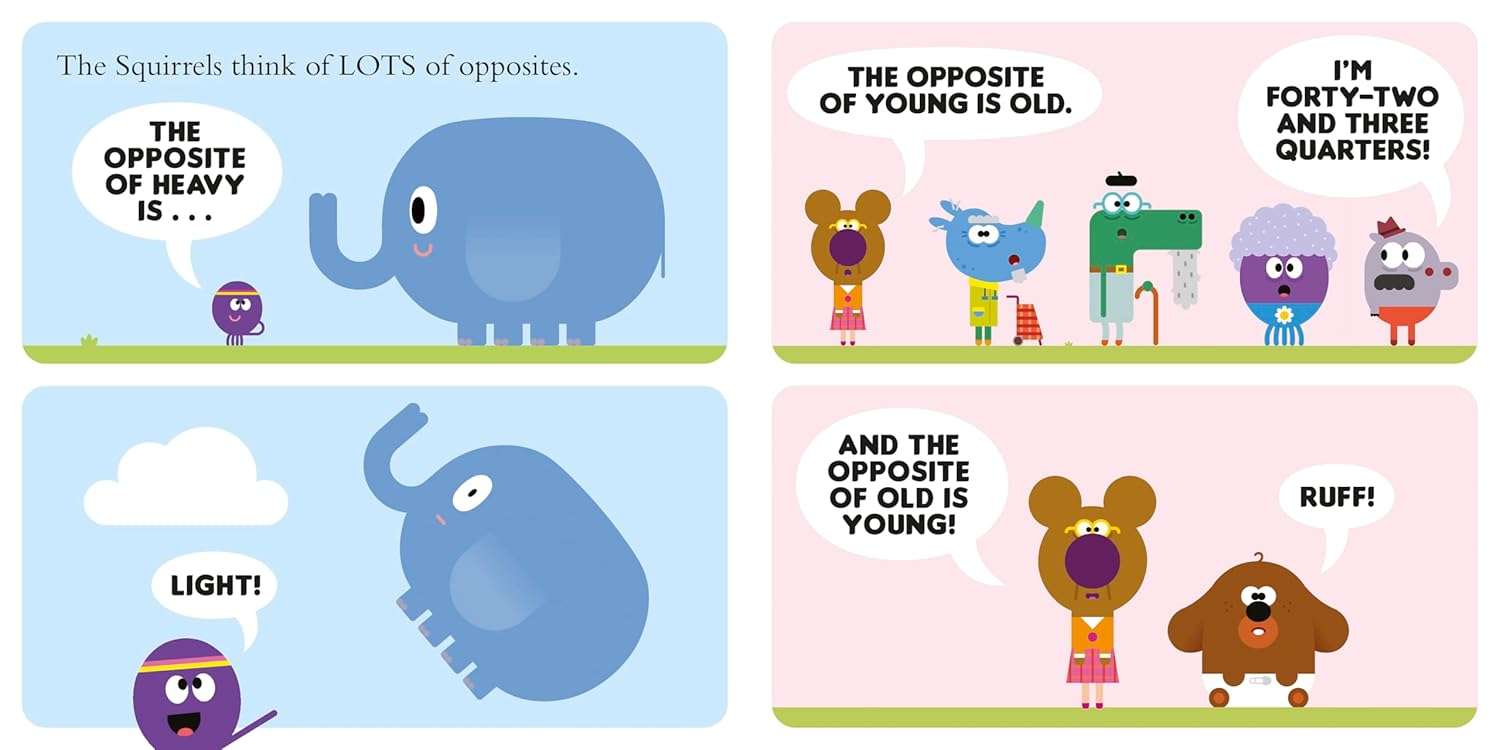
After Roly demonstrates quiet and loud, the Squirrels want to learn more. Duggee shares several examples of opposite concepts children may encounter in everyday life.
The book introduces pairs such as:
- Quiet and loud
- Open and closed
- Young and old
- Big and small
- Other contrasting first concepts
Learning opposites helps children understand how words relate to one another. Instead of memorising a word in isolation, they discover it alongside a contrasting idea.
Understanding Big and Small
Big and small are useful early concepts because children can easily compare objects around them. Parents can point to the illustrations and ask which character or object is larger.
They can extend the activity using safe household items:
- A big spoon and a small spoon
- A large ball and a little ball
- An adult shoe and a child’s shoe
- A big book and a small book
- A long pencil and a short pencil
Comparing physical objects helps connect the language in Hey Duggee: The Opposites Badge with real experiences.
Open and Closed
Children regularly encounter things that can be open or closed, including doors, windows, boxes, books, and cupboards.
Parents can demonstrate the concept by opening the book and then closing it. They can also ask children to identify whether a door or container is open or closed.
This activity can support:
- Word comprehension
- Visual observation
- Listening skills
- Following instructions
- Everyday vocabulary
Adults should choose safe objects and supervise activities involving doors, drawers, or containers.
Young and Old
The young-and-old comparison provides an opportunity to discuss how people, animals, and plants change over time. Parents can explain that a puppy is young while a grown dog is older, or that a small new plant may grow into an older, larger one.
The discussion should remain simple and positive. Families might look at photographs of the child as a baby and compare them with how they look now.
This helps children begin understanding age, growth, change, and family relationships.
Acting Out Opposite Words
Movement makes learning more enjoyable and can help children remember new vocabulary. Families can create a simple opposite-word game inspired by the book.
Parents can invite children to:
- Stand up and sit down
- Move fast and slow
- Reach high and low
- Take a step forward and backward
- Make themselves big and small
- Speak loudly and quietly
- Open and close their hands
- Turn a light on and off with adult supervision
These actions turn the concepts into physical experiences while encouraging listening and coordination.
Building Early Vocabulary
Hey Duggee: The Opposites Badge introduces useful descriptive words in a memorable context. Parents can repeat each pair clearly and encourage children to point to the corresponding picture.
Learning opposite words may support:
- Vocabulary development
- Understanding descriptive language
- Listening and comprehension
- Comparing objects and actions
- Sentence formation
- Early communication
- Logical thinking
Adults can use short sentences such as, “This box is open, but that box is closed.” Hearing both words in the same sentence can help children understand their relationship.
Encouraging Observation and Comparison
Understanding opposites requires children to notice how two things differ. They may compare size, age, position, volume, speed, or another quality.
Parents can invite children to examine the pictures carefully before answering questions. They might ask:
- “Which one is bigger?”
- “Who is being quiet?”
- “Which door is closed?”
- “Which character is moving faster?”
- “What is different between these pictures?”
These questions encourage attention to detail and early reasoning.
Earn the Opposites Badge
After exploring all the examples, Duggee and the Squirrels can earn their Opposites Badge. The badge provides a satisfying conclusion and celebrates their new knowledge.
Parents can congratulate their child after finishing the story and pretend to award them a badge too. They might say, “You found all the opposites—you earned your Opposites Badge!”
Children can also design a badge on a separate piece of paper using two opposite colours, shapes, or sizes.
A Durable Board Book for Young Readers
The sturdy board-book format is designed for preschool children who are still developing careful page-turning skills. Thick pages are easier for small fingers to hold than ordinary paper pages.
Its compact square format makes the book convenient for reading at home or carrying during journeys. Children can revisit the story as their understanding develops.
A younger child may enjoy the bright pictures and funny characters, while an older preschooler may begin naming the opposite pairs independently.
Supporting Early Childhood Development
Sharing Hey Duggee: The Opposites Badge may encourage:
- Opposite-word recognition
- Early vocabulary
- Listening skills
- Visual comparison
- Logical thinking
- Memory
- Communication
- Movement and coordination
- Parent-child interaction
The concepts can be explored naturally during everyday routines. Parents can mention when a light is on or off, a container is full or empty, or an object is near or far.
About Hey Duggee
Hey Duggee is a BAFTA and Emmy Award-winning animated preschool series about a friendly dog who runs the Squirrel Club. Duggee guides Tag, Norrie, Roly, Happy, and Betty through games, outdoor adventures, creative projects, and new learning experiences.
Featuring the voice of comedian and presenter Alexander Armstrong, the programme encourages children to be active, curious, cooperative, and imaginative. The Squirrels usually earn a badge after completing each challenge and celebrate with a famous Duggee Hug.
Families can explore more titles through the official Hey Duggee book collection.
Who Should Read The Opposites Badge?
This book is suitable for:
- Children from approximately two years old
- Preschoolers learning first concepts
- Young Hey Duggee fans
- Children developing descriptive vocabulary
- Families practising opposite words
- Nurseries and preschool classrooms
- Parents looking for durable board books
- Anyone searching for an educational toddler gift
These publication details are confirmed by the official Penguin UK listing.
Book Links
Buy or view the book at Bargain Books:
View the official publication information:
Hey Duggee: The Opposites Badge – Penguin UK
Explore more books in the series:
Hey Duggee Book Collection – Penguin UK
Learn Opposites and Earn a Badge
Hey Duggee: The Opposites Badge turns an important early-learning concept into an amusing Squirrel Club story. Through Duggee’s examples, children can compare sizes, sounds, ages, positions, and actions while developing their vocabulary and observation skills.
With familiar characters, colourful illustrations, sturdy pages, and a rewarding badge ending, this book is a delightful introduction to opposite words for every curious little Squirrel. Ah-woof!
Be the first to review “Hey Duggee: The Opposites Badge”
Related products
-25%
Out of stock
Children & Young Adult
Original price was: රු2,000.00.රු1,500.00Current price is: රු1,500.00.
3 X Rs. 500.00 or 8% Cashback with
or 3 X රු500.00 with
or up to 4 X රු375.00 with
Out of stock
Children & Young Adult
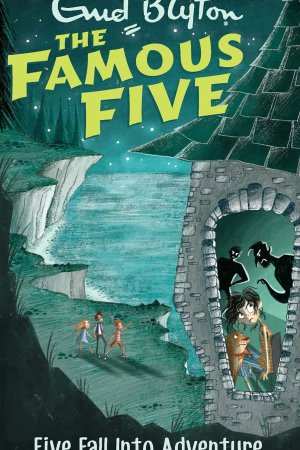
Famous Five Vol 9: Five Fall into Adventure by Enid Blyton | Classic Children’s Adventure Book
රු800.00
3 X Rs. 266.67 or 8% Cashback with
or 3 X රු266.67 with
or up to 4 X රු200.00 with
Out of stock
Children & Young Adult
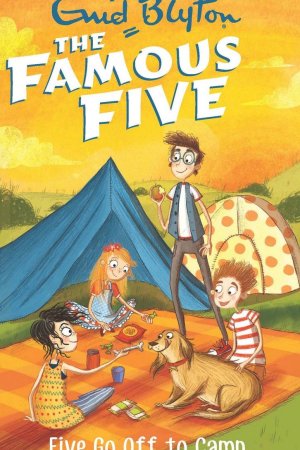
Famous Five Vol 7: Five Go Off to Camp by Enid Blyton | Classic Adventure Book
රු800.00
3 X Rs. 266.67 or 8% Cashback with
or 3 X රු266.67 with
or up to 4 X රු200.00 with
Out of stock
Children & Young Adult
රු2,100.00
3 X Rs. 700.00 or 8% Cashback with
or 3 X රු700.00 with
or up to 4 X රු525.00 with
Out of stock
Children & Young Adult
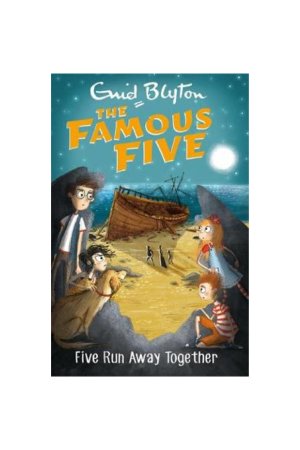
Famous Five: Five Run Away Together (Book 3) by Enid Blyton | Paperback Edition
රු800.00
3 X Rs. 266.67 or 8% Cashback with
or 3 X රු266.67 with
or up to 4 X රු200.00 with
-16%
Out of stock
Children & Young Adult
Original price was: රු32,000.00.රු27,000.00Current price is: රු27,000.00.
3 X Rs. 9,000.00 or 8% Cashback with
or 3 X රු9,000.00 with
or up to 4 X රු6,750.00 with
Out of stock
Children & Young Adult
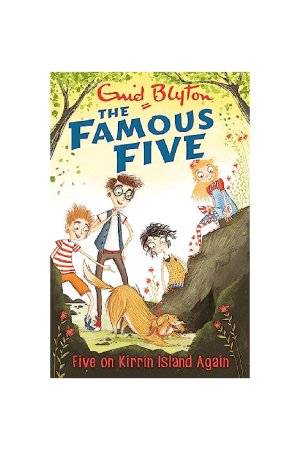
Famous Five Vol 6: Five on Kirrin Island Again by Enid Blyton | Classic Adventure Book
රු800.00
3 X Rs. 266.67 or 8% Cashback with
or 3 X රු266.67 with
or up to 4 X රු200.00 with
Out of stock
Children & Young Adult
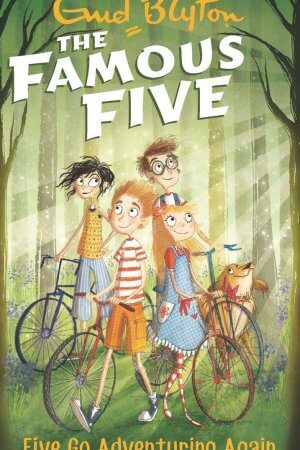
Famous Five: Five Go Adventuring Again by Enid Blyton | Book 2 of the Classic Adventure Series
රු800.00
3 X Rs. 266.67 or 8% Cashback with
or 3 X රු266.67 with
or up to 4 X රු200.00 with
Reviews
There are no reviews yet.