
No products in the cart.
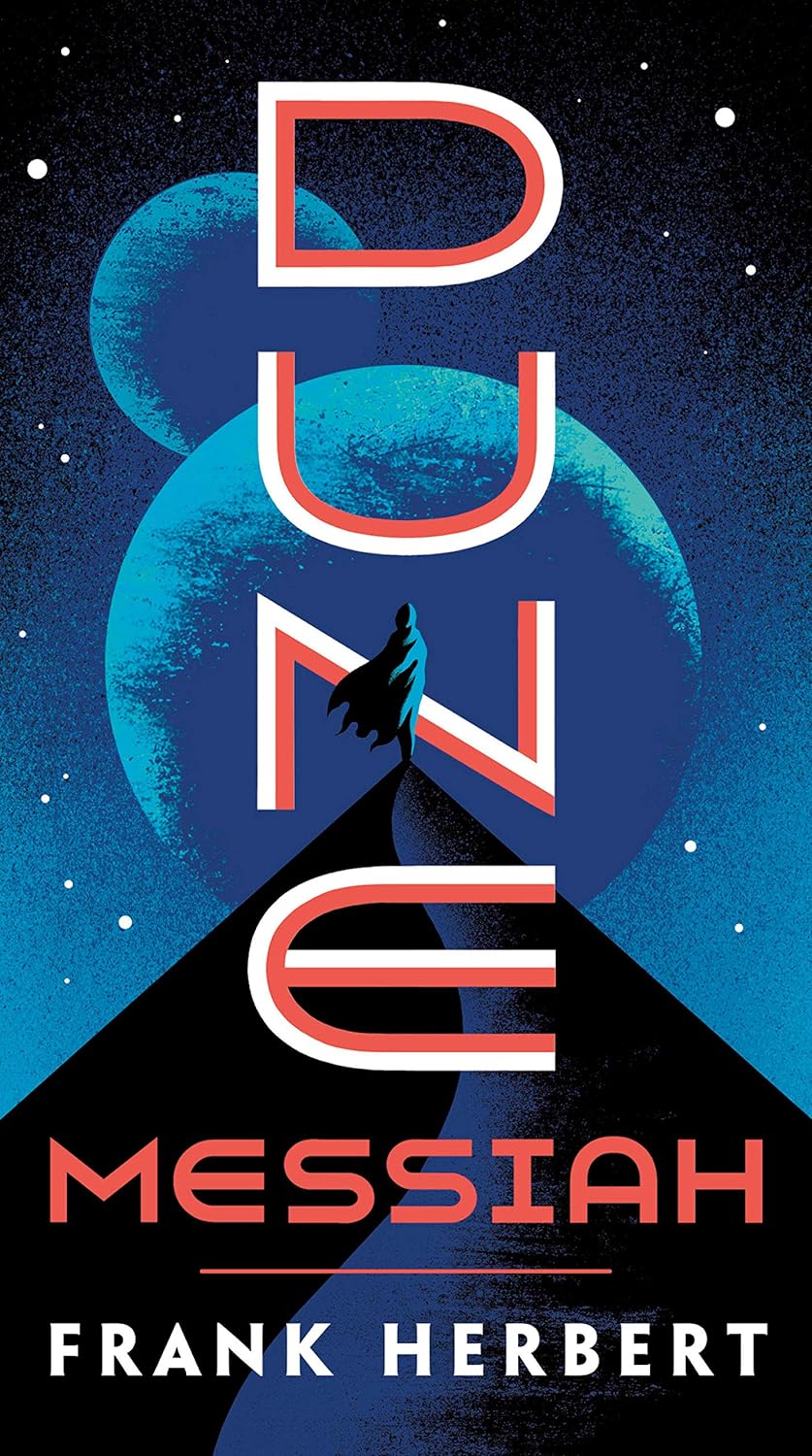
Dune Messiah by Frank Herbert


රු3,000.00
3 X Rs. 1,000.00 or 8% Cashback with


or 3 X රු1,000.00 with


or up to 4 X රු750.00 with


“Explore the gripping continuation of the Dune saga with ‘Dune Messiah’ by Frank Herbert. Immerse yourself in a world of political intrigue, prophecy, and the consequences of power as Herbert’s masterful storytelling unfolds. This sci-fi classic is a must-read for fans of epic tales and intricate world-building.”
Out of stock
Email when stock available
Dune Messiah by Frank Herbert is the powerful second novel in the legendary Dune saga.
The story continues the journey of Paul Atreides, now known throughout the universe as Muad’Dib.
Paul is no longer the young heir struggling to survive on Arrakis.
He is now Emperor of the known universe.
He possesses extraordinary political power.
Millions worship him as a religious figure.
Yet having almost unlimited power has not made his life easier.
Instead, Paul finds himself surrounded by political enemies, religious expectations, dangerous conspiracies and visions of possible futures.
Dune Messiah explores what happens after the hero wins.
That makes it very different from many traditional science-fiction adventures.
Frank Herbert is interested not simply in how power is gained, but in what power does to the person who holds it.
Why Read Dune Messiah?
Dune Messiah takes the themes introduced in Dune and pushes them much further.
Paul achieved victory.
He defeated his enemies.
He became Emperor.
His followers spread his name across the universe.
But victory has consequences.
The political houses displaced by Paul have not forgotten what happened.
Some want revenge.
Others want to weaken House Atreides.
Even people close to Paul may have their own secret motives.
The official Dune description states that Paul faces hostility from the political houses he displaced while also confronting a conspiracy operating within his own sphere of influence.
Dune Messiah and Paul Atreides
Paul Atreides remains at the centre of Dune Messiah.
But he is a very different person from the young man readers met in Dune.
He has become one of the most powerful figures in human civilization.
He commands an empire.
His name inspires devotion.
His decisions can affect entire worlds.
Yet Paul also understands the danger of what he has become.
His prescient abilities allow him to see possible futures.
That sounds like an incredible advantage.
But knowledge of the future can also become a prison.
If Paul sees terrible possibilities, can he avoid them?
Or will trying to avoid one disaster create another?
This tension gives Dune Messiah much of its philosophical depth.
Paul as Muad’Dib
Paul is no longer known only as Paul Atreides.
He is Muad’Dib.
For the Fremen, that name has enormous religious significance.
Paul has become more than a political ruler.
He has become a symbol.
That creates a dangerous situation.
People do not simply obey him.
They believe in him.
The official publisher description emphasises that Paul is worshipped as a religious icon by the Fremen while ruling as Emperor.
Frank Herbert uses this situation to explore the dangers of charismatic leadership.
What happens when millions of people stop seeing a leader as human?
What happens when political authority and religious devotion become connected?
Dune Messiah and the Price of Victory
One of the strongest ideas in Dune Messiah is that winning a war does not automatically create peace.
Paul’s victory in Dune completely changed the balance of power.
Old rulers lost influence.
House Atreides rose.
The Fremen became a major political and military force.
But those changes created resentment.
Paul must now live with the consequences of the revolution that placed him on the throne.
This makes the novel less about conquering enemies and more about surviving the world created by victory.
Political Conspiracy in Dune Messiah
Political intrigue plays an enormous role in Dune Messiah.
Paul’s enemies understand that defeating him through ordinary military force may be impossible.
So they look for another method.
Manipulation.
Secrets.
Psychology.
Personal relationships.
They attempt to attack the weaknesses surrounding Paul rather than simply confronting his armies.
The official synopsis specifically describes a conspiracy operating against Paul while House Atreides begins to weaken under the schemes of its enemies.
This creates a tense story where conversations can be as dangerous as battles.
Chani in Dune Messiah
Chani remains one of the most important people in Paul’s life.
She is not simply another political figure.
She is the person Paul loves.
That makes her especially important to his enemies.
The publisher identifies the danger facing Chani and the unborn heir of House Atreides as the greatest personal threat confronting Paul.
This gives the novel an emotional centre.
Paul may be Emperor.
But political power cannot protect him from every form of pain.
Power Does Not Mean Freedom
Paul appears to possess everything.
Political authority.
Military strength.
Religious influence.
Prescient abilities.
Yet Dune Messiah repeatedly asks whether Paul is truly free.
Knowing possible futures can restrict choices.
Being Emperor creates responsibilities.
Being Muad’Dib creates expectations.
Millions of followers interpret his actions according to their beliefs.
Paul therefore experiences one of the novel’s greatest paradoxes:
He may be the most powerful man in the universe while also being trapped by that very power.
Dune Messiah and Prophecy
Prophecy was already important in Dune.
In Dune Messiah, its consequences become even more complicated.
Paul can perceive possible futures.
But seeing them does not mean controlling them perfectly.
Every choice creates consequences.
Every possible path may carry another danger.
This transforms prophecy from a simple supernatural advantage into something much more unsettling.
Knowledge can become a burden.
The Danger of Hero Worship
Frank Herbert’s treatment of Paul becomes especially important in Dune Messiah.
The novel questions the idea that society should place unlimited faith in a heroic leader.
Paul is intelligent.
Powerful.
Gifted.
But he is still human.
His followers can transform his actions into doctrine.
His image becomes larger than the individual person behind it.
This gives Dune Messiah a strong political and philosophical dimension.
It is not simply asking whether Paul is a good ruler.
It asks whether anyone should possess that level of power.
Dune Messiah and House Atreides
House Atreides now sits at the centre of the empire.
But ruling makes the family a target.
The political houses that lost power have reasons to oppose Paul.
Internal relationships also become more complicated.
The official publisher description states that House Atreides begins to crumble under the schemes of Paul’s enemies.
This creates a much different kind of danger from the first novel.
In Dune, House Atreides faced an obvious political trap.
In Dune Messiah, the threat is more difficult to identify.
Enemies may be hidden.
A More Philosophical Dune Novel
Readers expecting constant warfare may find Dune Messiah noticeably different from Dune.
The sequel is more focused on:
- Political consequences
- Prophecy
- Religion
- Leadership
- Conspiracy
- Personal sacrifice
- Responsibility
- Power
- Fate
- Moral choices
There is still danger.
But much of the tension comes from what characters know, what they hide and what they are trying to manipulate.
That makes Dune Messiah especially rewarding for readers interested in the philosophical side of the Dune universe.
Dune Messiah and Arrakis
Arrakis remains central to Paul’s empire.
The desert world once appeared to be simply a prize because of its spice.
Now it is also connected with Paul’s political and religious authority.
Arrakis has changed Paul.
Paul has changed Arrakis.
And both have changed the wider universe.
This relationship between environment, politics and religion continues the complexity established in Dune.
The Burden of Prescience
Imagine being able to see what might happen.
At first, that sounds like perfect power.
You could avoid mistakes.
You could defeat enemies.
You could make better decisions.
But what if every future contains suffering?
What if preventing one disaster causes another?
Dune Messiah uses Paul’s prescience to explore this dilemma.
Paul sometimes understands the consequences of choices before other characters do.
That does not necessarily make those choices easier.
Sometimes it makes them much harder.
Leadership in Dune Messiah
Dune Messiah presents leadership as something dangerous.
A ruler must make decisions for people who may never understand the reasons behind them.
A religious leader can inspire devotion that becomes impossible to control.
An emperor may have unlimited authority while facing extremely limited choices.
Paul’s story therefore becomes a study of the cost of leadership.
Frank Herbert refuses to present power as something automatically desirable.
Love and Duty
Paul’s responsibilities as Emperor do not disappear because he loves Chani.
That creates conflict.
Personal desires collide with political necessity.
House Atreides needs stability.
The empire needs succession.
Paul wants to protect the people closest to him.
Those goals do not always align.
This makes Dune Messiah deeply personal despite its enormous political scale.
Dune Messiah Is Book 2 of the Dune Saga
Dune Messiah is officially listed as Book 2 in Frank Herbert’s Dune series.
The original six-book reading order is:
- Dune
- Dune Messiah
- Children of Dune
- God Emperor of Dune
- Heretics of Dune
- Chapterhouse: Dune
Readers should ideally read Dune first.
Dune Messiah directly explores the consequences of Paul’s rise to power and sets up important developments continued in Children of Dune.
Dune Messiah and Children of Dune
The story does not end with Dune Messiah.
The next novel is Children of Dune.
Penguin Random House identifies Children of Dune as Book 3 and describes it as continuing the Atreides story through Paul’s children, Leto and Ghanima.
This makes Dune Messiah an important bridge.
It connects Paul’s rise in Dune with the next generation of House Atreides.
7 Powerful Reasons to Read Dune Messiah
- Continue Paul Atreides’ Story – Discover what happens after Paul becomes Emperor and Muad’Dib.
- Political Conspiracy – Experience a dangerous plot involving enemies both outside and within Paul’s circle.
- Powerful Philosophical Themes – Explore leadership, prophecy, religion, freedom and responsibility.
- The Cost of Victory – See how winning control of the empire creates entirely new problems.
- Paul and Chani – Their relationship gives the massive political story a deeply personal dimension.
- Essential Dune Sequel – Dune Messiah is officially Book 2 of Frank Herbert’s original saga.
- Sets Up Children of Dune – The novel lays important groundwork for the third book and the future of House Atreides.
What You Can Expect From Dune Messiah
Readers can expect:
- Paul Atreides
- Muad’Dib
- Chani
- Arrakis
- House Atreides
- Political conspiracy
- Fremen
- Religious power
- Prophecy
- Prescience
- Empire
- Political intrigue
- Leadership
- Betrayal
- Love
- Sacrifice
- Philosophy
- Science fiction
- Space opera
- Complex world-building
Who Should Read Dune Messiah?
Dune Messiah is ideal for readers who have already finished Dune.
Fans of Paul Atreides will discover a much more complicated stage of his journey.
Readers interested in political intrigue may particularly appreciate the conspiracy surrounding his empire.
Those who enjoy philosophical science fiction will find plenty of material involving destiny, leadership, religion and the dangers of excessive power.
It is also essential for readers planning to continue with Children of Dune and the rest of Frank Herbert’s original series.
A Powerful Sequel to Dune
Dune Messiah refuses to give Paul Atreides a simple heroic ending.
He won.
He became Emperor.
He became Muad’Dib.
Millions worship him.
Yet victory has created another kind of prison.
Political enemies surround him.
Religious devotion has grown beyond his control.
His knowledge of possible futures becomes a burden.
And the people he loves become vulnerable to those who cannot challenge him directly.
Frank Herbert transforms the heroic victory of Dune into a deeper examination of power and consequence.
For readers interested in political science fiction, prophecy, leadership, philosophical themes and the continuing journey of Paul Atreides, Dune Messiah is an essential second chapter in the Dune saga.
Book Details
Title: Dune Messiah
Author: Frank Herbert
Series: Dune
Series Position: Book 2
Previous Book: Dune
Next Book: Children of Dune
Genre: Science Fiction / Space Opera / Political Fiction
Original Novel Publication: 1969.
A current Ace Deluxe Hardcover Edition has:
ISBN-13: 9780593548448
Pages: 288
Format: Hardcover
Publisher: Ace
Publication Date: April 4, 2023
Dimensions: 6 × 9 inches.
| Author | Frank Herbert |
|---|---|
| Type | Paperback Printed Book |
| ISBN/ISSN | 0593098234, 978-0593098233 |
| Pages | 352 |
Be the first to review “Dune Messiah by Frank Herbert”
Related products

Out of stock
Adventure Fiction
THE TRIALS OF APOLLO: COMPLETE COLLECTION 5 BOX SET by Rick Riordan
රු4,500.00
3 X Rs. 1,500.00 or 8% Cashback with
or 3 X රු1,500.00 with
or up to 4 X රු1,125.00 with

රු3,000.00
3 X Rs. 1,000.00 or 8% Cashback with
or 3 X රු1,000.00 with
or up to 4 X රු750.00 with
-12%

Original price was: රු1,700.00.රු1,490.00Current price is: රු1,490.00.
3 X Rs. 496.67 or 8% Cashback with
or 3 X රු496.67 with
or up to 4 X රු372.50 with
-32%

Out of stock
Contemporary romance
Original price was: රු3,250.00.රු2,200.00Current price is: රු2,200.00.
3 X Rs. 733.33 or 8% Cashback with
or 3 X රු733.33 with
or up to 4 X රු550.00 with
-15%

Out of stock
Contemporary romance
A Touch of Darkness: Greek mythology, contemporary romance, and dark fantasy by Scarlett St. Clair
Original price was: රු3,400.00.රු2,900.00Current price is: රු2,900.00.
3 X Rs. 966.67 or 8% Cashback with
or 3 X රු966.67 with
or up to 4 X රු725.00 with

Damaged & Imperfect Books
රු1,300.00
3 X Rs. 433.33 or 8% Cashback with
or 3 X රු433.33 with
or up to 4 X රු325.00 with

Out of stock
Contemporary Fiction
රු2,150.00
3 X Rs. 716.67 or 8% Cashback with
or 3 X රු716.67 with
or up to 4 X රු537.50 with

Out of stock
Children & Young Adult
රු1,750.00
3 X Rs. 583.33 or 8% Cashback with
or 3 X රු583.33 with
or up to 4 X රු437.50 with
Reviews
There are no reviews yet.