
No products in the cart.
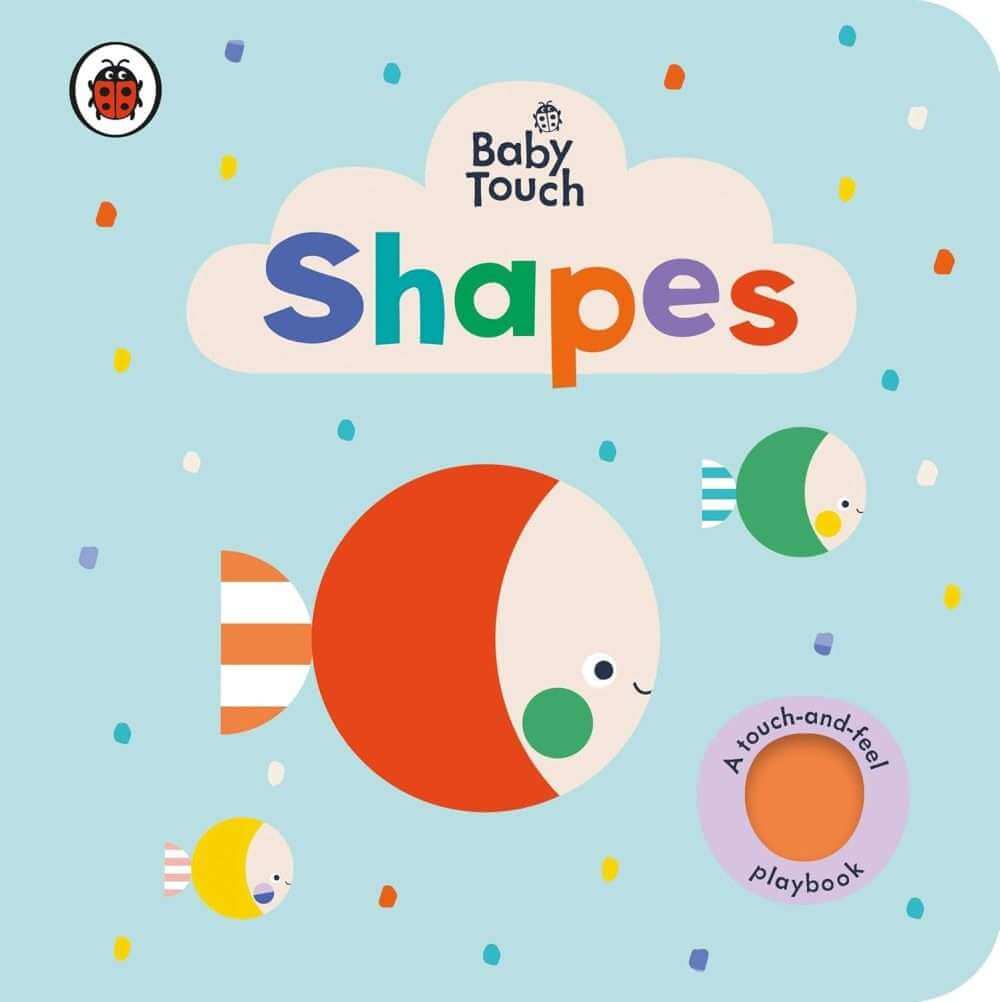
Baby Touch: Shapes
රු2,990.00
3 X Rs. 996.67 or 8% Cashback with


or 3 X රු996.67 with


or up to 4 X රු747.50 with


| Attribute | Description |
|---|---|
| Title | Baby Touch: Shapes |
| Series | Ladybird Baby Touch Series |
| Author / Publisher | Ladybird |
| Format | Board Book |
| Pages | 10 Pages |
| Recommended Age | 0 – 2 Years |
| Language | English |
| ISBN-13 | 978-0241379158 |
| ISBN-10 | 0241379156 |
| Dimensions (L × W × H) | 18 cm × 18 cm × 1.5 cm |
| Package Weight | Approx. 0.24 kg (240 g) |
| Material | Thick, durable board pages with textured touch-and-feel elements |
| Theme / Learning Focus | Shapes, Sensory Exploration, Early Learning, Fine Motor Skills |
| Illustrations | Bold and bright, baby-friendly illustrations |
| Safety Features | Rounded corners, non-toxic materials, baby-safe design |
| Category | Baby Books, Touch-and-Feel Books, Early Learning |
| Publisher Country | United Kingdom |
| Release Date | 2019 |
| EAN | 9780241379158 |
5 in stock
Baby Touch: Shapes by Ladybird
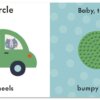
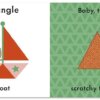
Baby Touch: Shapes is a bold and colourful touch-and-feel board book that introduces babies and toddlers to five basic shapes: square, circle, triangle, star, and rectangle. Published by Ladybird as part of the bestselling Baby Touch series, this interactive early-learning book combines simple words, bright pictures, and a large tactile area on every double-page spread.
Young children can look at each shape, trace it with their fingers, touch the textured patches, and listen as parents say its name. This multi-sensory approach makes Baby Touch: Shapes an engaging first concept book while supporting visual concentration, sensory awareness, and early motor development.
Created for children from birth, the sturdy board pages and compact format make it ideal for little hands to explore at home, in a nursery, or while travelling.
Discover Five First Shapes
Baby Touch: Shapes gently introduces five shapes commonly encountered during early childhood:
- Square
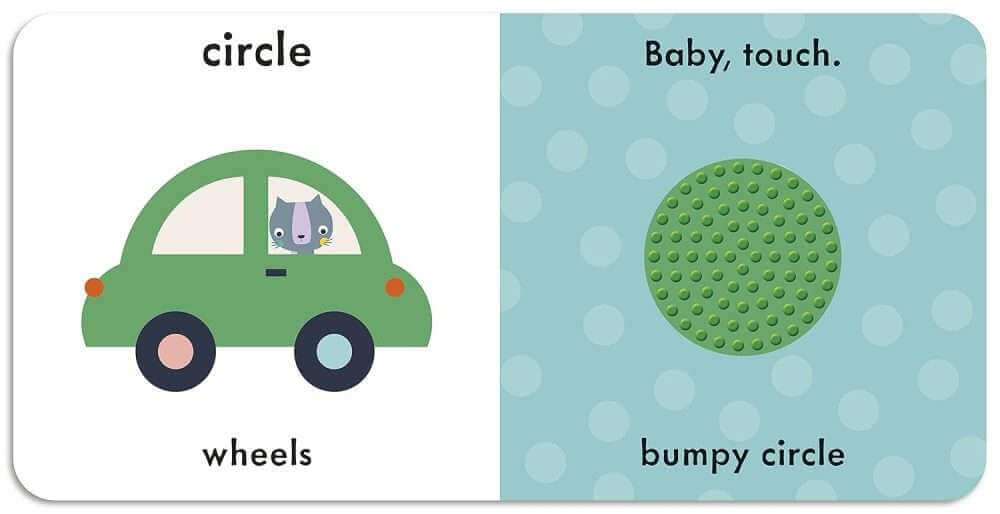
- Circle
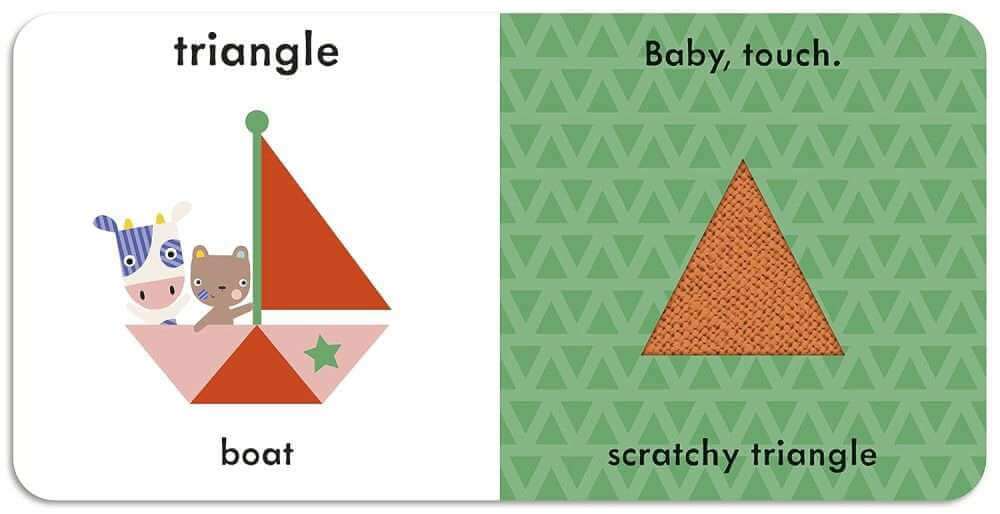
- Triangle
- Star
- Rectangle
Each shape is presented clearly, allowing babies to concentrate on its outline and accompanying tactile area. Parents can say the shape’s name slowly and guide the child’s finger around its edges.
Although very young babies will not immediately remember every name, regular exposure can help make these words and visual patterns familiar.
Learning About Squares
A square has four equal sides and four corners. Parents can point to the square shown in the book and then find similarly shaped objects around the home.
Examples may include:
- Building blocks
- Floor tiles
- Cushions
- Picture frames
- Toy boxes
Adults can say, “This is a square,” while tracing its edges. Connecting the shape in the book with real objects makes the concept more meaningful.
Exploring Circles
A circle is round and has no corners. Babies may already see circular objects in their everyday surroundings.
Parents can find examples such as:
- Balls
- Plates
- Wheels
- Clocks
- Coins
Adults can move a finger around the circular outline while saying “round and round.” This adds movement and repetition to the learning activity.
Discovering Triangles
A triangle has three sides and three corners. Parents can count the sides aloud while pointing to each one.
They can say:
- “One side”
- “Two sides”
- “Three sides”
- “This is a triangle”
Older toddlers may enjoy using their fingers to form a triangle or searching for triangular objects in toys, patterns, and pictures.
Finding Stars and Rectangles
The star introduces children to a distinctive shape often seen in decorations, toys, and pictures of the night sky. Parents can count its points or sing a familiar star-themed nursery rhyme.
A rectangle has four sides, with two longer sides and two shorter sides. Common rectangular objects include books, doors, screens, and tables.
By connecting these shapes to familiar objects, families can extend the lessons in Baby Touch: Shapes beyond the pages.
Large Touch-and-Feel Areas
A large touch-and-feel section appears on every double-page spread. These tactile areas encourage babies to explore the book physically while learning the shape names.
Parents can describe the surfaces using words such as:
- Soft
- Smooth
- Shiny
- Furry
- Rough
- Bumpy
The generously sized patches are easier for young babies to find than very small sensory details. Parents can initially guide the child’s fingers, while older babies may begin locating and exploring the textures independently.
Tracing Shapes with Little Fingers
Tracing a shape allows children to experience its outline through movement and touch. Adults can gently move a baby’s finger around the edges while saying the shape’s name.
This activity may support:
- Finger control
- Hand-eye coordination
- Visual tracking
- Shape familiarity
- Sensory awareness
- Early pre-writing movements
There is no need to expect accurate tracing from a baby. The purpose is to provide an enjoyable experience that connects touch, movement, sight, and language.
Bright and Bold Illustrations
The bright artwork in Baby Touch: Shapes is designed to capture the attention of babies whose eyesight is still developing. Clear outlines and strong colours can make the shapes easier to notice.
Parents can use the illustrations to introduce colour words alongside the shapes. For example, they might say, “This is a red circle” or “Can you find the yellow star?”
Combining shape and colour words gradually expands the child’s early vocabulary.
Finding Shapes in Everyday Life
Parents can extend the learning experience by looking for shapes around the home or outdoors. This turns shape recognition into an enjoyable everyday game.
Simple prompts include:
- “Can you find a circle?”
- “Is the door a rectangle?”
- “What shape is this block?”
- “Can you see a square?”
- “Where is the star?”
Children may initially only observe while an adult answers. As they grow, they may begin pointing towards matching objects independently.
Supporting Early Language Development
The simple text and repeated shape names make Baby Touch: Shapes suitable for introducing early vocabulary.
Parents can use short phrases such as:
- “This is a circle.”
- “The square has four corners.”
- “The triangle has three sides.”
- “The star has points.”
- “This rectangle is long.”
Even before children can speak, listening to repeated words helps them become familiar with language sounds and patterns.
Developing Visual Discrimination
Recognising shapes involves noticing how one outline differs from another. A circle is round, a triangle has three corners, and a rectangle is longer than a square.
These comparisons can help children develop visual discrimination—the ability to notice similarities and differences between objects.
This skill later contributes to activities such as sorting objects, recognising symbols, completing puzzles, and identifying letters and numbers.
Supporting Fine Motor Skills
Touching the sensory patches, tracing the outlines, pointing to pictures, and turning the board pages encourage controlled hand and finger movements.
Exploring Baby Touch: Shapes may support:
- Reaching and pointing
- Grasping and releasing
- Finger strength and control
- Hand-eye coordination
- Page-turning confidence
- Independent book exploration
Younger babies may need help from an adult, while toddlers can gradually take greater control of the activity.
Supporting Early Childhood Development
Baby Touch: Shapes combines visual, tactile, verbal, and physical learning opportunities in one baby-friendly book.
Regularly exploring it may encourage:
- Shape recognition
- Sensory awareness
- Fine motor development
- Hand-eye coordination
- Visual concentration
- Early vocabulary
- Colour familiarity
- Matching and sorting abilities
- Curiosity and active exploration
- Parent-child communication
The book introduces these concepts through relaxed interaction rather than formal teaching.
Shared Reading and Family Bonding
Parents, grandparents, siblings, and caregivers can share Baby Touch: Shapes with babies. Adults can say the shape names, guide the child’s fingers, identify colours, and look for matching objects nearby.
Shared reading creates opportunities for conversation, eye contact, smiles, and affection. These positive experiences can help babies associate books and learning with comfort and enjoyment.
The book is suitable for:
- Tummy time
- Quiet play
- Bedtime reading
- Travel
- Family visits
- Nursery sessions
- Early-learning activities
A Durable Board Book for Little Hands
The sturdy board pages are designed for babies and toddlers who are still developing careful book-handling skills. Thick pages are easier for little fingers to hold and turn than ordinary paper pages.
Its compact square design makes Baby Touch: Shapes convenient for use at home or while travelling. A newborn may focus on the bold pictures, while an older toddler may name shapes, trace their outlines, and find matching objects independently.
A Thoughtful Early-Learning Gift
This interactive shapes book is a practical gift for:
- Baby showers
- Newborn celebrations
- First birthdays
- Christmas
- Nursery starters
- Early-learning collections
- Children beginning their first library
It offers both sensory entertainment and educational value in a durable format.
About Ladybird Books
Ladybird is a respected children’s publishing imprint known for producing playful and educational books for young readers. Its catalogue includes touch-and-feel titles, bedtime stories, first-concept books, activity books, and popular character collections.
The Baby Touch series uses simple text, bold artwork, sturdy pages, and tactile features to encourage babies to learn through looking, listening, touching, and playing.
Who Should Read Baby Touch: Shapes?
This book is suitable for:
- Babies from birth
- Infants developing their senses
- Toddlers learning basic shapes
- Children who enjoy touch-and-feel books
- Babies developing fine motor skills
- Parents looking for an interactive first-concept book
- Nurseries and early-learning centres
- Anyone searching for an educational baby gift
The edition specifications and principal features are confirmed by the official Penguin UK publication page.
Book Links
Buy or view the book at Bargain Books:
https://bargainbooks.lk/
View the official publication information:
Baby Touch: Shapes – Penguin UK
Explore more books from the collection:
Baby Touch Series – Penguin UK
A Fun First Book of Shapes
Baby Touch: Shapes combines five essential first shapes with bright pictures and large tactile patches. Its interactive design encourages babies to look, trace, touch, and listen while supporting sensory awareness, shape recognition, visual concentration, fine motor skills, and early vocabulary.
Whether shared during tummy time, travel, or an early-learning activity, this sturdy board book provides an enjoyable introduction to shapes. It is a valuable addition to a baby’s first library and a thoughtful educational gift for curious young learners.
Be the first to review “Baby Touch: Shapes”
Related products
Out of stock
Children & Young Adult
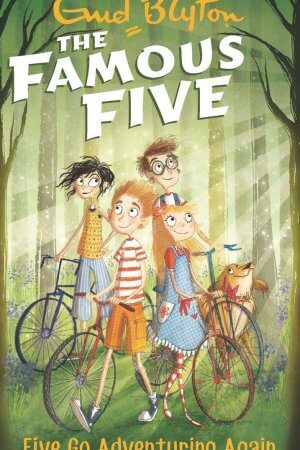
Famous Five: Five Go Adventuring Again by Enid Blyton | Book 2 of the Classic Adventure Series
රු800.00
3 X Rs. 266.67 or 8% Cashback with
or 3 X රු266.67 with
or up to 4 X රු200.00 with
-50%

Out of stock
Children & Young Adult
Original price was: රු3,400.00.රු1,700.00Current price is: රු1,700.00.
3 X Rs. 566.67 or 8% Cashback with
or 3 X රු566.67 with
or up to 4 X රු425.00 with
Out of stock
Children & Young Adult
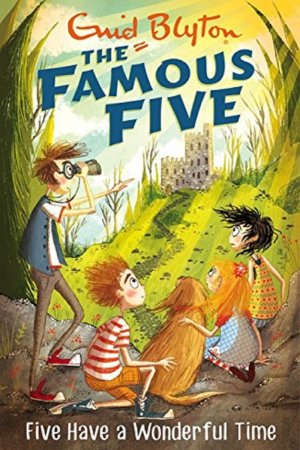
Famous Five Vol 11: Five Have a Wonderful Time – Enid Blyton | Classic Children’s Adventure Book
රු800.00
3 X Rs. 266.67 or 8% Cashback with
or 3 X රු266.67 with
or up to 4 X රු200.00 with

Out of stock
Children & Young Adult
Famous Five Vol 10: Five on a Hike Together by Enid Blyton | Classic Children’s Adventure Book
රු800.00
3 X Rs. 266.67 or 8% Cashback with
or 3 X රු266.67 with
or up to 4 X රු200.00 with

Out of stock
Children & Young Adult
රු3,200.00
3 X Rs. 1,066.67 or 8% Cashback with
or 3 X රු1,066.67 with
or up to 4 X රු800.00 with
Out of stock
Children & Young Adult
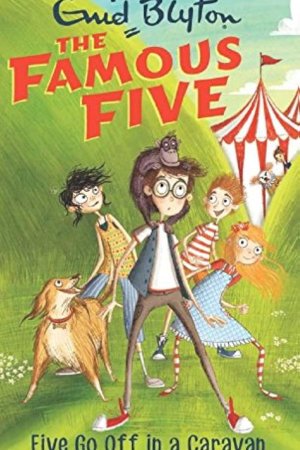
Famous Five: Five Go Off in a Caravan – Book 5 by Enid Blyton | Classic Children’s Adventure
රු800.00
3 X Rs. 266.67 or 8% Cashback with
or 3 X රු266.67 with
or up to 4 X රු200.00 with

Out of stock
Children & Young Adult
රු1,750.00
3 X Rs. 583.33 or 8% Cashback with
or 3 X රු583.33 with
or up to 4 X රු437.50 with

Out of stock
Children & Young Adult
Famous Five: Five Go to Smuggler’s Top – Book 4 by Enid Blyton
රු800.00
3 X Rs. 266.67 or 8% Cashback with
or 3 X රු266.67 with
or up to 4 X රු200.00 with
Reviews
There are no reviews yet.