
No products in the cart.
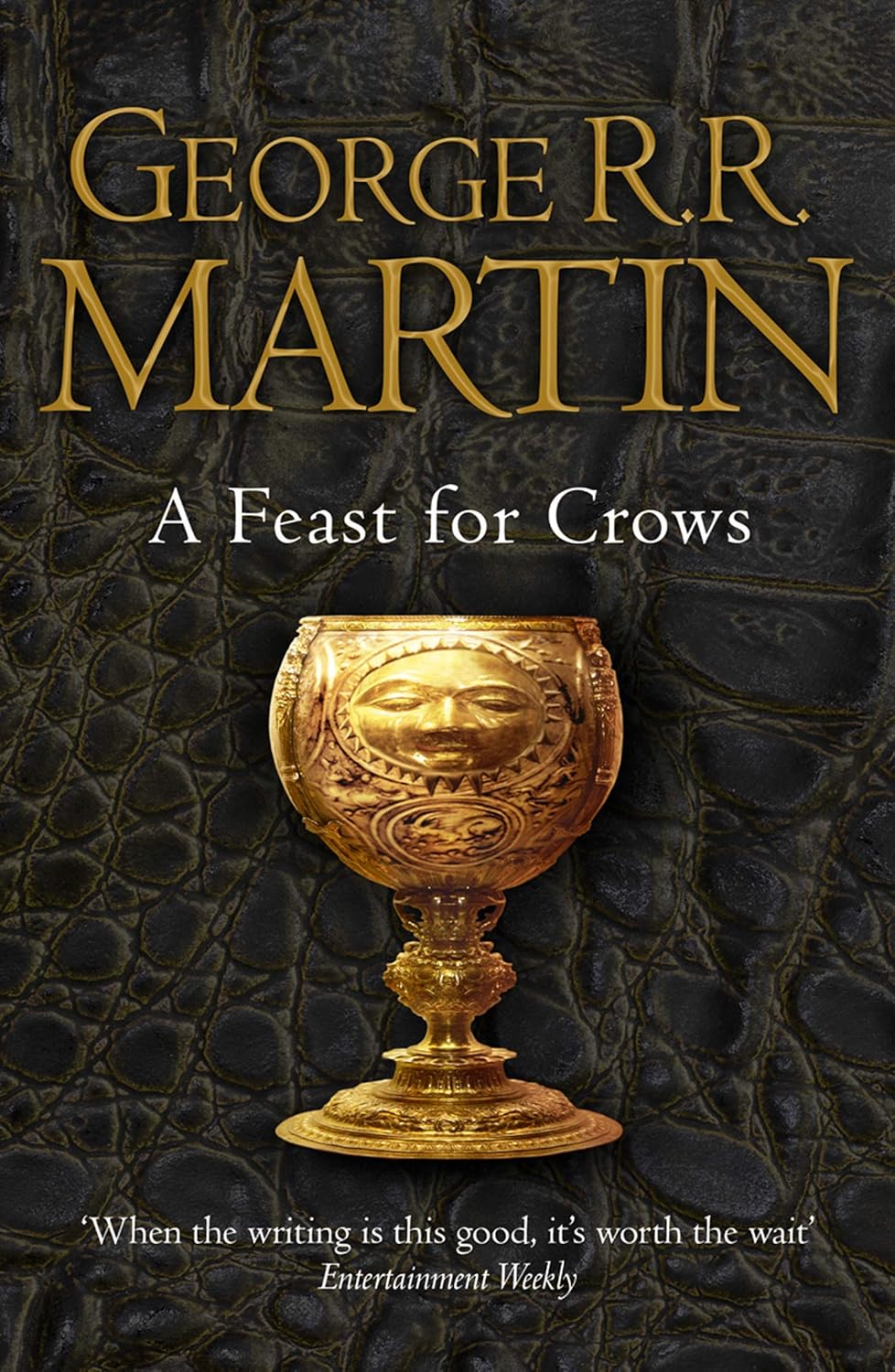
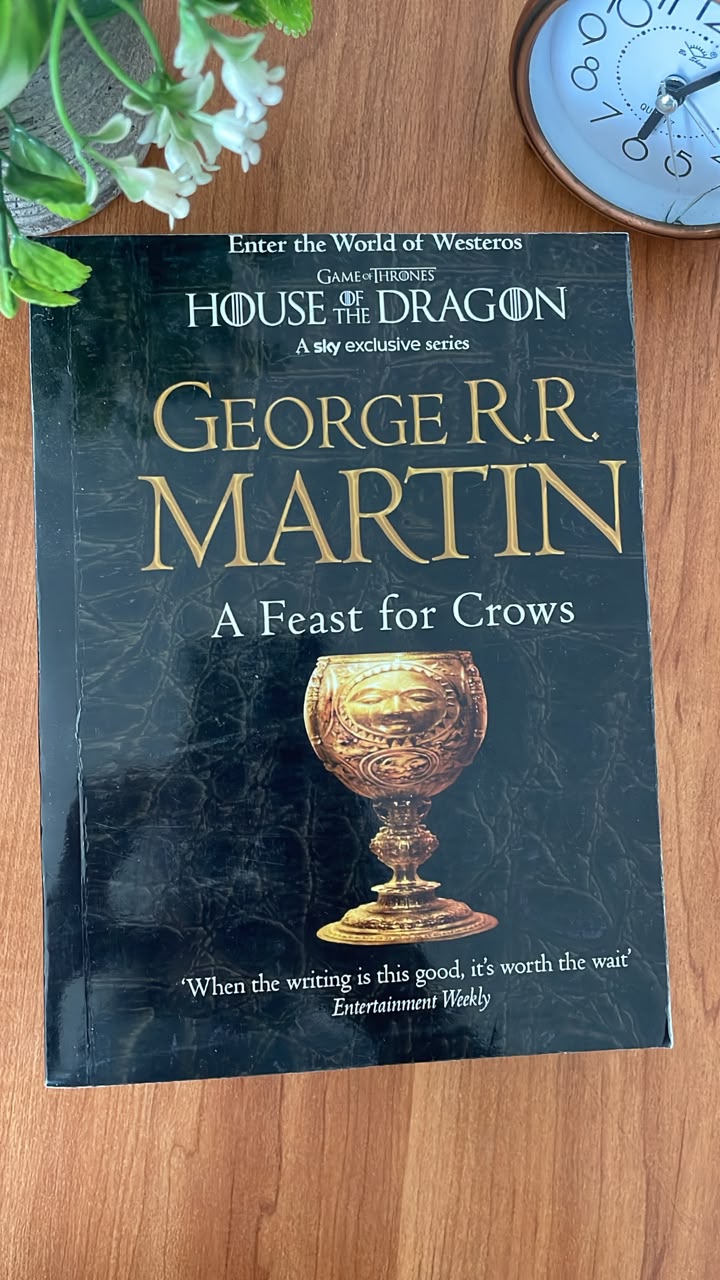
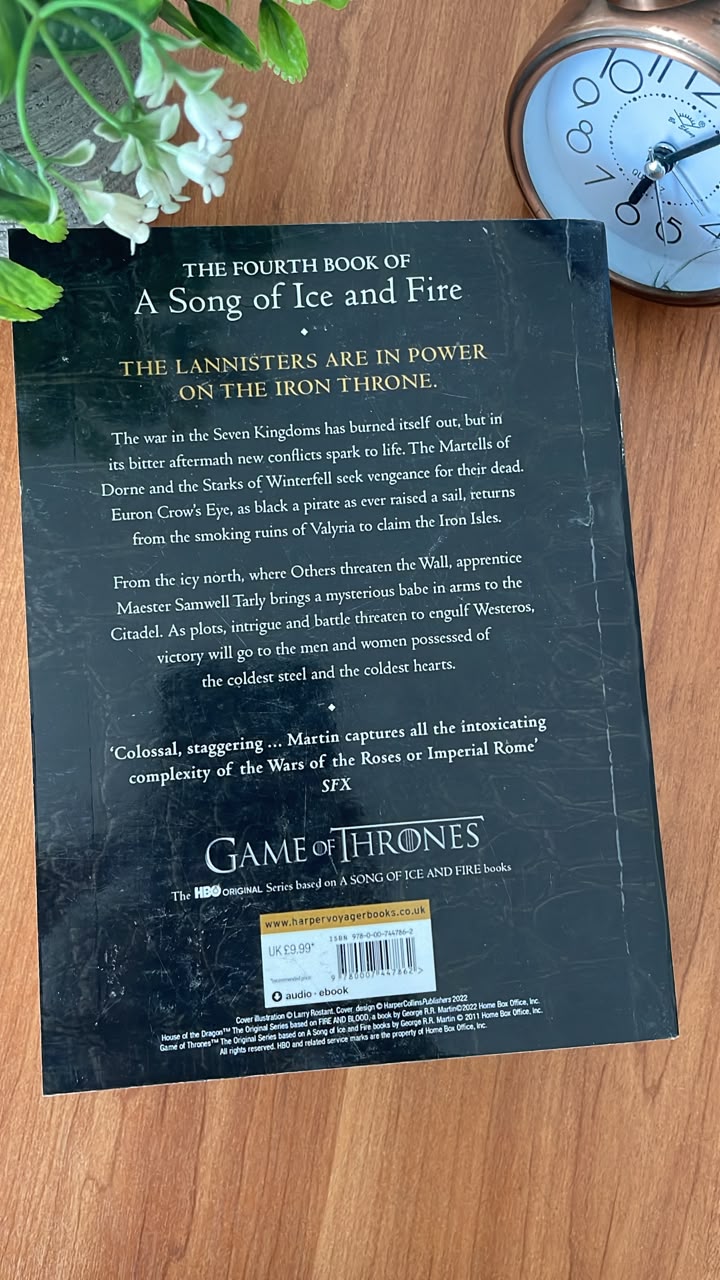
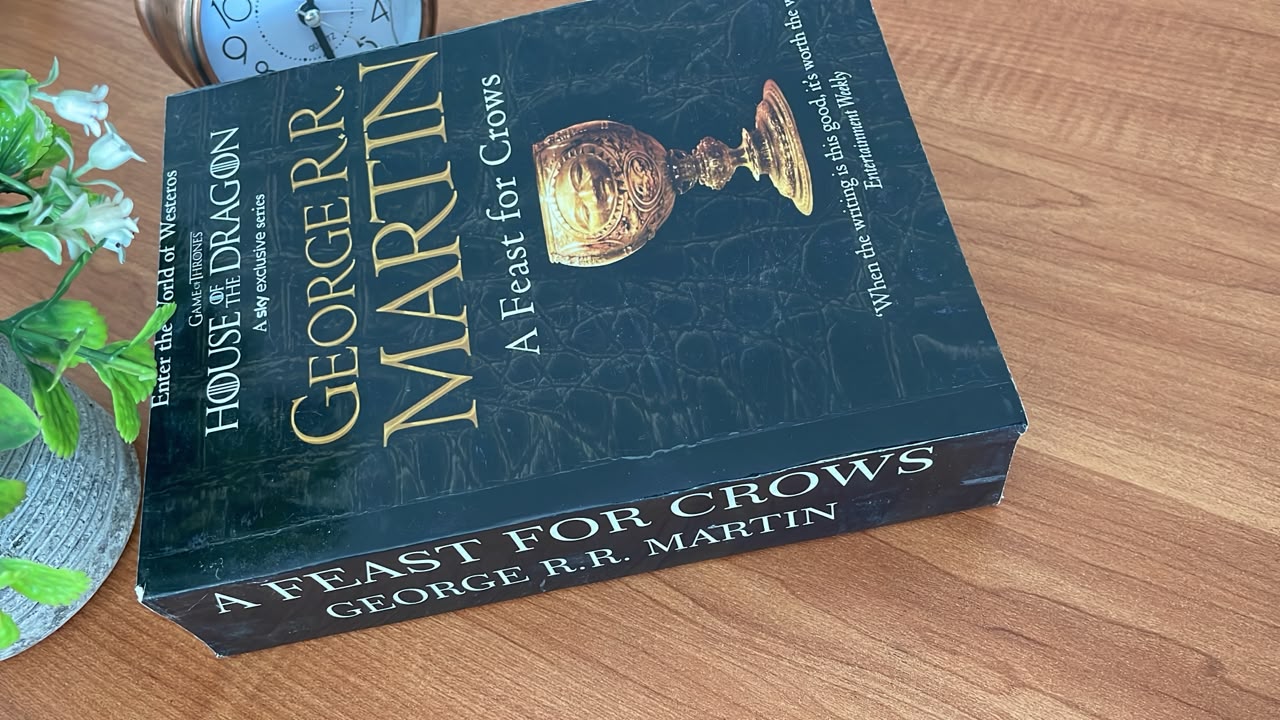
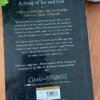
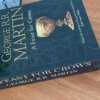
Feast for Crows (GAME OF THRONES) by George R. R. Martin
රු2,900.00
3 X Rs. 966.67 or 8% Cashback with


or 3 X රු966.67 with


or up to 4 X රු725.00 with


| Detail | Information |
|---|---|
| Title | A Feast for Crows |
| Author | George R. R. Martin |
| Series | A Song of Ice and Fire #4 |
| Genre | Fantasy / Epic Fantasy |
| Language | English |
| Publisher | HarperCollins / Bantam Books |
| Publication Year | 2005 |
| Pages | 784 pages |
| Format | Paperback |
| ISBN-10 | 0002247437 |
| ISBN-13 | 9780002247433 |
| Package Length (cm) | 19.8 cm |
| Package Width (cm) | 12.9 cm |
| Package Height (cm) | 4.4 cm |
6 in stock
A Feast for Crows (A Game of Thrones) by George R. R. Martin
A Feast for Crows by George R. R. Martin takes readers back into the brutal, politically complex world of Westeros after years of devastating war.
Kings have fallen.
Armies have been shattered.
Great houses have lost sons, daughters, soldiers, and fortunes.
The fighting may have slowed.
But peace has not truly arrived.
Instead, the survivors begin moving.
New alliances form.
Old enemies return.
Religious power grows.
Outlaws roam the countryside.
And those who survived the war discover that winning a throne is much easier than rebuilding a broken kingdom.
Why Read A Feast for Crows?
A Feast for Crows is ideal for readers who enjoy complex fantasy where politics, character choices, and consequences matter just as much as battles.
The novel explores:
- Political intrigue
- Rival noble houses
- The aftermath of war
- Power and corruption
- Revenge
- Religion
- Identity
- Loyalty
- Family
- Leadership
- Survival
- Moral compromise
- Dangerous alliances
This is not simply another story about who will sit on the Iron Throne.
It is also about what happens to ordinary people when powerful families spend years fighting over it.
A Feast for Crows and the Aftermath of War
One of the strongest elements of A Feast for Crows is its focus on consequences.
Previous books contain enormous battles and shocking political events.
This novel asks what happens afterward.
Fields have been destroyed.
Villages have suffered.
Families have disappeared.
Soldiers become outlaws.
Food becomes harder to find.
And people who once followed kings begin looking for other sources of protection and meaning.
Westeros is exhausted.
But exhausted kingdoms can still be dangerous.
Sometimes even more dangerous.
Westeros After A Storm of Swords
A Feast for Crows begins after the enormous upheavals of A Storm of Swords.
The balance of power has changed.
Some major players are gone.
Others suddenly have far more authority than they expected.
And several characters discover that victory comes with responsibilities they may not be prepared to handle.
The result is a different kind of tension.
The realm is not simply fighting one enormous war.
Power is fragmenting.
Smaller conflicts begin appearing everywhere.
Cersei in A Feast for Crows
Cersei Lannister becomes one of the most important characters in the novel.
She has always wanted influence.
Now she has much more opportunity to exercise it.
But holding power is different from wanting power.
Cersei must deal with enemies at court.
Political rivals.
The Tyrells.
Religious forces.
Questions of loyalty.
And her own fear that the people around her may be plotting against her.
Her chapters give readers a much closer look at how she thinks.
That makes A Feast for Crows especially interesting for readers fascinated by morally complicated characters.
Jaime Lannister in A Feast for Crows
Jaime continues one of the most important character journeys in the series.
He is no longer simply the arrogant knight readers first encountered.
His experiences have changed him.
His relationship with honour becomes increasingly complicated.
He begins asking difficult questions about:
Who he is.
Who he wants to become.
What his reputation means.
And whether a person can change after years of terrible choices.
Jaime’s storyline gives A Feast for Crows some of its strongest reflections on identity and redemption.
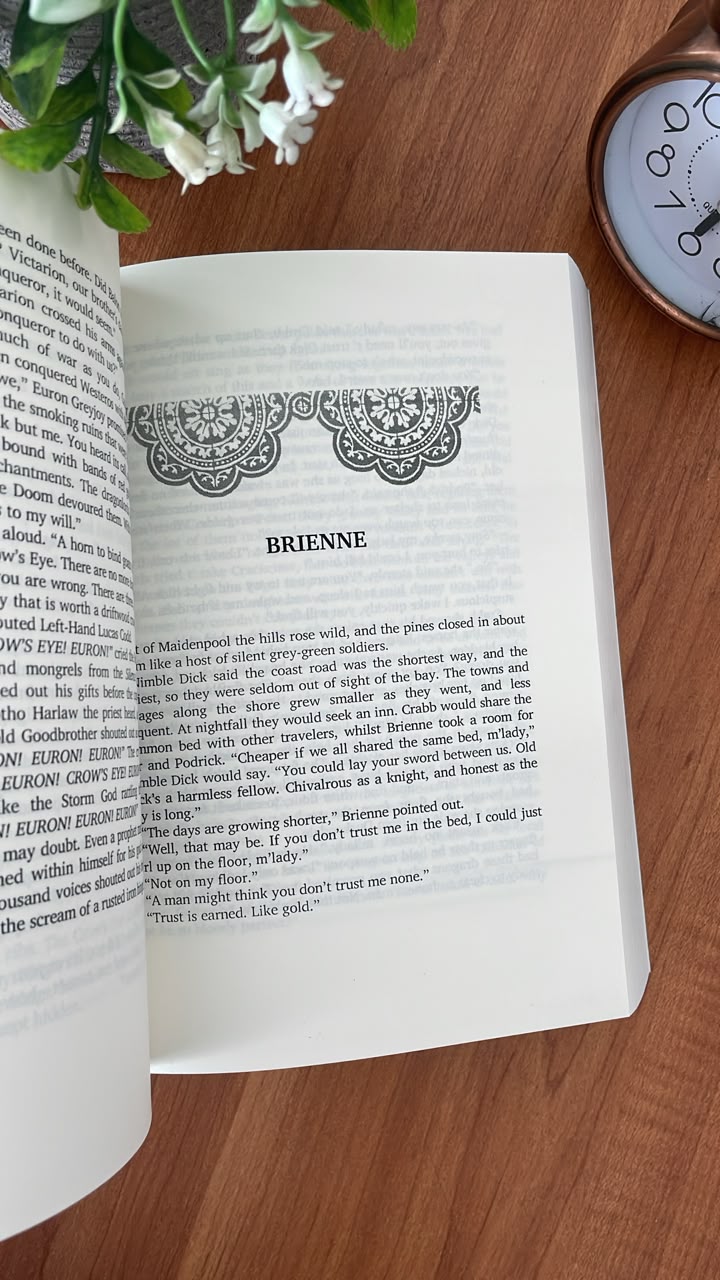
Brienne of Tarth
Brienne also receives significant attention.
Her journey takes her across parts of Westeros damaged by war.
Through her eyes, readers see what political conflict actually does to ordinary communities.
She travels through dangerous countryside.
Meets survivors.
Encounters criminals.
And searches for someone she has promised to protect.
Brienne’s commitment to honour stands out in a world where honour is often treated as weakness.
That contrast makes her storyline particularly powerful.
A Feast for Crows and Arya Stark
Arya’s journey continues far from the traditional political centres of Westeros.
Her story becomes increasingly connected with identity.
Who is Arya Stark?
Can she leave that identity behind?
What happens when someone tries to become nobody?
Her experiences move the series into stranger territory involving training, secrecy, death, and the transformation of identity.
Arya’s chapters remain very different from the political intrigue happening in King’s Landing.
Sansa Stark and a New Identity
Sansa’s storyline also deals heavily with identity.
She has survived enormous danger.
Now survival requires secrecy.
Her situation forces her to become more observant.
More careful.
And increasingly aware of how political games actually work.
Earlier in the series, Sansa often dreamed about knights, princes, and romantic court life.
By A Feast for Crows, those illusions have been shattered.
She has learned that beautiful courts can hide extremely dangerous people.
Samwell Tarly
Samwell Tarly continues his own journey.
He is intelligent.
Kind.
Often frightened.
But repeatedly capable of doing difficult things despite that fear.
His path expands the reader’s understanding of the wider world.
Knowledge becomes increasingly important.
Old books.
Ancient histories.
Forgotten threats.
And institutions that have existed for centuries may hold information that powerful rulers overlook.
Sam’s storyline reminds readers that swords are not the only things capable of changing history.
A Feast for Crows and the Iron Islands
The Iron Islands receive greater attention in this novel.
Their culture is harsh.
Their politics are dangerous.
And leadership becomes uncertain.
Different people have different ideas about what the Ironborn should become.
Raiders.
Conquerors.
Traditionalists.
Or something else entirely.
The Ironborn storyline broadens the political world of A Feast for Crows beyond King’s Landing and the familiar mainland houses.
Dorne in A Feast for Crows
Dorne also becomes much more important.
The Dornish have their own traditions.
Their own political ambitions.
Their own grievances.
And their own memories of what the major houses have done.
This gives readers another perspective on Westeros.
Events that look one way from King’s Landing can look completely different from Dorne.
That difference in perspective is one of the strengths of George R. R. Martin’s world-building.
Political Intrigue in A Feast for Crows
Readers who enjoy political fantasy will find plenty to examine.
Who can be trusted?
Who is pretending?
Which alliance is temporary?
Which marriage is political?
Who is manipulating whom?
And which apparently small decision will eventually create enormous consequences?
George R. R. Martin rarely makes politics simple.
Characters may believe they are being clever.
But their opponents have plans too.
The Cost of Power
A Feast for Crows repeatedly shows that power has a cost.
A throne does not automatically create security.
A title does not guarantee respect.
Fear does not guarantee loyalty.
And eliminating one rival may create three new enemies.
Characters who gain authority discover that leadership requires more than ambition.
They need judgement.
Patience.
Knowledge.
And the ability to understand people.
Without those qualities, power can become extremely dangerous.
Religion in A Feast for Crows
Religion becomes more politically important as Westeros suffers.
This makes sense.
When kingdoms collapse, people often search for meaning and protection somewhere else.
Religious movements begin gaining influence.
That creates another source of power.
Kings and queens may control armies.
But faith can influence thousands of ordinary people.
This adds another layer to the struggle shaping Westeros.
A Feast for Crows and Ordinary People
One of the most interesting aspects of the book is its increased attention to ordinary people.
Wars in fantasy novels can sometimes look exciting from a distance.
Armies march.
Castles fall.
Kings win.
But civilians pay much of the price.
Farmers lose crops.
Families lose homes.
Children become orphans.
Travellers encounter lawless roads.
A Feast for Crows makes the aftermath difficult to ignore.
That gives the novel a darker and more realistic atmosphere.
A More Character-Focused Fantasy Novel
Readers expecting nonstop enormous battles may find A Feast for Crows different from A Storm of Swords.
Its strength lies more heavily in:
Character development.
Political manoeuvring.
World-building.
Consequences.
Regional conflicts.
And psychological tension.
The pace can feel more deliberate.
But that slower exploration allows Martin to show what the war has done to Westeros and to the people who survived it.
A Feast for Crows and A Dance with Dragons
An important reading note is that A Feast for Crows and A Dance with Dragons divide much of the story geographically.
Rather than covering every major character in one enormous volume, Martin separated parts of the narrative.
That means some major characters have limited or no viewpoint presence in A Feast for Crows, while their stories continue in A Dance with Dragons.
Readers should therefore continue directly into Book 5 after finishing this one.
A Song of Ice and Fire Reading Order
A Feast for Crows is Book 4 in the main sequence:
- A Game of Thrones
- A Clash of Kings
- A Storm of Swords
- A Feast for Crows
- A Dance with Dragons
Penguin Random House confirms this published sequence for the main novels.
Mature Themes in A Feast for Crows
This is adult epic fantasy.
Readers should expect mature material including:
- Violence
- Death
- War
- Sexual content
- Political murder
- Trauma
- Abuse
- Religious extremism
- Strong language
- Disturbing situations
The darkness is an important part of the world Martin creates.
This is not a light fantasy adventure.
7 Powerful Reasons to Read A Feast for Crows
- Complex Political Intrigue – Westeros enters a new phase where alliances and court politics become increasingly dangerous.
- Excellent Character Development – Cersei, Jaime, Brienne, Arya, Sansa, Sam, and others receive important development.
- The Consequences of War – The novel explores what happens after armies have devastated a kingdom.
- New Regions Gain Importance – Dorne and the Iron Islands become major parts of the political story.
- Deep Moral Questions – Honour, revenge, leadership, identity, and power are constantly examined.
- Expanded World-Building – The political and cultural complexity of Westeros becomes even greater.
- Essential A Song of Ice and Fire Reading – A Feast for Crows is the fourth novel in the main series and leads directly toward A Dance with Dragons.
What You Can Expect From A Feast for Crows
Readers can expect:
- Westeros
- Cersei Lannister
- Jaime Lannister
- Brienne of Tarth
- Arya Stark
- Sansa Stark
- Samwell Tarly
- King’s Landing
- Dorne
- Iron Islands
- Political intrigue
- Religious conflict
- Revenge
- War aftermath
- Family rivalry
- Dangerous alliances
- Betrayal
- Identity
- Epic fantasy
- Complex world-building
Who Should Read A Feast for Crows?
A Feast for Crows is ideal for readers who enjoy:
Epic fantasy.
Political fantasy.
Game of Thrones.
Complex characters.
Dark fantasy.
Multiple points of view.
Medieval-inspired worlds.
Moral ambiguity.
Court intrigue.
Long fantasy series.
Readers who enjoyed A Game of Thrones, A Clash of Kings, and A Storm of Swords should continue naturally into this fourth instalment.
A Powerful Fourth Chapter in A Song of Ice and Fire
A Feast for Crows explores a kingdom that has survived war but has not found peace.
The armies may be smaller.
Some kings are gone.
But ambition remains.
Cersei struggles to control King’s Landing.
Jaime questions the person he has become.
Brienne travels through a damaged countryside.
Arya moves further into a new identity.
Sansa learns more about political survival.
Dorne and the Iron Islands enter the larger game.
And across Westeros, new forces begin rising from the ruins.
The official publisher describes the Seven Kingdoms as having reached an uneasy truce before survivors, renegades, nobles, soldiers, assassins, and others begin forming new plots and alliances.
For readers who enjoy deeply layered fantasy, political manoeuvring, morally complicated characters, and a world where every victory creates new consequences, A Feast for Crows is an essential part of George R. R. Martin’s A Song of Ice and Fire saga.
Book Details
Title: A Feast for Crows
Author: George R. R. Martin
Series: A Song of Ice and Fire
Series Number: Book 4
Genre: Epic Fantasy / Political Fantasy / Dark Fantasy
Original Publication: 2005
Main Setting: Westeros
Previous Book: A Storm of Swords
Next Book: A Dance with Dragons
Penguin Random House lists the original U.S. hardcover publication on November 8, 2005.
Mass Market Paperback Edition
A commonly available Random House Worlds edition has:
ISBN-13: 9780553582024
Format: Mass Market Paperback
Publication Date: September 26, 2006
Pages: 1,104
Dimensions: approximately 10.7 × 17.5 × 4.0 cm
Weight: approximately 442 g.
Trade Paperback Edition
Penguin Random House also lists a larger paperback edition at 784 pages, published October 30, 2007.
Illustrated Edition
A special illustrated edition was published in November 2025.
It contains 24 original colour illustrations by Jeffrey R. McDonald, a foreword by Joe Abercrombie, and approximately 800 pages.
Edition Note
Different editions of A Feast for Crows have significantly different page counts, dimensions, covers, and ISBNs.
Use the ISBN printed on your physical copy before entering exact edition details on your website.
Learn more about A Feast for Crows by George R. R. Martin on the official Penguin Random House website.
Explore more fantasy books in our Fantasy collection.
Be the first to review “Feast for Crows (GAME OF THRONES) by George R. R. Martin”
Related products

Out of stock
Children & Young Adult
රු3,200.00
3 X Rs. 1,066.67 or 8% Cashback with
or 3 X රු1,066.67 with
or up to 4 X රු800.00 with
-14%
Out of stock
Adventure Fiction
Original price was: රු3,650.00.රු3,150.00Current price is: රු3,150.00.
3 X Rs. 1,050.00 or 8% Cashback with
or 3 X රු1,050.00 with
or up to 4 X රු787.50 with

Out of stock
Fiction & Literature
රු1,900.00
3 X Rs. 633.33 or 8% Cashback with
or 3 X රු633.33 with
or up to 4 X රු475.00 with
-29%
Classics & Literary Fiction
Original price was: රු2,100.00.රු1,500.00Current price is: රු1,500.00.
3 X Rs. 500.00 or 8% Cashback with
or 3 X රු500.00 with
or up to 4 X රු375.00 with
-18%
Fiction & Literature
Original price was: රු1,950.00.රු1,600.00Current price is: රු1,600.00.
3 X Rs. 533.33 or 8% Cashback with
or 3 X රු533.33 with
or up to 4 X රු400.00 with

Out of stock
Classics & Literary Fiction
රු1,600.00
3 X Rs. 533.33 or 8% Cashback with
or 3 X රු533.33 with
or up to 4 X රු400.00 with

Out of stock
Classics & Literary Fiction
රු1,750.00
3 X Rs. 583.33 or 8% Cashback with
or 3 X රු583.33 with
or up to 4 X රු437.50 with
-20%
Classics & Literary Fiction
Original price was: රු2,450.00.රු1,950.00Current price is: රු1,950.00.
3 X Rs. 650.00 or 8% Cashback with
or 3 X රු650.00 with
or up to 4 X රු487.50 with
Reviews
There are no reviews yet.