
No products in the cart.
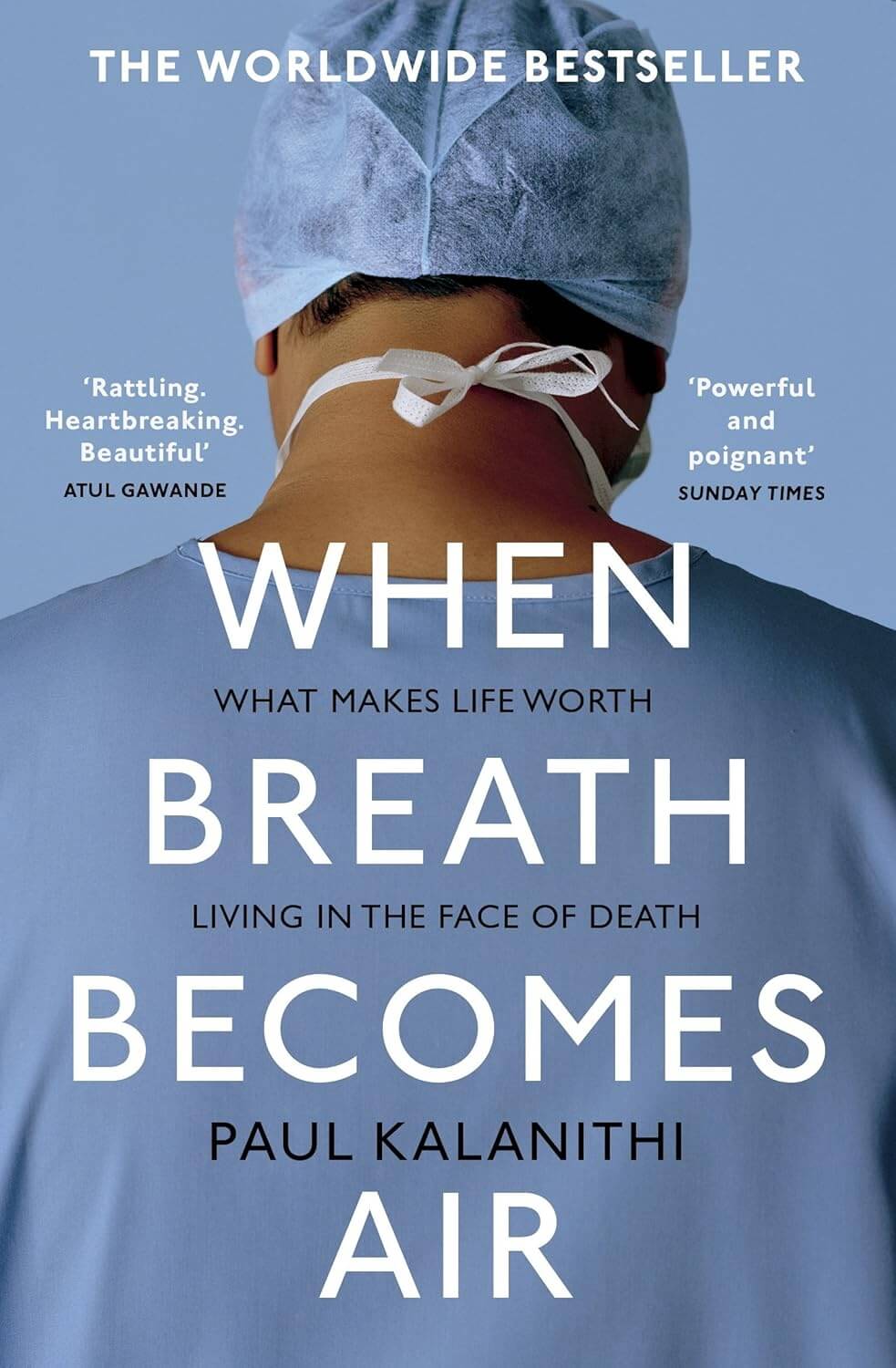
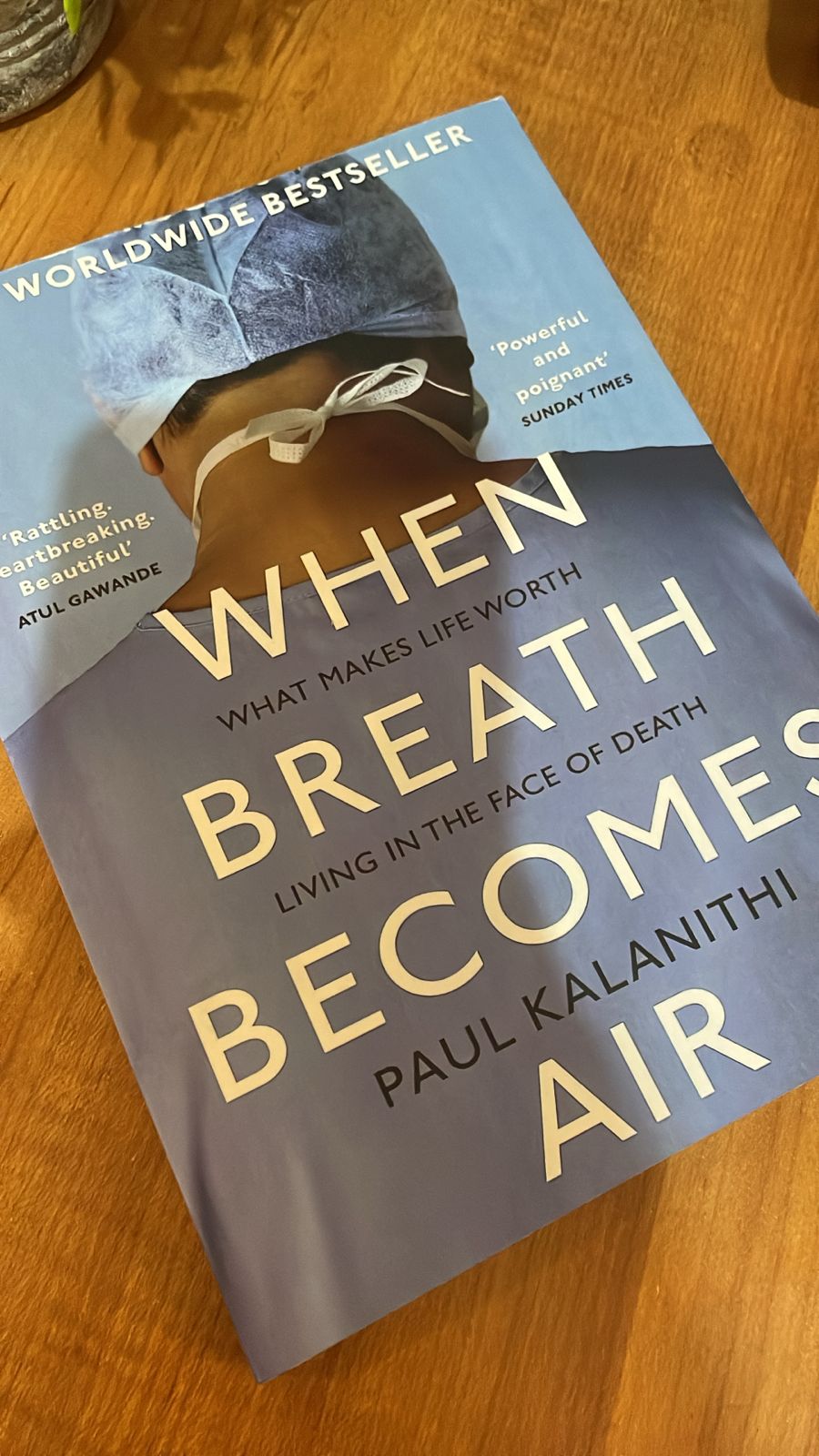
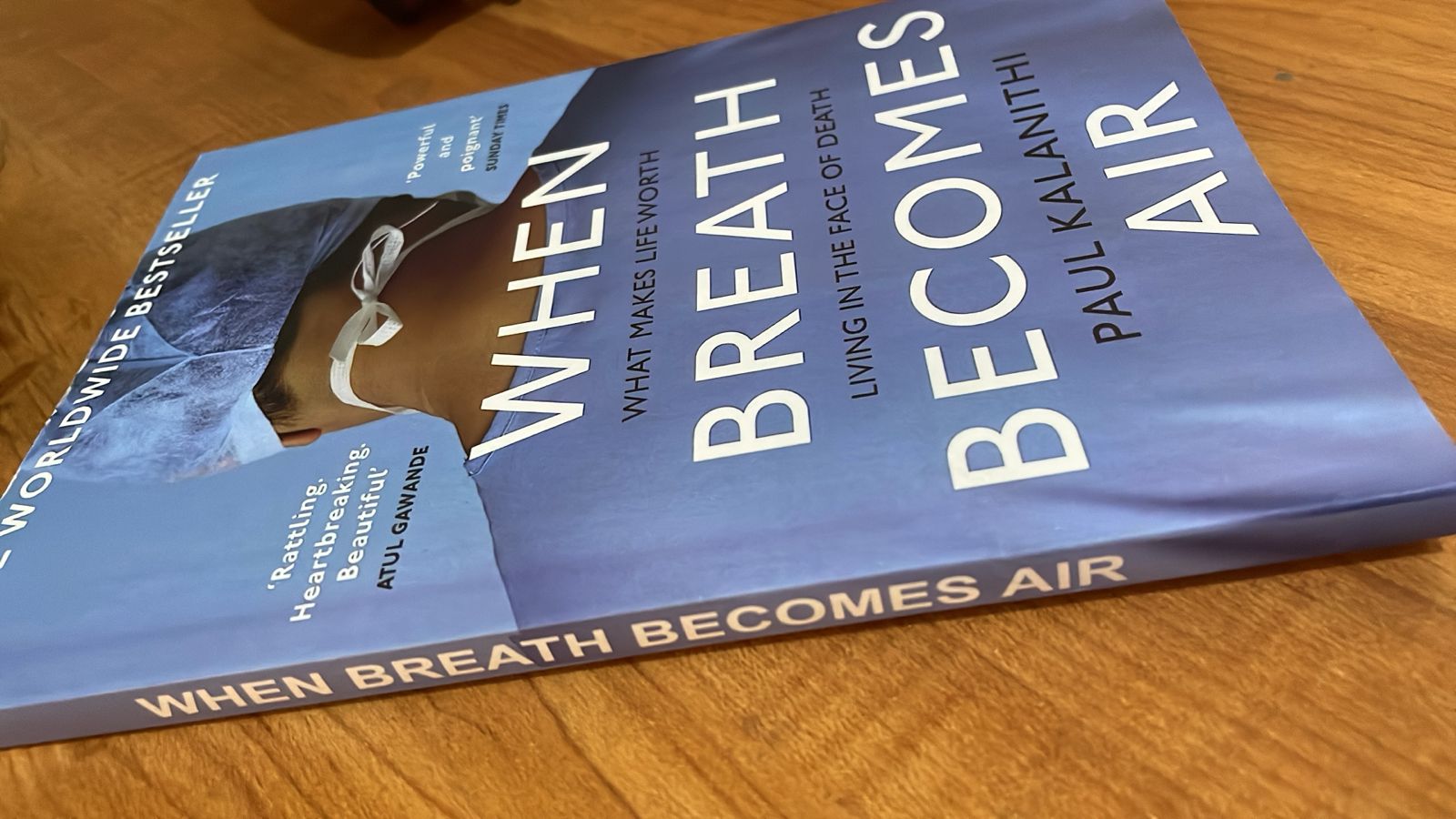
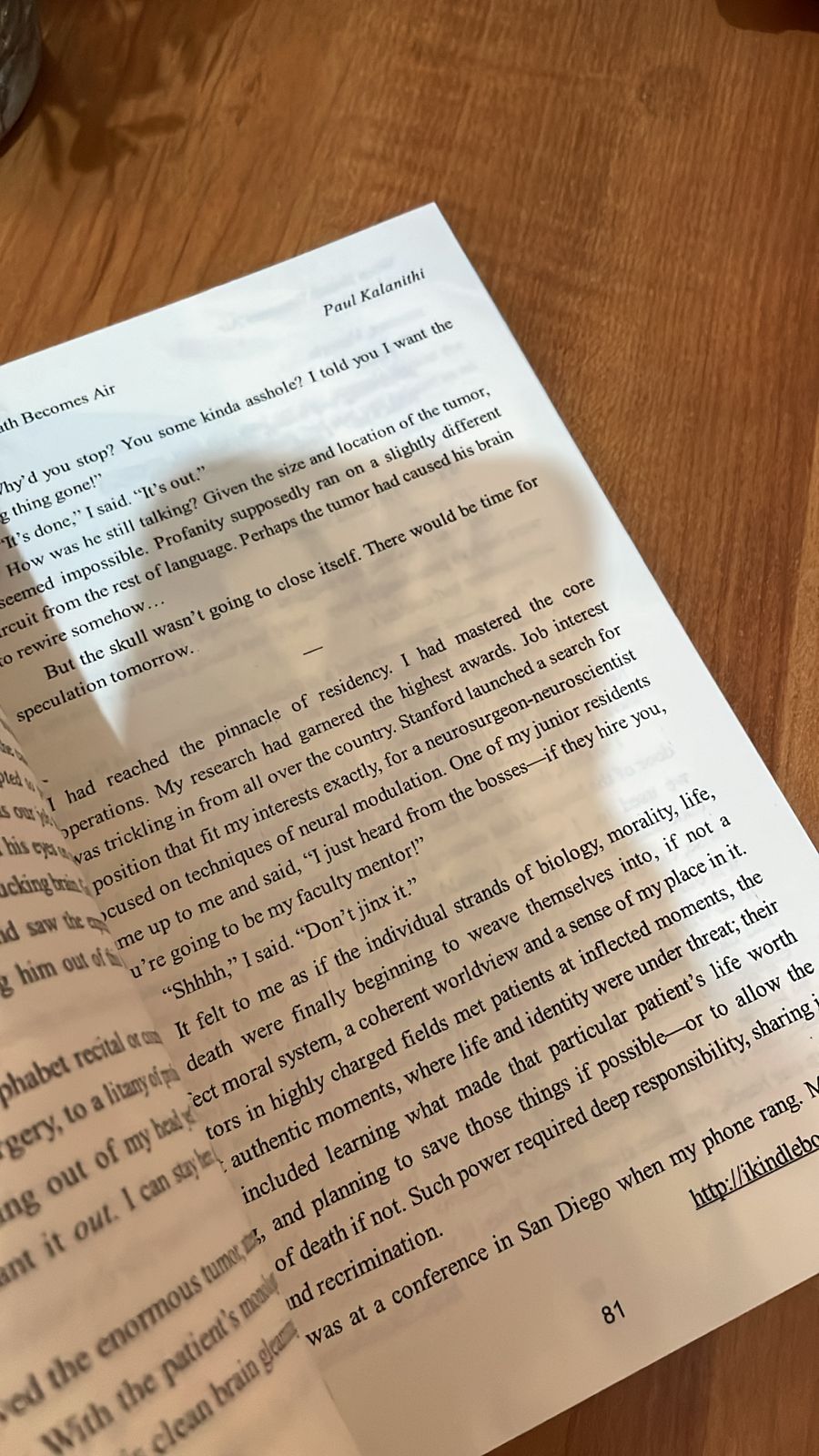
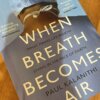
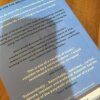
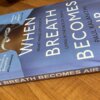

When Breath Becomes Air by Paul Kalanithi


රු2,200.00
3 X Rs. 733.33 or 8% Cashback with


or 3 X රු733.33 with


or up to 4 X රු550.00 with


“When Breath Becomes Air” by Paul Kalanithi is a profoundly moving memoir that chronicles a young neurosurgeon’s journey from doctor to patient as he faces a terminal cancer diagnosis. This deeply reflective and beautifully written book explores life, death, and what it means to live a meaningful existence, leaving a lasting impact on readers.
16 in stock
When Breath Becomes Air by Paul Kalanithi
When Breath Becomes Air by Paul Kalanithi is a deeply moving memoir about medicine, mortality, identity, family, purpose, and the question of what makes a life worth living.
Paul Kalanithi spent years training to become a neurosurgeon.
Then, at the age of thirty-six, he was diagnosed with stage IV lung cancer.
Suddenly, the doctor became the patient.
Everything he had imagined about his future changed.
About When Breath Becomes Air
When Breath Becomes Air follows Paul Kalanithi’s journey through medicine, literature, surgery, illness, and fatherhood.
Before becoming a doctor, Kalanithi studied literature and philosophy.
He wanted to understand what gives human life meaning.
Medicine eventually became another way of exploring that question.
As a neurosurgeon, he worked with patients facing some of the most serious moments of their lives.
Then he became one of those patients himself.
7 Powerful Lessons from When Breath Becomes Air
1. Life Can Change Without Warning
One of the strongest lessons in When Breath Becomes Air is how quickly certainty can disappear.
Paul had spent years preparing for a successful medical career.
He was close to completing his neurosurgical training.
Then his diagnosis changed everything.
The future he had planned no longer felt guaranteed.
2. Meaning Matters More Than Time Alone
The book asks whether a meaningful life should be measured only by length.
Paul knows his time may be limited.
That forces him to ask what is still worth doing.
Should he continue practicing medicine?
Should he write?
Should he become a father?
The memoir shows that meaning can still exist even when time is uncertain.
3. Doctors and Patients See Illness Differently
Before his diagnosis, Paul understood disease as a physician.
He studied scans.
He performed surgery.
He explained difficult news.
After becoming a patient, the same medical world feels different.
Now the results affect his own future.
This change gives the memoir an unusual perspective on the doctor-patient relationship.
4. Identity Can Change Suddenly
Paul strongly identifies as a surgeon.
Medicine has shaped his life.
But illness makes that identity uncertain.
Can he still operate?
Should he continue working?
Who is he if he can no longer be the doctor he trained to become?
These questions make the memoir about identity as much as illness.
5. Love Becomes More Important Under Pressure
Paul’s relationship with his wife, Lucy, becomes central to the story.
Illness creates fear.
But it also brings difficult conversations.
They must decide how to live while facing an uncertain future.
Their relationship gives the memoir much of its emotional power.
6. Parenthood Can Be an Act of Hope
Paul and Lucy face a difficult question.
Should they have a child when Paul may not live long enough to watch that child grow?
They decide to become parents.
Their daughter becomes a powerful symbol of hope.
The decision shows that love and uncertainty can exist together.
7. Mortality Can Clarify What Matters
Most people know they will die someday.
But that knowledge often feels distant.
Paul cannot treat mortality as distant.
His illness forces him to confront it directly.
That changes how he thinks about work, relationships, ambition, time, and meaning.
From Literature to Medicine
Paul Kalanithi did not begin his intellectual life with surgery.
He studied literature.
He was interested in philosophy.
He wanted to understand what makes human life meaningful.
Eventually, he became drawn to medicine.
The brain fascinated him.
Neurosurgery brought together science, identity, consciousness, and human experience.
Becoming a Neurosurgeon
Neurosurgical training is demanding.
The hours are long.
The responsibility is enormous.
Doctors make decisions that can affect whether someone walks, speaks, remembers, or survives.
Paul gradually becomes highly skilled.
But the work also teaches him humility.
Medicine cannot always save everyone.
Doctor Becomes Patient
The emotional center of When Breath Becomes Air begins when Paul becomes seriously ill.
Symptoms that once belonged to other people now belong to him.
He undergoes tests.
He waits for results.
He listens to doctors.
He faces decisions about treatment.
The change is profound.
Understanding Mortality
Death is present throughout the memoir.
But the book is not simply about dying.
It is about living while knowing that life is temporary.
Paul does not pretend to have easy answers.
Instead, he keeps asking questions.
What should I do with my time?
What matters now?
What makes a life meaningful?
Medicine and Humanity
Doctors often work with scientific facts.
Scans.
Numbers.
Diagnosis.
Treatment.
But patients experience illness emotionally.
Fear matters.
Hope matters.
Family matters.
Identity matters.
Paul’s experience on both sides of medicine helps him understand this more deeply.
The Role of Literature
Literature remains important throughout the book.
Paul turns to books and language when medicine alone cannot answer his questions.
Science can describe disease.
But literature can help explore meaning.
This combination gives the memoir its distinctive voice.
Purpose
Before his illness, purpose seemed connected to achievement.
Finish training.
Become a surgeon.
Build a career.
After diagnosis, purpose becomes more immediate.
A conversation can matter.
A day with family can matter.
Writing can matter.
Meaning becomes less about the distant future.
Family
Family becomes increasingly important.
Paul’s parents.
His wife.
His daughter.
These relationships shape the final part of his life.
The memoir shows how illness affects not only the patient.
It affects everyone who loves them.
Writing the Book
Paul began writing When Breath Becomes Air while living with cancer.
He knew he might not finish it.
That gives the book unusual urgency.
He died in March 2015 while still working on the manuscript.
His wife, Lucy Kalanithi, later contributed the epilogue.
Lucy Kalanithi’s Epilogue
The epilogue gives readers another perspective.
Lucy describes Paul’s final period of life.
She also reflects on their relationship.
Her contribution brings emotional closure to a memoir Paul could not fully complete himself.
What Makes a Life Worth Living?
This is one of the central questions in the book.
There is no simple answer.
Career matters.
Love matters.
Family matters.
Purpose matters.
But the balance changes as circumstances change.
That uncertainty is part of the book’s strength.
The Doctor-Patient Relationship
Paul’s experience challenges the emotional distance doctors sometimes develop.
Doctors need objectivity.
But patients also need compassion.
The book explores how difficult it can be to balance both.
It may be especially meaningful for medical students and healthcare professionals.
Hope Without False Certainty
The memoir does not offer unrealistic optimism.
Paul understands the seriousness of his condition.
Hope therefore becomes something different.
It means deciding what is worth doing even when the outcome is uncertain.
That makes the book emotional without becoming simplistic.
Who Should Read This Book?
When Breath Becomes Air is ideal for readers who enjoy memoirs, medicine, philosophy, literary nonfiction, and deeply personal stories.
It may especially appeal to medical students, doctors, nurses, and healthcare professionals.
Readers interested in questions about purpose, mortality, family, and meaning may also find it powerful.
Content Note
This memoir deals with serious illness, cancer, death, grief, medical procedures, and end-of-life decisions.
Some sections may be emotionally difficult for readers who have experienced similar situations.
About Paul Kalanithi
Paul Kalanithi was a neurosurgeon and writer.
He studied English literature and human biology at Stanford.
He later studied history and philosophy of science and medicine at Cambridge.
He graduated from Yale School of Medicine and returned to Stanford for neurosurgical residency and neuroscience research.
He died in March 2015.
Readers can learn more through the official Penguin Random House page for When Breath Becomes Air.
Product Details
Title: When Breath Becomes Air
Author: Paul Kalanithi
Foreword: Abraham Verghese
Epilogue: Lucy Kalanithi
Genre: Memoir / Biography / Medicine / Philosophy
Language: English
Publisher: Random House
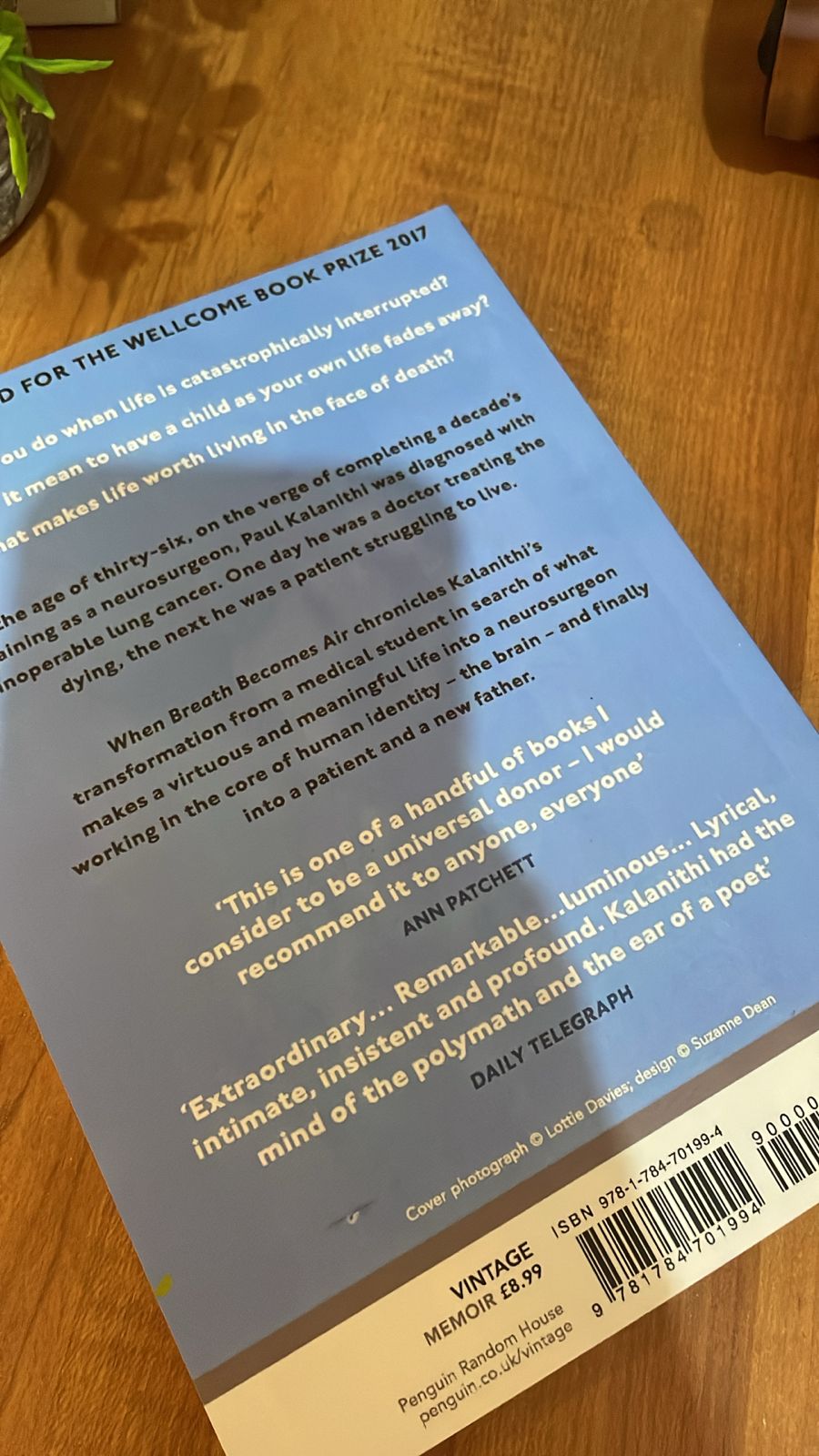
ISBN-13: 9780812988406
Pages: 256
Publication Date: January 12, 2016
Dimensions: Approximately 5 × 7½ inches
Penguin Random House confirms these specifications for the U.S. edition.
Awards and Recognition
When Breath Becomes Air became a #1 New York Times bestseller.
It was also a Pulitzer Prize finalist.
Penguin Random House states that the book has sold more than two million copies.
Important Edition Note
Different international editions may have different ISBNs, page counts, dimensions, and cover designs.
Always check the barcode printed on your physical copy before entering final WooCommerce specifications.
Explore More Biography and Non-Fiction Books
When Breath Becomes Air begins with medicine.
But it becomes something much larger.
It is about life.
Love.
Work.
Family.
Mortality.
And deciding what remains meaningful when the future becomes uncertain.
Readers can explore more Biography Books at Bargain Books.
You can also explore Non-Fiction & Knowledge Books at Bargain Books.
For readers who appreciate thoughtful memoirs about medicine, purpose, mortality, and what makes life meaningful, When Breath Becomes Air is a powerful and unforgettable book.
Be the first to review “When Breath Becomes Air by Paul Kalanithi”
Related products
Non-Fiction & Knowledge
රු2,250.00
3 X Rs. 750.00 or 8% Cashback with
or 3 X රු750.00 with
or up to 4 X රු562.50 with
-24%
Non-Fiction & Knowledge
Original price was: රු2,300.00.රු1,750.00Current price is: රු1,750.00.
3 X Rs. 583.33 or 8% Cashback with
or 3 X රු583.33 with
or up to 4 X රු437.50 with
-26%
Non-Fiction & Knowledge
The 7 Habits of Highly Effective People by Stephen R. Covey – Blue Cover
Original price was: රු2,300.00.රු1,700.00Current price is: රු1,700.00.
3 X Rs. 566.67 or 8% Cashback with
or 3 X රු566.67 with
or up to 4 X රු425.00 with
Out of stock
Self-Help & Psychology
රු1,900.00
3 X Rs. 633.33 or 8% Cashback with
or 3 X රු633.33 with
or up to 4 X රු475.00 with
-17%
Out of stock
Non-Fiction & Knowledge
Original price was: රු2,900.00.රු2,400.00Current price is: රු2,400.00.
3 X Rs. 800.00 or 8% Cashback with
or 3 X රු800.00 with
or up to 4 X රු600.00 with
-19%
Out of stock
Non-Fiction & Knowledge
Original price was: රු2,650.00.රු2,150.00Current price is: රු2,150.00.
3 X Rs. 716.67 or 8% Cashback with
or 3 X රු716.67 with
or up to 4 X රු537.50 with
-29%

Self-Help & Psychology
Original price was: රු1,750.00.රු1,250.00Current price is: රු1,250.00.
3 X Rs. 416.67 or 8% Cashback with
or 3 X රු416.67 with
or up to 4 X රු312.50 with
Out of stock
Autobiography
රු2,750.00
3 X Rs. 916.67 or 8% Cashback with
or 3 X රු916.67 with
or up to 4 X රු687.50 with
Reviews
There are no reviews yet.