
No products in the cart.
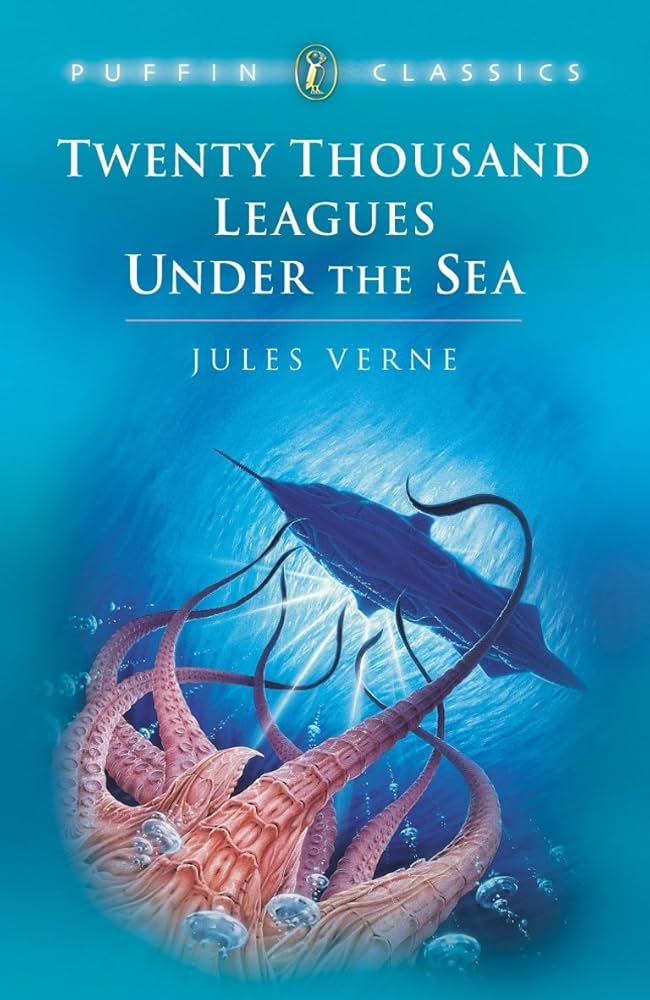
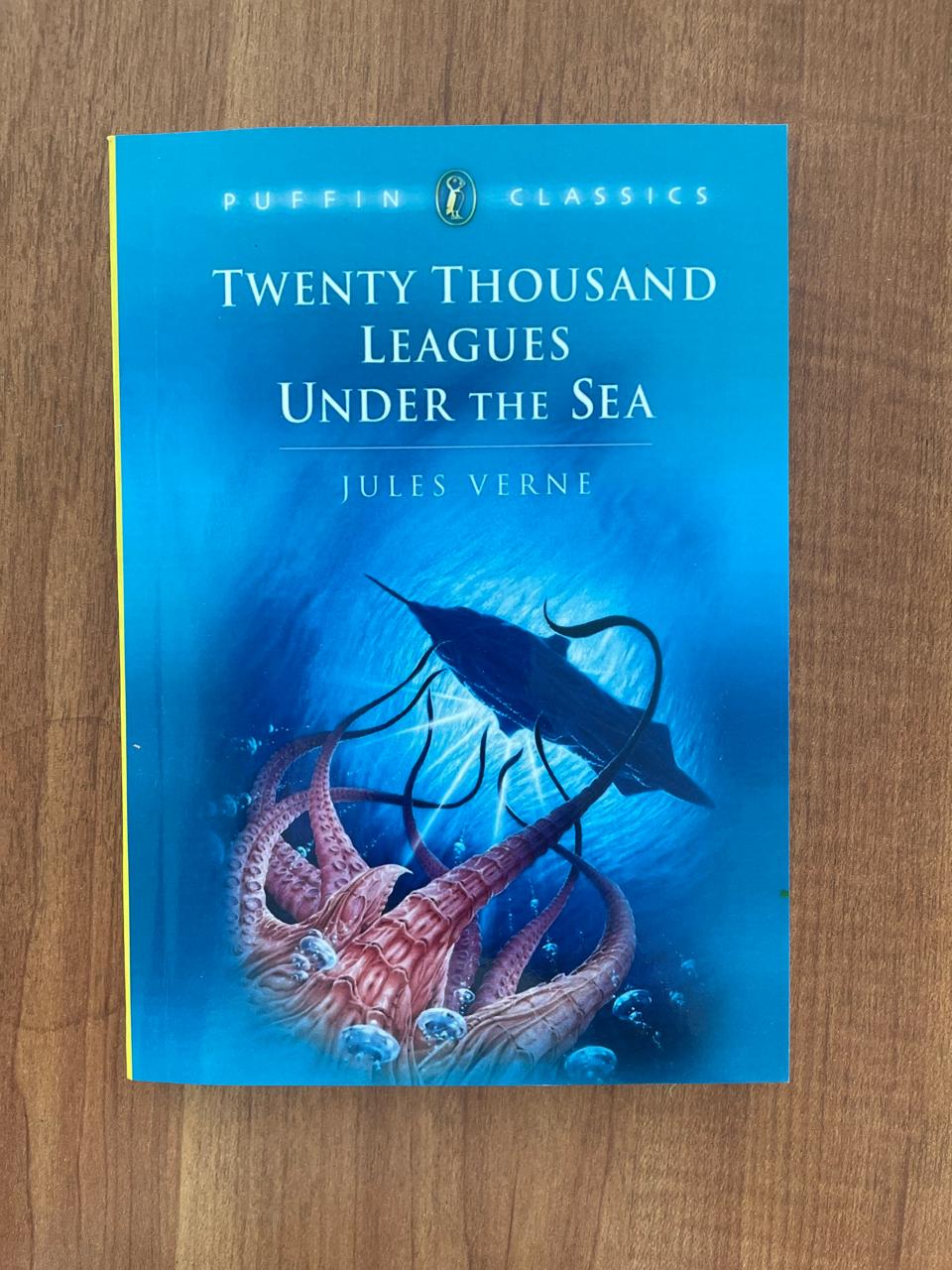




Twenty Thousand Leagues Under The Sea by Jules Verne


රු1,950.00
3 X Rs. 650.00 or 8% Cashback with


or 3 X රු650.00 with


or up to 4 X රු487.50 with


Twenty Thousand Leagues Under the Sea by Jules Verne is a classic science fiction novel that follows Professor Aronnax and his companions as they journey beneath the ocean aboard the mysterious submarine Nautilus, commanded by the enigmatic Captain Nemo.
The novel combines scientific exploration, imaginative technology, and thrilling adventure, introducing readers to underwater worlds long before modern submarines existed. It remains one of the most influential works in science fiction literature.
5 in stock
Twenty Thousand Leagues Under the Sea by Jules Verne
Twenty Thousand Leagues Under the Sea by Jules Verne is one of the most famous adventure and science-fiction novels ever written.
The story follows Professor Pierre Aronnax, his assistant Conseil, and Canadian harpooner Ned Land.
They join an expedition to investigate reports of a mysterious creature attacking ships at sea.
What they discover is far more extraordinary than any monster.
The supposed creature is actually the Nautilus, an advanced submarine commanded by the brilliant and secretive Captain Nemo.
The three men are taken aboard.
And their journey beneath the oceans begins.
About Twenty Thousand Leagues Under the Sea
Twenty Thousand Leagues Under the Sea was originally published in the nineteenth century and became one of Jules Verne’s most influential novels.
The story combines science, exploration, suspense, adventure, and imagination.
Readers travel beneath the oceans aboard the Nautilus.
They encounter strange marine life.
They witness underwater landscapes.
They face storms, giant creatures, dangerous ice, and mysterious ruins.
At the center of everything is Captain Nemo.
He is intelligent.
He is powerful.
He is also deeply angry with the world above the sea.
Meet Professor Pierre Aronnax
Pierre Aronnax is a marine biologist and professor.
He joins an expedition after ships report encounters with a mysterious creature.
Aronnax is fascinated by the ocean.
That curiosity becomes extremely important once he reaches the Nautilus.
He is amazed by the submarine.
He is fascinated by its technology.
He is equally fascinated by Captain Nemo.
But his scientific curiosity also creates a conflict.
The Nautilus is extraordinary.
Yet Aronnax and his companions are still prisoners.
Meet Captain Nemo
Captain Nemo is one of the most famous characters in classic science fiction.
He commands the Nautilus.
He has rejected much of ordinary society.
Instead, he has created a life beneath the sea.
Nemo is brilliant.
He understands science and engineering.
He is also mysterious and emotionally complicated.
His anger toward civilization shapes many of his decisions.
That makes him both fascinating and dangerous.
7 Epic Reasons to Read Twenty Thousand Leagues Under the Sea
1. The Nautilus Is an Iconic Invention
The submarine Nautilus is one of the most memorable machines in classic literature.
Jules Verne imagined an underwater vessel with astonishing capabilities.
Readers explore its interior.
They learn how it operates.
They see how it allows Nemo and his crew to live largely independent of the surface world.
The Nautilus feels like both a scientific marvel and a prison.
2. Incredible Underwater Exploration
Twenty Thousand Leagues Under the Sea is filled with exploration.
Aronnax sees marine life he could previously only study in books.
The characters walk beneath the sea.
They travel through underwater forests.
They encounter coral landscapes and unusual creatures.
The ocean becomes an entire hidden world.
3. Captain Nemo Is Unforgettable
Nemo is not a simple hero or villain.
He is intelligent and cultured.
He values knowledge.
He rejects oppression.
But he also carries deep anger.
His motives are revealed gradually.
This complexity makes him one of the novel’s strongest characters.
4. Science and Imagination Work Together
Jules Verne was fascinated by science and technology.
The novel reflects that interest.
Real scientific knowledge is mixed with speculation.
Many ideas felt futuristic when the novel first appeared.
This gives the book a strong sense of discovery.
5. Adventure Happens Constantly
The journey is rarely calm for long.
The characters face dangerous seas.
Ice.
Wild marine creatures.
Extreme depths.
Mechanical problems.
And threats created by Nemo himself.
This keeps the novel moving from one remarkable event to another.
6. It Explores Freedom and Captivity
Aronnax is fascinated by the Nautilus.
Ned Land feels differently.
He wants to escape.
This creates one of the novel’s central tensions.
Is an extraordinary life still worthwhile if you are not free?
That question becomes increasingly important.
7. It Helped Shape Modern Science Fiction
The novel became highly influential.
Later writers and filmmakers repeatedly returned to its ideas.
Advanced submarines.
Underwater civilizations.
Scientific exploration.
Mysterious inventors.
Many later adventure and science-fiction stories owe something to Jules Verne’s imagination.
The Mystery of the Sea Monster
At the beginning, ships report encounters with a strange creature.
Some believe it is a giant animal.
Others are uncertain.
The mystery creates international concern.
An expedition is organized.
Aronnax joins because of his scientific expertise.
The discovery that follows changes everything.
The monster is not biological.
It is technological.
That reversal is one of the novel’s most famous ideas.
Life Aboard the Nautilus
The Nautilus is much more than transportation.
It is Nemo’s entire world.
There are rooms.
Libraries.
Scientific equipment.
Art.
Food from the sea.
Nemo has tried to make himself independent from the land.
This gives the submarine a strange atmosphere.
It is luxurious.
It is technologically impressive.
But it is also isolated.
That isolation reflects Nemo himself.
Ned Land Wants Freedom
Ned Land is very different from Aronnax.
He is practical.
He does not care as much about scientific discovery.
For him, imprisonment is still imprisonment.
No matter how impressive the Nautilus may be, Ned wants to leave.
This creates tension between curiosity and freedom.
Aronnax wants to keep exploring.
Ned wants to escape.
Both positions are understandable.
Conseil
Conseil is Aronnax’s loyal assistant.
He is calm and dependable.
He frequently helps classify the many species they encounter.
His personality provides stability during dangerous moments.
He also adds humor through his highly organized way of thinking.
Science and Nature
Twenty Thousand Leagues Under the Sea is fascinated by the relationship between technology and nature.
The Nautilus allows humans to enter places they could not otherwise survive.
But nature remains powerful.
Storms still matter.
Ice still matters.
Sea creatures still matter.
Human invention expands possibilities.
It does not completely control the natural world.
Giant Squid and Sea Monsters
One of the novel’s most famous sequences involves a giant squid.
The scene reinforces the danger of the deep ocean.
Even with advanced technology, Nemo and his crew are vulnerable.
The ocean contains forces they cannot fully predict.
This combination of scientific wonder and danger gives the book much of its appeal.
Atlantis and Underwater Mystery
The novel also includes some of its most imaginative episodes beneath the sea.
Ruins.
Sunken landscapes.
Lost civilizations.
These moments push the story beyond ordinary exploration.
They give the ocean a mythic quality.
The sea becomes a place where history can disappear and still remain hidden.
Captain Nemo and Society
Nemo has separated himself from civilization.
His reasons are connected to pain and political anger.
He sees the sea as freedom.
There, he can avoid governments and institutions he despises.
But his isolation also changes him.
His refusal to live within society gives him independence.
It also makes him increasingly distant from ordinary human relationships.
Technology and Morality
The Nautilus represents incredible technological power.
But technology itself is neutral.
What matters is how it is used.
Nemo can use the submarine to explore.
He can use it to save people.
He can also use it destructively.
This makes the story surprisingly modern.
Scientific progress does not automatically create moral progress.
Adventure Across the Oceans
The novel moves through many different parts of the world.
Readers experience warm seas.
Polar regions.
Coral landscapes.
Shipwrecks.
Deep water.
The constant movement gives the book a global scale.
The title refers to distance traveled beneath the sea, not depth.
That distinction is important.
“Twenty thousand leagues” describes the enormous journey made by the Nautilus.
Who Should Read This Book?
Twenty Thousand Leagues Under the Sea is ideal for readers who enjoy classic literature, adventure, science fiction, exploration, maritime stories, and mysterious characters.
It may especially appeal to readers who enjoy stories involving submarines and scientific invention.
Young readers may prefer an abridged edition.
Adult readers may enjoy a full translation with notes.
Because many editions exist, the reading experience can vary significantly depending on the translation or adaptation.
About Jules Verne
Jules Verne was a French novelist born in 1828.
He became famous for combining adventure with science and technological imagination.
His best-known works include Journey to the Center of the Earth, Around the World in Eighty Days, and Twenty Thousand Leagues Under the Sea.
Penguin Random House describes him as a major early figure in science fiction whose novels repeatedly explored emerging technology and the limits of exploration.
Readers can learn more through the official Penguin Random House page for Twenty Thousand Leagues Under the Sea.
Product Details
Title: Twenty Thousand Leagues Under the Sea
Author: Jules Verne
Genre: Classic Fiction / Science Fiction / Adventure
Language: English
Original Publication: 1870
Main Characters: Pierre Aronnax, Captain Nemo, Conseil, Ned Land
Main Setting: The Nautilus and the world’s oceans
Vintage Paperback Edition
Publisher: Vintage
ISBN-13: 9780593081518
Format: Paperback
Pages: 352
Publication Date: June 16, 2020
Dimensions: Approximately 5 3/16 × 8 inches
Penguin Random House confirms these specifications for this Vintage paperback edition.
Penguin Classics Paperback Edition
Another popular unabridged edition is:
Publisher: Penguin Classics
ISBN-13: 9780141394930
Format: Paperback
Pages: 528
Publication Date: August 14, 2018
Translator: David Coward
Dimensions: Approximately 5 1/16 × 7 3/4 inches
Penguin Random House confirms these specifications.
Important Edition Note
Many editions of this classic exist.
Some are complete translations.
Some are abridged.
Some are children’s adaptations.
For example, Puffin’s ISBN 9780140367218 is an abridged 288-page edition adapted by Robin H. Waterfield.
Always check the ISBN and translator printed on your physical copy before entering final WooCommerce specifications.
Explore More Classic Fiction
Twenty Thousand Leagues Under the Sea combines exploration, imagination, science, mystery, and adventure.
Professor Aronnax sees the Nautilus as a scientific miracle.
Ned Land sees it as a prison.
Captain Nemo sees it as freedom from the world above.
That conflict gives the novel much more depth than a simple underwater adventure.
Readers looking for more timeless novels can explore Fiction & Literature Books at Bargain Books.
You can also explore Children & Young Adult Books at Bargain Books if your edition is an abridged children’s classic.
For readers interested in submarines, exploration, classic science fiction, dangerous voyages, and one of literature’s most mysterious captains, Twenty Thousand Leagues Under the Sea remains an unforgettable adventure.
Be the first to review “Twenty Thousand Leagues Under The Sea by Jules Verne”
Related products

Out of stock
Adventure Fiction
Death on the Nile – Film Tie-In Edition | Agatha Christie Paperback
රු2,400.00
3 X Rs. 800.00 or 8% Cashback with
or 3 X රු800.00 with
or up to 4 X රු600.00 with

Adventure Fiction
රු1,950.00
3 X Rs. 650.00 or 8% Cashback with
or 3 X රු650.00 with
or up to 4 X රු487.50 with
Out of stock
Adventure Fiction
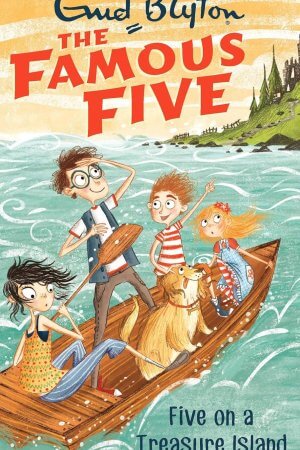
Famous Five: Five on a Treasure Island by Enid Blyton | Book 1 of the Classic Adventure Series
රු800.00
3 X Rs. 266.67 or 8% Cashback with
or 3 X රු266.67 with
or up to 4 X රු200.00 with
Adventure Fiction
රු2,550.00
3 X Rs. 850.00 or 8% Cashback with
or 3 X රු850.00 with
or up to 4 X රු637.50 with

Adventure Fiction
රු11,900.00
3 X Rs. 3,966.67 or 8% Cashback with
or 3 X රු3,966.67 with
or up to 4 X රු2,975.00 with
-20%

Classics & Literary Fiction
Original price was: රු2,450.00.රු1,950.00Current price is: රු1,950.00.
3 X Rs. 650.00 or 8% Cashback with
or 3 X රු650.00 with
or up to 4 X රු487.50 with

Action & Adventure
රු1,990.00
3 X Rs. 663.33 or 8% Cashback with
or 3 X රු663.33 with
or up to 4 X රු497.50 with

Classics & Literary Fiction
රු1,850.00
3 X Rs. 616.67 or 8% Cashback with
or 3 X රු616.67 with
or up to 4 X රු462.50 with
Reviews
There are no reviews yet.