
No products in the cart.
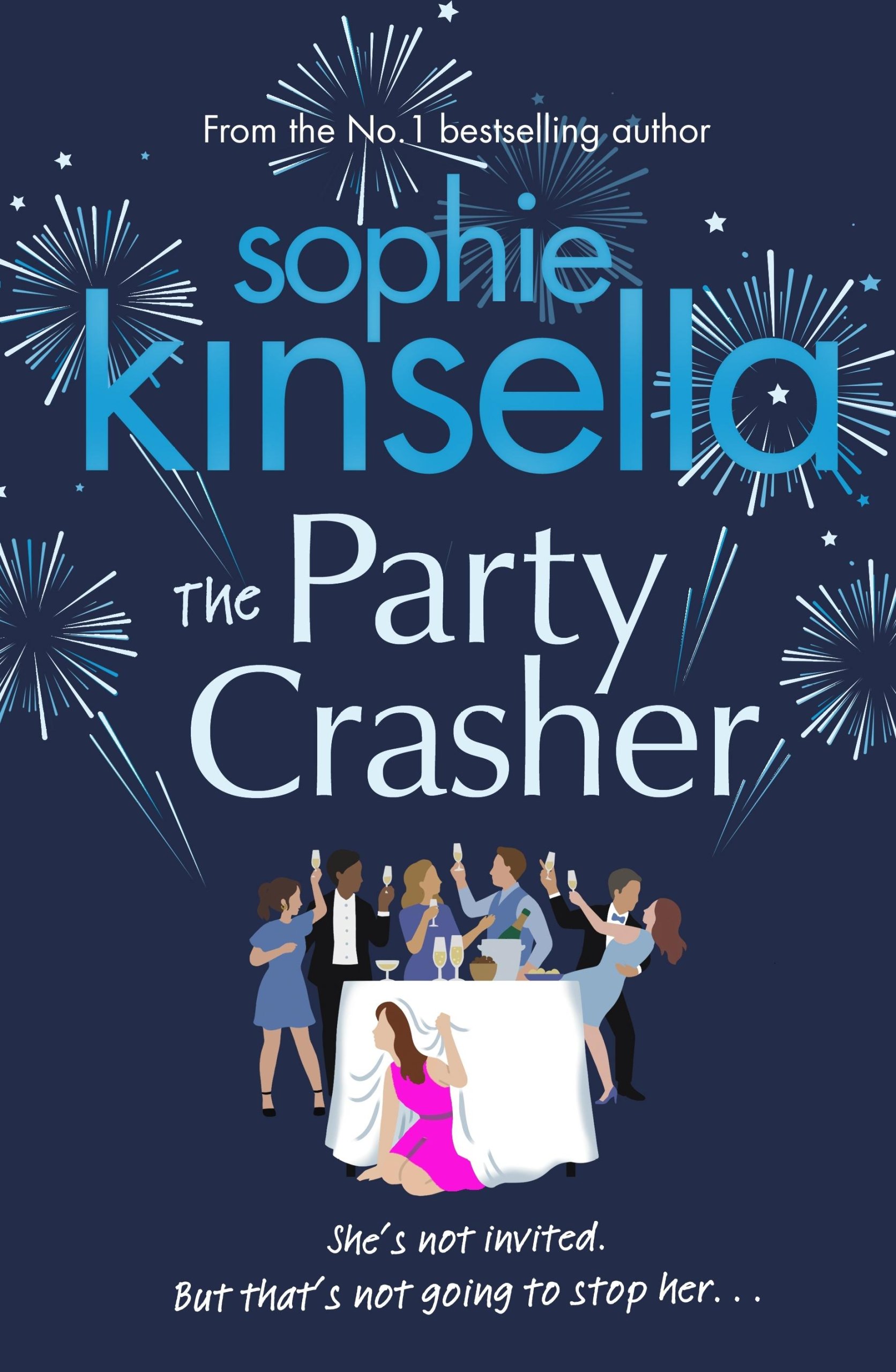
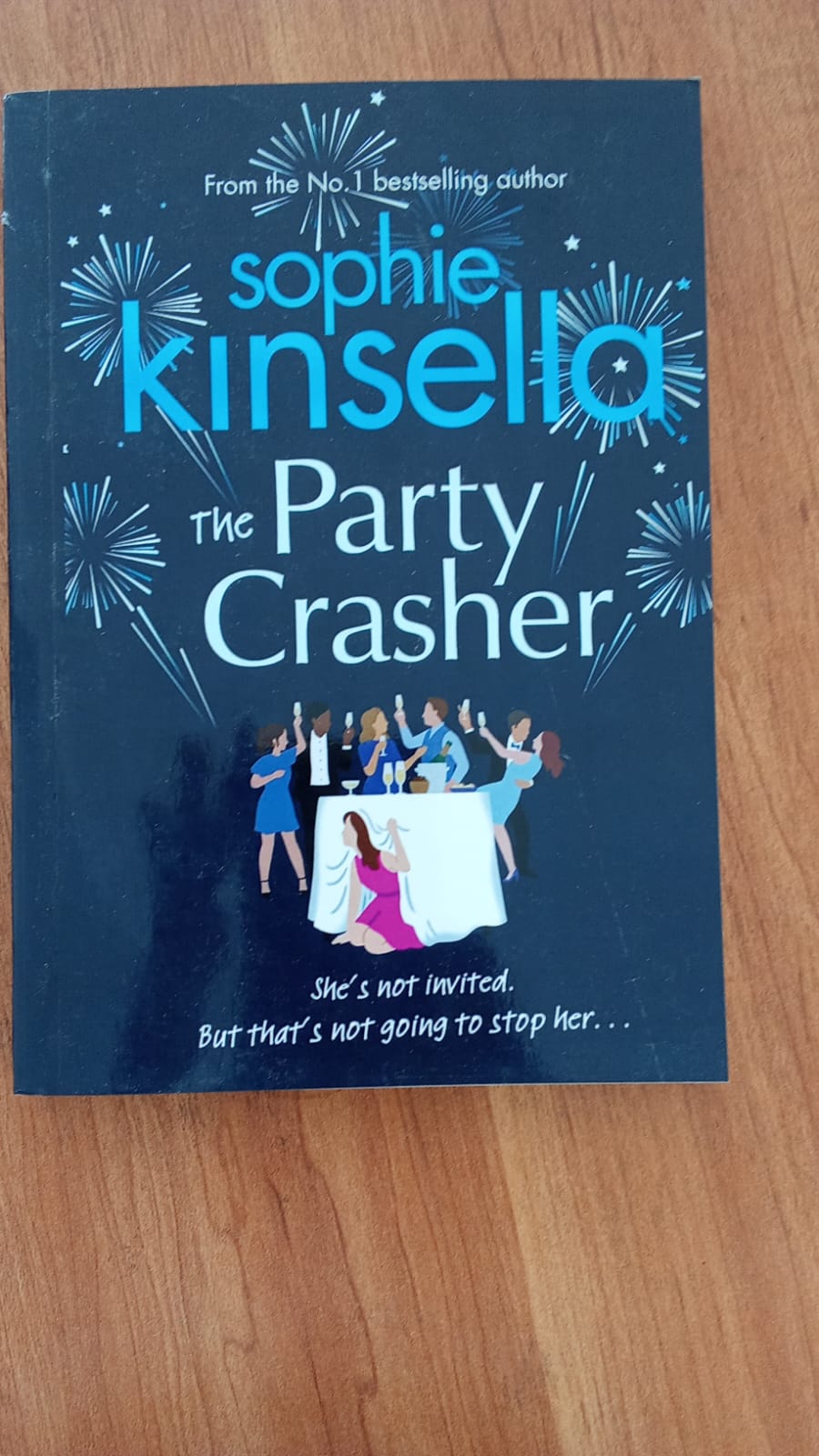



Party Crasher by Sophie Kinsella


රු2,150.00
3 X Rs. 716.67 or 8% Cashback with


or 3 X රු716.67 with


or up to 4 X රු537.50 with


The Party Crasher by Sophie Kinsella is a funny and heartwarming standalone novel about Effie Talbot, who secretly sneaks into her family home’s extravagant farewell party to recover a treasured set of Russian dolls. While hiding around the house, she overhears unexpected family secrets, encounters her ex-boyfriend Joe and begins questioning everything she thought she knew about her father, siblings and past. Filled with family drama, second chances, romance, misunderstandings and Sophie Kinsella’s signature humor, it is a delightful read for fans of contemporary romantic comedy.
4 in stock
The Party Crasher by Sophie Kinsella is a funny, warm and emotionally satisfying contemporary novel about family conflict, hidden truths, second chances and what happens when you secretly attend a party where everyone believes you are not there.
Effie Talbot is not exactly having the easiest time.
Her family has changed.
Her parents have split up.
Her father has moved on with a much younger new girlfriend, Krista.
Effie and her father have become increasingly distant.
And now Greenoaks, the rambling family home filled with years of memories, is being sold.
Before the house disappears from the family’s life forever, Krista decides to organize a spectacular house-cooling party.
There is just one complication.
Effie is not exactly welcome.
At first, she decides she does not care.
Then she remembers something important.
Her precious Russian dolls are still hidden inside the house.
She wants them back.
So Effie forms what should be a simple plan.
Sneak into Greenoaks.
Find the dolls.
Leave.
Nobody needs to know.
Naturally, almost nothing goes according to plan.
Instead of making a quick escape, Effie finds herself hiding throughout the house, moving through familiar rooms and trying desperately not to be discovered by family members and guests.
And because nobody knows she is listening, people begin saying things they might never say in front of her.
Effie overhears conversations.
Discovers secrets.
Learns unexpected truths about the people closest to her.
And begins realizing that perhaps the version of her family she has been carrying in her head is not entirely accurate.
Then there is Joe, the man she once loved and the ex-boyfriend she certainly did not expect to encounter while secretly crashing a party she was never supposed to attend.
What began as a mission to recover a childhood treasure gradually becomes something much bigger.
Effie has to confront her anger, her assumptions, her relationships and the possibility that moving forward may require seeing her family—and herself—differently.
The Party Crasher by Sophie Kinsella – Book Overview
The Party Crasher by Sophie Kinsella is a standalone contemporary novel combining family drama, romantic comedy and Sophie Kinsella’s trademark talent for placing an ordinary person inside an increasingly ridiculous situation.
The setup is immediately entertaining.
Effie is secretly inside a party.
Everyone believes she is absent.
That means she can overhear things she was never meant to hear.
At first this seems almost like a comic advantage.
Then the information becomes much more personal.
What do people say about you when they believe you cannot hear them?
What do family members reveal when they stop performing the version of themselves they show you?
And what happens when the truth is more complicated than the story you have been telling yourself?
Those questions give the novel emotional depth beneath its comedy.
Effie Talbot
Effie is the center of the story.
She is hurt.
Frustrated.
Stubborn.
Funny.
And convinced she understands exactly what has happened to her family.
Her father’s relationship with Krista has become a symbol of everything that feels wrong.
Effie believes the family she knew has been broken.
Greenoaks is being sold.
Relationships are changing.
People appear to be moving on without asking whether she is ready.
That makes her angry.
But anger is often easier to feel than grief.
A Family Changed by Divorce
One of the strongest themes in The Party Crasher by Sophie Kinsella is the emotional impact of divorce on adult children.
People sometimes assume that family separation is easier when children are older.
Not necessarily.
A family home can carry decades of emotional meaning.
Parents can still represent stability.
Family traditions can still matter enormously.
When that structure changes, even adult children may feel as though part of their identity has disappeared.
Greenoaks
Greenoaks is more than a house.
It represents:
Childhood.
Family memories.
Security.
Old routines.
Relationships.
The version of the Talbot family Effie believed would always exist.
Selling it therefore feels like much more than a property transaction.
It feels like the final confirmation that her old family life is gone.
The House-Cooling Party
Instead of a housewarming party, Krista throws a house-cooling party.
The idea is perfect for the novel.
The family is not celebrating moving into a new home.
They are saying goodbye to an old one.
That creates a strange emotional atmosphere.
It is festive and sad at the same time.
People drink.
Talk.
Remember.
Reveal things.
And Effie moves invisibly through the middle of it all.
Crashing Your Own Family’s Party
The comedy comes from the absurdity of Effie’s situation.
She belongs to this family.
She grew up in this house.
Yet she is effectively sneaking into her own history.
She hides.
Crawls around.
Avoids people.
Listens.
Almost gets caught.
Then stays longer than she intended.
It becomes increasingly difficult to remember that all she originally wanted was to retrieve one set of dolls.
The Russian Dolls
Effie’s Russian dolls function as more than a convenient excuse for returning to Greenoaks.
They represent childhood and memory.
Like the house itself, they connect Effie to a time when life seemed more stable.
The search for them therefore carries emotional meaning.
She thinks she is returning for an object.
In reality, she is being forced to confront everything that object represents.
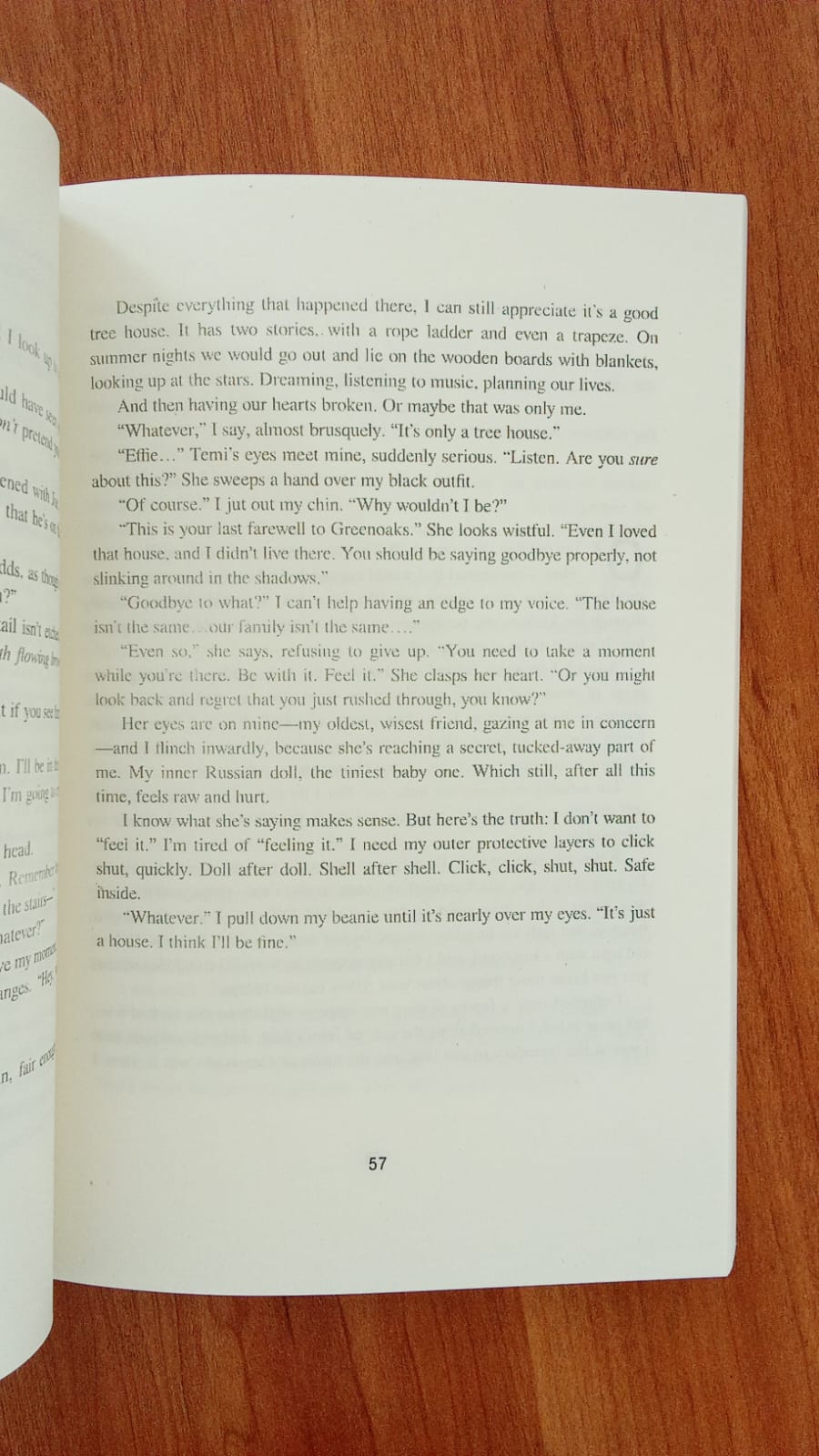
Secrets Inside Secrets
Russian nesting dolls contain one figure inside another.
That image fits beautifully with the structure of the novel.
People contain layers too.
A family member may appear:
Happy.
Confident.
Successful.
Selfish.
Uninterested.
But another reality may exist underneath.
Then another underneath that.
The more Effie listens, the more complicated everyone becomes.
What People Say When You Are Not There
This is one of the most entertaining ideas in The Party Crasher by Sophie Kinsella.
Most of us have wondered at some point:
What do people say about me when I leave the room?
Effie accidentally gets the answer.
Unfortunately, knowing everything people say is not always pleasant.
Some conversations hurt.
Others surprise her.
Still others reveal that she may have misunderstood a situation completely.
Family Misunderstandings
Families frequently assume they understand each other because they have known each other for years.
But familiarity can produce lazy assumptions.
You stop asking:
How are you really?
What happened?
Why did you do that?
Instead, everyone creates explanations.
Effie does this repeatedly.
The party forces those explanations to collide with reality.
Krista
Krista initially represents everything Effie dislikes about her father’s new life.
She is younger.
Glamorous.
Confident.
And connected to the breakup of the family structure Effie misses.
It is therefore easy for Effie to reduce her to a simple role:
The problem.
But The Party Crasher by Sophie Kinsella is interested in what happens when supposedly simple characters turn out to have more layers.
Parents Are People Too
Children often see parents primarily as:
Mum.
Dad.
Providers.
Authority figures.
But parents are also individuals with:
Needs.
Mistakes.
Romantic lives.
Fears.
Financial problems.
Regrets.
Effie gradually has to confront the uncomfortable truth that her father is not simply a character inside her version of the family story.
He has his own life.
Siblings
The party also gives Effie new insight into her siblings.
Family members can grow up inside the same house yet experience that family differently.
One child may remember stability.
Another remembers pressure.
One person may feel close to a parent.
Another may have been quietly struggling.
Shared childhood does not automatically mean shared interpretation.
Joe
Romantic tension enters through Joe, Effie’s former boyfriend.
Their history complicates an already complicated evening.
Seeing an ex is difficult enough.
Seeing an ex while hiding inside a party you were not invited to is considerably worse.
Joe also represents unfinished emotional business.
Effie has spent a great deal of time interpreting the past.
Now she has an opportunity to discover whether the story she believes about their relationship is completely accurate.
Second Chances
The Party Crasher by Sophie Kinsella contains a second-chance romantic element.
Second-chance stories work because they ask:
Can two people who failed once make something work differently?
But a genuine second chance requires more than recreating the past.
Something needs to change.
Communication.
Timing.
Understanding.
Maturity.
Honesty.
Otherwise, people simply repeat the same relationship.
First Impressions Versus Reality
The novel repeatedly plays with the gap between appearance and reality.
Effie thinks she knows:
Krista.
Her father.
Her siblings.
Joe.
Her own motivations.
Then the party begins dismantling those assumptions.
That is one reason overheard conversations are such an effective storytelling device.
People behave differently when they believe the person being discussed is absent.
Family Secrets
Every family has information that is not equally shared.
Sometimes these are harmless details.
Sometimes they are serious.
The Talbot family contains misunderstandings and secrets that gradually change how Effie sees what happened.
The revelations are important not because the family is uniquely dysfunctional, but because their situation feels recognizable.
Communication
Many of the problems in the novel exist because people are not communicating clearly.
Someone assumes.
Someone avoids the conversation.
Someone gets angry.
Someone says something defensive.
Then everyone behaves as though the interpretation has become fact.
This is painfully realistic.
Listening
Effie spends much of the party doing something she has not necessarily done enough of before:
Listening.
She cannot immediately interrupt.
Argue.
Defend herself.
Correct anyone.
That forces her to hear complete conversations.
Sometimes understanding another person requires listening longer than is comfortable.
Being Wrong
One surprisingly mature lesson from The Party Crasher by Sophie Kinsella is that realizing you were wrong does not have to be humiliating.
It can be liberating.
If your interpretation of a situation is wrong, then the future may contain possibilities you thought were gone.
Being wrong can open a door.
Pride
Pride often prevents reconciliation.
If you have spent months telling yourself:
They are wrong.
I am right.
They should apologize.
then changing your position can feel like losing.
But relationships are not always competitions.
Sometimes protecting pride costs more than admitting you misunderstood something.
Anger
Effie’s anger makes sense.
But the story also shows that anger can become self-reinforcing.
The more angry you become, the more evidence you notice supporting the anger.
You ignore contradictory evidence.
You stop asking questions.
You assume motives.
The party interrupts this cycle.
Grief for a Family That Changed
Effie is not only angry.
She is grieving.
Her old idea of family is disappearing.
Greenoaks is being sold.
Her father has a new partner.
Relationships have shifted.
Grief does not occur only after death.
People can grieve:
Homes.
Marriages.
Friendships.
Life stages.
Versions of the future they expected.
Letting Go
Letting go does not mean deciding the past was unimportant.
It means accepting that something has changed.
Effie cannot preserve her family simply by refusing to accept the new reality.
The house will still be sold.
Her parents’ relationship has still changed.
The challenge is learning what remains.
Home Is More Than a Building
Greenoaks matters deeply.
But eventually the story asks whether home is:
A specific building.
The people inside it.
The memories created there.
Or some combination of all three.
A physical home can disappear without erasing everything that happened inside it.
Growing Up
Although Effie is an adult, The Party Crasher by Sophie Kinsella is still partly a coming-of-age story.
Adulthood continues after people leave school.
You can still discover:
Your parents are complicated.
Your relationships need work.
Your assumptions are wrong.
You need to apologize.
You need to start again.
Growing up is not something completed at eighteen.
Humor
Sophie Kinsella is especially known for comic situations in which embarrassment escalates.
This novel gives her an ideal setup.
Effie is constantly trying not to be discovered.
She needs to move through a crowded house secretly.
She hears conversations she should not hear.
She encounters people she would rather avoid.
Every decision threatens to make the situation more ridiculous.
Comedy With Emotional Weight
The book remains light and entertaining, but the comedy does not erase the emotional material.
Underneath the hiding and awkward encounters are real questions about:
Divorce.
Family loyalty.
Anxiety.
Romantic disappointment.
Financial pressure.
Forgiveness.
That combination gives the novel warmth.
Is The Party Crasher a Romance?
Romance is important, particularly through Effie’s relationship history with Joe.
However, The Party Crasher by Sophie Kinsella is equally—or arguably more strongly—a family-centered contemporary comedy.
Readers expecting the entire story to focus only on a romantic couple should know that family reconciliation forms a major part of the novel.
Your BargainBooks classification under Contemporary Romance works for store navigation, but the book also fits contemporary women’s fiction/family fiction.
Is The Party Crasher a Standalone?
Yes.
The Party Crasher by Sophie Kinsella is a complete standalone novel.
It is not part of the Shopaholic series.
You do not need to read any other Sophie Kinsella book first.
Is It Part of Shopaholic?
No.
Effie Talbot is not Becky Bloomwood, and the story is completely separate from Kinsella’s Shopaholic novels.
Readers can begin directly with this book.
Is It a Heavy Book?
Generally no.
Although the story includes family breakdown, anxiety and emotional conflict, the overall tone is humorous, warm and optimistic rather than dark.
Penguin Random House describes it as humorous and heartwarming, centered on family and a second chance at love.
Who Is Sophie Kinsella?
Sophie Kinsella was the bestselling author of the Shopaholic series and standalone novels including Can You Keep a Secret?, I’ve Got Your Number, My Not So Perfect Life, The Undomestic Goddess, Surprise Me and The Burnout. Her fiction became especially popular for combining comedy with relationships, family and the embarrassing complications of everyday life.
Edition Note
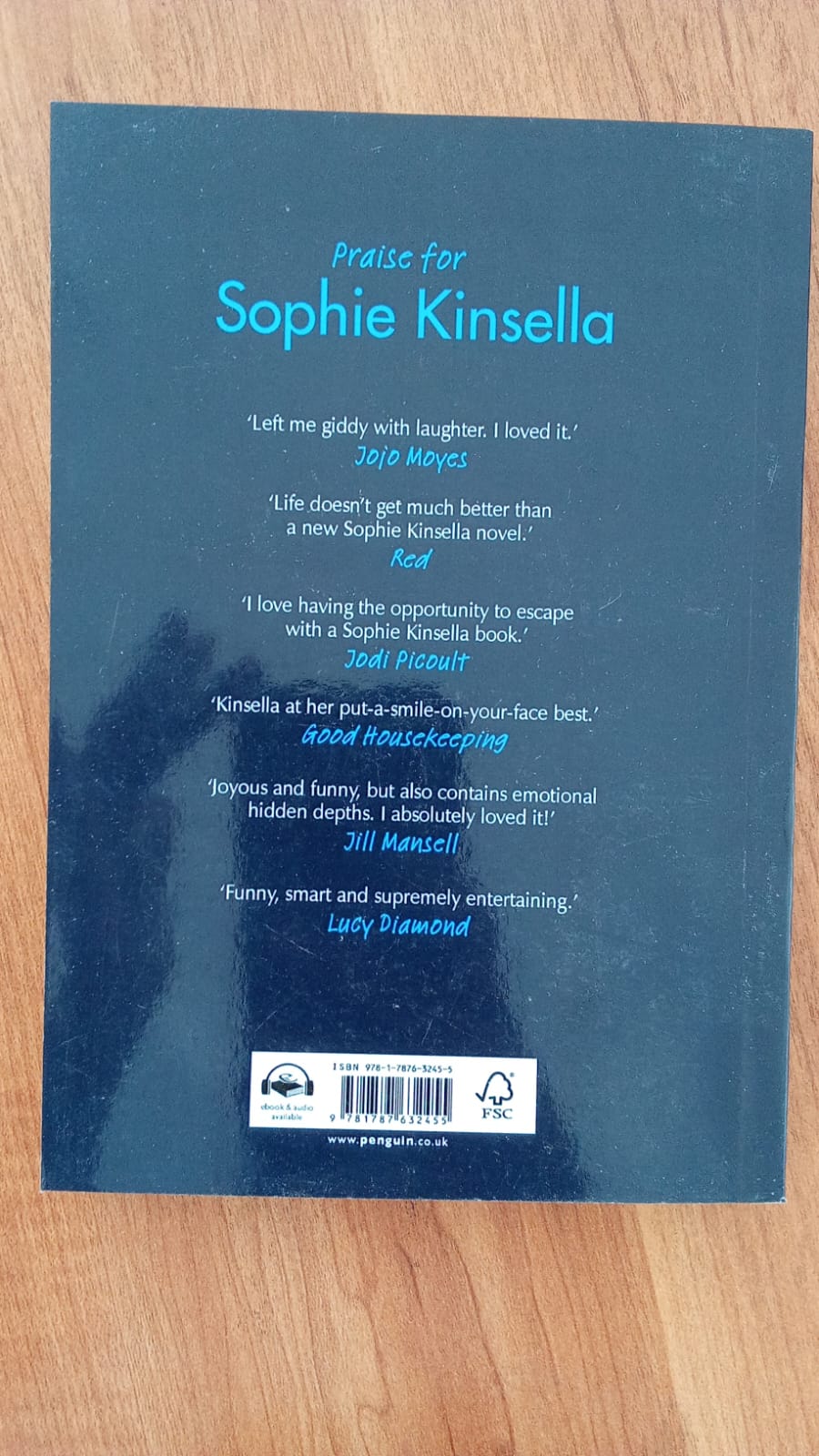
Different editions of The Party Crasher have different ISBNs and page counts.
For example, Penguin Random House lists the U.S. Dial Press trade paperback at 368 pages, ISBN 9780593449189, while UK editions use different ISBNs and may have different pagination.
For WooCommerce, use the ISBN and page count printed on the physical copy you currently stock rather than copying specifications from another regional edition.
Content Considerations
The novel includes family divorce and separation, estrangement between parent and child, romantic breakups, family arguments, financial worries, references to anxiety and emotional stress.
The material is handled primarily in a comedic and heartwarming contemporary-fiction style rather than as dark or graphic content.
Important Themes
The Party Crasher by Sophie Kinsella explores family, divorce, home, memory, misunderstandings, second chances, romance, siblings, parental relationships, pride, forgiveness, communication, anxiety, secrets, assumptions, growing up, nostalgia, honesty and learning to see people more completely.
7 Delightful Reasons to Read The Party Crasher by Sophie Kinsella
- The secret-party premise is wonderfully funny. Effie’s plan to slip into the house, retrieve her Russian dolls and disappear becomes increasingly complicated as she hides around a party filled with people she knows.
- The family story has genuine emotional depth. Beneath the comedy is a thoughtful exploration of how divorce and major family changes can affect even adult children.
- Overheard conversations completely change the story. Because people believe Effie is absent, she hears truths, assumptions and secrets she might never have discovered otherwise.
- The romance offers second-chance appeal. Running into Joe forces Effie to reconsider a relationship she believed she already understood.
- Greenoaks is an emotionally meaningful setting. The family home represents childhood, security and memory, making its sale an important part of Effie’s struggle to accept change.
- Sophie Kinsella balances humor with heart. Awkward hiding, family drama and romantic complications produce plenty of comedy without making the characters’ emotional problems meaningless.
- It is a complete standalone story. You do not need to know the Shopaholic series or any other Sophie Kinsella book before reading The Party Crasher by Sophie Kinsella.
Why Read The Party Crasher by Sophie Kinsella?
The Party Crasher by Sophie Kinsella is a great choice for readers who enjoy contemporary romance, family stories, romantic comedy, second-chance romance and novels where misunderstandings gradually give way to honesty.
It may especially appeal to readers who like books featuring chaotic family gatherings, complicated sibling relationships, ex-boyfriends, embarrassing situations and heroines who discover that their understanding of everyone around them is not quite as complete as they thought.
The novel is warm without being overly sentimental and funny without ignoring genuine emotional pain.
Its strongest message is surprisingly simple:
Families can become messy without becoming meaningless.
Relationships can change without every connection disappearing.
And sometimes the person who most needs to hear the truth is the one hiding under the table.
Who Should Read This Book?
The Party Crasher by Sophie Kinsella is particularly suitable for Sophie Kinsella fans, contemporary-fiction readers, romantic-comedy fans, readers who enjoy second-chance romance, family-drama readers and anyone looking for an entertaining standalone novel with both humor and emotional warmth.
It is also a good choice for readers who enjoy stories about returning home and discovering that the place—and people—they thought they understood have changed.
The Party Crasher by Sophie Kinsella – Sometimes You Need to Hear the Truth Before You Can Move Forward
The Party Crasher by Sophie Kinsella begins with Effie believing she already knows the story.
Her family broke apart.
Her father changed.
Krista is the problem.
Her old home is being taken away.
Her past relationship is finished.
She is hurt, and she has explanations for why.
Then she walks back into Greenoaks.
Secretly.
At first, the mission is about Russian dolls.
Something from childhood.
Something small enough to hold.
Something that belongs to the version of her life she does not want to lose.
But as Effie moves through the party unseen, something unusual happens.
She gets to observe her family without being part of the conversation.
And the story she has been telling herself begins changing.
People are not exactly who she thought they were.
Some are struggling.
Some have been misunderstood.
Some have made mistakes.
Some care more than she realized.
Even Effie’s own behavior begins looking different when viewed from another perspective.
That is why the party becomes much more important than a comic setup.
It becomes a place where Effie finally sees beneath the surface.
Not because everyone suddenly sits down for a perfectly organized family conversation.
But because she accidentally hears the messy truth.
The novel does not argue that every conflict disappears when people talk.
Some hurt is real.
Some mistakes still matter.
But relationships cannot improve while everyone is fighting against versions of each other that may not be accurate.
Effie eventually has to decide whether she wants to remain hidden.
Not merely physically hidden at the party.
Emotionally hidden too.
Because stepping back into the room means accepting that she may need to:
Listen.
Speak honestly.
Forgive.
Apologize.
Take another chance.
And accept that the future will not look exactly like the past.
For readers who love funny contemporary fiction with family drama, romantic tension, second chances and plenty of awkward situations, The Party Crasher by Sophie Kinsella is a warm, witty story about discovering that sometimes the family you thought was broken is simply changing—and sometimes crashing the party is the only way to finally understand what everyone has been trying to say.
Learn more about The Party Crasher by Sophie Kinsella on the official Sophie Kinsella website.
Explore more romance and contemporary fiction books at Bargain Books.
Be the first to review “Party Crasher by Sophie Kinsella”
Related products
-14%

Out of stock
Adventure Fiction
Original price was: රු3,650.00.රු3,150.00Current price is: රු3,150.00.
3 X Rs. 1,050.00 or 8% Cashback with
or 3 X රු1,050.00 with
or up to 4 X රු787.50 with
Contemporary romance
රු1,950.00
3 X Rs. 650.00 or 8% Cashback with
or 3 X රු650.00 with
or up to 4 X රු487.50 with
-16%
Out of stock
Contemporary romance
Original price was: රු3,150.00.රු2,650.00Current price is: රු2,650.00.
3 X Rs. 883.33 or 8% Cashback with
or 3 X රු883.33 with
or up to 4 X රු662.50 with
-14%

Contemporary romance
Original price was: රු3,600.00.රු3,100.00Current price is: රු3,100.00.
3 X Rs. 1,033.33 or 8% Cashback with
or 3 X රු1,033.33 with
or up to 4 X රු775.00 with

Out of stock
Children & Young Adult
රු3,200.00
3 X Rs. 1,066.67 or 8% Cashback with
or 3 X රු1,066.67 with
or up to 4 X රු800.00 with
-16%
Contemporary romance
Original price was: රු3,100.00.රු2,600.00Current price is: රු2,600.00.
3 X Rs. 866.67 or 8% Cashback with
or 3 X රු866.67 with
or up to 4 X රු650.00 with
-20%

Contemporary romance
Original price was: රු2,050.00.රු1,650.00Current price is: රු1,650.00.
3 X Rs. 550.00 or 8% Cashback with
or 3 X රු550.00 with
or up to 4 X රු412.50 with
-17%
Contemporary romance
Original price was: රු2,950.00.රු2,450.00Current price is: රු2,450.00.
3 X Rs. 816.67 or 8% Cashback with
or 3 X රු816.67 with
or up to 4 X රු612.50 with
Reviews
There are no reviews yet.