
No products in the cart.
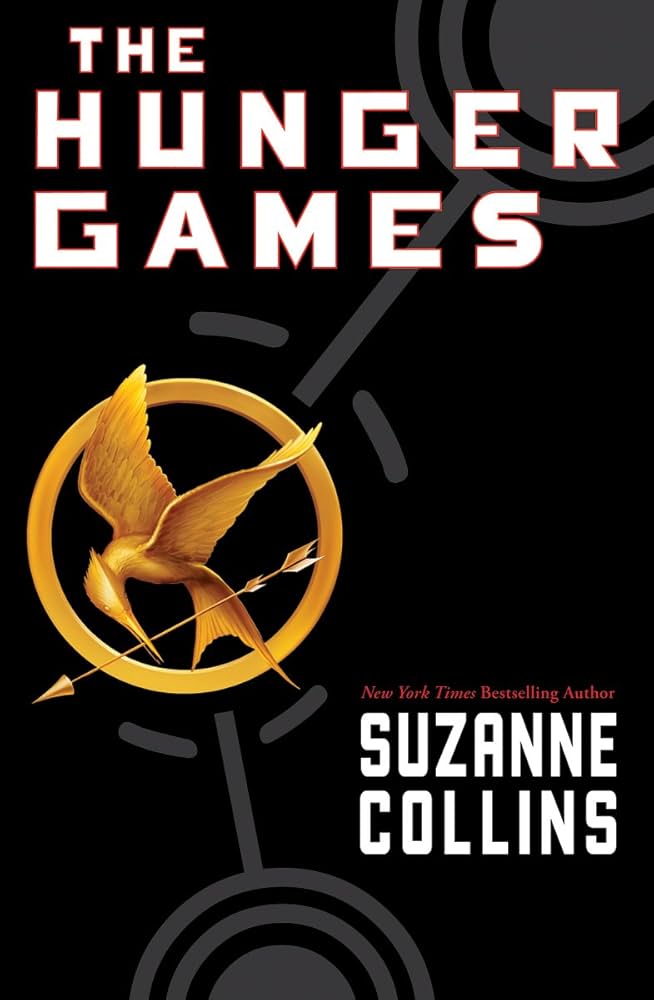











The Hunger Games – Book Description
The Hunger Games by Suzanne Collins is the explosive first novel in the original Hunger Games trilogy, introducing readers to Katniss Everdeen and the brutal dystopian nation of Panem.
In Panem, the wealthy Capitol controls twelve surrounding districts.
Every year, each district is forced to send one boy and one girl between the ages of twelve and eighteen to participate in a terrifying televised competition known as the Hunger Games.
Twenty-four young people enter the arena.
Only one is expected to survive.
For the Capitol, the Games are entertainment.
For the districts, they are a reminder of who holds power.
When Katniss Everdeen’s younger sister Prim is selected to represent District 12, Katniss makes an immediate decision that changes everything.
She volunteers to take Prim’s place.
From that moment, The Hunger Games by Suzanne Collins becomes an unforgettable story of survival, courage, sacrifice, loyalty, political power, friendship, and resistance.
The Hunger Games by Suzanne Collins – Book Overview
The Hunger Games by Suzanne Collins takes place in a future society called Panem, built in the ruins of what was once North America.
At the centre is the Capitol.
It is wealthy, technologically advanced, and filled with luxury.
Outside the Capitol are twelve districts where many people live under very different conditions.
District 12, where Katniss lives, is particularly poor.
Katniss has learned from a young age how to survive.
She hunts.
She gathers food.
She protects her younger sister.
She helps support her family.
These skills become incredibly important when she is selected for a competition unlike anything she has experienced before.
The Hunger Games are not simply a sporting event.
They are a tool of political control.
By forcing every district to sacrifice children each year, the Capitol reminds the population of the consequences of rebellion.
But when Katniss enters the arena, something begins to change.
Meet Katniss Everdeen
Katniss Everdeen is the central character of The Hunger Games by Suzanne Collins.
She is sixteen years old and comes from District 12.
Katniss is not introduced as someone who wants fame.
She does not dream of becoming a hero.
Her priorities are much simpler.
Protect her family.
Find food.
Survive.
After losing her father, Katniss becomes an important provider for her mother and younger sister.
Her experience hunting outside District 12 helps her develop several important abilities.
She knows how to use a bow and arrow.
She understands forests.
She can identify useful plants.
She knows how to move quietly.
And most importantly, she knows what it means to survive when resources are limited.
These abilities become major advantages inside the Hunger Games arena.
Katniss Volunteers for Prim
One of the defining moments in The Hunger Games by Suzanne Collins happens during the Reaping.
The Reaping is the event where the district’s tributes are selected.
When Prim’s name is called, Katniss reacts immediately.
She volunteers.
This decision reveals one of Katniss’s most important qualities.
Her courage is closely connected to love.
She does not volunteer because she believes she will become famous.
She does it because she cannot allow her younger sister to face almost certain death.
That sacrifice becomes the emotional foundation of the novel.
Throughout the story, Katniss repeatedly faces situations where protecting someone else may place her own survival at risk.
Peeta Mellark
The male tribute selected from District 12 is Peeta Mellark.
Peeta and Katniss already have a connection from their past.
But entering the Hunger Games together creates an extremely complicated relationship.
Inside the arena, everyone is technically a competitor.
Only one tribute is expected to survive.
That means friendship can become dangerous.
Trust can become dangerous.
Love can become dangerous.
Peeta’s personality is different from Katniss’s.
Katniss is highly focused on physical survival.
Peeta understands people and public perception particularly well.
Their different strengths become important throughout the novel.
The Capitol
The Capitol is one of the most fascinating elements of The Hunger Games by Suzanne Collins.
Its citizens live in enormous luxury compared with people in districts such as District 12.
Food is plentiful.
Fashion is extravagant.
Technology is advanced.
Entertainment is everywhere.
The difference between the Capitol and the districts creates one of the novel’s most important themes:
inequality.
The Capitol controls resources while many district residents struggle to survive.
Even more disturbingly, Capitol audiences treat the Hunger Games as entertainment.
The tributes’ fear, suffering, alliances, and deaths become part of a television spectacle.
Suzanne Collins uses this setting to explore questions about entertainment, power, inequality, and how societies can become disconnected from the suffering of others.
Enter the Hunger Games Arena
The arena is where The Hunger Games by Suzanne Collins becomes an intense survival thriller.
Katniss faces much more than other competitors.
The arena itself is dangerous.
Food and water may be difficult to find.
Weather can create problems.
Injuries can become deadly.
The environment may change unexpectedly.
Katniss must constantly evaluate risks.
Should she move?
Should she hide?
Should she trust someone?
Should she form an alliance?
Finding the wrong answer can have fatal consequences.
Her years of surviving around District 12 become incredibly valuable.
But physical ability alone is not enough.
The Games also require psychological strength.
Haymitch Abernathy
Katniss and Peeta are mentored by Haymitch Abernathy, a previous Hunger Games victor from District 12.
At first, Haymitch may not appear to be an ideal mentor.
But he understands the Games in a way most people cannot.
He knows how the Capitol operates.
He understands sponsors.
He understands audience reactions.
And he knows that surviving the arena requires more than simply fighting.
Presentation matters.
Strategy matters.
Public support matters.
This introduces another important aspect of the novel.
The Hunger Games are both a deadly competition and a television production.
Tributes must survive physically while also becoming characters that audiences want to support.
Survival Versus Humanity
One of the strongest themes in The Hunger Games by Suzanne Collins is the conflict between survival and humanity.
The Capitol designs the Games to make tributes see each other as enemies.
If everyone believes survival requires becoming completely ruthless, the Capitol wins on another level.
Katniss therefore faces an important question.
How can someone survive without losing their humanity?
Compassion can be dangerous.
Trust can be dangerous.
Helping someone else can reduce your own chances of survival.
Yet refusing all human connection can also destroy something important.
This moral conflict gives the novel much greater depth than a simple action story.
Friendship and Alliances
Alliances become important inside the arena.
Some tributes work together because there is strength in numbers.
Others remain independent.
Katniss must constantly decide whether someone can be trusted.
The Hunger Games by Suzanne Collins explores how extraordinary circumstances can create powerful relationships.
When survival is uncertain, small acts of kindness become incredibly meaningful.
Sharing food.
Offering help.
Protecting someone.
Remembering a promise.
These moments provide emotional contrast to the brutality of the Games.
Power and Political Control
Although The Hunger Games by Suzanne Collins is highly entertaining, it also contains significant political themes.
The Capitol controls Panem through fear.
The annual Games communicate a message:
The districts rebelled once.
They lost.
The Capitol has not forgotten.
By forcing the districts to watch their own children compete, the government turns punishment into public entertainment.
But authoritarian systems depend partly on people believing resistance is impossible.
Katniss does not initially enter the arena intending to challenge the entire political system.
She simply wants to survive.
Yet individual actions can sometimes acquire meanings far beyond what the person originally intended.
This idea becomes extremely important across the series.
Inequality in Panem
Another powerful theme in The Hunger Games by Suzanne Collins is economic inequality.
Katniss comes from a place where hunger is common.
People struggle for basic necessities.
Meanwhile, the Capitol enjoys extraordinary abundance.
The contrast is intentionally uncomfortable.
People in the Capitol can treat food and fashion casually because scarcity is not part of their everyday lives.
Katniss understands food differently.
For her, food can mean survival.
This difference reveals how dramatically people’s experiences can be shaped by where they are born.
Media and Entertainment
The Hunger Games are televised.
This means everything becomes part of a performance.
Interviews.
Clothing.
Relationships.
Emotions.
Drama.
The tributes need sponsors, and audiences are more likely to support competitors they find memorable.
The Hunger Games by Suzanne Collins therefore explores the power of media.
What happens when real suffering becomes entertainment?
What happens when audiences become emotionally invested in a competition while ignoring the system that created it?
And how much of a person’s public identity belongs to them when powerful institutions control the story?
These questions make the novel feel relevant far beyond its fictional setting.
Courage and Sacrifice
Courage in The Hunger Games by Suzanne Collins does not mean never feeling afraid.
Katniss experiences fear repeatedly.
She knows how dangerous the arena is.
What makes her courageous is that she acts despite that fear.
Her first major act of courage occurs when she volunteers for Prim.
But sacrifice continues throughout the book.
Characters must decide what they are willing to risk for other people.
This gives the novel significant emotional power.
A Strong Female Protagonist
Katniss became one of modern young adult fiction’s most recognizable protagonists for good reason.
She is capable but imperfect.
Independent but vulnerable.
Compassionate but sometimes emotionally guarded.
She can make intelligent decisions and still make mistakes.
The Hunger Games by Suzanne Collins allows Katniss to be strong without making her invincible.
Much of her strength comes from experience.
She survived difficult circumstances before entering the Games.
The arena simply forces her to use those skills under even more extreme conditions.
Fast-Paced Dystopian Adventure
One reason The Hunger Games by Suzanne Collins became such a popular novel is its pace.
The story combines:
- Survival
- Action
- Suspense
- Romance
- Political conflict
- Friendship
- Strategy
- Mystery
- Emotional drama
Once Katniss enters the Games, danger can appear at almost any moment.
At the same time, the larger questions about Panem keep the story from becoming only an action novel.
Readers want to know whether Katniss survives.
But they also begin wondering what her actions might mean for the world outside the arena.
The Hunger Games Book Series
The Hunger Games by Suzanne Collins is the first novel in the original trilogy.
The trilogy reading order is:
1. The Hunger Games
Katniss Everdeen enters the deadly Hunger Games after volunteering to protect Prim.
2. Catching Fire
The consequences of Katniss’s actions begin spreading throughout Panem.
3. Mockingjay
The conflict between the Capitol and the districts reaches its powerful conclusion.
Readers should begin with The Hunger Games before continuing to Catching Fire and Mockingjay.
From Book to Blockbuster Movie
The Hunger Games by Suzanne Collins was adapted into the hugely successful 2012 film The Hunger Games, starring Jennifer Lawrence as Katniss Everdeen, Josh Hutcherson as Peeta Mellark, and Liam Hemsworth as Gale Hawthorne.
Readers who discovered the story through the movie can experience additional details through the original novel.
Because the book follows Katniss closely, readers gain greater access to her thoughts, fears, judgments, memories, and motivations.
This makes the novel an excellent choice even for people who already know the film.
7 Powerful Reasons to Read The Hunger Games
There are many reasons The Hunger Games by Suzanne Collins remains so compelling:
- Katniss Everdeen is an unforgettable protagonist – Brave, intelligent, vulnerable, and deeply protective of her family.
- The survival story is intensely suspenseful – The arena keeps the stakes extremely high.
- Panem is a fascinating dystopian world – The Capitol and districts create a powerful setting.
- It explores meaningful social themes – Including inequality, authoritarian power, media, violence, and political control.
- Relationships add emotional depth – Katniss’s connections with Prim, Peeta, Haymitch, Gale, and others shape her choices.
- The story combines action with deeper ideas – Readers get both an exciting adventure and thought-provoking themes.
- It begins an unforgettable trilogy – The first book establishes events that grow dramatically in Catching Fire and Mockingjay.
Why Read The Hunger Games by Suzanne Collins?
The Hunger Games by Suzanne Collins is an excellent choice for readers interested in:
- Dystopian fiction
- Young adult novels
- Action and adventure
- Survival stories
- Strong female protagonists
- Political fiction
- Science fiction
- Rebellion
- Friendship
- Romance
- Suspense
- Social commentary
- Movie adaptations
- Suzanne Collins books
It combines a highly readable story with deeper questions about society, power, humanity, and freedom.
Who Should Read This Book?
The Hunger Games by Suzanne Collins may especially appeal to:
- Teen readers
- Young adult fiction fans
- Dystopian-fiction readers
- Science-fiction fans
- Adventure readers
- Fans of strong female characters
- Readers who enjoyed the Hunger Games films
- Readers who enjoy survival stories
- Fans of fast-paced fiction
- Readers looking to start the Hunger Games series
The novel is officially positioned by Scholastic for readers aged 12 and above.
An Unforgettable Beginning to the Hunger Games Trilogy
The Hunger Games by Suzanne Collins begins with one girl’s decision to protect her younger sister and develops into a gripping story about survival, power, inequality, courage, and resistance.
Katniss Everdeen enters the arena expecting only one challenge:
Stay alive.
But survival becomes much more complicated when friendship, loyalty, compassion, public perception, and political power become involved.
The Capitol wants entertainment.
The districts are expected to watch helplessly.
Katniss simply wants to return home.
Yet her actions begin creating consequences that extend far beyond the arena.
For readers looking for a fast-paced dystopian novel filled with action, memorable characters, emotional relationships, political themes, survival, and suspense, The Hunger Games by Suzanne Collins is an essential read and the perfect starting point for the original trilogy.
Learn more about The Hunger Games series on the official Hunger Games website.
Explore more young adult and dystopian books at Bargain Books.
Be the first to review “Hunger Games Movies by Suzanne Collins”
Related products

Science Fiction
රු2,150.00
3 X Rs. 716.67 or 8% Cashback with


or 3 X රු716.67 with


or up to 4 X රු537.50 with

Young Adult Fiction
රු1,900.00
3 X Rs. 633.33 or 8% Cashback with
or 3 X රු633.33 with
or up to 4 X රු475.00 with

Out of stock
රු850.00
3 X Rs. 283.33 or 8% Cashback with
or 3 X රු283.33 with
or up to 4 X රු212.50 with
-34%
Out of stock
Original price was: රු2,900.00.රු1,900.00Current price is: රු1,900.00.
3 X Rs. 633.33 or 8% Cashback with
or 3 X රු633.33 with
or up to 4 X රු475.00 with

Out of stock
Children & Young Adult
රු1,600.00
3 X Rs. 533.33 or 8% Cashback with
or 3 X රු533.33 with
or up to 4 X රු400.00 with
Out of stock
Children & Young Adult
රු2,500.00
3 X Rs. 833.33 or 8% Cashback with
or 3 X රු833.33 with
or up to 4 X රු625.00 with
-38%

Original price was: රු2,900.00.රු1,800.00Current price is: රු1,800.00.
3 X Rs. 600.00 or 8% Cashback with
or 3 X රු600.00 with
or up to 4 X රු450.00 with
-13%
Out of stock
Fiction & Literature
The Inheritance Games: Deadly stakes, thrilling twists, and juicy secrets by Jennifer Lynn Barnes
Original price was: රු2,400.00.රු2,100.00Current price is: රු2,100.00.
3 X Rs. 700.00 or 8% Cashback with
or 3 X රු700.00 with
or up to 4 X රු525.00 with
Reviews
There are no reviews yet.