
No products in the cart.
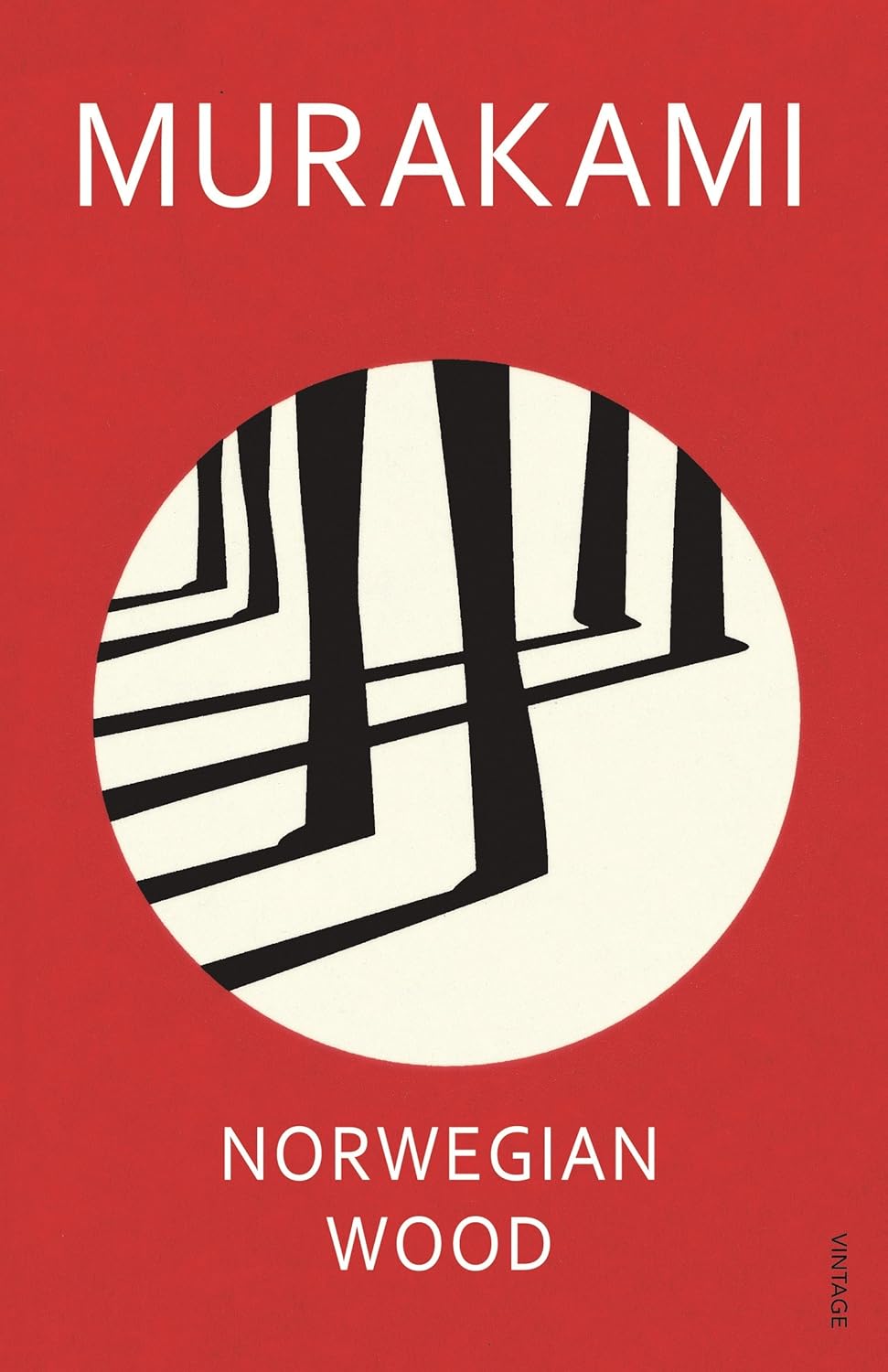





Norwegian Wood: Million-Copy Bestseller by Haruki Murakami – A Captivating Tale of Love and Loss


රු1,800.00
3 X Rs. 600.00 or 8% Cashback with


or 3 X රු600.00 with


or up to 4 X රු450.00 with


Norwegian Wood by Haruki Murakami is a haunting coming-of-age novel set in 1960s Tokyo, following university student Toru Watanabe as he struggles with grief, first love and the memory of his late friend Kizuki. Torn between the fragile, introspective Naoko and the lively, independent Midori, Toru must confront love, loneliness, mental health and the difficult choice to keep living after loss. Beautifully melancholic and deeply human, this standalone literary novel is an excellent introduction to Murakami’s more realistic fiction.
2 in stock
Norwegian Wood by Haruki Murakami is a haunting and deeply emotional literary novel about first love, grief, memory, loneliness and the difficult transition from youth into adulthood.
Years later, Toru Watanabe hears the Beatles song “Norwegian Wood,” and the music pulls him back into memories of his university years in Tokyo.
He remembers Naoko.
Quiet.
Beautiful.
Emotionally fragile.
And deeply connected to a tragedy neither of them has truly escaped.
Toru and Naoko share a bond created partly through Kizuki, Toru’s best friend and Naoko’s boyfriend, whose death leaves a permanent space inside both of their lives.
As Toru begins university, his relationship with Naoko grows more intimate.
But love cannot automatically heal grief.
Naoko increasingly struggles with her mental health and eventually withdraws from ordinary university life.
Meanwhile, Toru meets Midori Kobayashi, a completely different presence.
Where Naoko often seems trapped by memory and sadness, Midori is direct, unpredictable, funny, emotionally open and intensely alive.
Toru is gradually caught between two relationships—and, symbolically, between two ways of living.
Norwegian Wood by Haruki Murakami is not a conventional love triangle or simple romance.
It is a novel about what love can and cannot do.
About the people we lose.
About the parts of youth we can never return to.
And about learning how to continue living when grief has changed everything.
Norwegian Wood by Haruki Murakami – Book Overview
Norwegian Wood by Haruki Murakami begins from memory.
An older Toru hears a song.
Suddenly the past returns with extraordinary clarity.
A landscape.
A voice.
A young woman.
A period of his life that still carries emotional weight years later.
This framing immediately tells readers something important:
The story is not simply about what happened.
It is about how the past survives inside us.
Toru Watanabe
Toru is the central narrator.
He is thoughtful.
Observant.
Reserved.
Often lonely.
He attends university in Tokyo but feels somewhat detached from the social and political excitement around him.
He reads.
Walks.
Listens.
Forms relationships.
And spends a great deal of time trying to understand what other people need from him.
Toru is not a dramatic fantasy hero.
His struggle is emotional.
How do you care for another person without disappearing into their pain?
How do you remain loyal to the dead while still choosing life?
Kizuki
Kizuki is physically absent through much of the novel, yet emotionally present everywhere.
He was:
Toru’s closest friend.
Naoko’s boyfriend.
A central part of their small emotional world.
His death changes both Toru and Naoko.
This is one of Murakami’s strongest ideas:
A person can disappear physically while continuing to shape the lives of those left behind.
Grief
Grief is central to Norwegian Wood by Haruki Murakami.
Murakami does not present grief as a clean process.
There is no simple sequence:
Loss.
Sadness.
Acceptance.
Finished.
Grief returns unexpectedly.
Through music.
Places.
Conversations.
Memories.
Relationships.
The novel understands that people can continue functioning while carrying something unresolved inside them.
Naoko
Naoko is one of the novel’s most emotionally delicate characters.
She loves Toru in her own way.
But she is also struggling with profound psychological pain.
Her relationship with grief is complicated.
The people around her may want to help.
But wanting someone to recover does not automatically make recovery possible.
Love Cannot Cure Everything
This is one of the most important ideas in Norwegian Wood by Haruki Murakami.
Popular stories sometimes suggest:
Love heals everything.
If you love someone enough, they will become well.
Murakami presents something more painful and realistic.
Love can provide:
Companionship.
Understanding.
Support.
Warmth.
But serious mental-health struggles may require far more than the love of one person.
Toru cannot simply love Naoko into becoming well.
Mental Health
Naoko’s psychological difficulties are treated as a major part of the story.
The novel explores:
Depression.
Emotional instability.
Trauma.
Isolation.
Suicidal thoughts and death.
Readers should therefore approach the book knowing that its emotional material can be very heavy.
The Sanatorium
Naoko eventually spends time in a peaceful treatment environment away from Tokyo.
This creates a striking contrast.
Tokyo is:
Crowded.
Changing.
Political.
Noisy.
The sanatorium is:
Quiet.
Natural.
Slow.
Separated.
But physical peace does not automatically produce emotional peace.
Reiko Ishida
At the sanatorium, Toru meets Reiko Ishida.
Reiko becomes an important emotional and musical presence in the novel.
She has her own difficult history.
She also understands vulnerability in ways many other characters do not.
Reiko often acts as:
Listener.
Friend.
Guide.
Musician.
Her presence gives some of the book’s darkest sections unexpected warmth.
Music
Music is deeply woven through Norwegian Wood by Haruki Murakami.
The title itself evokes the Beatles song.
But music throughout the novel acts as:
Memory.
Connection.
Atmosphere.
Emotional shorthand.
A song can contain an entire period of someone’s life.
Anyone who has heard a particular song and instantly remembered a person, place or moment will understand this immediately.
Why the Title Matters
“Norwegian Wood” is not merely a stylish title.
The song becomes associated with Toru’s memory of Naoko.
When he hears it, an entire emotional world returns.
Music can sometimes preserve memories more powerfully than deliberate thought.
Midori Kobayashi
Midori is almost the opposite of Naoko in emotional energy.
She is:
Bold.
Talkative.
Funny.
Unpredictable.
Sexually frank.
Alive in a way Toru finds difficult to ignore.
Her relationship with him introduces another possibility.
Not forgetting the past.
But continuing despite it.
Naoko and Midori
Readers sometimes reduce the novel to:
Naoko versus Midori.
But that misses much of its depth.
They represent different relationships with:
Memory.
Life.
Pain.
Communication.
Toru’s difficulty choosing between them is also a difficulty choosing how he wants to live.
The Past Versus the Present
Naoko is deeply tied to Toru’s past.
Kizuki.
Youth.
Grief.
A shared world that no longer exists.
Midori belongs much more strongly to Toru’s present.
She asks him to:
Respond.
Participate.
Choose.
Be emotionally available now.
This tension gives the novel much of its emotional structure.
Coming of Age
Norwegian Wood by Haruki Murakami is fundamentally a coming-of-age novel.
But adulthood does not arrive through one dramatic achievement.
It arrives through:
Loss.
Sex.
Responsibility.
Relationships.
Confusion.
Independence.
Learning that some questions have no satisfying answer.
Toru becomes older partly by realizing that adulthood does not protect people from pain.
University Life
The novel is set partly against university life in Tokyo during the late 1960s.
Students are politically active.
Campuses experience unrest.
Social expectations are changing.
Yet Toru often remains emotionally distant from organized activism.
This creates another contrast.
History is happening publicly.
Toru’s most important struggles are happening privately.
Student Protest
The late-1960s setting places the characters inside a generation questioning authority and social structures.
However, Norwegian Wood by Haruki Murakami is not primarily a political novel.
Murakami is more interested in how individual people experience youth during a period of cultural change.
Loneliness
Almost every major character experiences loneliness differently.
Toru feels disconnected.
Naoko retreats inward.
Midori wants closeness but fears abandonment.
Reiko lives apart from ordinary society.
The novel repeatedly asks whether people can truly understand one another.
Human Connection
Despite the loneliness, characters keep reaching toward one another.
They talk.
Write letters.
Walk.
Eat.
Listen to music.
Sleep together.
Visit one another.
Sometimes connection works.
Sometimes it fails.
But the desire remains.
Letters
Letters play an important role.
Before instant messaging and smartphones, written correspondence required:
Time.
Waiting.
Reflection.
Distance.
A letter could become emotionally significant precisely because the sender and receiver were separated.
Communication
Characters sometimes speak honestly.
At other times, they fail completely to say what they need.
This creates one of the novel’s painful truths:
Caring about someone does not automatically mean you know how to communicate with them.
Sexuality
Sexuality is an important part of Norwegian Wood by Haruki Murakami.
The novel contains explicit conversations and sexual situations.
Sex can represent:
Love.
Loneliness.
Comfort.
Curiosity.
Desire.
Confusion.
Sometimes intimacy brings people closer.
Sometimes it reveals how emotionally distant they actually are.
Adult Content
This is not a children’s book or light teen romance.
Readers should expect mature discussion of:
Sex.
Mental illness.
Suicide.
Death.
Grief.
Emotional trauma.
Murakami treats sexuality as part of the characters’ emotional development, but the material is clearly adult.
Nagasawa
Toru’s university acquaintance Nagasawa represents another approach to relationships.
He is intelligent.
Ambitious.
Confident.
But often emotionally detached.
His behavior toward women challenges Toru’s values and exposes the emptiness that can exist beneath charisma and achievement.
Hatsumi
Hatsumi brings emotional seriousness to the Nagasawa storyline.
Through their relationship, the novel examines what happens when one person gives emotional commitment while another refuses to offer the same.
It becomes another variation on the central problem of love:
Caring for someone does not guarantee that they will care for you in the way you need.
Emotional Responsibility
Throughout the novel, characters repeatedly face questions about responsibility.
How responsible are we for another person’s happiness?
How much can we sacrifice?
When does support become self-destruction?
There are no easy answers.
Memory
Memory may be the novel’s deepest theme.
The entire story exists because Toru remembers.
But memory is not perfect recording.
We remember:
Certain faces.
Certain songs.
Certain conversations.
Certain losses.
Other details disappear.
The version of the past we carry becomes part of who we are.
Nostalgia
Norwegian Wood by Haruki Murakami is filled with nostalgia, but it does not romanticize youth completely.
Youth contains beauty.
Music.
Love.
Possibility.
But it also contains:
Confusion.
Death.
Loneliness.
Mistakes.
The past is emotionally powerful precisely because it cannot be recovered.
Death and Life
Death surrounds the novel.
Yet paradoxically, this makes the question of how to live even more important.
One of the book’s central tensions is:
Do we remain psychologically with the dead?
Or do we keep moving toward the living?
Toru struggles with this repeatedly.
Survival
Survival does not mean forgetting.
It means finding a way to carry memory without allowing memory to end your own life.
This gives Norwegian Wood by Haruki Murakami much of its emotional weight.
Murakami Without Magical Realism
Readers familiar with books such as Kafka on the Shore or 1Q84 may expect surreal worlds and supernatural events.
Norwegian Wood is different.
It is one of Murakami’s more realistic novels.
There are no major alternate realities or overt supernatural systems.
The strangeness comes from:
Memory.
Emotional disconnection.
Grief.
Human relationships.
Is Norwegian Wood a Romance?
Romantic relationships are central, but it is better categorized as literary fiction / coming-of-age fiction than as conventional romance.
Readers expecting a simple love story with a comforting romantic resolution should know that this is a much sadder and more psychologically complex novel.
Is Norwegian Wood a Standalone?
Yes.
Norwegian Wood by Haruki Murakami is a complete standalone novel.
You do not need to read any other Murakami book before it.
There is no sequel required.
Is It a Good First Murakami Book?
Yes, especially for readers who prefer realistic literary fiction.
It is one of the easiest Murakami novels to recommend to someone who is less interested in surrealism.
Penguin Random House notes that the novel helped propel Murakami into international literary prominence.
Translation
The widely read English translation is by Jay Rubin, one of the major translators of Murakami’s work. Penguin Random House identifies Rubin as the translator of Norwegian Wood as well as several other Murakami novels.
Different English-language editions may have different ISBNs and page counts.
Your inventory currently records ISBN 9780099448820.
Use the page count, dimensions and format printed on your exact physical copy when entering WooCommerce attributes.
Film Adaptation
Norwegian Wood was adapted into a Japanese film directed by Tran Anh Hung, released in 2010.
Readers who have seen the film may still find the novel worthwhile because Toru’s inner thoughts, memories and emotional uncertainty naturally receive more space on the page.
Haruki Murakami
Haruki Murakami is one of Japan’s most internationally recognized contemporary writers.
His fiction is known for recurring interests in:
Music.
Loneliness.
Memory.
Love.
Loss.
Urban life.
Disconnection.
Surreal experience.
Norwegian Wood by Haruki Murakami emphasizes the realistic and emotional side of his writing more strongly than many of his more fantastical novels.
Content Considerations
Readers should be aware that Norwegian Wood by Haruki Murakami contains significant mature and potentially distressing material, including:
- Suicide and repeated references to suicide
- Death and grief
- Depression and severe mental-health struggles
- Trauma
- Loneliness and emotional isolation
- Explicit sexual content and sexual discussion
- Relationship conflict
- Infidelity-related themes
- Alcohol and smoking
- Hospitalization / residential mental-health treatment
- Bereavement
- Difficult discussions of intimacy and loss
Because suicide and mental illness are central to the story, it may be emotionally difficult for some readers.
Important Themes
Norwegian Wood by Haruki Murakami explores love, grief, memory, loneliness, mental health, suicide, sexuality, friendship, adulthood, first love, loss, nostalgia, university life, communication, responsibility, emotional dependence, death and the difficulty of choosing life after tragedy.
7 Powerful Reasons to Read Norwegian Wood by Haruki Murakami
- It captures grief with unusual emotional honesty. The characters do not simply “move on” after tragedy; loss remains part of their identities and relationships.
- Toru is a deeply reflective narrator. His quiet observation allows readers to experience Tokyo, friendship, love and loneliness from an intimate perspective.
- Naoko and Midori create two very different emotional worlds. Their contrasting personalities force Toru to confront the difference between remaining tied to memory and participating in the present.
- Music gives the novel an unforgettable atmosphere. Songs do more than decorate the story—they preserve memories and emotional associations that words alone cannot fully capture.
- It is one of Murakami’s most accessible realistic novels. Readers can experience his themes of alienation, memory and connection without the elaborate surrealism found in some of his other fiction.
- The 1960s Tokyo setting gives the story a strong sense of time and place. University life, political unrest, music and changing social attitudes surround a deeply personal coming-of-age story.
- It asks difficult questions about love and responsibility. The novel refuses the comforting idea that loving someone always means you can save them, making its emotional conflicts feel painful but deeply human.
Why Read Norwegian Wood by Haruki Murakami?
Norwegian Wood by Haruki Murakami is an excellent choice for readers interested in literary fiction, Japanese literature, coming-of-age stories, emotionally intense novels, first love, mental health, grief, university life and character-driven fiction.
It may especially appeal to readers who enjoy novels where the most important events happen inside the characters.
There are no giant fantasy battles.
No murder investigation driving every chapter.
No elaborate magic system.
Instead, the tension comes from questions such as:
Will Toru learn how to live with grief?
Can Naoko recover?
What does Midori truly want from him?
Can love exist without emotional availability?
How much of the past should we carry into the future?
Those questions make the novel powerful long after its plot details fade.
Who Should Read This Book?
Norwegian Wood by Haruki Murakami may especially appeal to:
- Haruki Murakami readers
- Fans of Japanese literature
- Literary-fiction readers
- University-age readers
- Readers interested in coming-of-age fiction
- Fans of melancholic and emotional novels
- Readers who enjoy complex relationships
- Music lovers
- Readers interested in 1960s culture
- Fans of character-driven fiction
- Readers exploring Murakami for the first time
- People interested in stories about memory, grief and emotional growth
Norwegian Wood by Haruki Murakami – When Memory Becomes a Place You Can Still Visit
Norwegian Wood by Haruki Murakami begins with a song.
Toru hears it years after the events of his youth.
And suddenly he is somewhere else.
Back with Naoko.
Back with Kizuki.
Back in Tokyo.
Back inside feelings he thought time had placed safely behind him.
That is how memory often works.
It does not ask permission.
A smell.
A song.
A street.
A sentence.
And suddenly the past becomes present again.
Toru’s story is therefore not simply about deciding which woman he loves.
It is about deciding whether he can continue living while carrying the people and experiences he has lost.
Naoko is connected to one of the most painful chapters of his life.
He loves her.
He wants to help her.
But love cannot force another human being into health.
Midori offers something different.
She asks Toru to participate in the world that still exists.
To respond.
To choose.
To be present.
Yet choosing the present can feel almost like betraying the past.
That conflict makes the novel so painful.
Grief creates loyalty.
If I stop hurting, did the person matter less?
If I love again, did I forget?
If I continue living, have I left someone behind?
Norwegian Wood by Haruki Murakami quietly argues that remembering and living do not have to be opposites.
But reaching that understanding can take time.
Some people remain with us through music.
Through habits.
Through memories.
Through parts of ourselves they helped create.
We do not need to erase them.
But eventually the living still have to decide how to live.
That is why this novel continues to affect readers.
Beneath the relationships, university life, music and 1960s atmosphere is a deeply human question:
How do you keep moving when part of you still belongs to someone who is gone?
For readers who appreciate beautiful, melancholic literary fiction about first love, loss, mental health, memory and growing up, Norwegian Wood by Haruki Murakami remains one of Murakami’s most emotionally direct and unforgettable novels.
Learn more about Norwegian Wood by Haruki Murakami on the official Penguin Random House website.
Explore more literary fiction books at Bargain Books.




Be the first to review “Norwegian Wood: Million-Copy Bestseller by Haruki Murakami – A Captivating Tale of Love and Loss”
Related products

Out of stock
රු2,400.00
3 X Rs. 800.00 or 8% Cashback with
or 3 X රු800.00 with
or up to 4 X රු600.00 with
-15%

Out of stock
Contemporary romance
A Touch of Darkness: Greek mythology, contemporary romance, and dark fantasy by Scarlett St. Clair
Original price was: රු3,400.00.රු2,900.00Current price is: රු2,900.00.
3 X Rs. 966.67 or 8% Cashback with
or 3 X රු966.67 with
or up to 4 X රු725.00 with

Out of stock
රු2,400.00
3 X Rs. 800.00 or 8% Cashback with
or 3 X රු800.00 with
or up to 4 X රු600.00 with

Out of stock
රු2,400.00
3 X Rs. 800.00 or 8% Cashback with
or 3 X රු800.00 with
or up to 4 X රු600.00 with

Out of stock
Fantasy Romance
රු2,800.00
3 X Rs. 933.33 or 8% Cashback with
or 3 X රු933.33 with
or up to 4 X රු700.00 with

Out of stock
රු2,400.00
3 X Rs. 800.00 or 8% Cashback with
or 3 X රු800.00 with
or up to 4 X රු600.00 with

Out of stock
රු10,900.00
3 X Rs. 3,633.33 or 8% Cashback with
or 3 X රු3,633.33 with
or up to 4 X රු2,725.00 with

Out of stock
රු2,400.00
3 X Rs. 800.00 or 8% Cashback with
or 3 X රු800.00 with
or up to 4 X රු600.00 with
Reviews
There are no reviews yet.