
No products in the cart.
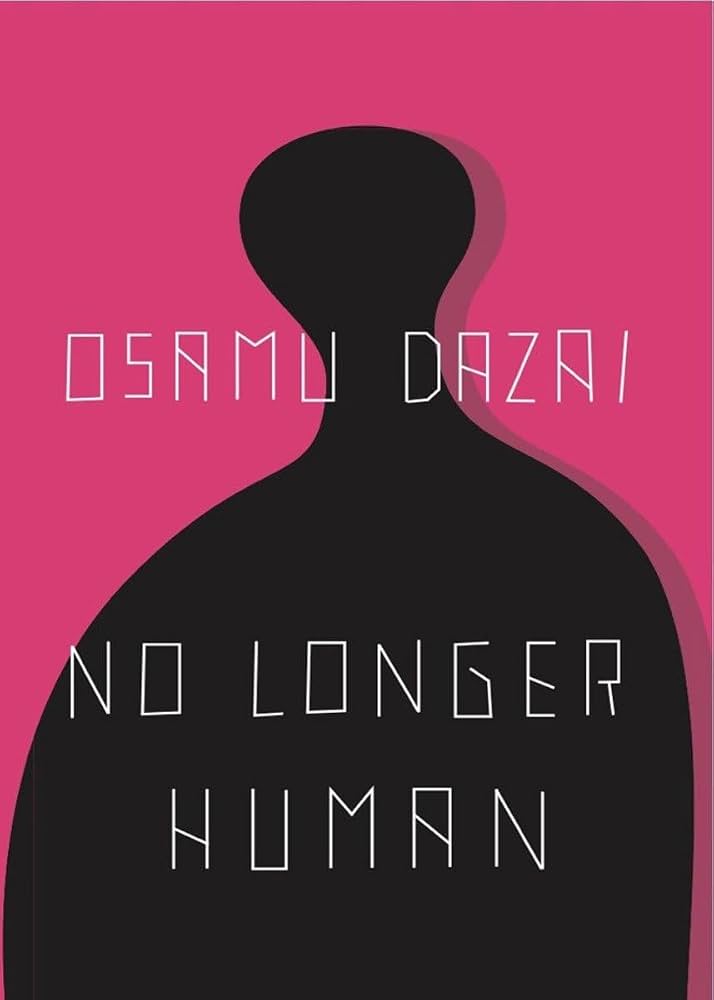
No Longer Human by Osamu Dazai

රු1,750.00
3 X Rs. 583.33 or 8% Cashback with


or 3 X රු583.33 with


or up to 4 X රු437.50 with


No Longer Human by Osamu Dazai is a haunting modern Japanese classic about Yozo Oba, a young man who hides his alienation behind humour while struggling to understand society and himself.
Translated from Japanese by Donald Keene, the novel explores identity, shame, loneliness, addiction and the difficulty of human connection.
Format: Paperback
Pages: 176 recommended for physical stock
Publisher: New Directions
Translator: Donald Keene
ISBN: 9780811204811
8 in stock
No Longer Human by Osamu Dazai
No Longer Human by Osamu Dazai is one of the most influential works of modern Japanese literature.
Originally published in Japanese as Ningen Shikkaku, the novel follows Yozo Oba, a young man who feels fundamentally disconnected from the people around him.
Although others often see him as humorous, charming or socially functional, Yozo experiences life very differently.
He feels unable to understand ordinary human behaviour.
He studies other people.
He imitates them.
He performs for them.
And from childhood onward, he uses humour and clowning as a way to hide how alienated he really feels.
New Directions describes the novel as the story of a man who appears to live a normal life while privately feeling incapable of understanding human beings.
Yozo Oba
Yozo is the emotional centre of the novel.
From an early age, he experiences intense discomfort around other people.
Instead of feeling naturally connected to family, friends and society, he treats social life almost like a performance.
He learns that making people laugh can protect him.
If people are amused, they may not notice how frightened or disconnected he feels.
That coping mechanism becomes central to his identity.
He presents one version of himself to the world while privately experiencing:
- Shame
- Fear
- Isolation
- Self-doubt
- Emotional disconnection
- Difficulty trusting others
The gap between the person others see and the person Yozo believes himself to be becomes one of the novel’s most powerful themes.
Alienation
Alienation is at the heart of No Longer Human.
Yozo does not simply feel lonely.
He feels as though he does not understand the basic rules of being human.
Ordinary social behaviour appears strange to him.
Relationships become difficult.
Expectations feel threatening.
He often believes that everyone else possesses some basic understanding of life that he lacks.
This makes the novel especially powerful for readers interested in questions of identity and belonging.
The Mask of Humour
Yozo’s humour is not simply entertainment.
It is a defence mechanism.
By acting like a clown, he can control how other people respond to him.
He would rather be laughed at than examined too closely.
The performance protects him from exposure, but it also deepens his isolation.
The more successful the mask becomes, the harder it is for him to feel genuinely known.
Family and Social Expectations
The novel also examines the pressures created by family and social expectations.
Yozo comes from a privileged family, yet privilege does not make him feel secure.
Instead, expectations surrounding class, behaviour and adulthood intensify his sense that he is playing a role.
He struggles to become the person others expect him to be.
This tension between individual identity and social conformity gives the novel much of its lasting relevance.
Modern Japan
Dazai wrote the novel during a period of enormous change in Japan.
Traditional social structures were under pressure, while Western cultural influence was becoming increasingly visible.
W. W. Norton describes the book as the story of a young man caught between the traditions of a northern Japanese aristocratic family and the impact of Western ideas.
This historical background gives Yozo’s personal alienation a wider cultural dimension.
Shame and Self-Perception
Shame is one of the novel’s strongest emotional themes.
Yozo constantly judges himself.
He interprets mistakes and weaknesses as evidence that he is fundamentally defective.
This creates a painful cycle.
The worse he feels about himself, the more he withdraws.
The more he withdraws, the harder genuine connection becomes.
The novel explores how damaging a negative self-image can become when it is reinforced over many years.
Relationships
Yozo forms several relationships throughout the novel.
Some offer moments of tenderness.
Others become sources of dependence, disappointment or further emotional pain.
The book does not present relationships as simple solutions to loneliness.
Instead, it shows how difficult connection can be when someone believes they are unworthy of being understood.
Addiction and Self-Destructive Behaviour
As Yozo’s life becomes increasingly unstable, he turns toward self-destructive coping mechanisms.
The novel includes themes involving:
- Alcohol abuse
- Drug dependence
- Emotional instability
- Failed suicide attempts
- Despair
These elements are not presented as glamorous or desirable.
They show the worsening consequences of Yozo’s inability to find healthier ways of coping with his distress.
A Semi-Autobiographical Novel
No Longer Human is often described as semi-autobiographical.
Dazai drew on aspects of his own emotional life, social experiences and struggles.
New Directions identifies it as his final completed work and describes it as semi-autobiographical.
That connection between author and protagonist has contributed to the novel’s lasting fascination.
However, Yozo should still be understood as a fictional character rather than a direct one-to-one portrait of Dazai.
A Japanese Modern Classic
The novel remains one of Dazai’s best-known works.
New Directions notes that it continues to rank among the bestselling books in Japan decades after publication.
Its continuing appeal comes partly from how recognisable its central emotions remain.
Readers from very different cultures and generations may still recognise:
- Feeling misunderstood
- Hiding behind humour
- Fear of judgment
- Social anxiety
- Shame
- Loneliness
- Difficulty belonging
Translation by Donald Keene
This edition is translated by Donald Keene, one of the most important scholars and translators of Japanese literature into English.
W. W. Norton, Foyles and library records all identify Donald Keene as translator for ISBN 9780811204811.
His translation has become one of the best-known English versions of the novel.
Content Considerations
No Longer Human contains serious and potentially distressing themes, including:
- Depression and despair
- Suicide attempts
- Addiction
- Substance misuse
- Sexual exploitation
- Violence
- Emotional abuse
- Shame
- Psychological distress
These themes are central to the tragic narrative and should not be romanticised.
The novel is literary fiction, not a mental-health guide, and it should not be treated as a substitute for professional support.
Who May Enjoy This Book?
No Longer Human may appeal to readers who enjoy:
- Japanese literature
- Literary fiction
- Psychological fiction
- Existential fiction
- Modern classics
- Character-driven novels
- Dark introspective fiction
- Osamu Dazai
- Translated literature
It may especially appeal to readers interested in novels that explore identity, alienation and the difficulty of fitting into society.
About Osamu Dazai
Osamu Dazai was a major twentieth-century Japanese novelist.
His best-known works include:
- No Longer Human
- The Setting Sun
- Schoolgirl
- Blue Bamboo
New Directions identifies Dazai as one of Japan’s important twentieth-century writers and notes his major role in portraying the social and moral crises of his era.
For readers looking to buy No Longer Human by Osamu Dazai in Sri Lanka, ISBN 9780811204811 is the classic New Directions paperback edition translated by Donald Keene.
Be the first to review “No Longer Human by Osamu Dazai”
Related products

Fiction in Translation
Heart Lamp: Selected Stories by Banu Mushtaq – Translated by Deepa Bhasthi
රු1,550.00
3 X Rs. 516.67 or 8% Cashback with
or 3 X රු516.67 with
or up to 4 X රු387.50 with
Reviews
There are no reviews yet.