No products in the cart.
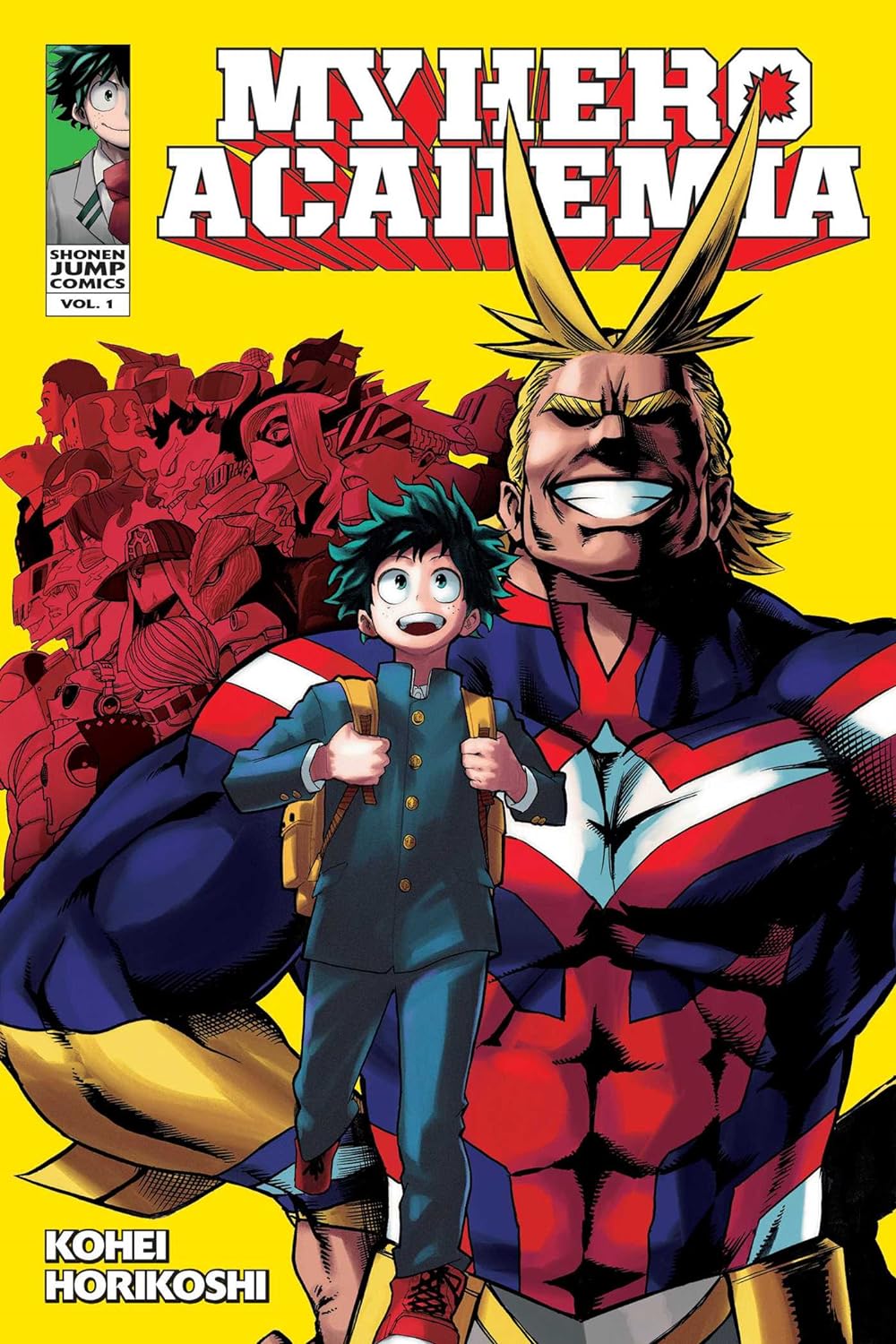



My Hero Academia vol 1 by Kohei Horikoshi

රු1,990.00
3 X Rs. 663.33 or 8% Cashback with


or 3 X රු663.33 with

or up to 4 X රු497.50 with


My Hero Academia Vol 1 by Kohei Horikoshi begins the story of Izuku Midoriya, a Quirkless boy dreaming of becoming a professional hero in a world where superpowers are normal. After a life-changing encounter with legendary hero All Might, Midoriya receives an opportunity to pursue the seemingly impossible path toward U.A. High School. Packed with superhero action, humor, courage, rivalry and an unforgettable underdog story, this first volume is the perfect starting point for new My Hero Academia readers.
Out of stock
Email when stock available
My Hero Academia Vol 1 by Kohei Horikoshi is the exciting beginning of the internationally popular superhero manga series about courage, determination and one seemingly powerless boy who refuses to give up his dream of becoming a hero.
In Izuku Midoriya’s world, extraordinary abilities called Quirks have become normal.
Most people have one.
Some can produce incredible physical effects.
Others possess strange mutations or unusual abilities.
And the greatest among them may train to become professional heroes.
For Izuku, or Deku, becoming a hero is the dream that has shaped almost his entire life.
There is only one enormous problem.
He was born Quirkless.
No superpower.
No special ability.
No obvious path toward the prestigious U.A. High School, where future heroes are trained.
Everyone around him knows how unrealistic his dream seems.
His childhood friend and rival Katsuki Bakugo certainly knows it.
But Midoriya continues studying heroes, recording their abilities and dreaming about the impossible.
Then he meets the greatest hero of them all:
All Might.
That encounter changes everything.
My Hero Academia Vol 1 introduces a world where superpowers are common but true heroism is much more complicated than simply being powerful.
What makes someone worthy of becoming a hero?
Strength?
Talent?
Courage?
Instinct?
Sacrifice?
Kohei Horikoshi begins answering those questions through Midoriya, a boy who may lack power but repeatedly demonstrates something just as important:
The instinct to help someone in danger.
My Hero Academia Vol 1 – Beginning of Izuku Midoriya’s Hero Journey
My Hero Academia Vol 1 introduces readers to the world, characters and central ideas that define the series.
The basic concept is immediately compelling:
What happens when a boy who desperately wants to become a superhero is born into a superpowered society without any powers of his own?
Midoriya grows up watching professional heroes.
He studies them.
Analyzes their abilities.
Fills notebooks with observations.
His greatest inspiration is All Might, the world’s most famous Symbol of Peace.
Midoriya wants to follow that path.
But reality seems determined to tell him no.
A World Filled With Quirks
In My Hero Academia, superpowers are known as Quirks.
They have become so widespread that society has developed around them.
Heroes are not simply mysterious masked figures.
Professional hero work has become part of the social system.
Heroes train.
Receive licenses.
Fight villains.
Rescue civilians.
Become celebrities.
For young people with powerful Quirks, heroism can become a career.
What If You Have No Quirk?
This is where Midoriya’s story becomes emotionally powerful.
Imagine growing up in a world where almost everyone has the one thing required for your dream.
And you do not.
Midoriya is repeatedly reminded of this.
People tell him to be realistic.
Bakugo mocks him.
His dream appears impossible.
Yet he cannot completely abandon it.
Izuku Midoriya
Izuku Midoriya is one of the main reasons My Hero Academia Vol 1 works so well as an opening volume.
He does not begin as:
The strongest.
The most confident.
The most popular.
Instead, he begins as someone who feels physically disadvantaged but is deeply fascinated by heroes.
His strengths initially lie elsewhere.
He observes.
He thinks.
He studies.
Most importantly, when another person is in danger, his body can move before he has time to calculate whether he is strong enough.
What Makes a Hero?
This question sits at the heart of My Hero Academia Vol 1.
A hero cannot simply be someone with a powerful Quirk.
A powerful person can still be selfish.
Cruel.
Cowardly.
A villain can also possess tremendous power.
The difference lies partly in how someone chooses to use what they have.
Courage Before Power
One of Midoriya’s defining qualities is that his courage appears before his power.
That matters.
If Midoriya had been fearless only after becoming powerful, his heroism would feel very different.
Instead, readers see his willingness to act while he is still vulnerable.
All Might
All Might is Midoriya’s greatest hero.
He represents almost everything society believes a professional hero should be.
Strong.
Confident.
Smiling.
Reassuring.
When All Might appears, people feel safer.
But meeting your idol in real life can be very different from watching them from a distance.
The Symbol of Peace
All Might is known as a symbol of hope and safety.
His presence sends a message:
Everything will be okay.
This concept becomes important because My Hero Academia is not only interested in how heroes fight.
It is interested in what heroes represent to society.
Meeting Your Hero
For Midoriya, meeting All Might should be the greatest moment imaginable.
Instead, it forces him to confront difficult truths.
Can someone without a Quirk become a hero?
Is determination enough?
Should dreams be limited by physical reality?
These questions give the opening volume emotional weight beyond ordinary superhero action.
Katsuki Bakugo
Bakugo is Midoriya’s childhood friend and rival.
He possesses an extremely powerful Quirk and enormous confidence.
Where Midoriya begins without power, Bakugo begins with obvious potential.
Their relationship is complicated.
Bakugo sees Midoriya as weak.
Midoriya simultaneously fears and admires parts of Bakugo’s ability.
Rivals
Rivalries are a major part of shonen manga.
But the Midoriya-Bakugo dynamic begins from an unequal position.
Bakugo believes he is naturally destined for greatness.
Midoriya is told he has no chance.
That contrast makes Midoriya’s determination particularly satisfying.
U.A. High School
U.A. High School is one of Japan’s most prestigious hero-training schools within the story.
For aspiring heroes, admission represents an enormous opportunity.
Students are trained in:
Combat.
Rescue.
Quirk control.
Decision-making.
Professional hero skills.
Midoriya dreams of attending U.A., even when that dream appears nearly impossible.
The Entrance Examination
The path toward U.A. provides some of the major action in My Hero Academia Vol 1.
Midoriya must prove that he belongs in a world where many applicants already possess powerful abilities.
The challenge is not simply:
Can he fight?
It becomes:
What kind of person does U.A. actually want to train as a hero?
Heroism Is More Than Points
One of the strongest ideas in the opening story is that heroic behavior cannot always be reduced to a score.
Sometimes the most heroic action may not be the one that gives the greatest immediate reward.
Helping someone else can matter more than winning.
One For All
Midoriya’s encounter with All Might introduces one of the most important concepts in the entire series:
One For All.
Without going too deeply into later-series spoilers, this power becomes central to Midoriya’s development.
It is not simply a convenient superpower.
It comes with:
Responsibility.
Physical consequences.
Expectations.
A legacy.
Power Must Be Learned
Receiving power does not immediately make Midoriya invincible.
This is extremely important.
He still needs:
Training.
Control.
Experience.
Judgment.
A powerful ability without control can be dangerous even to the person using it.
Training
Training becomes central to Midoriya’s journey.
The message is simple:
Potential is not enough.
Even extraordinary opportunity requires work.
Midoriya must prepare his body and mind for the path ahead.
Effort
This makes My Hero Academia Vol 1 motivating for many younger readers.
The story recognizes that people begin from different positions.
Some have natural advantages.
Others do not.
But effort still matters.
Hard Work Cannot Solve Everything Alone
At the same time, the manga does not need to be reduced to:
“Just work hard and anything is possible.”
Midoriya receives help.
Mentorship matters.
Opportunity matters.
Training matters.
His growth comes from a combination of:
Effort.
Support.
Courage.
Learning.
Mentorship
The relationship between All Might and Midoriya becomes one of the series’ most important mentorship relationships.
All Might has experience.
Midoriya has potential.
But a good mentor does more than give instructions.
A mentor can help someone recognize possibilities they could not yet see themselves.
Believing in Someone
Sometimes one person’s belief can change another person’s direction.
Midoriya has heard many versions of:
You cannot.
Then he encounters someone capable of saying something different.
That moment matters.
Dreams
My Hero Academia Vol 1 is ultimately a story about a dream that looks unreasonable.
Midoriya knows becoming a hero will be difficult.
He knows others doubt him.
Yet the dream remains.
The manga asks readers to consider what happens when someone refuses to define themselves only by what they currently lack.
Talent Versus Character
Bakugo appears naturally gifted.
Midoriya appears disadvantaged.
But the series introduces an important distinction:
Having power and having heroic character are not automatically the same thing.
Responsibility
Superpowers create responsibility.
If you can help someone, what should you do?
If using your power puts you at risk, does that change the answer?
These moral questions make superhero fiction more interesting than simply watching stronger characters defeat weaker ones.
Heroes and Villains
The world of My Hero Academia Vol 1 includes professional heroes and villains who misuse their Quirks.
This establishes the basic conflict.
But as the wider series develops, heroism and villainy become more complicated than labels alone.
Volume 1 lays the foundation for those questions.
Superhero Manga
The series combines Japanese shonen manga traditions with Western superhero influences.
Readers familiar with superhero comics may recognize ideas such as:
Costumes.
Hero identities.
Special powers.
Villains.
Hero schools.
But Horikoshi places these elements inside the structure of a Japanese battle manga.
Shonen Manga
My Hero Academia Vol 1 is published under the SHONEN JUMP imprint.
Shonen manga traditionally targets teen boys but is read by audiences of many ages and genders.
Common themes include:
Friendship.
Growth.
Rivalry.
Training.
Courage.
Perseverance.
All of these appear strongly in My Hero Academia.
Action
The opening volume contains energetic action sequences.
Quirks make battles visually creative because characters can have very different abilities.
Victory does not always depend only on physical strength.
Understanding how an ability works becomes important.
Strategy
Midoriya’s habit of analyzing heroes gives him an interesting advantage.
Even before becoming powerful, he thinks about:
How abilities work.
Strengths.
Weaknesses.
Situations.
That analytical mindset becomes part of his identity.
Hero Notebooks
Midoriya’s notebooks symbolize how seriously he takes heroism.
He has spent years studying professional heroes.
This tells readers something important:
His dream is not casual.
He has already been preparing in the only way available to him.
Determination
Determination is perhaps the clearest theme in My Hero Academia Vol 1.
Midoriya receives discouragement from multiple directions.
But he continues.
That does not mean he never feels afraid.
He does.
Courage becomes meaningful precisely because fear exists.
Fear
Heroes are not necessarily fearless.
A better definition may be someone who acts despite fear when another person needs help.
Midoriya repeatedly demonstrates this instinct.
Friendship
The first volume begins introducing relationships that will become important throughout the series.
U.A. is not simply a place for training powers.
It becomes a place where Midoriya begins meeting people who understand the ambition to become a hero.
Ochaco Uraraka
One important character introduced early is Ochaco Uraraka.
Her interactions with Midoriya help establish the wider student world beyond his difficult relationship with Bakugo.
She brings warmth and friendliness into a situation where Midoriya is often nervous and uncertain.
Tenya Iida
Tenya Iida also represents a different personality among aspiring hero students.
Disciplined.
Serious.
Rule-focused.
Characters like Iida help show that there is no single personality required to become a hero.
Different Paths to Heroism
One student may rely on:
Strength.
Another on speed.
Another on intelligence.
Another on rescue ability.
Different Quirks create different approaches.
That variety becomes one of the great appeals of the series.
Art Style
Kohei Horikoshi’s artwork combines expressive manga storytelling with superhero-comic energy.
Action is dynamic.
Characters have distinctive silhouettes.
Facial expressions often shift quickly between:
Comedy.
Fear.
Determination.
Intensity.
This helps the manga move easily between serious and humorous scenes.
Humor
Despite its emotional opening, My Hero Academia Vol 1 is not relentlessly serious.
Midoriya’s nervousness.
Character reactions.
Exaggerated expressions.
Hero personalities.
all create humor.
This balance makes the story approachable.
Emotional Storytelling
What gives the action meaning is Midoriya’s emotional investment.
Readers understand:
Why he wants to become a hero.
Why failure scares him.
Why All Might matters.
Why receiving a chance changes everything.
Without that foundation, the battles would feel much less important.
Never Underestimate Someone
Midoriya begins as someone other people underestimate.
That creates a naturally satisfying underdog story.
Underdog stories work because readers understand the distance between:
Where the character is.
And where they want to be.
Every step forward feels meaningful.
Becoming Worthy of Power
One of the deeper themes of the series is that gaining power and becoming worthy of using it are not the same thing.
Power requires:
Control.
Judgment.
Responsibility.
Compassion.
Is My Hero Academia Vol 1 the First Book?
Yes.
My Hero Academia Vol 1 is the correct starting point for the main manga series.
You do not need to read another My Hero Academia title before it.
This is where new readers should begin.
Correct Reading Order
For the main manga, simply begin with:
My Hero Academia Vol 1
Then continue with:
My Hero Academia Vol 2
My Hero Academia Vol 3
and onward in numerical order.
The main manga should be read sequentially because the story and character development continue directly between volumes.
What About My Hero Academia Spin-Offs?
There are also related titles and spin-offs, including works such as:
My Hero Academia: Vigilantes
My Hero Academia: Smash!!
My Hero Academia: School Briefs
However, none of these are required before beginning the main series.
Start with My Hero Academia Vol 1.
Is My Hero Academia Vol 1 Manga or a Novel?
It is a manga, meaning the story is primarily told through sequential black-and-white comic artwork.
It is not a prose novel.
For English editions, readers generally follow manga reading direction from right to left.
Is It Suitable for Teen Readers?
The VIZ English edition carries a Teen age rating.
Readers should expect superhero action, fantasy violence, bullying themes and dangerous situations.
Parents can use the publisher’s Teen rating as a general guide.
Content Considerations
My Hero Academia Vol 1 contains themes and scenes including:
- Superhero fantasy violence
- Fighting and physical injury
- Bullying
- Threats from villains
- Dangerous situations involving young characters
- Emotional distress
- Fear and self-doubt
- School competition
- Some intense action imagery
The tone is primarily adventurous and inspirational rather than graphic horror.
Anime Adaptation
My Hero Academia was also adapted into a highly popular anime series.
Readers who discovered Midoriya, All Might and U.A. through the anime can use My Hero Academia Vol 1 to experience the original manga version of the story.
The manga is the source material created by Kohei Horikoshi.
Should You Read the Manga After Watching the Anime?
Yes, if you enjoy the series.
Reading the manga gives you:
Horikoshi’s original artwork.
Original panel composition.
The pacing of the source material.
Details and expressions that may feel different from animation.
Fans often enjoy comparing both versions.
Kohei Horikoshi
Kohei Horikoshi is the creator, writer and artist of My Hero Academia.
His work combines his interest in superhero storytelling with the pacing, character development and visual style of Japanese shonen manga.
Official English Edition
The VIZ paperback edition of My Hero Academia Vol 1 has:
Author/Artist: Kohei Horikoshi
ISBN-13: 9781421582696
Imprint: SHONEN JUMP
Format: Paperback Manga
Length: 192 pages
Age Rating: Teen
Important Themes
My Hero Academia Vol 1 explores:
- Heroism
- Courage
- Determination
- Superpowers
- Quirks
- Dreams
- Hard work
- Mentorship
- Rivalry
- Self-belief
- Sacrifice
- Responsibility
- Friendship
- Bullying
- Training
- Growth
- Identity
- Underdogs
- U.A. High School
- Becoming a hero
7 Epic Reasons to Read My Hero Academia Vol 1
There are many reasons to begin My Hero Academia Vol 1, but seven stand out:
- Izuku Midoriya is an inspiring underdog – He begins without a Quirk in a superpowered world, making every step toward his dream feel meaningful.
- The story asks what truly makes someone a hero – Strength matters, but courage, compassion and the instinct to help others matter even more.
- All Might is an unforgettable mentor – His relationship with Midoriya gives the story both emotional heart and superhero excitement.
- The Quirk system creates endless possibilities – Different abilities make the world imaginative and allow battles to involve strategy as well as power.
- The rivalry with Bakugo adds strong tension – Their contrasting personalities, abilities and ideas about greatness create one of the series’ most important relationships.
- It is the perfect starting point for the main series – This first volume introduces the world, Midoriya, All Might, U.A. and the major concepts needed for everything that follows.
- It combines superhero action with emotional growth – The manga is exciting, funny and visually energetic while also telling a meaningful story about self-belief and becoming worthy of opportunity.
Why Read My Hero Academia Vol 1?
My Hero Academia Vol 1 is an excellent choice for readers interested in:
Superhero manga.
Shonen Jump.
Kohei Horikoshi.
Izuku Midoriya.
Deku.
All Might.
Bakugo.
Anime and manga.
Superpowers.
Quirks.
Hero schools.
Underdog stories.
Friendship.
Rivalry.
Training.
Action manga.
Coming-of-age stories.
Japanese comics.
Fantasy action.
Inspirational stories.
It is particularly suitable for readers who enjoy characters who begin from a position of weakness and gradually work toward becoming stronger.
Who Should Read This Manga?
My Hero Academia Vol 1 may especially appeal to:
- My Hero Academia anime fans
- Manga beginners
- Shonen manga readers
- Teen readers
- Superhero fans
- Readers who enjoy underdog protagonists
- Fans of action and adventure
- Readers who enjoy school settings
- Fans of training and tournament-style stories
- Readers who enjoy friendship and rivalry
- Collectors starting the My Hero Academia manga
- Readers looking for the correct first volume of the series
My Hero Academia Vol 1 – Can Someone Without Power Become a Hero?
My Hero Academia Vol 1 begins with a boy who has already been told what his future should look like.
Not a hero.
Not U.A.
Not someone standing beside the people he admires.
The world appears to have made the decision for him.
He has no Quirk.
But Midoriya has something the people around him initially fail to recognize.
When someone is in danger, he wants to help.
Even when he is afraid.
Even when he does not have the power to win.
Even when running forward seems irrational.
That instinct catches the attention of All Might.
And suddenly, the impossible future is not quite as impossible as it appeared.
The volume does not tell readers that dreams come true automatically.
Midoriya must train.
Struggle.
Learn.
Make mistakes.
His opportunity becomes the beginning of much more work.
That is what makes the story effective.
He is not rewarded simply because he wanted something badly.
He is given a chance because his actions reveal something about his character.
From there, the real challenge begins:
Can he become capable of carrying the responsibility that comes with the opportunity?
For readers who love superheroes, manga, action, training arcs, rivalry and stories about becoming stronger without losing compassion, My Hero Academia Vol 1 is the ideal starting point for Kohei Horikoshi’s heroic saga.
Learn more about My Hero Academia Vol. 1 by Kohei Horikoshi on the official Simon & Schuster publisher page.
Explore more manga books at Bargain Books.
| Author | Kohei Horikoshi |
|---|---|
| Type | Paperback Brand new Printed (Indian Locally published) |
| ISBN/ISSN | 9781421582696 |
| Language | English |
| Pages | 192 |
Be the first to review “My Hero Academia vol 1 by Kohei Horikoshi”
Related products
රු1,600.00
3 X Rs. 533.33 or 8% Cashback with
or 3 X රු533.33 with
or up to 4 X රු400.00 with

Out of stock
Fiction & Literature
Uzumaki (3 in 1 Deluxe Edition): Includes vols. 1, 2 & 3 by Junji Ito (Hardcover)
රු3,950.00
3 X Rs. 1,316.67 or 8% Cashback with
or 3 X රු1,316.67 with
or up to 4 X රු987.50 with
Out of stock
රු1,600.00
3 X Rs. 533.33 or 8% Cashback with
or 3 X රු533.33 with
or up to 4 X රු400.00 with
-37%
Out of stock
Original price was: රු19,000.00.රු11,900.00Current price is: රු11,900.00.
3 X Rs. 3,966.67 or 8% Cashback with
or 3 X රු3,966.67 with
or up to 4 X රු2,975.00 with
-24%
Out of stock
Original price was: රු12,990.00.රු9,900.00Current price is: රු9,900.00.
3 X Rs. 3,300.00 or 8% Cashback with
or 3 X රු3,300.00 with
or up to 4 X රු2,475.00 with
-21%
Out of stock
Original price was: රු2,400.00.රු1,900.00Current price is: රු1,900.00.
3 X Rs. 633.33 or 8% Cashback with
or 3 X රු633.33 with
or up to 4 X රු475.00 with

Out of stock
රු6,150.00
3 X Rs. 2,050.00 or 8% Cashback with
or 3 X රු2,050.00 with
or up to 4 X රු1,537.50 with
Out of stock
රු1,250.00
3 X Rs. 416.67 or 8% Cashback with
or 3 X රු416.67 with
or up to 4 X රු312.50 with
Reviews
There are no reviews yet.