
No products in the cart.
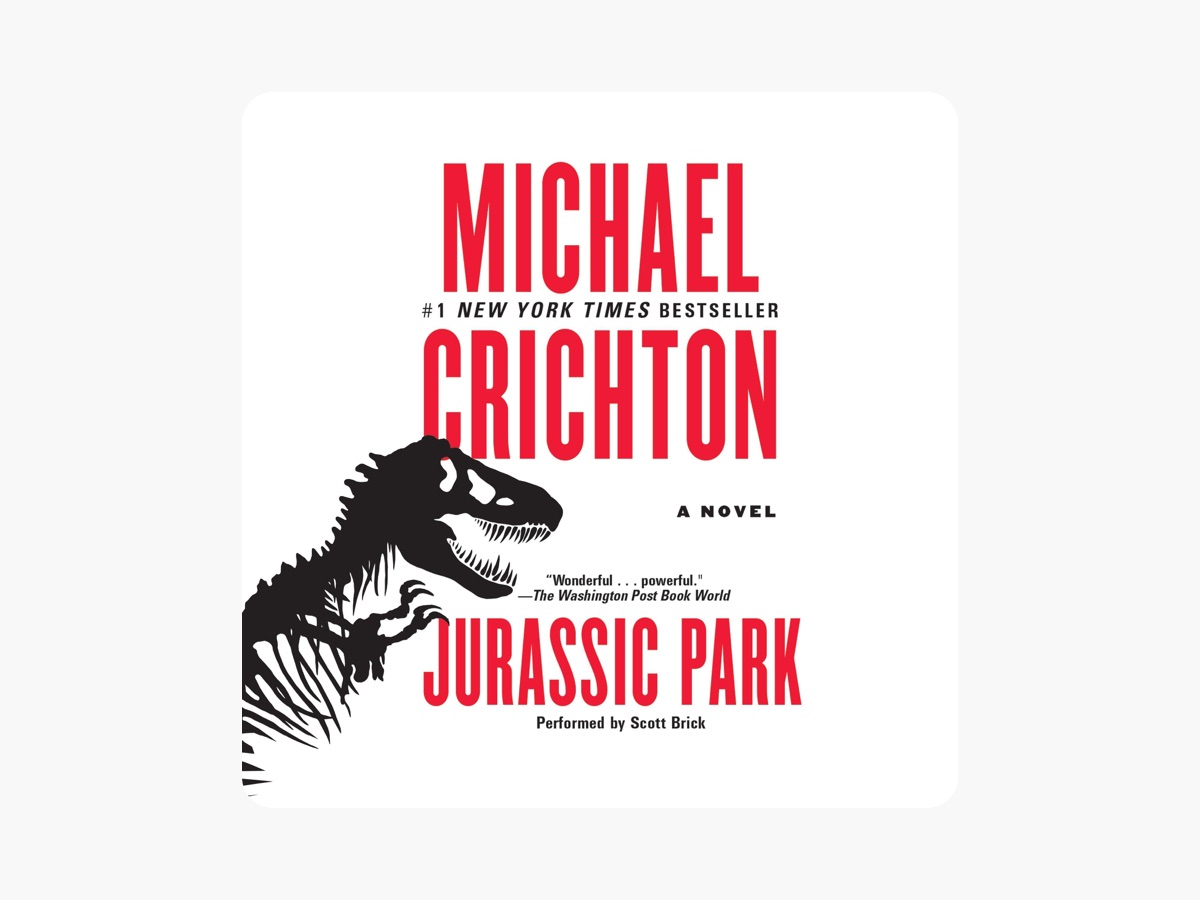
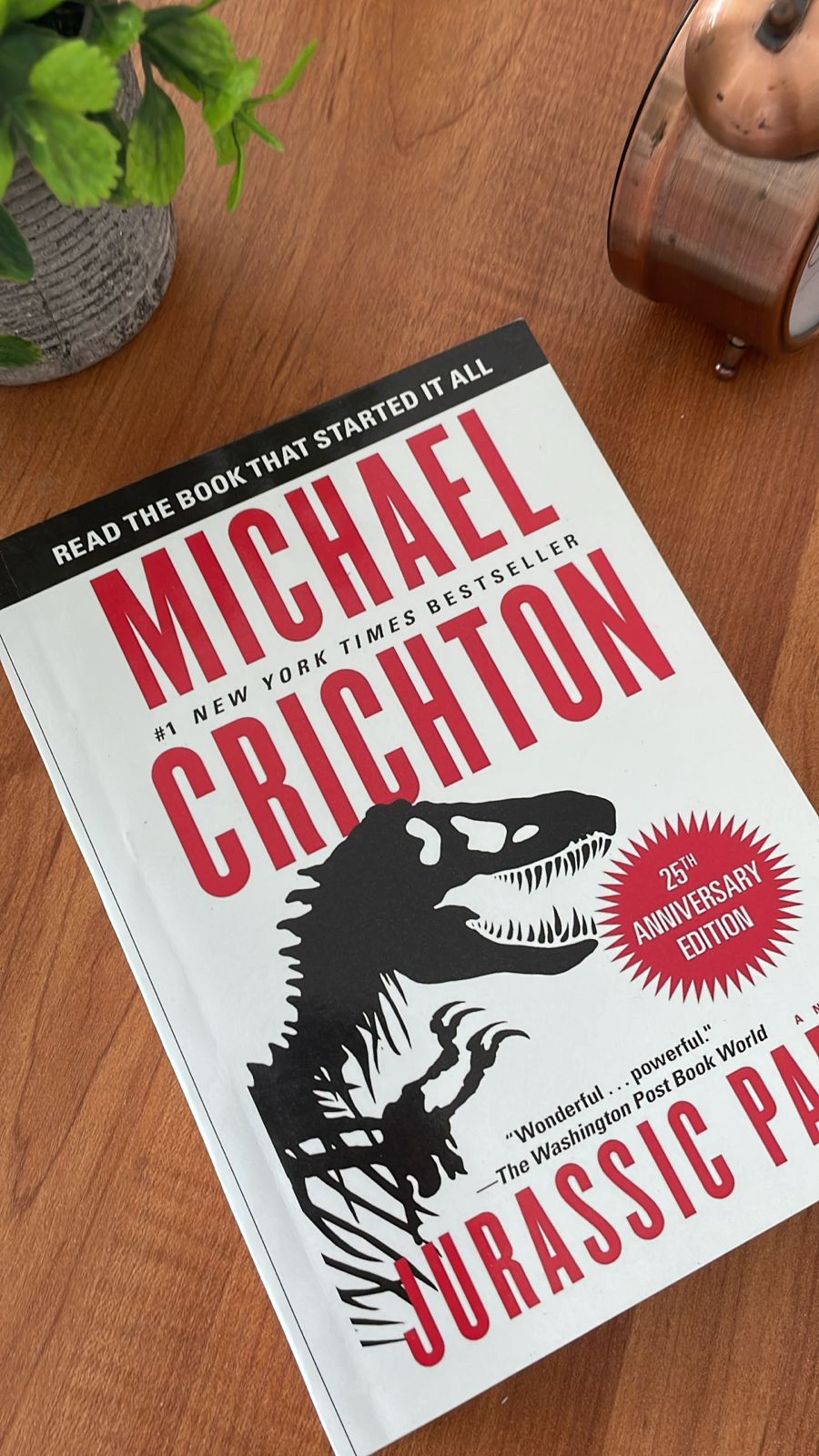

Jurassic Park: A Novel by Michael Crichton
රු2,250.00
3 X Rs. 750.00 or 8% Cashback with


or 3 X රු750.00 with


or up to 4 X රු562.50 with


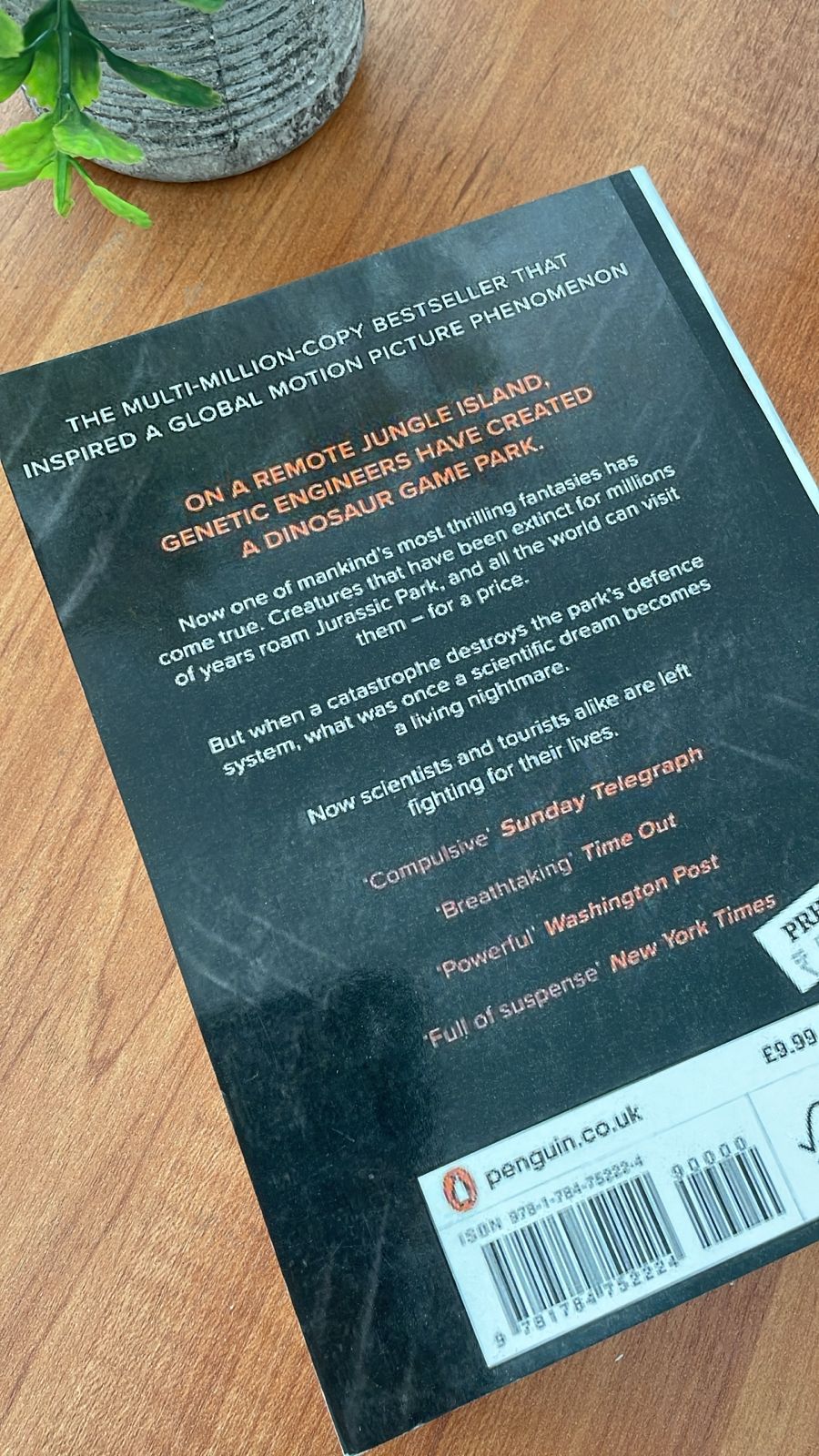
Jurassic Park A Novel by Michael Crichton is a gripping science-fiction thriller about a revolutionary dinosaur theme park created through genetic engineering. When the park’s systems begin to fail, Alan Grant, Ellie Sattler, Ian Malcolm and the other visitors must survive escaped dinosaurs and the consequences of human overconfidence. Combining action, chaos theory, biotechnology, scientific ethics and suspense, it is an essential read for dinosaur, thriller and science-fiction fans.
3 in stock
Jurassic Park A Novel by Michael Crichton is a gripping science-fiction thriller that combines dinosaurs, genetic engineering, corporate ambition, chaos theory, survival, suspense and the dangerous consequences of trying to control nature.
The idea sounds extraordinary.
Bring dinosaurs back to life.
Place them inside a carefully designed island park.
Allow visitors to experience creatures extinct for millions of years.
Control every animal.
Monitor every system.
Protect every guest.
Make history.
But in Jurassic Park A Novel by Michael Crichton, the problem is simple:
Nature does not always behave according to human plans.
Scientist and entrepreneur John Hammond has created an extraordinary private park filled with genetically engineered dinosaurs.
The animals are real.
Living.
Breathing.
Hunting.
Hammond believes the park can become one of the greatest attractions ever created.
Before it officially opens, however, experts are invited to inspect the island and determine whether the park is safe.
Among them are paleontologist Dr. Alan Grant, paleobotanist Dr. Ellie Sattler, mathematician Dr. Ian Malcolm, and attorney Donald Gennaro.
What begins as a remarkable scientific tour quickly becomes a terrifying struggle for survival.
Systems fail.
Dinosaurs escape.
Predators begin hunting.
And the people trapped inside Jurassic Park discover that creating life is much easier than controlling it.
Jurassic Park A Novel by Michael Crichton – Book Overview
Jurassic Park A Novel by Michael Crichton begins with one of the most fascinating questions in science fiction:
What if humans could bring dinosaurs back from extinction?
Through advanced genetic engineering, scientists working for Hammond’s company recreate dinosaur DNA.
The result is Jurassic Park.
A private island filled with prehistoric creatures including:
- Tyrannosaurus rex
- Velociraptors
- Triceratops
- Dilophosaurus
- Stegosaurus
- Brachiosaurus
- Other dinosaur species
Hammond believes technology has solved every problem.
The animals are monitored.
Electric fences keep them contained.
Computer systems track them.
Genetic modifications are supposed to prevent uncontrolled reproduction.
Everything appears carefully planned.
But mathematician Ian Malcolm immediately sees a problem.
A biological system this complex cannot be perfectly controlled.
That warning becomes central to the novel.
John Hammond
John Hammond is the visionary behind Jurassic Park.
He represents ambition.
Innovation.
Confidence.
And, at times, dangerous overconfidence.
Hammond does not simply want to study dinosaurs.
He wants to build an attraction unlike anything the world has ever seen.
His dream is enormous.
But Jurassic Park A Novel by Michael Crichton asks an important question:
Just because something can be created, does that mean it should be?
Hammond focuses heavily on what technology makes possible.
Other characters are more concerned with what might go wrong.
That conflict drives much of the story.
Alan Grant
Dr. Alan Grant is a paleontologist invited to inspect Jurassic Park.
For someone who studies dinosaurs through fossils, seeing living dinosaurs should be the greatest experience imaginable.
At first, it is astonishing.
Animals he has spent years studying are suddenly alive in front of him.
But amazement quickly turns into danger.
Grant must use:
Scientific knowledge.
Observation.
Courage.
Experience.
Problem-solving.
His understanding of dinosaurs becomes essential when Jurassic Park’s technology begins to fail.
Ellie Sattler
Dr. Ellie Sattler is a paleobotanist and another important member of the inspection team.
She is intelligent, observant and practical.
Her knowledge of plants helps expose problems that the park’s designers overlooked.
This reinforces one of the central lessons in Jurassic Park A Novel by Michael Crichton:
A complex system can fail because of details that appear insignificant.
A park containing dinosaurs is not just about dinosaurs.
Plants matter.
Weather matters.
Software matters.
Human decisions matter.
Every system connects with another.
Ian Malcolm
Ian Malcolm is one of the novel’s most memorable characters.
He is a mathematician who specializes in chaos theory.
Malcolm questions Jurassic Park before the disaster even begins.
His argument is that complex systems behave unpredictably.
Small changes can create enormous consequences.
You cannot control every variable.
You cannot predict every interaction.
And biological systems are especially difficult to manage.
Jurassic Park A Novel by Michael Crichton uses Malcolm to challenge the belief that enough technology can eliminate uncertainty.
The park’s creators believe they have control.
Malcolm believes control is an illusion.
Chaos Theory
Chaos theory is one of the most important concepts in the novel.
The basic idea is that complex systems can become unpredictable because small differences can produce very large outcomes.
In Jurassic Park, the management team believes they understand the system.
They know:
How many dinosaurs exist.
Where they are.
How fences operate.
How they reproduce.
How they behave.
At least, they think they know.
But living systems are not machines.
Animals adapt.
Systems interact.
People make mistakes.
Unexpected events occur.
Jurassic Park A Novel by Michael Crichton uses chaos theory to show how fragile apparently perfect control can be.
Genetic Engineering
The dinosaurs in Jurassic Park are created through genetic engineering.
Scientists recover ancient dinosaur DNA and reconstruct missing genetic information.
This gives the novel one of its most fascinating scientific ideas.
But Michael Crichton does not treat biotechnology as automatically good or bad.
Instead, he focuses on responsibility.
What happens when scientific capability develops faster than ethical judgment?
Who decides when an experiment is too dangerous?
What happens when commercial pressure influences scientific decisions?
These questions make Jurassic Park A Novel by Michael Crichton more than a dinosaur adventure.
It is also a story about the responsibility that comes with powerful technology.
Science Versus Responsibility
One of the central conflicts in the novel is the difference between:
Can we do this?
and
Should we do this?
The scientists responsible for recreating dinosaurs achieve something extraordinary.
But creating life introduces responsibilities far beyond technical success.
A dinosaur is not simply a product.
It is a living organism.
It can:
Adapt.
Learn.
Hunt.
Reproduce.
Escape.
The novel suggests that scientific achievement without careful consideration of consequences can become dangerous.
Nature Cannot Be Fully Controlled
The entire park is designed around control.
Electric fences.
Monitoring systems.
Computer software.
Genetic restrictions.
Security protocols.
But nature repeatedly refuses to behave exactly as expected.
This creates one of the most famous themes in Jurassic Park A Novel by Michael Crichton:
Life finds ways around human assumptions.
The park’s creators underestimate how adaptable living systems can be.
The Dinosaurs
The dinosaurs are obviously one of the biggest reasons readers love the novel.
Michael Crichton presents them not merely as monsters but as living animals.
Some are peaceful.
Some are curious.
Some are territorial.
Some are extremely dangerous.
This makes Jurassic Park feel more believable.
The dinosaurs do not attack because they are evil.
They behave according to instincts.
The danger comes from placing powerful prehistoric animals inside a system that humans mistakenly believe they completely understand.
Tyrannosaurus Rex
The Tyrannosaurus rex is one of the most iconic creatures in the story.
Massive.
Powerful.
Terrifying.
When Jurassic Park’s systems fail, barriers that once seemed secure become meaningless.
The Tyrannosaurus represents the scale of the mistake the park’s creators have made.
Technology created the animal.
Technology contained it.
Then technology failed.
What remains is a predator that does not care about business plans or security procedures.
Velociraptors
The velociraptors are among the most dangerous creatures in Jurassic Park A Novel by Michael Crichton.
They are frightening not only because they are predators.
They are intelligent.
They observe.
They react.
They learn.
Their behaviour challenges the assumption that humans will always remain intellectually superior to the animals they created.
The raptors add enormous tension to the novel because their danger comes from both physical ability and intelligence.
Technology
Jurassic Park depends on technology.
Computers control:
Doors.
Fences.
Animal tracking.
Security systems.
Infrastructure.
This creates efficiency.
But it also creates vulnerability.
When one system fails, several others may fail with it.
Jurassic Park A Novel by Michael Crichton explores a problem that remains relevant today:
The more complex a technological system becomes, the more important it is to understand what happens when that system breaks.
Human Error
Not every disaster comes from unpredictable nature.
Some problems come from people.
Poor decisions.
Greed.
Overconfidence.
Security weaknesses.
Communication failures.
The novel demonstrates that advanced technology cannot eliminate human error.
A perfect system does not exist if imperfect people operate it.
Corporate Ambition
Jurassic Park is not created purely for scientific research.
It is also a business.
That changes everything.
There are investors.
Deadlines.
Public expectations.
Financial pressure.
Commercial goals.
Jurassic Park A Novel by Michael Crichton examines how commercial ambition can push organizations to move faster than safety allows.
People may ignore warning signs when too much money depends on success.
Greed
Greed also plays an important role.
Technology becomes especially dangerous when people see scientific information primarily as something to sell.
Knowledge becomes valuable.
Access becomes valuable.
Secrets become valuable.
That creates motives for betrayal and sabotage.
Survival
Once the park begins to collapse, the novel becomes an intense survival thriller.
Characters must navigate an environment filled with dangerous animals and unreliable technology.
Survival depends on:
Observation.
Calm thinking.
Scientific knowledge.
Luck.
Teamwork.
Fast decisions.
The shift from scientific wonder to survival horror gives the book enormous momentum.
Children in Jurassic Park
Hammond’s grandchildren are also present on the island.
Their involvement raises the stakes dramatically.
The danger is no longer theoretical.
The adults must protect children while also trying to survive themselves.
This adds emotional tension and makes the collapse of Jurassic Park feel even more serious.
Suspense
Michael Crichton builds suspense effectively by showing that the park is vulnerable before the characters fully understand the danger.
Small warning signs appear.
Animals behave unexpectedly.
Data does not always make sense.
Systems appear reliable until they are tested.
This creates tension because readers understand that something is wrong even before the disaster reaches its full scale.
Adventure and Horror
Jurassic Park A Novel by Michael Crichton combines several genres:
Science fiction.
Adventure.
Thriller.
Horror.
Survival fiction.
Techno-thriller.
This combination helps explain its enormous popularity.
Readers get scientific ideas and philosophical questions alongside exciting dinosaur attacks and survival sequences.
Scientific Curiosity
The novel also captures the excitement of scientific discovery.
Seeing a living dinosaur would be extraordinary.
For scientists like Grant, it challenges everything previously known about prehistoric life.
The park creates opportunities to observe:
Movement.
Feeding.
Social behaviour.
Communication.
Growth.
But wonder and danger exist together.
That contrast makes the story compelling.
Ethics
The ethical questions in the novel remain highly relevant.
Who owns genetically created life?
Should extinct species be recreated?
What responsibility does a company have when experimenting with living organisms?
Should profit influence biotechnology?
What happens when technology becomes more powerful than regulation?
Jurassic Park A Novel by Michael Crichton raises these questions without turning the story into a textbook.
They emerge naturally through the consequences of the characters’ choices.
Control Versus Complexity
Hammond’s team believes the park is controlled because they have measurements.
Numbers.
Maps.
Sensors.
Databases.
But measuring a system is not the same as understanding it.
This is one of Ian Malcolm’s strongest warnings.
Complexity creates interactions nobody anticipated.
A small mistake can spread.
One failure affects another.
Soon, the entire system behaves differently.
Life and Adaptation
Living organisms adapt.
This is one of the most important ideas in the novel.
Humans may design rules for life.
Life does not necessarily follow those rules.
Dinosaurs are not machines programmed to stay inside fences.
They are organisms.
They respond to:
Environment.
Food.
Threats.
Opportunity.
Instinct.
That difference between mechanical control and biological adaptation becomes central to the collapse of the park.
Man Versus Nature
Jurassic Park A Novel by Michael Crichton can also be read as a classic man-versus-nature story.
Humans create an environment they believe they control.
Nature proves otherwise.
The dinosaurs are not supernatural monsters.
They are natural organisms placed in an unnatural situation.
The disaster comes from human arrogance more than from the animals themselves.
Arrogance
Arrogance is perhaps one of the biggest dangers in the novel.
The park’s creators assume:
We understand this.
We can control this.
We have solved the problems.
Malcolm argues that such confidence is dangerous.
The more powerful technology becomes, the more dangerous overconfidence can become with it.
Responsibility for Innovation
Innovation is often celebrated.
But Jurassic Park A Novel by Michael Crichton asks what happens after innovation succeeds.
Creating something new is only the beginning.
You must also manage:
Risk.
Safety.
Consequences.
Unexpected behaviour.
Long-term impact.
Responsibility does not end when the invention works.
It begins there.
The Island Setting
The isolated island setting increases tension.
When problems begin, characters cannot simply leave.
They are surrounded by ocean.
Infrastructure depends on the park.
Communication becomes difficult.
Isolation transforms Jurassic Park into a closed survival environment.
The island becomes both:
A technological paradise.
And a trap.
The Novel and the Film
Jurassic Park was famously adapted into the 1993 film directed by Steven Spielberg.
The movie became one of the most recognizable blockbusters in cinema history.
It helped make characters such as:
Alan Grant.
Ellie Sattler.
Ian Malcolm.
John Hammond.
and the Tyrannosaurus rex internationally famous.
However, the novel and film are not identical.
The book contains:
More scientific explanation.
Different character details.
Darker moments.
Additional events.
More discussion of chaos theory.
Different portrayals of some characters.
This means readers who already know the film can still find many surprises in Jurassic Park A Novel by Michael Crichton.
Book Versus Movie
The film emphasizes wonder, adventure and visual spectacle.
The novel often feels darker and more technical.
Michael Crichton spends more time examining:
Genetic engineering.
Complex systems.
Corporate responsibility.
Computer technology.
Scientific ethics.
Chaos theory.
That gives the book a stronger techno-thriller identity.
The Lost World
Readers who enjoy Jurassic Park can continue with Michael Crichton’s sequel:
The Lost World
Recommended reading order:
1. Jurassic Park
2. The Lost World
The second novel returns to the consequences of dinosaur genetic engineering and expands the world introduced in the first book.
7 Powerful Reasons to Read Jurassic Park
There are many reasons readers continue to love Jurassic Park A Novel by Michael Crichton, but seven stand out:
- The dinosaur concept is unforgettable – Genetic engineering brings extinct creatures back to life in one of science fiction’s most famous premises.
- It combines science with suspense – Biology, mathematics, technology and ethics are woven into a fast-moving thriller.
- Ian Malcolm’s chaos theory adds depth – The story explores why complex systems cannot always be controlled.
- The dinosaurs feel like real animals – They behave through instinct, adaptation and intelligence rather than simply acting as monsters.
- The survival sequences are intense – Once the park fails, the story becomes a gripping fight to escape predators and collapsing technology.
- The ethical questions remain relevant – Biotechnology, corporate responsibility and scientific ambition are still important modern topics.
- It offers more than the movie – Fans of the film can discover darker scenes, additional scientific detail and different character developments in the original novel.
Why Read Jurassic Park A Novel by Michael Crichton?
Jurassic Park A Novel by Michael Crichton is an excellent choice for readers interested in:
- Science fiction
- Dinosaurs
- Genetic engineering
- Thriller novels
- Michael Crichton
- Adventure
- Survival stories
- Chaos theory
- Biotechnology
- Technology
- Scientific ethics
- Corporate thrillers
- Action
- Suspense
- Jurassic Park movies
It is especially suitable for readers who enjoy stories where scientific ideas are combined with fast-paced adventure.
Who Should Read This Book?
Jurassic Park A Novel by Michael Crichton may especially appeal to:
- Science-fiction readers
- Thriller fans
- Dinosaur enthusiasts
- Michael Crichton fans
- Jurassic Park movie fans
- Readers interested in genetic engineering
- Readers interested in science and technology
- Adventure readers
- Survival-fiction fans
- Readers who enjoy scientific mysteries
- Fans of techno-thrillers
- Readers interested in ethics and innovation
A Legendary Thriller About Science, Dinosaurs and Human Arrogance
Jurassic Park A Novel by Michael Crichton remains compelling because it combines an extraordinary fantasy with believable scientific questions.
Dinosaurs return.
Humanity achieves something once thought impossible.
But success creates a dangerous illusion.
The creators of Jurassic Park believe that because they created the animals, they also control them.
They believe fences are enough.
Computer systems are enough.
Genetic safeguards are enough.
Predictions are enough.
Ian Malcolm understands the weakness in that thinking.
Complex systems change.
Living organisms adapt.
People make mistakes.
Technology fails.
And nature does not care how carefully a business plan was written.
That conflict transforms Jurassic Park from a scientific miracle into a nightmare.
For readers who enjoy dinosaurs, science fiction, genetic engineering, technology, survival, adventure, suspense, scientific ethics and unforgettable thrillers, Jurassic Park A Novel by Michael Crichton remains one of the genre’s most exciting and influential novels.
Learn more about Jurassic Park by Michael Crichton on the official Penguin Random House website.
Explore more science fiction and thriller books at Bargain Books.
Be the first to review “Jurassic Park: A Novel by Michael Crichton”
Related products
Science Fiction
රු2,150.00
3 X Rs. 716.67 or 8% Cashback with
or 3 X රු716.67 with
or up to 4 X රු537.50 with
Out of stock
Science Fiction
රු1,800.00
3 X Rs. 600.00 or 8% Cashback with
or 3 X රු600.00 with
or up to 4 X රු450.00 with
Science Fiction
රු1,950.00
3 X Rs. 650.00 or 8% Cashback with
or 3 X රු650.00 with
or up to 4 X රු487.50 with
රු2,500.00
3 X Rs. 833.33 or 8% Cashback with
or 3 X රු833.33 with
or up to 4 X රු625.00 with
-17%
Fiction & Literature
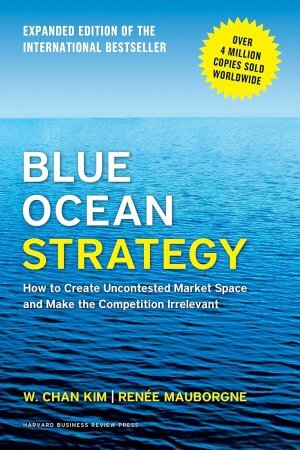
Blue Ocean Strategy (Paperback) by W. Chan Kim & Renée Mauborgne
Original price was: රු1,800.00.රු1,500.00Current price is: රු1,500.00.
3 X Rs. 500.00 or 8% Cashback with
or 3 X රු500.00 with
or up to 4 X රු375.00 with
Science Fiction
රු2,100.00
3 X Rs. 700.00 or 8% Cashback with
or 3 X රු700.00 with
or up to 4 X රු525.00 with

Classics & Literary Fiction
රු1,550.00
3 X Rs. 516.67 or 8% Cashback with
or 3 X රු516.67 with
or up to 4 X රු387.50 with
රු2,500.00
3 X Rs. 833.33 or 8% Cashback with
or 3 X රු833.33 with
or up to 4 X රු625.00 with
Reviews
There are no reviews yet.