
No products in the cart.
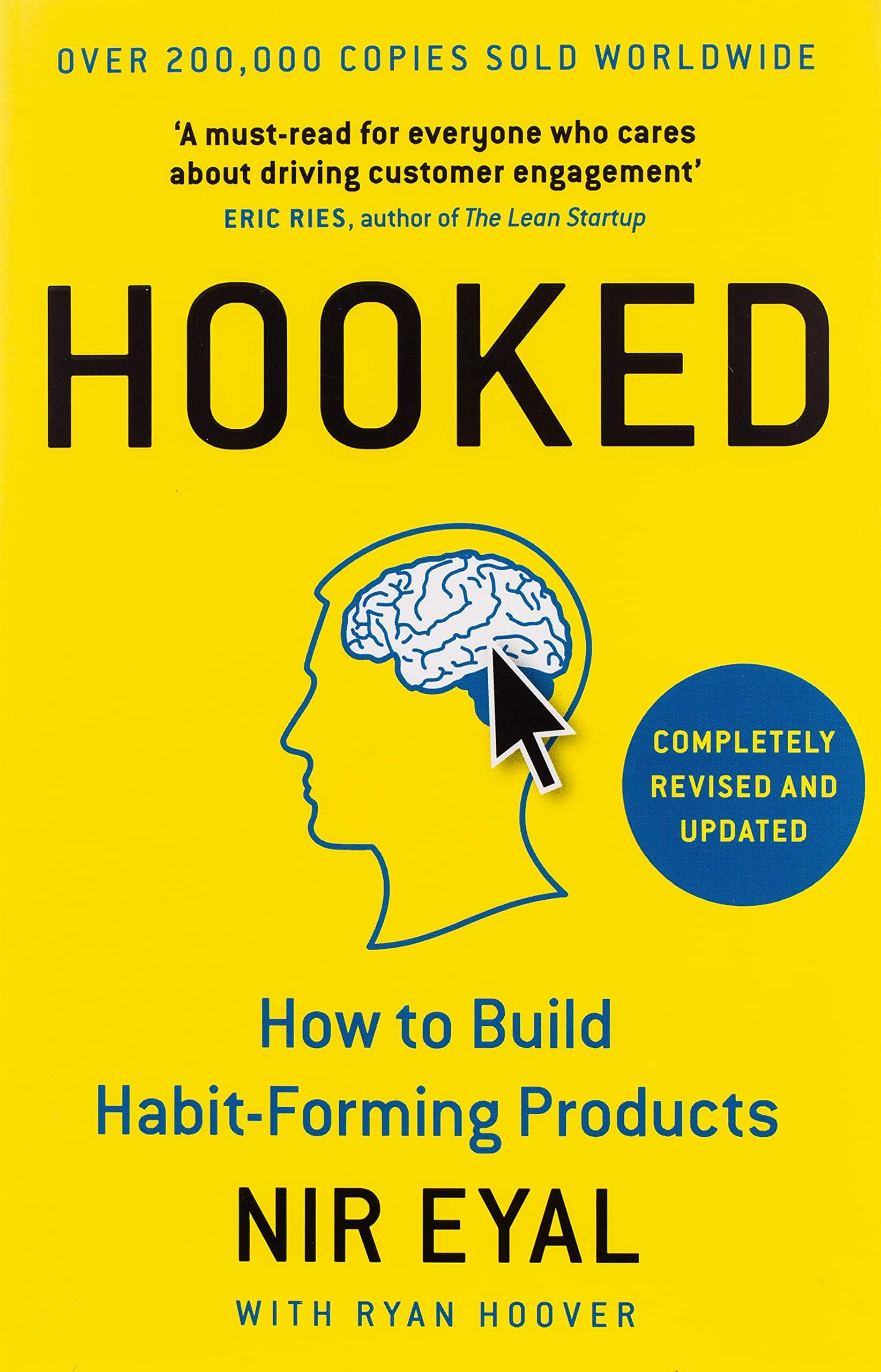


Hooked by Nir Eyal


රු1,550.00
3 X Rs. 516.67 or 8% Cashback with


or 3 X රු516.67 with


or up to 4 X රු387.50 with


| Detail | Information |
|---|---|
| Title | Hooked: How to Build Habit-Forming Products |
| Author | Nir Eyal |
| Genre | Business / Product Design / Psychology |
| Published | 2014 |
| Publisher | Penguin |
| Pages | 256 |
| Language | English |
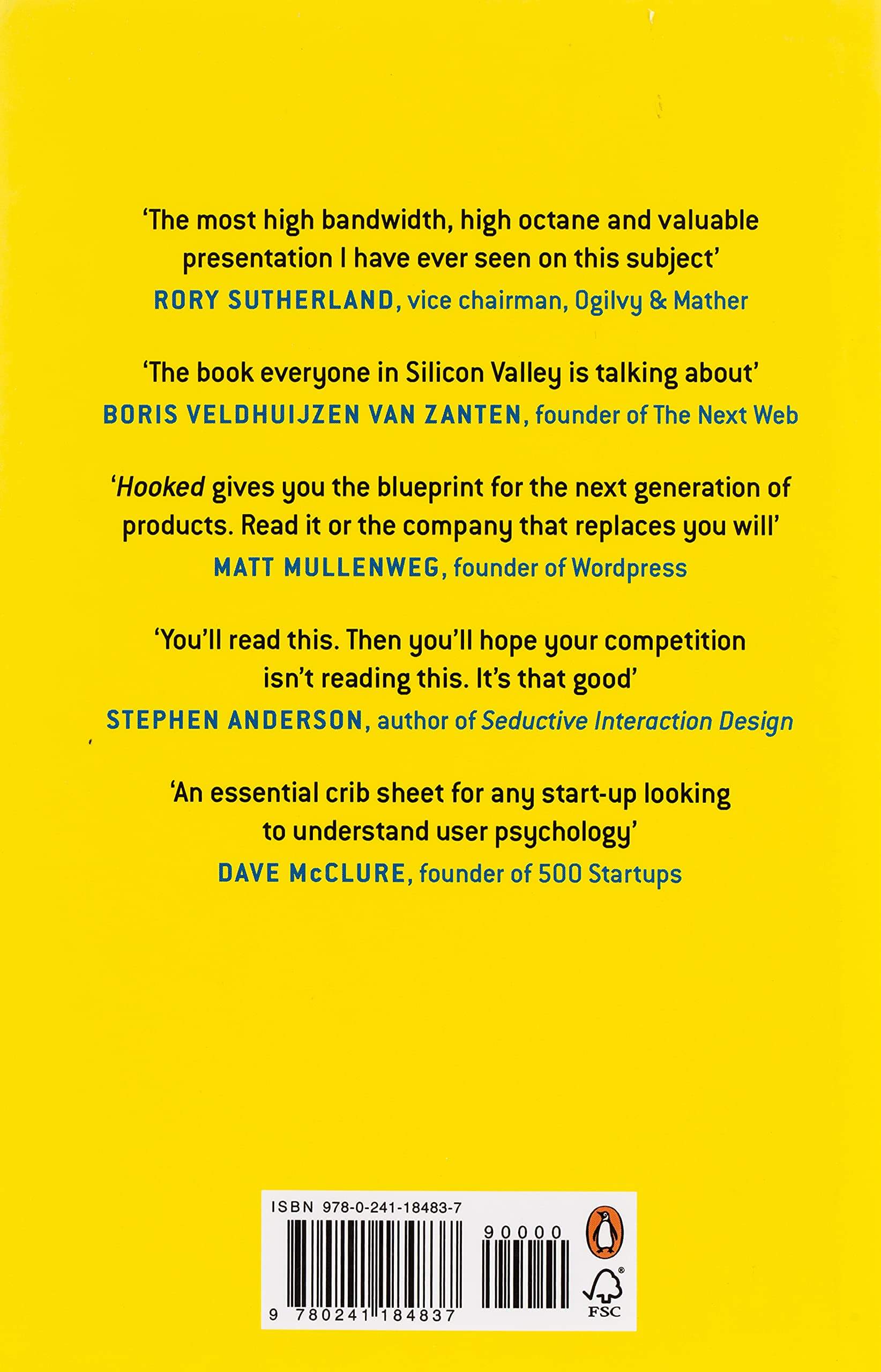
| ISBN | 9781591847786 |
| Formats | Paperback |
| Target Audience | Entrepreneurs, Product Teams, Designers, Marketers |
Out of stock
Nir Eyal’s Hooked: How to Build Habit-Forming Products is one of the most influential books in product design, behavioral psychology, startup growth, and UX strategy. First published in 2014, the book explains why certain digital products become part of users’ daily habits while others fail to retain attention.
The book introduces the famous Hook Model, a four-step behavioral framework used by many successful technology companies to create recurring user engagement. Eyal combines psychology, neuroscience, behavioral economics, and product strategy to explain how apps, platforms, and services encourage repeated usage without relying heavily on advertising
Main Concept: The Hook Model
The core idea of the book is the Hook Cycle, a repeating behavioral loop:
- Trigger
A cue that prompts users to take action.- External triggers: notifications, emails, ads
- Internal triggers: boredom, loneliness, curiosity, fear of missing out
- Action
The simplest behavior done in anticipation of reward.- Example: scrolling a feed, clicking a notification, refreshing a page
- Variable Reward
Unpredictable rewards that keep users engaged.- Likes, comments, new content, social validation
- Inspired partly by behavioral psychology and slot-machine mechanics
- Investment
Users put something into the product:- Time
- Data
- Content
- Followers
- Preferences
This investment increases the likelihood of future engagement.
Real-World Examples Discussed
The book references many popular digital products including:
Facebook
Twitter/X
Pinterest
Instagram
Google
WhatsApp
Why the Book Became Popular
The book became extremely influential in Silicon Valley because it provided:
- A practical framework for increasing retention
- Actionable product design strategies
- Psychological insights into user behavior
- Real startup/product examples
Many startups adopted the Hook Model for:
- Mobile app engagement
- User retention
- Subscription growth
- Social product design
Official Resources
| Author | Nir Eyal |
|---|---|
| Language | English |
| Type | Hardcover |
Be the first to review “Hooked by Nir Eyal”
Related products

Non-Fiction & Knowledge
රු2,450.00
3 X Rs. 816.67 or 8% Cashback with
or 3 X රු816.67 with
or up to 4 X රු612.50 with
-34%

Non-Fiction & Knowledge
Original price was: රු2,250.00.රු1,490.00Current price is: රු1,490.00.
3 X Rs. 496.67 or 8% Cashback with
or 3 X රු496.67 with
or up to 4 X රු372.50 with

Non-Fiction & Knowledge
රු1,700.00
3 X Rs. 566.67 or 8% Cashback with
or 3 X රු566.67 with
or up to 4 X රු425.00 with

Out of stock
Non-Fiction & Knowledge
රු1,800.00
3 X Rs. 600.00 or 8% Cashback with
or 3 X රු600.00 with
or up to 4 X රු450.00 with
-33%

Self-Help & Psychology
Original price was: රු2,300.00.රු1,550.00Current price is: රු1,550.00.
3 X Rs. 516.67 or 8% Cashback with
or 3 X රු516.67 with
or up to 4 X රු387.50 with
-14%

Out of stock
Self-Help & Psychology
Original price was: රු2,900.00.රු2,500.00Current price is: රු2,500.00.
3 X Rs. 833.33 or 8% Cashback with
or 3 X රු833.33 with
or up to 4 X රු625.00 with

Out of stock
Non-Fiction & Knowledge
රු1,600.00
3 X Rs. 533.33 or 8% Cashback with
or 3 X රු533.33 with
or up to 4 X රු400.00 with
-17%

Out of stock
Non-Fiction & Knowledge
Original price was: රු2,900.00.රු2,400.00Current price is: රු2,400.00.
3 X Rs. 800.00 or 8% Cashback with
or 3 X රු800.00 with
or up to 4 X රු600.00 with
Reviews
There are no reviews yet.