
No products in the cart.
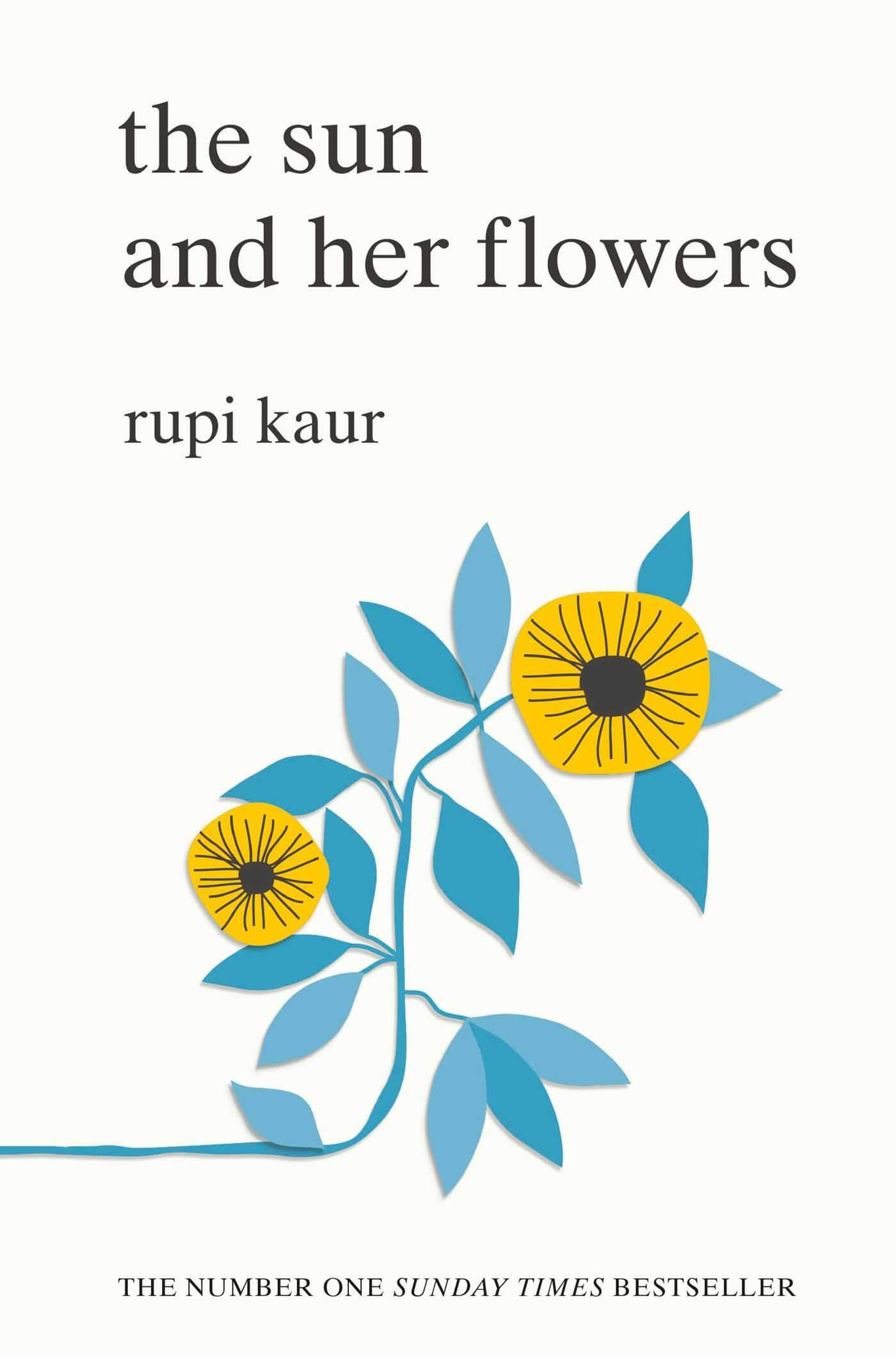
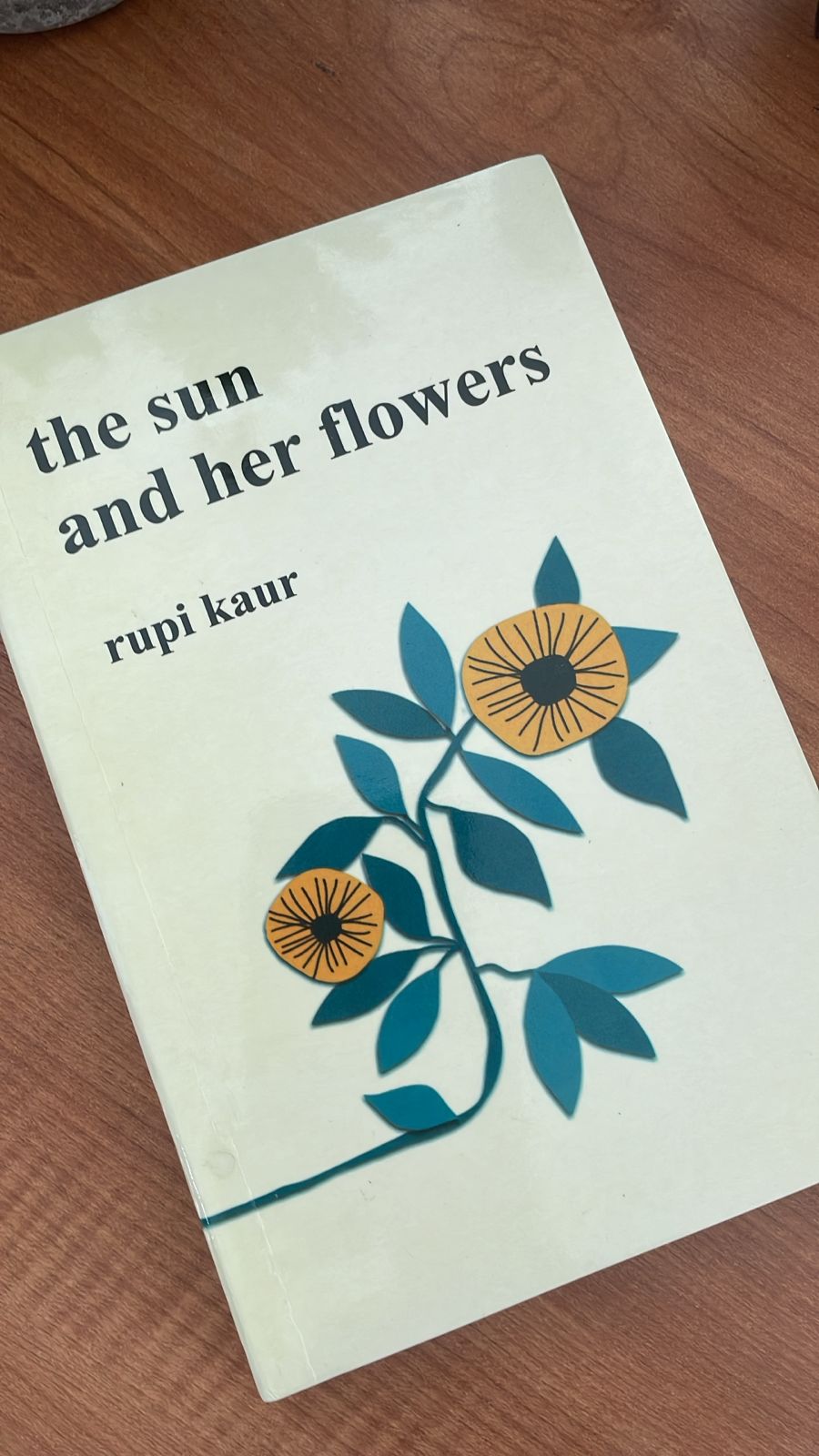

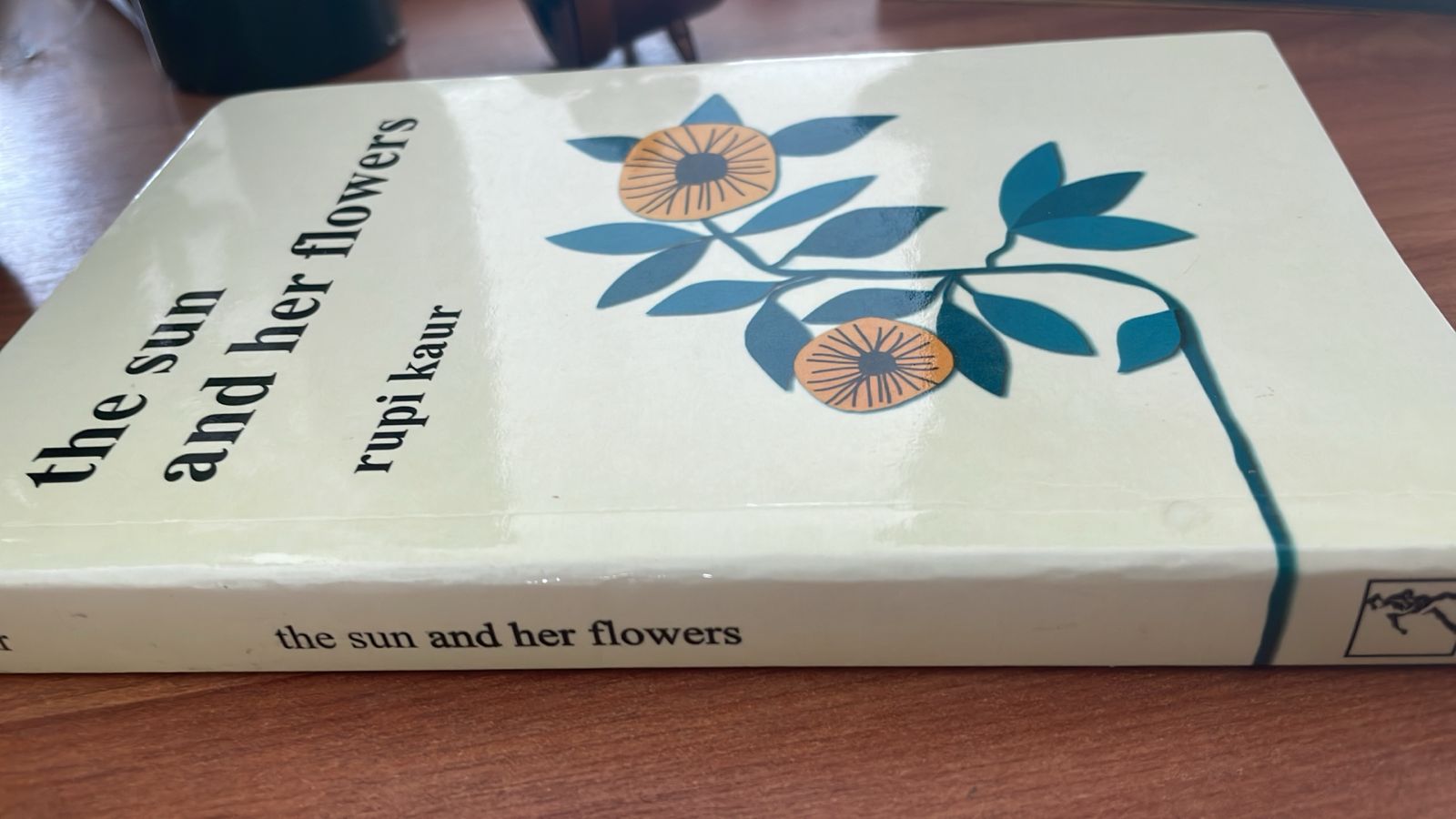
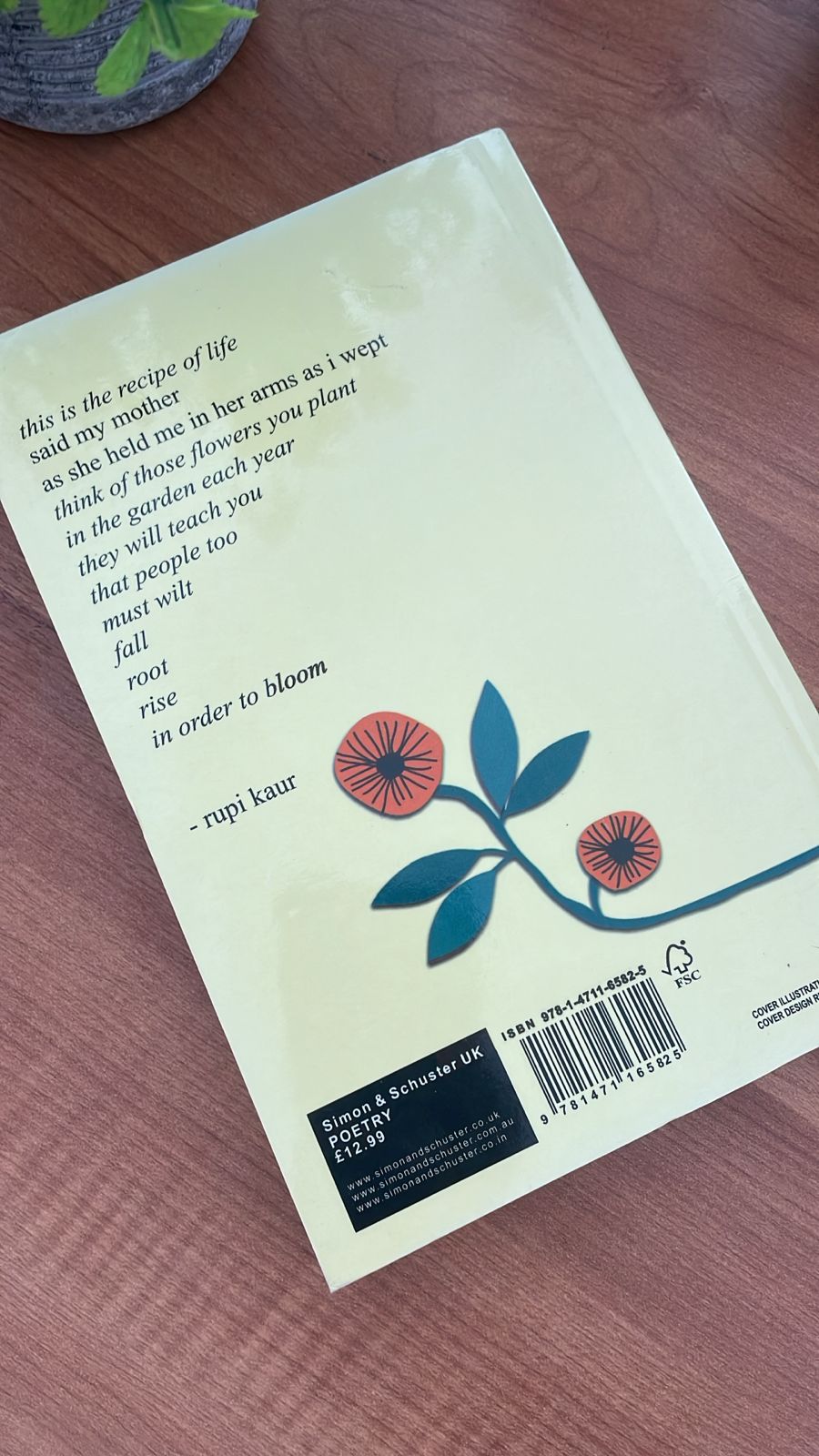
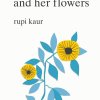
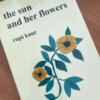


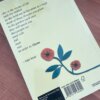
Sun and her flowers by Rupi Kaur


රු1,700.00
3 X Rs. 566.67 or 8% Cashback with


or 3 X රු566.67 with


or up to 4 X රු425.00 with


Experience the raw and evocative poetry of Rupi Kaur in “The Sun and Her Flowers.” This stunning collection explores themes of growth, healing, and resilience through powerful verses that resonate with readers around the world. Order now for a journey through love, loss, and the blooming of the human spirit.
5 in stock
The Sun and Her Flowers by Rupi Kaur
The Sun and Her Flowers by Rupi Kaur is a deeply personal poetry collection about love, heartbreak, healing, migration, self-worth, family, ancestry, and learning how to grow after loss.
This is Rupi Kaur’s second poetry collection.
Like her earlier work, it combines short poems with simple black-and-white illustrations.
The collection moves through five emotional stages: wilting, falling, rooting, rising, and blooming.
Together, these sections create a journey from pain toward healing and renewal.
About The Sun and Her Flowers
The Sun and Her Flowers explores what happens after something important falls apart.
That may be a relationship.
It may be a sense of identity.
It may be the feeling of belonging somewhere.
Rupi Kaur writes about these experiences using direct and accessible language.
Her poems often focus on emotions that can be difficult to explain.
Readers encounter grief, longing, loneliness, desire, self-doubt, strength, and hope.
5 Powerful Stages in The Sun and Her Flowers
1. Wilting
The first stage explores emotional exhaustion.
Love can be beautiful.
But losing it can leave someone feeling empty.
These poems examine separation, disappointment, and the pain that remains when a relationship ends.
Wilting represents the moment when something that once felt alive begins to fade.
It is uncomfortable.
But it is also part of change.
2. Falling
The second stage moves deeper into loss.
Sometimes healing does not begin immediately.
People may fall apart before they are able to rebuild.
The poems in this section explore vulnerability and emotional collapse.
There is grief.
There is confusion.
There is also the gradual realization that pain cannot be avoided forever.
3. Rooting
The Sun and Her Flowers then shifts toward identity and belonging.
Rooting is about understanding where you come from.
Kaur explores migration, family history, culture, ancestry, and the experience of building a life away from an original homeland.
Roots can connect people to family and tradition.
They can also influence how people understand themselves.
This section gives the collection a broader perspective beyond romantic love.
4. Rising
After loss and reflection comes rebuilding.
Rising focuses on strength, self-respect, and rediscovering personal value.
Healing is not presented as instant.
It happens gradually.
Readers see the speaker learning to stand independently rather than depending entirely on another person for validation.
This section is especially focused on growth.
5. Blooming
Blooming represents renewal.
The final stage is not about returning to the person you were before.
It is about becoming someone new.
The poems explore love in a healthier form.
They also celebrate self-worth, possibility, connection, and growth.
Blooming suggests that pain can change a person without permanently destroying them.
Love and Heartbreak
Love is one of the strongest themes in The Sun and Her Flowers.
The collection explores romantic love in several forms.
There is attraction.
There is intimacy.
There is separation.
There is also the difficult process of understanding when love is no longer healthy.
Kaur often writes about the difference between loving someone and losing yourself for that person.
That distinction becomes important throughout the collection.
Healing After Loss
Healing is not shown as a straight line.
Some days feel stronger.
Other days bring old emotions back.
This makes the collection relatable for readers who have experienced heartbreak or major change.
The poems suggest that recovery requires patience.
People may need to grieve before they can grow.
That process can be slow.
But it can still lead somewhere meaningful.
Migration and Belonging
One of the most important parts of the collection is its discussion of migration.
Rupi Kaur was born in Punjab, India, and raised in Canada.
Themes of displacement and belonging appear throughout her work.
In this collection, migration is connected to family history and identity.
What does home mean when your family comes from somewhere else?
Can a person belong to more than one place?
These questions add another layer to the book.
Mothers and Ancestry
Family relationships are also important.
Kaur reflects on mothers, daughters, heritage, and the sacrifices previous generations made.
Ancestry becomes a source of both pain and strength.
The poems encourage readers to recognize that personal identity is often connected to family history.
This gives the collection emotional depth beyond individual experience.
Self-Worth and Female Empowerment
The Sun and Her Flowers frequently explores self-respect.
Some poems focus on recovering from relationships that damaged confidence.
Others encourage women to define themselves beyond how other people see them.
Self-worth becomes part of the healing process.
The collection repeatedly returns to the idea that love should not require someone to abandon themselves.
Simple Language, Strong Emotion
Rupi Kaur’s poetry is known for being direct.
Many poems are short.
Some consist of only a few lines.
The language is intentionally accessible.
That simplicity allows the emotional message to remain central.
Readers who are new to poetry may find this style easier to approach than more traditional poetry collections.
Illustrations and Visual Style
The collection also includes Rupi Kaur’s minimalist illustrations.
These drawings often appear alongside poems.
They reinforce themes such as femininity, growth, nature, bodies, family, and healing.
The visual style has become closely associated with her work.
It gives the book a distinctive identity.
Who Should Read This Book?
The Sun and Her Flowers is ideal for readers who enjoy modern poetry.
It may particularly appeal to readers interested in love, heartbreak, healing, self-worth, feminism, migration, and personal growth.
Readers who enjoyed Milk and Honey will recognize Kaur’s style.
It can also be a good choice for readers who do not normally read poetry.
The short poems make it easy to read slowly.
Some readers may finish several sections at once.
Others may prefer reading a few poems and reflecting on them.
About Rupi Kaur
Rupi Kaur is a bestselling poet, artist, performer, and illustrator.
She first gained international attention with Milk and Honey.
She later published The Sun and Her Flowers, Home Body, and Healing Through Words.
Her work often explores love, loss, trauma, migration, healing, femininity, and identity.
Readers can learn more through the official publisher page for The Sun and Her Flowers.
Product Details
Title: The Sun and Her Flowers
Author: Rupi Kaur
Genre: Poetry / Contemporary Poetry
Language: English
Publisher: Andrews McMeel Publishing
Format: Trade Paperback
ISBN-13: 9781449486792
Pages: 256
Publication Date: October 3, 2017
Sections: Wilting, Falling, Rooting, Rising, Blooming
These specifications apply to the commonly sold Andrews McMeel trade paperback edition.
Other editions, including hardcover versions, use different ISBNs.
Always check the ISBN printed on your physical copy before entering final WooCommerce specifications.
Explore More Poetry and Literature
The Sun and Her Flowers is ultimately a collection about change.
Things end.
People leave.
Identity can feel uncertain.
But those experiences do not have to be the final stage.
Wilting can lead to rooting.
Falling can eventually lead to rising.
And healing can create space for something new to bloom.
Readers looking for more emotional and reflective writing can explore Fiction & Literature Books at Bargain Books.
For readers who enjoy accessible poetry about love, healing, identity, and personal growth, The Sun and Her Flowers is a meaningful collection to revisit at different stages of life.
.
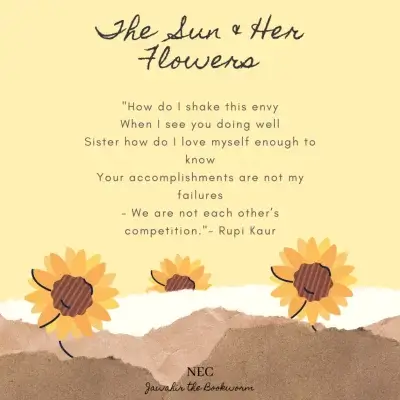
| Author | Rupi Kaur |
|---|---|
| Type | Paperback Printed Book |
| ISBN/ISSN | 1471165825, 978-1471165825 |
| Language | English |
| Pages | 256 |
Be the first to review “Sun and her flowers by Rupi Kaur”
Related products
-18%
Fiction & Literature
Original price was: රු2,750.00.රු2,250.00Current price is: රු2,250.00.
3 X Rs. 750.00 or 8% Cashback with
or 3 X රු750.00 with
or up to 4 X රු562.50 with
-23%

Out of stock
Contemporary Fiction
Original price was: රු2,200.00.රු1,700.00Current price is: රු1,700.00.
3 X Rs. 566.67 or 8% Cashback with
or 3 X රු566.67 with
or up to 4 X රු425.00 with
-21%
Out of stock
Contemporary Fiction
Original price was: රු2,400.00.රු1,900.00Current price is: රු1,900.00.
3 X Rs. 633.33 or 8% Cashback with
or 3 X රු633.33 with
or up to 4 X රු475.00 with
-10%

Out of stock
Original price was: රු5,000.00.රු4,500.00Current price is: රු4,500.00.
3 X Rs. 1,500.00 or 8% Cashback with
or 3 X රු1,500.00 with
or up to 4 X රු1,125.00 with
Out of stock
Classics & Literary Fiction
රු1,750.00
3 X Rs. 583.33 or 8% Cashback with
or 3 X රු583.33 with
or up to 4 X රු437.50 with

Out of stock
Children & Young Adult
රු12,000.00
3 X Rs. 4,000.00 or 8% Cashback with
or 3 X රු4,000.00 with
or up to 4 X රු3,000.00 with

Out of stock
Contemporary romance
රු1,850.00
3 X Rs. 616.67 or 8% Cashback with
or 3 X රු616.67 with
or up to 4 X රු462.50 with

Classics & Literary Fiction
රු1,800.00
3 X Rs. 600.00 or 8% Cashback with
or 3 X රු600.00 with
or up to 4 X රු450.00 with
Reviews
There are no reviews yet.