
No products in the cart.
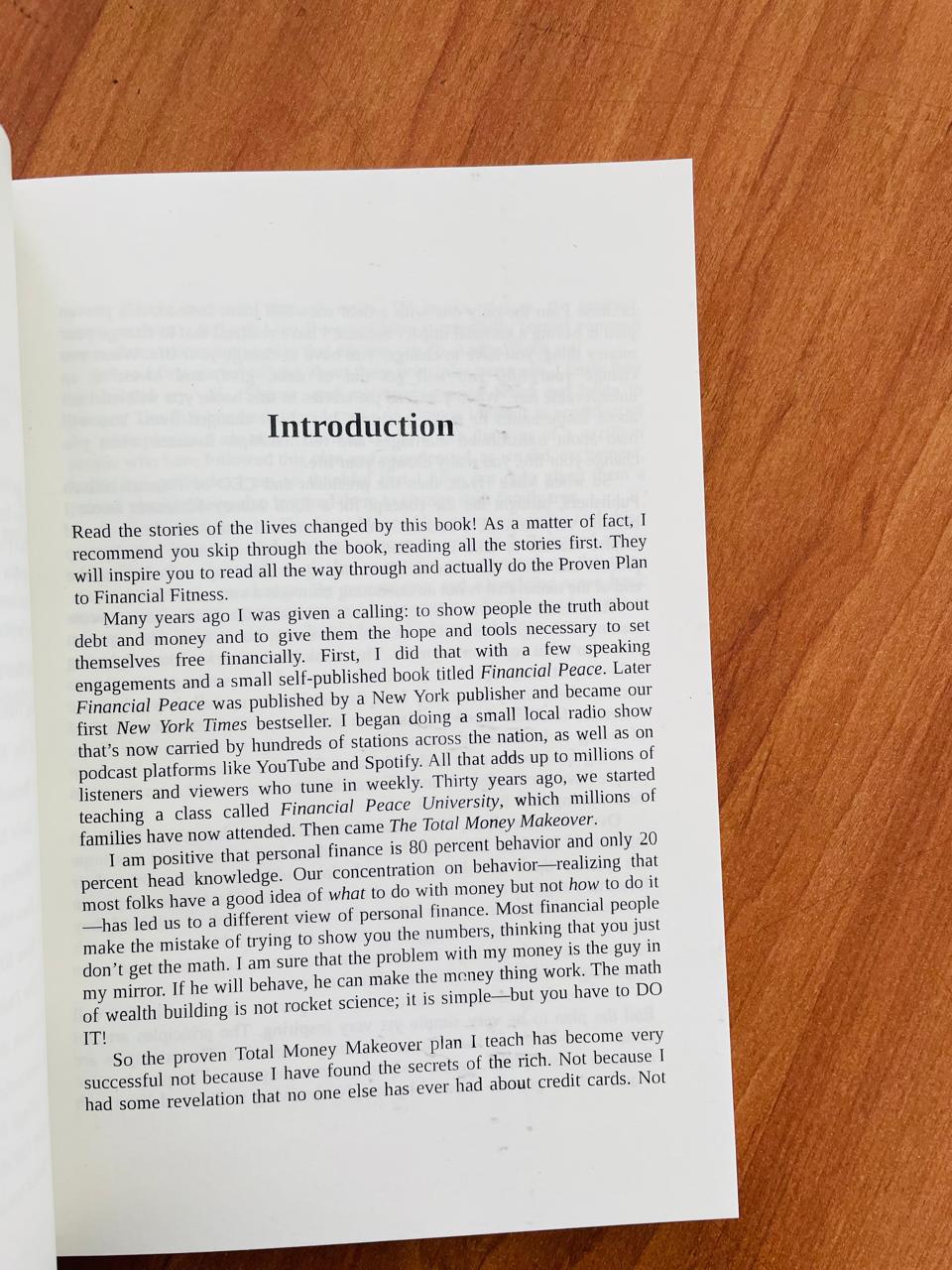
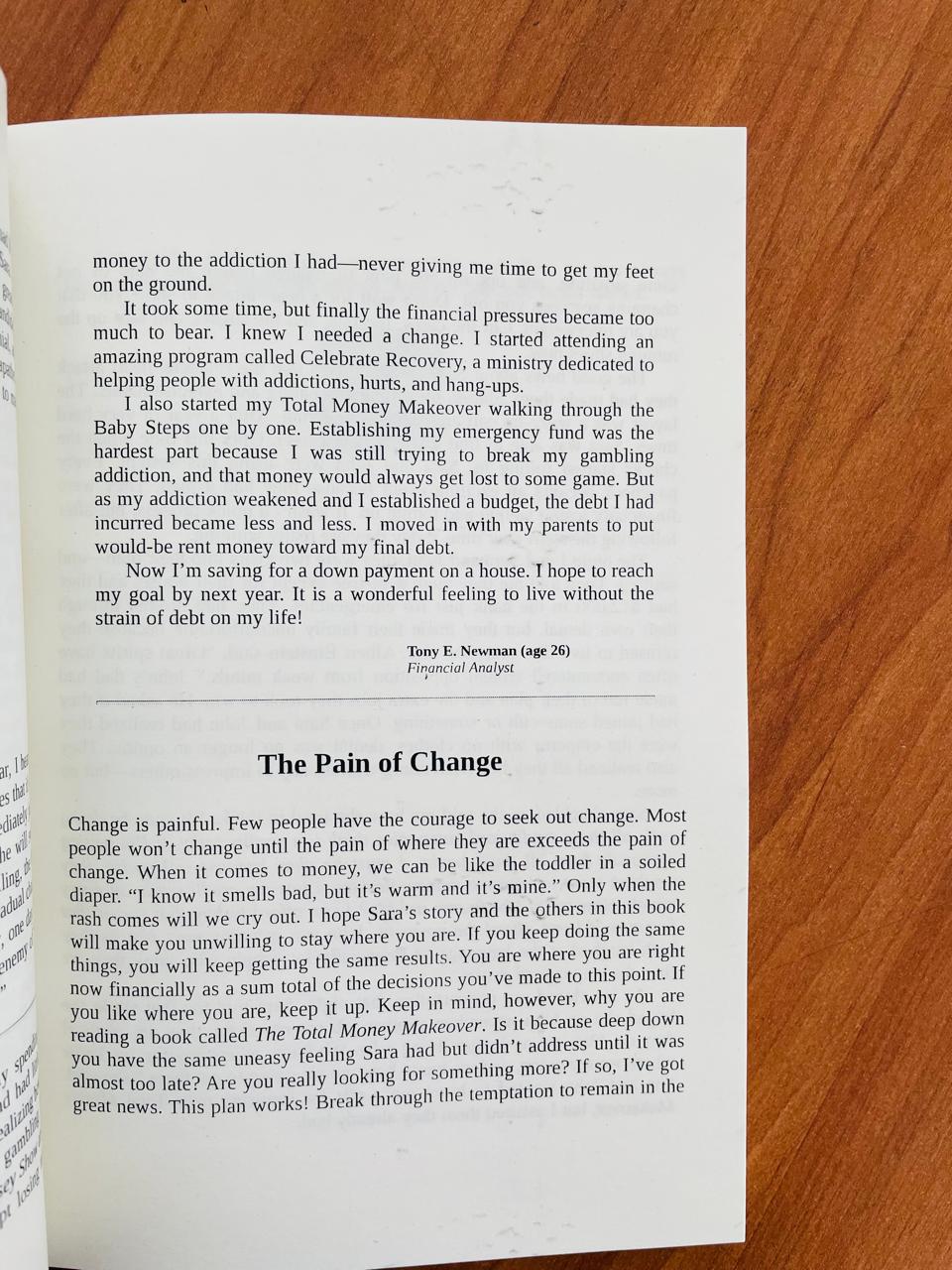




The Total Money Makeover by Dave Ramsey
The Total Money Makeover by Dave Ramsey is a practical personal finance guide designed to help readers take control of their money, eliminate debt, build savings, and create a clearer path toward long-term financial stability.
The book focuses on simple financial habits rather than complicated investment strategies.
Ramsey argues that changing money behavior is often more important than learning advanced financial theory.
The approach is direct.
Make a plan.
Stop adding new debt.
Build emergency savings.
Pay off what you owe.
Then begin building wealth.
About The Total Money Makeover
The Total Money Makeover presents a step-by-step approach to improving personal finances.
The book is especially aimed at people who feel stuck living paycheck to paycheck.
It also addresses people carrying credit-card balances, car loans, student debt, personal loans, and other financial obligations.
Instead of promising quick riches, the book emphasizes discipline and consistency.
Readers are encouraged to change everyday habits and follow a structured sequence.
The goal is to create a stronger financial foundation before moving toward larger wealth-building goals.
7 Powerful Lessons from The Total Money Makeover
1. Build an Emergency Fund
One of the first ideas in the book is to create emergency savings.
Unexpected expenses will happen.
Cars break down.
Medical expenses appear.
Homes need repairs.
Jobs can disappear.
Without savings, a small emergency can become new debt.
Building a cash buffer gives you another option.
Instead of borrowing every time something goes wrong, you can use money already set aside for emergencies.
2. Stop Depending on Debt
Debt is one of the central themes of The Total Money Makeover.
Ramsey challenges the idea that debt must be a normal part of life.
He encourages readers to avoid using borrowing as a routine solution for purchases.
The book discusses credit cards, car payments, personal loans, and other forms of consumer debt.
The goal is to reduce financial obligations so more income becomes available for saving and investing.
3. Use the Debt Snowball Method
The debt snowball is one of the best-known strategies in The Total Money Makeover.
The method involves listing debts from smallest balance to largest.
You continue making minimum payments on everything.
Then you direct extra money toward the smallest debt.
Once that balance is gone, the money that was being used for it moves to the next debt.
The process continues until the debts are eliminated.
The method focuses heavily on motivation and momentum.
4. Create a Real Budget
A budget tells your money where to go before it disappears.
Ramsey encourages readers to plan spending intentionally.
Income should be assigned to categories.
Housing.
Food.
Transportation.
Savings.
Debt repayment.
Insurance.
Giving.
Other priorities.
A budget is not meant simply to restrict spending.
It is a way to connect everyday financial decisions with larger goals.
5. Build a Larger Emergency Fund
After dealing with consumer debt, the next step is to strengthen savings.
A larger emergency fund can provide protection against more serious problems.
This may include job loss or major unexpected expenses.
Having savings can reduce financial stress.
It can also prevent people from immediately returning to debt when something goes wrong.
6. Invest for the Future
Once the financial foundation becomes stronger, the focus shifts toward long-term goals.
Retirement investing becomes important.
The book encourages consistency over time rather than searching for instant wealth.
Regular investing gives compound growth more time to work.
The exact investment choices should depend on individual circumstances, risk tolerance, tax rules, and financial goals.
7. Build Wealth with Purpose
The Total Money Makeover is not only about eliminating debt.
The larger goal is financial freedom.
Once debt is reduced and savings are established, money can be directed toward longer-term goals.
That may include retirement.
Education.
Home ownership.
Giving.
Travel.
Business.
Or greater flexibility in everyday life.
The Baby Steps Approach
Dave Ramsey’s wider financial system is commonly known as the Baby Steps.
The structure is designed to give people a clear sequence rather than asking them to solve every money problem at once.
The general progression moves through:
Emergency savings.
Debt elimination.
A larger emergency fund.
Retirement investing.
Education savings.
Mortgage payoff.
Then long-term wealth building and giving.
The simplicity is intentional.
Readers always know what financial priority comes next.
Why Behavior Matters
One of the strongest themes in The Total Money Makeover is that personal finance is not only mathematics.
Someone may understand interest rates perfectly and still overspend.
Another person may know they should save but continue delaying.
Habits matter.
Emotions matter.
Social pressure matters.
Lifestyle expectations matter.
Changing these behaviors can sometimes produce a larger financial improvement than learning another complex formula.
Breaking the Paycheck-to-Paycheck Cycle
Living paycheck to paycheck creates constant pressure.
One unexpected bill can cause serious problems.
The book encourages readers to gradually create space between income and expenses.
That means reducing unnecessary spending.
It may mean increasing income.
It may require selling things.
It may require temporary sacrifices.
The goal is to create enough margin to start moving forward.
Avoiding Lifestyle Inflation
Income increases do not always create financial progress.
Spending can rise just as quickly.
A salary increase may lead to a more expensive car.
A bigger house.
More subscriptions.
More dining out.
More monthly payments.
The book encourages readers to resist the pressure to increase spending simply because income has increased.
Financial progress often depends on what you keep rather than only what you earn.
Money Myths
Ramsey challenges several common beliefs about money.
Some people believe everyone will always have a car payment.
Others assume credit cards are necessary.
Some believe saving is impossible until income becomes much higher.
The Total Money Makeover encourages readers to question these assumptions.
The book asks whether common financial habits actually improve your life or simply keep you dependent on monthly payments.
The Power of Momentum
Financial change can feel slow at the beginning.
A small emergency fund may not feel impressive.
Paying off one small debt may not feel life-changing.
But small wins can create momentum.
That psychological progress matters.
Each completed step makes the next one feel more achievable.
This is one reason the debt snowball focuses on balance size rather than only interest rates.
Money and Relationships
Money can create serious tension between couples and families.
Different spending styles can cause conflict.
One person may want to save aggressively.
Another may prefer enjoying money now.
The book encourages communication and shared financial goals.
A budget works better when everyone involved understands the plan.
Saving for Retirement
Retirement planning becomes easier when started earlier.
Time allows compound growth to have a larger effect.
The book emphasizes consistent contributions rather than trying to predict markets perfectly.
However, retirement planning can vary significantly between countries.
Tax systems, retirement accounts, and investment products differ.
Readers in Sri Lanka or other countries should adapt the general principles to the financial products and regulations available locally.
Paying Off the Mortgage
The later stages of the plan include becoming completely debt-free.
That includes the home mortgage.
Removing a mortgage payment can significantly reduce monthly expenses.
It can also create more flexibility for investing, saving, or other goals.
This is a long-term objective rather than an immediate first step.
Financial Peace vs. Looking Wealthy
A person can appear wealthy while carrying large amounts of debt.
Expensive cars and houses do not automatically mean financial security.
The book encourages readers to focus less on appearances.
A stronger balance sheet may be less visible.
Savings.
Lower debt.
Investments.
Emergency reserves.
These may matter more than impressing other people.
Discipline and Delayed Gratification
Many of the strategies in The Total Money Makeover require patience.
You may have to delay purchases.
You may need to choose a cheaper option.
You may need to reduce entertainment spending temporarily.
This can be uncomfortable.
But the idea is to trade some short-term convenience for greater long-term freedom.
Who Should Read This Book?
The Total Money Makeover is ideal for readers who want a straightforward introduction to personal finance.
It may be particularly helpful for people who want to:
Pay off debt.
Start budgeting.
Build emergency savings.
Stop living paycheck to paycheck.
Improve financial habits.
Plan for retirement.
Create clearer money goals.
It is also suitable for readers who prefer practical steps over highly technical financial theory.
Important Financial Note
The book reflects Dave Ramsey’s specific personal-finance philosophy.
Some financial professionals disagree with parts of his approach, particularly around credit use, debt repayment order, and certain investing assumptions.
For example, paying the highest-interest debt first can minimize total interest mathematically, while the debt snowball prioritizes psychological momentum.
Readers should therefore treat The Total Money Makeover as one framework rather than the only possible financial strategy.
Tax, retirement, banking, and investment rules also differ by country.
Consider professional financial advice when making major financial decisions.
About Dave Ramsey
Dave Ramsey is an American personal finance author, radio host, and founder of Ramsey Solutions.
His work focuses on budgeting, debt elimination, saving, investing, and wealth building.
He is also known for The Ramsey Show and the broader Baby Steps financial system.
Readers can learn more through the official Ramsey Solutions page for The Total Money Makeover.
Product Details
Title: The Total Money Makeover
Author: Dave Ramsey
Genre: Personal Finance / Money Management / Self-Help
Language: English
Original Publication: 2003
Publisher: Thomas Nelson / Nelson Books
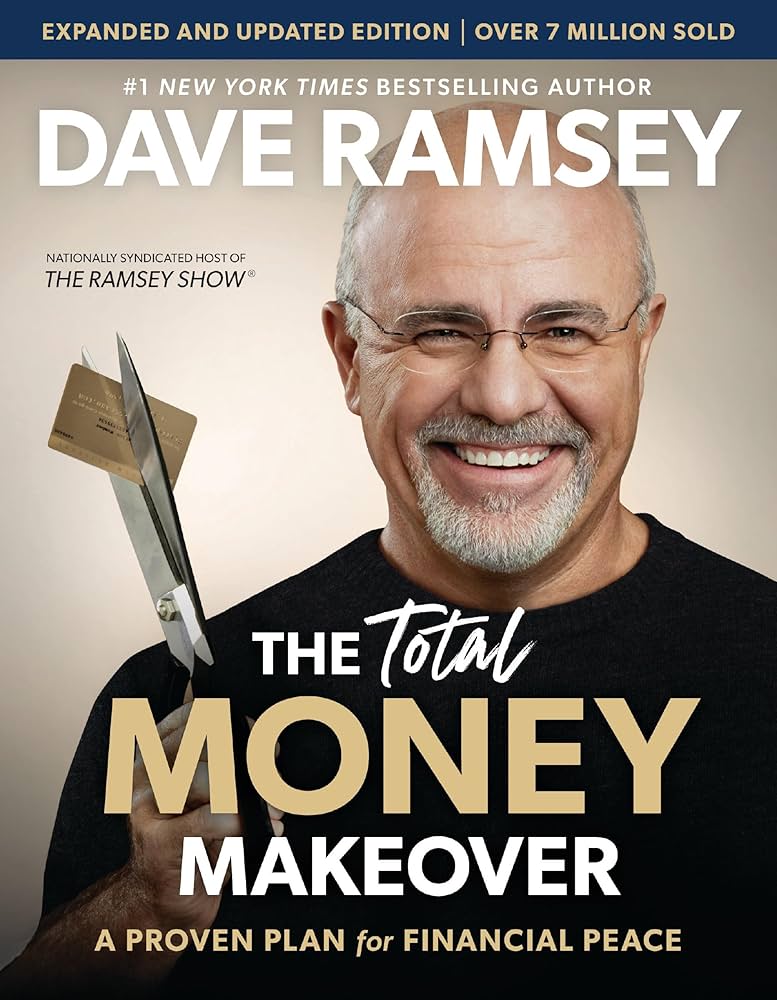
2024 Updated and Expanded Edition
Full Title: The Total Money Makeover: Updated and Expanded Edition
Publisher: Thomas Nelson
Publication Date: May 14, 2024
Pages: 237
Format: Hardcover
This 20th-anniversary edition includes updated examples and discussions of topics such as mortgages, car loans, retirement, college funding, buy-now-pay-later services, and payday loans.
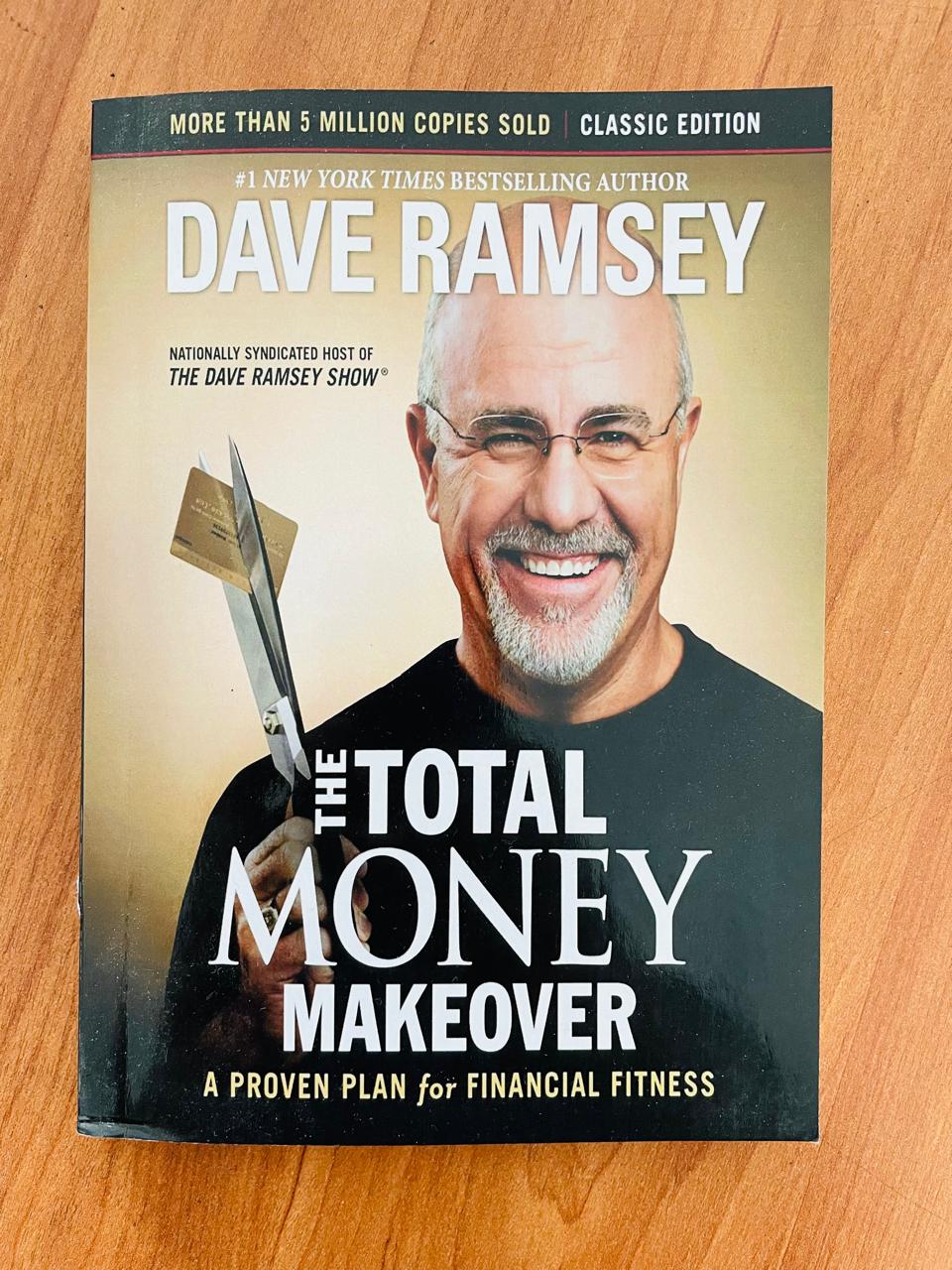
2013 Classic Edition
A widely available older edition is:
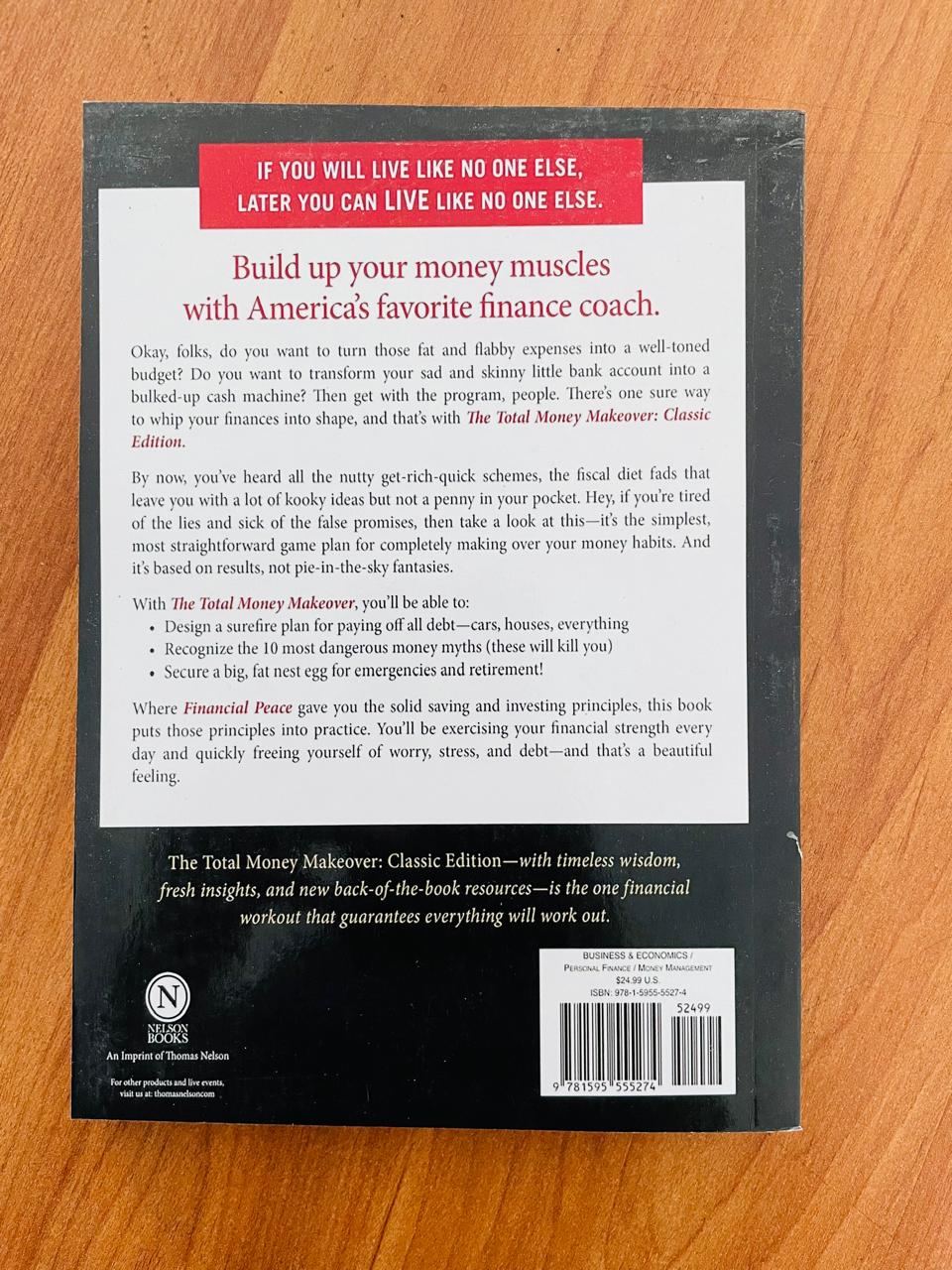
ISBN-13: 9781595555274
Publisher: Thomas Nelson
Edition: Classic Edition
Publication Year: 2013
Format: Hardcover
Pages: Approximately 237–272 depending on whether front matter and supplementary pages are included in the retailer count.
Because many editions of this book exist, always check the ISBN and format printed on your physical copy before entering final WooCommerce specifications.
Explore More Personal Finance Books
The Total Money Makeover is built around a simple idea.
Financial progress becomes easier when you stop trying to fix everything at once.
Start with one step.
Build some savings.
Attack debt.
Create a stronger emergency fund.
Then start building toward larger goals.
Readers looking for more books about budgeting, money management, investing, and financial habits can explore Business, Finance & Economics Books at Bargain Books.
You can also explore Self-Help & Psychology Books at Bargain Books.
For readers who want a structured and motivational approach to improving everyday finances, The Total Money Makeover offers a clear starting framework.
Be the first to review “Total Money Makeover by Dave Ramsey”
Related products

Money Management
රු1,400.00
3 X Rs. 466.67 or 8% Cashback with


or 3 X රු466.67 with


or up to 4 X රු350.00 with

Out of stock
Business, Finance & Economics
රු1,990.00
3 X Rs. 663.33 or 8% Cashback with
or 3 X රු663.33 with
or up to 4 X රු497.50 with

Out of stock
Business, Finance & Economics
රු1,300.00
3 X Rs. 433.33 or 8% Cashback with
or 3 X රු433.33 with
or up to 4 X රු325.00 with
-17%

Out of stock
Original price was: රු2,900.00.රු2,400.00Current price is: රු2,400.00.
3 X Rs. 800.00 or 8% Cashback with
or 3 X රු800.00 with
or up to 4 X රු600.00 with

Out of stock
රු1,750.00
3 X Rs. 583.33 or 8% Cashback with
or 3 X රු583.33 with
or up to 4 X රු437.50 with

Out of stock
Damaged & Imperfect Books
රු950.00
3 X Rs. 316.67 or 8% Cashback with
or 3 X රු316.67 with
or up to 4 X රු237.50 with

Out of stock
Business
රු1,300.00
3 X Rs. 433.33 or 8% Cashback with
or 3 X රු433.33 with
or up to 4 X රු325.00 with
Business
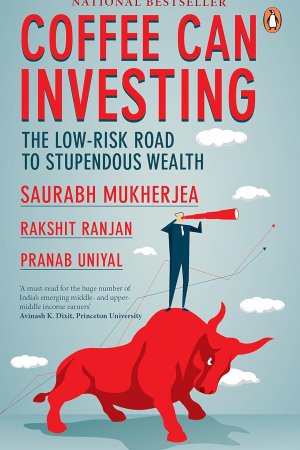
Coffee Can Investing by Sanjay Bakshi – A Simple, High-Reward Strategy for Building Long-Term Wealth
රු1,750.00
3 X Rs. 583.33 or 8% Cashback with
or 3 X රු583.33 with
or up to 4 X රු437.50 with
Reviews
There are no reviews yet.