
No products in the cart.
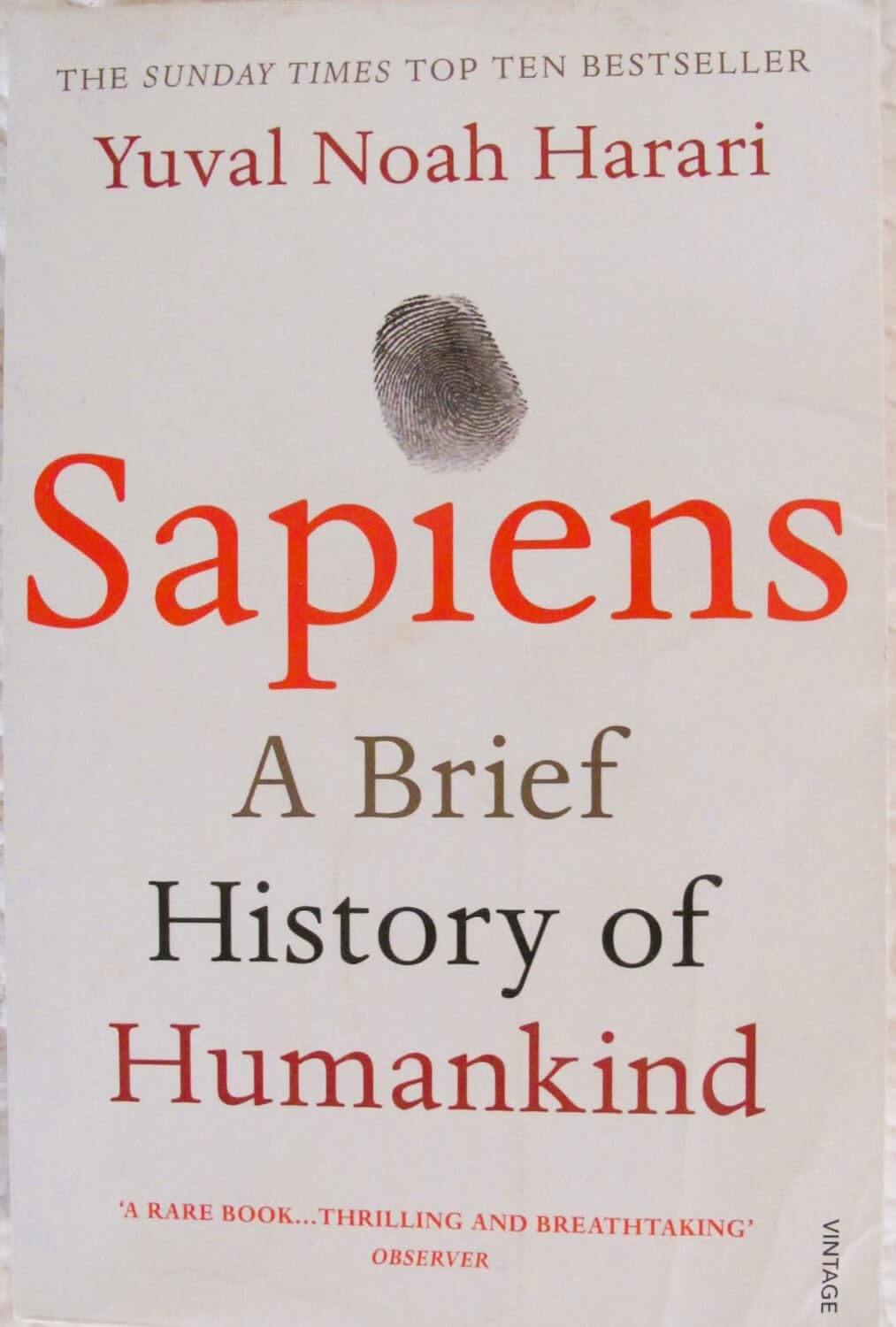
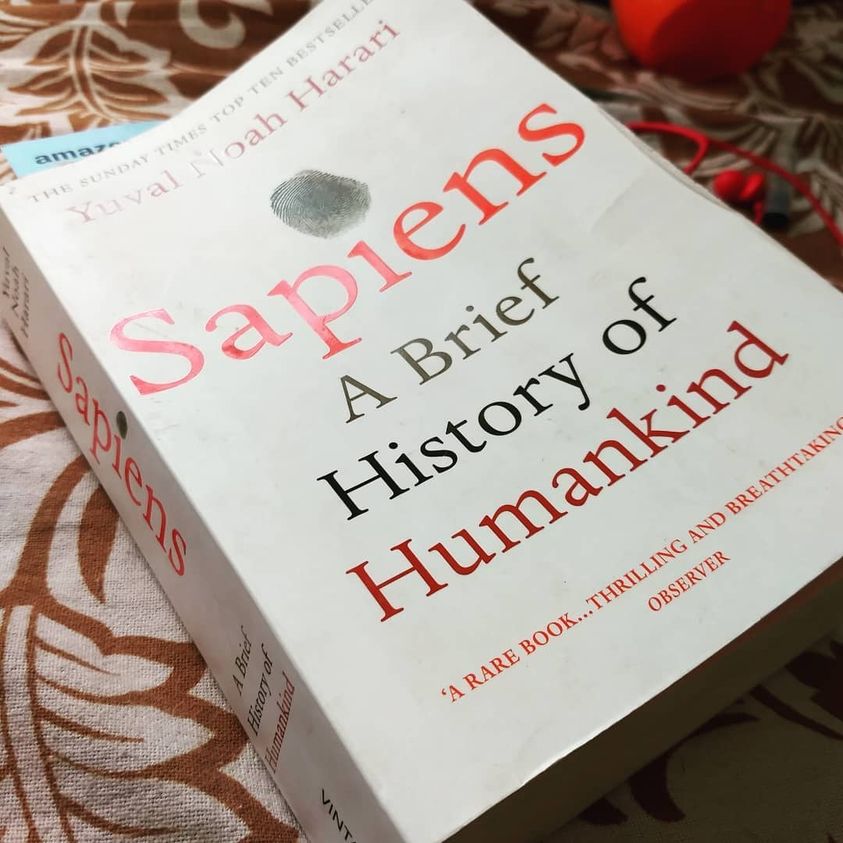


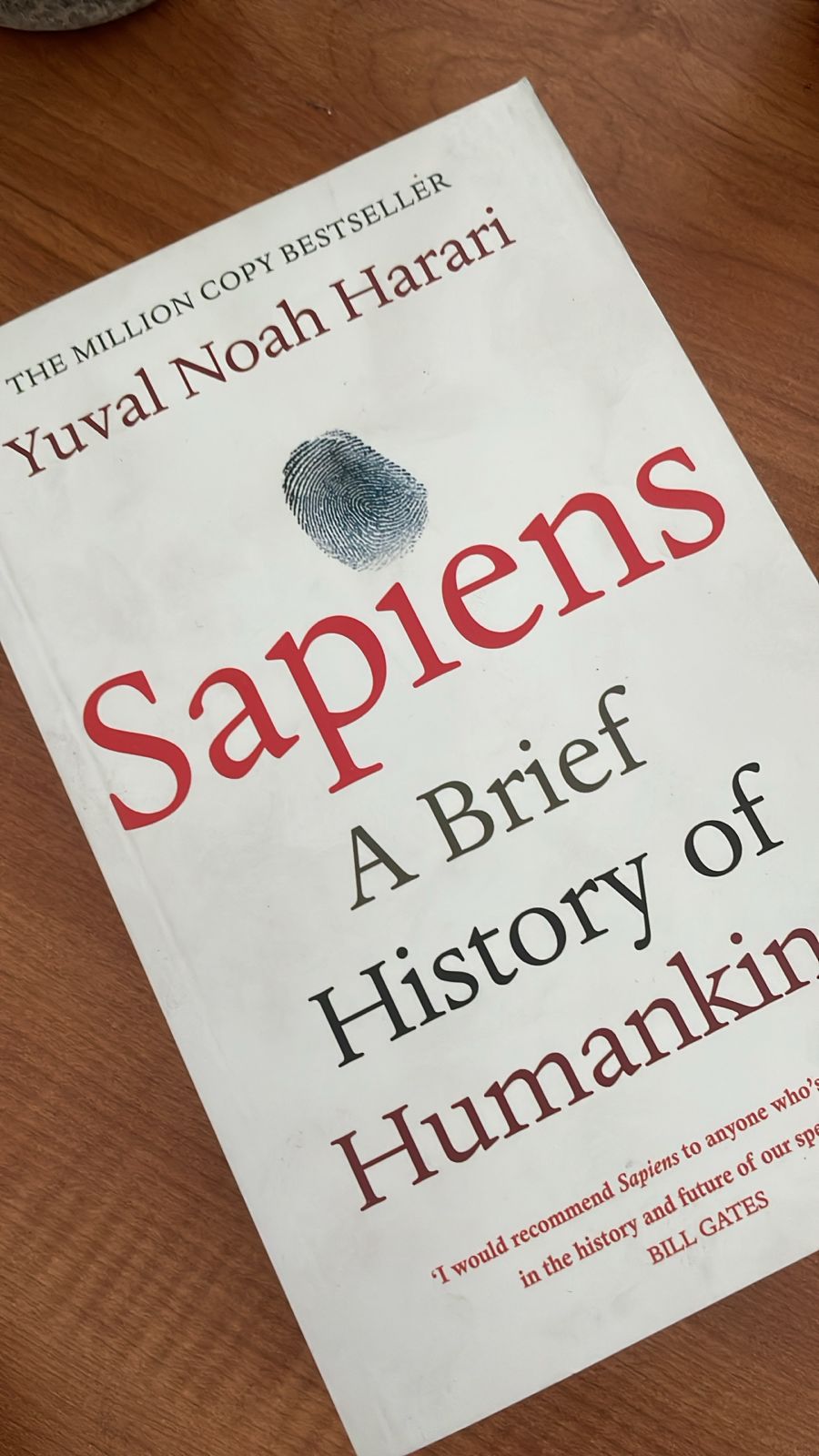
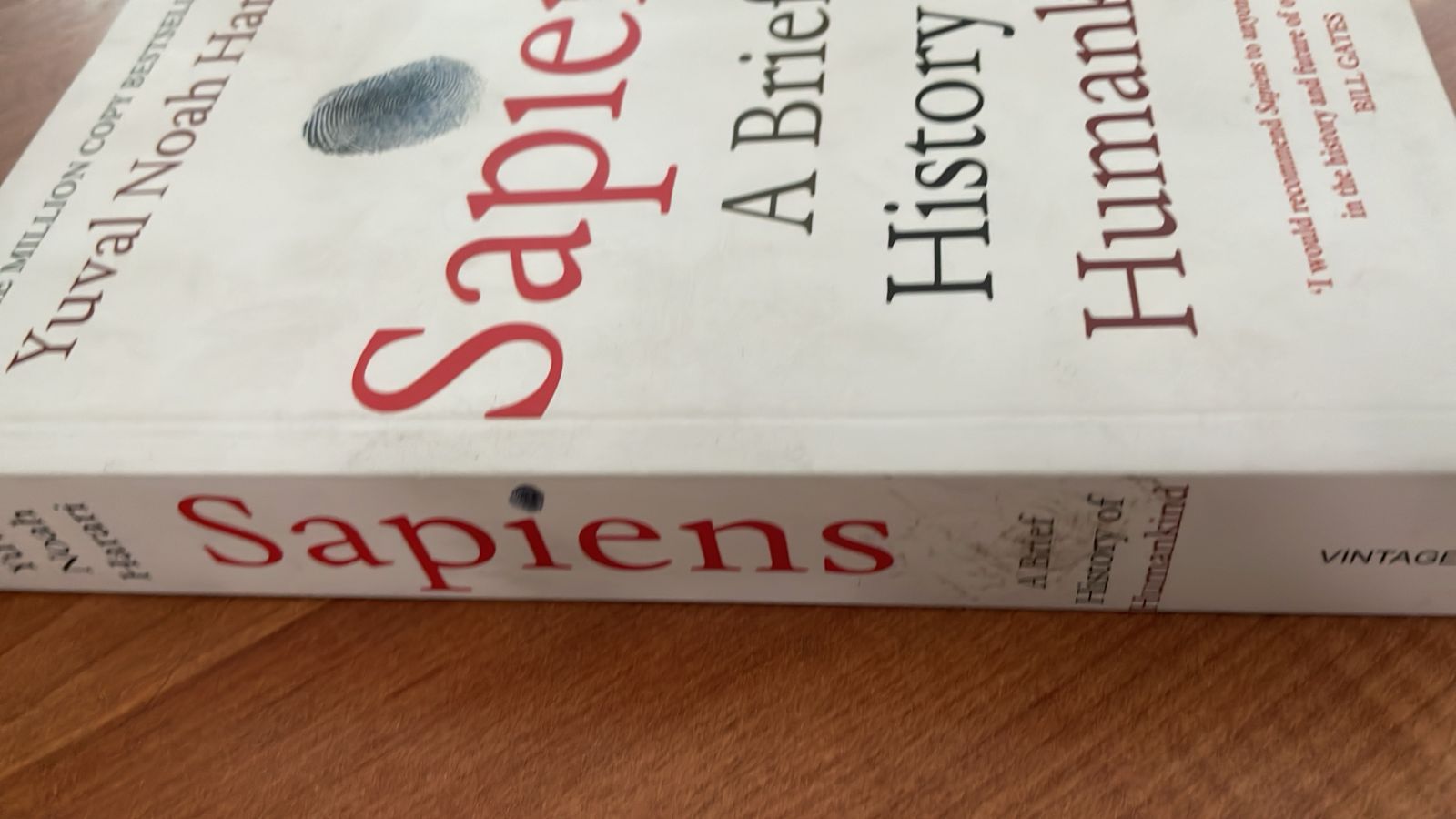




Sapiens by Yuval Noah Harari


රු1,900.00
3 X Rs. 633.33 or 8% Cashback with


or 3 X රු633.33 with


or up to 4 X රු475.00 with


“Sapiens: A Brief History of Humankind” by Yuval Noah Harari is a thought-provoking exploration of the history and impact of Homo sapiens. Harari traces the journey of the human species from the emergence of modern humans to the present day, examining how cultural, economic, and technological developments have shaped our societies and the world we live in.
54 in stock
Sapiens by Yuval Noah Harari is an ambitious and thought-provoking journey through the history of humankind, exploring how one species—Homo sapiens—went from being one relatively insignificant animal to becoming the dominant force on Earth.
Around 100,000 years ago, several different human species inhabited the planet.
Today, only Homo sapiens remains.
How did that happen?
Why did humans begin cooperating in enormous groups?
Why did hunter-gatherers settle into agricultural societies?
Why do billions of people trust money?
How did religions, kingdoms and empires unite strangers?
Why did science transform human power so dramatically?
And after all this progress, are humans actually happier?
These are some of the enormous questions explored in Sapiens by Yuval Noah Harari.
Rather than presenting history as a simple sequence of kings, wars and dates, Harari organizes the human story around several major transformations.
The Cognitive Revolution.
The Agricultural Revolution.
The growth of large human societies.
And the Scientific Revolution.
Across these stages, he examines language, myths, religion, money, capitalism, imperialism, science, technology, happiness and the growing ability of humans to reshape nature itself.
Penguin describes Sapiens as spanning human history from early humans through the Cognitive, Agricultural and Scientific Revolutions.
Sapiens by Yuval Noah Harari – Book Overview
Sapiens by Yuval Noah Harari begins from an unusual perspective.
For most of Earth’s history, humans were not particularly important.
We were simply animals living inside ecosystems.
Then something changed.
Homo sapiens developed ways of communicating and cooperating that allowed increasingly large groups of strangers to work together.
That ability transformed everything.
Harari’s central interest is not simply:
What happened?
He repeatedly asks:
Why did it happen?
And:
What did it cost?
This gives the book its provocative character.
The Cognitive Revolution
One of Harari’s major organizing ideas is the Cognitive Revolution, which he places roughly tens of thousands of years ago.
Human language became extraordinarily flexible.
People could communicate not only about:
Food.
Danger.
Animals.
Locations.
but also about things that did not physically exist in the same way.
Stories.
Spirits.
Tribes.
Rules.
Shared identities.
Harari argues that this ability became one of the foundations of large-scale human cooperation.
The Power of Shared Stories
Imagine 10 strangers.
They may cooperate because they personally know one another.
Now imagine:
10,000 people.
One million.
One billion.
Personal relationships alone cannot hold groups of that size together.
Humans use shared systems.
A nation exists partly because millions of people accept the idea of that nation.
A corporation exists because legal and social systems recognize it.
Money works because people collectively trust that it represents value.
Harari refers to many of these systems as forms of shared or imagined order.
Imagination Changed Human Cooperation
The important point is not that these things are meaningless.
Money has real consequences.
Companies employ real people.
Laws can send someone to prison.
Countries have borders and armies.
The idea is that their power depends heavily on shared human agreement.
That makes imagination surprisingly important to civilization.
Language
Language allows humans to share information.
But Harari argues that it also allows us to create common narratives.
Two strangers who believe in the same institution can cooperate even if they have never met before.
This helped Homo sapiens organize at scales other species could not match.
Homo Sapiens and Other Human Species
The book discusses a world in which Homo sapiens was not the only human species.
Other human groups included Neanderthals and other archaic humans.
Harari explores competing possibilities surrounding interaction between these populations, including migration, interbreeding and replacement.
Readers should remember that human-origins research continues to develop as genetic and archaeological evidence changes.
Sapiens is a broad synthesis rather than a specialist scientific textbook.
Humans as Ecological Disruptors
Harari also challenges the romantic idea that environmental destruction began only with factories.
As humans expanded into new regions, large animals disappeared from many ecosystems.
The exact causes of prehistoric extinctions are often debated and can involve climate as well as human activity.
But the broader point remains important:
Humans began altering ecosystems long before modern industry.
Hunter-Gatherer Life
The book spends significant time examining hunter-gatherer societies.
Harari argues that readers should not automatically assume every aspect of pre-agricultural life was miserable.
Foragers often possessed detailed knowledge of:
Plants.
Animals.
Landscapes.
Weather.
Seasonal patterns.
Their lives were different from modern life, not simply primitive versions of it.
The Agricultural Revolution
Then came one of humanity’s biggest transformations.
Agriculture.
Humans began domesticating plants and animals.
Settling permanently.
Growing crops.
Building villages.
Eventually creating larger societies.
Conventional history often presents this as straightforward progress.
Harari complicates that story.
Was Agriculture Really Progress?
Agriculture allowed human populations to grow dramatically.
But did it immediately improve the life of the average person?
Not necessarily.
Farming could involve:
Hard physical work.
Repetitive labor.
Poor nutrition.
Disease.
Dependence on a limited number of crops.
Social inequality.
Harari provocatively argues that agricultural success for the species did not automatically mean better lives for every individual.
Wheat and Humans
One of the book’s most memorable arguments reverses the normal relationship between humans and crops.
Humans think:
We domesticated wheat.
Harari playfully asks whether wheat, from an evolutionary perspective, effectively domesticated humans.
Before agriculture, wheat existed in limited areas.
After humans began cultivating it, wheat spread across enormous territories.
Humans changed their daily routines around the needs of the crop.
It is an intentionally provocative way of thinking about domestication.
Population Versus Individual Well-Being
This introduces an important distinction.
A development may be successful for a species while still creating difficult conditions for individuals.
Agriculture allowed more humans to exist.
But more humans does not automatically mean happier humans.
This question appears repeatedly throughout Sapiens by Yuval Noah Harari.
Permanent Settlements
Agriculture encouraged people to remain in one place.
That produced new possibilities.
Villages.
Towns.
Cities.
Stored food.
Property.
Government.
Taxation.
But permanent settlement also required more complicated social organization.
Surplus Food
Agricultural surplus allowed some people to specialize.
Not everyone needed to grow food.
Some could become:
Soldiers.
Priests.
Officials.
Craftspeople.
Merchants.
Rulers.
This specialization helped create increasingly complex societies.
Hierarchies
Large societies also developed hierarchies.
Class.
Gender roles.
Political rank.
Economic inequality.
Some of these systems were justified through stories about:
Religion.
Nature.
Tradition.
Divine authority.
Harari asks readers to examine how societies turn invented social arrangements into things that feel natural or inevitable.
The Unification of Humankind
Another major part of Sapiens by Yuval Noah Harari explores forces that connected increasingly large groups of people.
Harari gives particular attention to:
Money.
Empires.
Religion.
These systems created networks across cultural boundaries.
Money
Money is one of Harari’s favorite examples of shared trust.
A banknote itself has limited physical usefulness.
A number inside a banking database is even more abstract.
Yet people exchange:
Food.
Labor.
Property.
Time.
Services.
in return for money because they trust that others will recognize its value.
Money as Universal Trust
People from different religions and cultures may disagree about almost everything.
But they can often still trade.
Money creates a system of trust that can cross:
Language.
Culture.
Religion.
Nationality.
That makes it one of history’s most successful coordination technologies.
Empires
Harari also examines empires.
Empires have conquered, exploited and destroyed.
They have also spread:
Languages.
Administrative systems.
Infrastructure.
Laws.
Cultures.
Ideas.
The history is therefore complicated.
Modern societies often contain cultural elements created through centuries of imperial expansion and interaction.
Religion
Religion is another major system for large-scale cooperation.
Shared religious traditions can create:
Moral rules.
Community.
Identity.
Institutions.
Calendars.
Rituals.
Harari takes a broad comparative approach, discussing different religious traditions and belief systems within the wider question of how humans create shared social order.
Religion and Social Organization
Whether a reader personally accepts or rejects particular religious claims, Harari is interested in religion historically as an enormously influential information and social system.
Religious beliefs have shaped:
Governments.
Laws.
Wars.
Art.
Family structures.
Education.
Moral systems.
That makes them impossible to separate from human history.
The Scientific Revolution
Another major turning point begins when humans become increasingly willing to say:
We do not know.
Harari emphasizes this as a crucial feature of modern science.
Admitting ignorance creates a reason to investigate.
Observe.
Experiment.
Measure.
Test.
Revise.
Knowledge Through Admitting Ignorance
This may sound simple.
But civilizations often built authority around claims of certainty.
Scientific culture gave increasing legitimacy to the idea that existing knowledge could be incomplete.
That opened the door to systematic discovery.
Science and Power
Scientific research eventually became closely connected with:
Military power.
Industry.
Medicine.
Exploration.
Economic growth.
Technology.
Governments and businesses invested in knowledge because knowledge could produce practical advantages.
Science and Empire
Harari also examines the relationship between scientific exploration and imperial expansion.
Explorers mapped territories.
Naturalists catalogued species.
Governments gathered geographical knowledge.
Scientific curiosity and political expansion sometimes developed together.
This complicates simple stories in which science progresses entirely independently of power.
Capitalism
Sapiens by Yuval Noah Harari also spends substantial time examining capitalism.
One important idea is credit.
A modern economy often depends on belief in future growth.
A bank lends money because it expects future economic activity to generate enough value for repayment.
Investment therefore depends partly on confidence about the future.
Trust in the Future
This allows businesses to spend money before they have earned it.
Borrow.
Invest.
Build.
Expand.
If people expect the economy to grow, credit becomes easier to create.
This helps explain why financial systems became so important to modern development.
Capitalism and Growth
Economic growth has produced enormous increases in:
Production.
Technology.
Infrastructure.
Consumption.
But growth also creates questions about:
Inequality.
Resources.
Environmental costs.
Labor.
Whether endless expansion is sustainable.
Harari invites readers to think about both benefits and costs.
Industrial Revolution
The Industrial Revolution transformed humanity’s relationship with energy.
Humans learned to convert energy sources into mechanical power on an unprecedented scale.
Steam.
Coal.
Oil.
Electricity.
Engines.
Machines.
Industrialization dramatically increased productivity.
Humans and Animals
Harari also pays attention to domesticated animals.
Modern industrial agriculture can produce enormous quantities of food.
But he raises ethical questions about the conditions in which billions of animals live.
A system can be economically efficient while still producing suffering.
Consumerism
Modern economies need people not only to produce more but also to consume more.
Advertising encourages desire.
Products promise:
Status.
Happiness.
Identity.
Improvement.
This creates another question explored by the book:
Does increasing consumption necessarily make people happier?
Are We Happier?
This is one of the most interesting questions in Sapiens by Yuval Noah Harari.
Modern humans have access to technologies that ancient kings could never imagine.
Antibiotics.
Air travel.
Smartphones.
Electricity.
Modern sanitation.
But are we proportionally happier?
Material capability and subjective well-being are not identical.
Happiness
Harari examines happiness from several perspectives.
Biology.
Expectations.
Meaning.
Social conditions.
He questions the assumption that historical progress should automatically be measured only through:
Power.
Population.
Production.
Perhaps human well-being deserves its own measurement.
Expectations
One reason greater wealth may not produce proportional happiness is that expectations change.
A luxury can become normal.
Then necessary.
Then invisible.
The standard continually moves.
This makes happiness more complicated than simply accumulating more.
Buddhism and Desire
Harari discusses Buddhist perspectives on suffering and craving as one example of a tradition that analyzes the relationship between desire and dissatisfaction.
The discussion is broad rather than a detailed guide to Buddhist philosophy.
Readers wanting rigorous religious study should pair it with specialist sources.
The Individual
Modern culture often emphasizes individual freedom.
Choose your:
Career.
Partner.
Identity.
Lifestyle.
Opinions.
But individual choice is also influenced by:
Biology.
Culture.
Advertising.
Economic structures.
Social expectations.
Harari repeatedly asks how free our choices truly are.
Humanism
The book discusses the rise of human-centered ideologies that place significant value on human experience, choice and welfare.
Harari uses broad categories to examine how modern societies increasingly treat human feelings and decisions as sources of authority.
These classifications are interpretive frameworks rather than universally accepted historical definitions.
Technology and the Future
Near the end, the book looks beyond traditional history.
Humans increasingly possess technologies capable of changing:
Bodies.
Brains.
Genetics.
Lifespans.
Behavior.
This raises a dramatic possibility.
The future may not simply contain different societies.
It may contain different kinds of humans.
Genetic Engineering
Biotechnology gives humanity the possibility of modifying living organisms with increasing precision.
This produces enormous potential.
Disease treatment.
Agriculture.
Medicine.
But also difficult ethical questions.
What should humans modify?
Who decides?
Who gets access?
Artificial Intelligence
Although Sapiens predates the latest generative-AI boom, Harari’s broader interest in technological transformation leads naturally toward later books such as Homo Deus, 21 Lessons for the 21st Century and Nexus.
Readers particularly interested in AI may therefore want to continue into Harari’s later work.
History Is Not Inevitable
One important lesson from Sapiens by Yuval Noah Harari is that history did not have to develop exactly as it did.
Many institutions that now feel permanent are historically recent.
Different decisions could have produced different societies.
That perspective makes the present feel less inevitable.
Question What Feels Natural
Money feels natural.
Countries feel natural.
Corporate employment feels natural.
The weekly calendar feels natural.
But historically, all of these systems developed over time.
Understanding their history helps readers distinguish:
Biological reality
from
social convention.
Big History
Sapiens belongs to the tradition sometimes described as big history.
Rather than focusing on one country or century, it attempts to explain enormous patterns across:
Biology.
Anthropology.
Economics.
Religion.
Politics.
Technology.
This broad scale is one reason the book became popular.
It is also why individual arguments should sometimes be checked against specialist scholarship.
A Provocative Synthesis, Not the Final Word
This is important for readers.
Harari deliberately writes at enormous scale.
That creates memorable arguments.
It also means scholars can disagree with his interpretations, simplifications or emphasis.
Penguin’s own reading guide invites readers to identify assertions they disagree with, reinforcing that the book is designed to provoke discussion rather than function as an uncontested encyclopedia.
A strong way to read Sapiens by Yuval Noah Harari is:
Enjoy the big ideas.
Question the claims.
Compare specialist sources when a topic especially interests you.
Is Sapiens a History Book?
Yes.
But it is not a conventional history textbook.
It combines:
History.
Anthropology.
Evolution.
Economics.
Philosophy.
Religion.
Technology.
The book is best understood as a broad interpretive history of humankind.
Is Sapiens Difficult to Read?
Generally, no.
One reason for its popularity is Harari’s ability to present enormous subjects in clear, accessible language.
Readers do not need an academic background in history.
However, the ideas are often large enough to encourage slow reading and discussion.
Is Sapiens Suitable for Beginners?
Yes.
It can be an excellent gateway into history, anthropology and big-picture nonfiction.
A reader who becomes interested in one area can then explore more specialized books afterward.
Is Sapiens a Textbook?
No.
It should not replace a specialist textbook in:
Evolutionary biology.
Anthropology.
Economic history.
Religious studies.
Political history.
Its purpose is broader synthesis and interpretation.
Is Sapiens Part of a Series?
Not in the strict sense of a continuing narrative series.
However, Harari’s major books are often read together because they address related questions.
A useful order is:
Sapiens – how humanity reached the present.
Homo Deus – possible directions for humanity’s future.
21 Lessons for the 21st Century – major challenges facing the contemporary world.
Nexus – the history and future of information networks.
You do not need to read all of them to understand Sapiens.
Sapiens Graphic History
There is also a separate illustrated adaptation series called Sapiens: A Graphic History.
This is not the same product as the standard 528-page text edition.
Penguin describes the graphic series as a full-colour adaptation of Harari’s original book.
Your inventory separately includes graphic-history volumes, so keep those as distinct WooCommerce products.
Official Paperback Edition Details
Your current inventory edition matches Penguin’s official UK paperback:
Title: Sapiens: A Brief History of Humankind
Author: Yuval Noah Harari
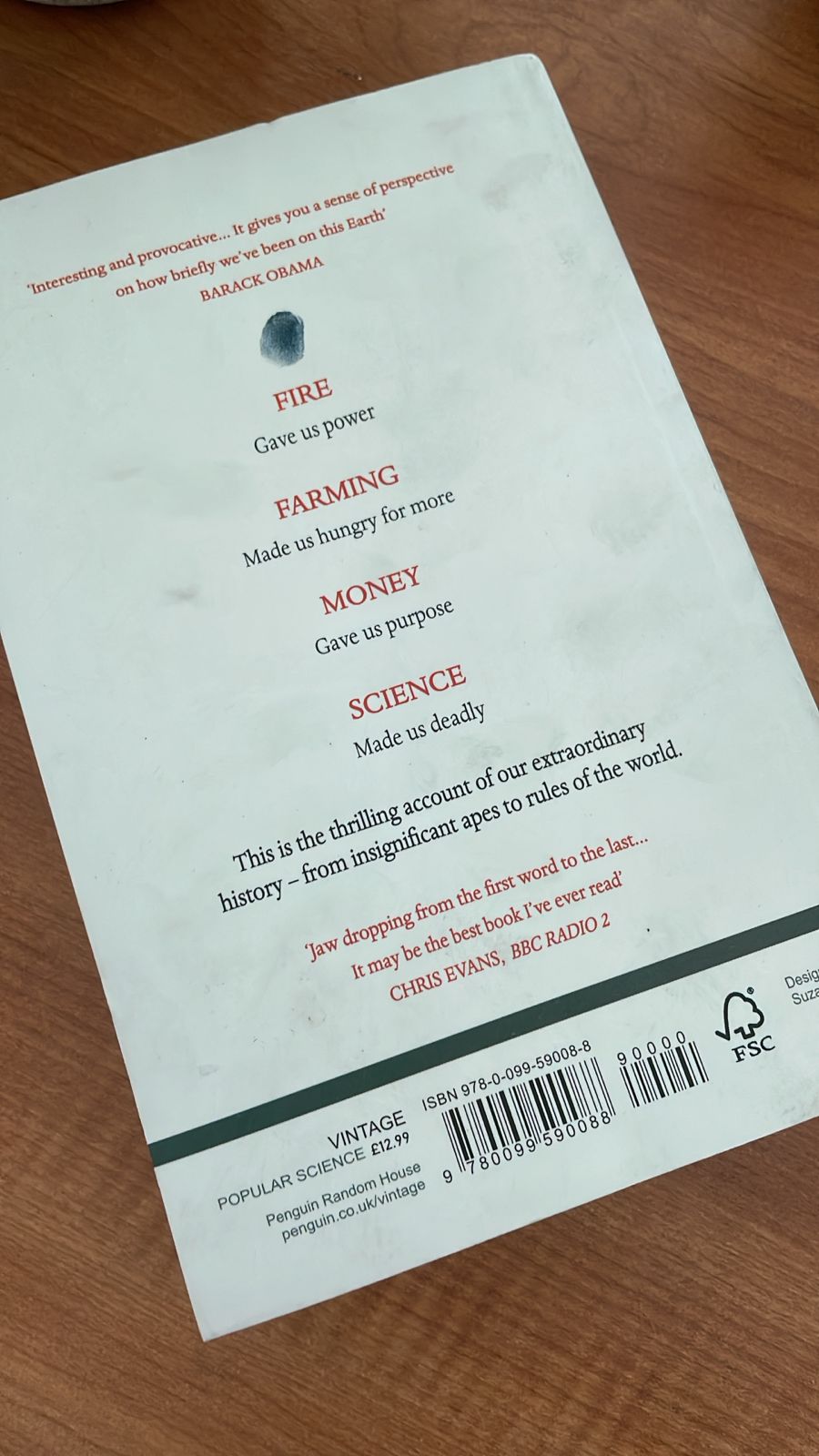
Publisher/Imprint: Vintage
ISBN-13: 9780099590088
Format: Paperback
Pages: 528
Publication Date: April 30, 2015
Dimensions: 197 × 128 × 39 mm
Listed Weight: 454 g
Your procurement data also records ISBN 9780099590088, so the inventory ISBN is consistent with this edition.
Important Themes
Sapiens by Yuval Noah Harari explores:
- Human evolution
- Homo sapiens
- Cognitive Revolution
- Agricultural Revolution
- Scientific Revolution
- Language
- Shared myths
- Religion
- Money
- Empires
- Capitalism
- Industrialization
- Consumerism
- Human happiness
- Technology
- Biotechnology
- Ethics
- Ecology
- Cooperation
- The future of humanity
7 Powerful Ideas From Sapiens by Yuval Noah Harari
- Human cooperation depends heavily on shared stories. Nations, corporations, currencies and institutions work partly because large numbers of strangers accept common systems and ideas.
- Progress for humanity does not always mean improvement for every human. Agriculture increased population and social complexity, but it also introduced new forms of labor, disease and inequality.
- Money is one of humanity’s most powerful systems of trust. People who disagree about religion, culture and politics can still cooperate economically because they accept shared monetary systems.
- Admitting ignorance can create knowledge. The Scientific Revolution accelerated partly because people became more willing to acknowledge what they did not know and investigate systematically.
- Economic growth depends strongly on belief in the future. Credit and investment work because people expect future production to create greater value.
- More power does not automatically create more happiness. Humanity’s technological capabilities have increased enormously, but subjective well-being follows a much more complicated pattern.
- The future of Homo sapiens may be radically different from its past. Biotechnology, computing and other technologies could allow humans to modify life itself, raising questions that previous generations never had to confront.
Why Read Sapiens by Yuval Noah Harari?
Sapiens by Yuval Noah Harari is an excellent choice for readers interested in:
- Human history
- World history
- Evolution
- Anthropology
- Civilization
- Psychology
- Economics
- Religion
- Philosophy
- Science
- Technology
- Capitalism
- Human behavior
- Society
- Artificial intelligence
- The future of humanity
- Big history
- Thought-provoking nonfiction
- Yuval Noah Harari
- Books that challenge assumptions
Its biggest strength is perspective.
Most people experience history as separate subjects.
Ancient history.
Economics.
Religion.
Science.
Technology.
Harari places these subjects inside one enormous story.
That allows readers to notice connections that are easy to miss when each topic is studied separately.
Who Should Read This Book?
Sapiens by Yuval Noah Harari may especially appeal to:
- History readers
- University students
- Business readers
- Entrepreneurs
- Technology professionals
- Science enthusiasts
- Philosophy readers
- Psychology readers
- Readers interested in civilization
- People curious about human behavior
- Fans of big-picture nonfiction
- Readers of Guns, Germs, and Steel
- Readers interested in Harari’s Nexus or Homo Deus
- Anyone asking how Homo sapiens became the dominant species on Earth
It is also a strong choice for readers who normally find traditional history books too focused on dates and rulers.
Sapiens by Yuval Noah Harari – How Did One Human Species Change an Entire Planet?
Sapiens by Yuval Noah Harari begins with a humbling idea.
For most of history, humans were not the center of the world.
We were animals.
One species among many.
Then Homo sapiens began doing something extraordinary.
We cooperated in groups larger than our immediate families.
We created stories strangers could share.
Those stories became:
Tribes.
Religions.
Kingdoms.
Currencies.
Companies.
Countries.
Over thousands of years, those networks became powerful enough to reshape the planet.
But Harari does not tell this story as a simple celebration of progress.
Every transformation creates another question.
Agriculture produced larger societies—but did the average farmer live better?
Empires connected enormous territories—but at what human cost?
Capitalism created unprecedented growth—but how should that growth be judged?
Science gave humanity tremendous power—but what should we do with that power?
Technology has made modern humans capable of changing life itself—but are we wise enough to decide what comes next?
That is why Sapiens remains so engaging.
It takes familiar parts of everyday life and makes them strange again.
Money.
Work.
Marriage.
Nations.
Religion.
Shopping.
Science.
It asks readers to step outside these systems and look at them historically.
Once you realize that many parts of modern life were created by previous generations, another thought becomes unavoidable:
Future generations may live inside systems that do not yet exist.
History is therefore not merely about the past.
It shows how radically human society can change.
For readers interested in history, evolution, economics, psychology, religion, science and the future of civilization, Sapiens by Yuval Noah Harari offers an accessible and provocative starting point for thinking about one enormous question:
How did Homo sapiens become what we are—and what might we become next?
Learn more about Sapiens: A Brief History of Humankind by Yuval Noah Harari on the official Yuval Noah Harari website.
Explore more history and anthropology books at Bargain Books.
| Dimensions | 1.4 × 5.9 × 8.9 cm |
|---|---|
| Author | Yuval Noah Harari |
| Language | English |
| Type | Paperback Printed Book (Second Quality Copy) |
| ISBN/ISSN | 9780062316110 |
| Pages | 464 |
Be the first to review “Sapiens by Yuval Noah Harari”
Related products

Out of stock
Non-Fiction & Knowledge
රු1,500.00
3 X Rs. 500.00 or 8% Cashback with
or 3 X රු500.00 with
or up to 4 X රු375.00 with

Out of stock
Autobiography
රු2,750.00
3 X Rs. 916.67 or 8% Cashback with
or 3 X රු916.67 with
or up to 4 X රු687.50 with

Out of stock
Self-Help & Psychology
රු1,900.00
3 X Rs. 633.33 or 8% Cashback with
or 3 X රු633.33 with
or up to 4 X රු475.00 with
-14%

Out of stock
Self-Help & Psychology
Original price was: රු2,900.00.රු2,500.00Current price is: රු2,500.00.
3 X Rs. 833.33 or 8% Cashback with
or 3 X රු833.33 with
or up to 4 X රු625.00 with

Non-Fiction & Knowledge
රු1,950.00
3 X Rs. 650.00 or 8% Cashback with
or 3 X රු650.00 with
or up to 4 X රු487.50 with
-19%

Out of stock
Biography
Original price was: රු2,400.00.රු1,950.00Current price is: රු1,950.00.
3 X Rs. 650.00 or 8% Cashback with
or 3 X රු650.00 with
or up to 4 X රු487.50 with
-24%
Out of stock
Non-Fiction & Knowledge
Original price was: රු2,100.00.රු1,600.00Current price is: රු1,600.00.
3 X Rs. 533.33 or 8% Cashback with
or 3 X රු533.33 with
or up to 4 X රු400.00 with

Non-Fiction & Knowledge
රු1,700.00
3 X Rs. 566.67 or 8% Cashback with
or 3 X රු566.67 with
or up to 4 X රු425.00 with
Reviews
There are no reviews yet.