
No products in the cart.
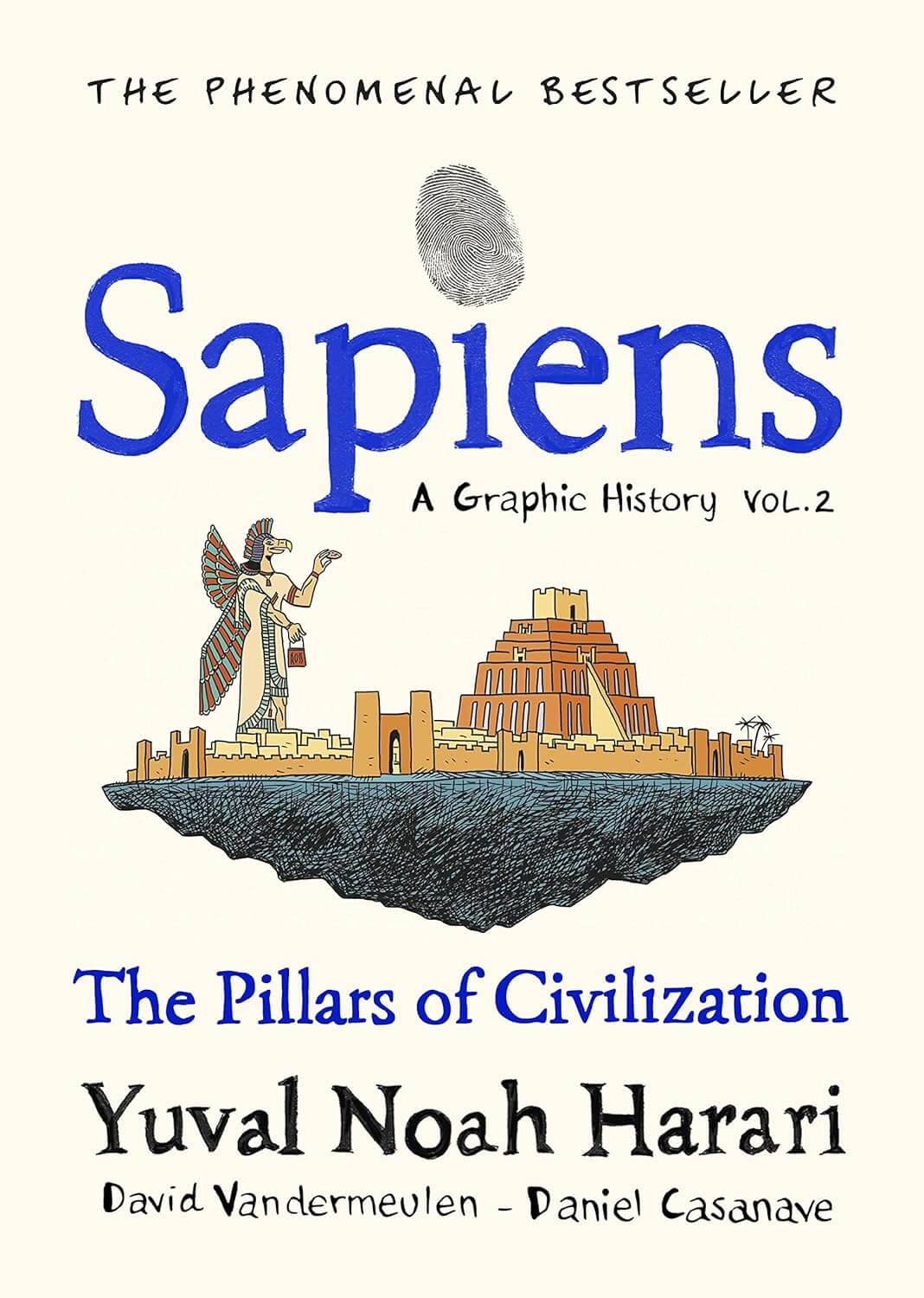
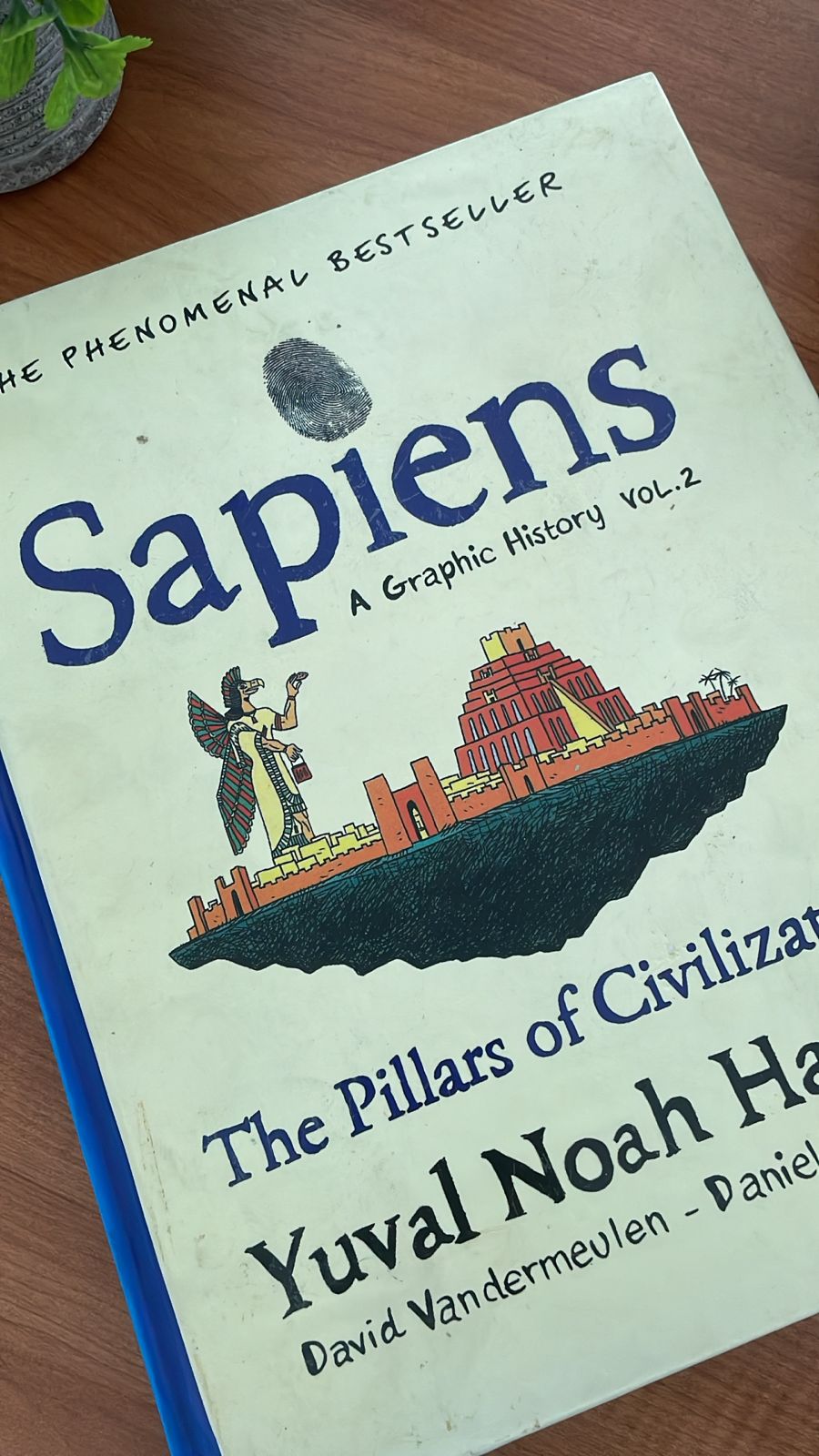
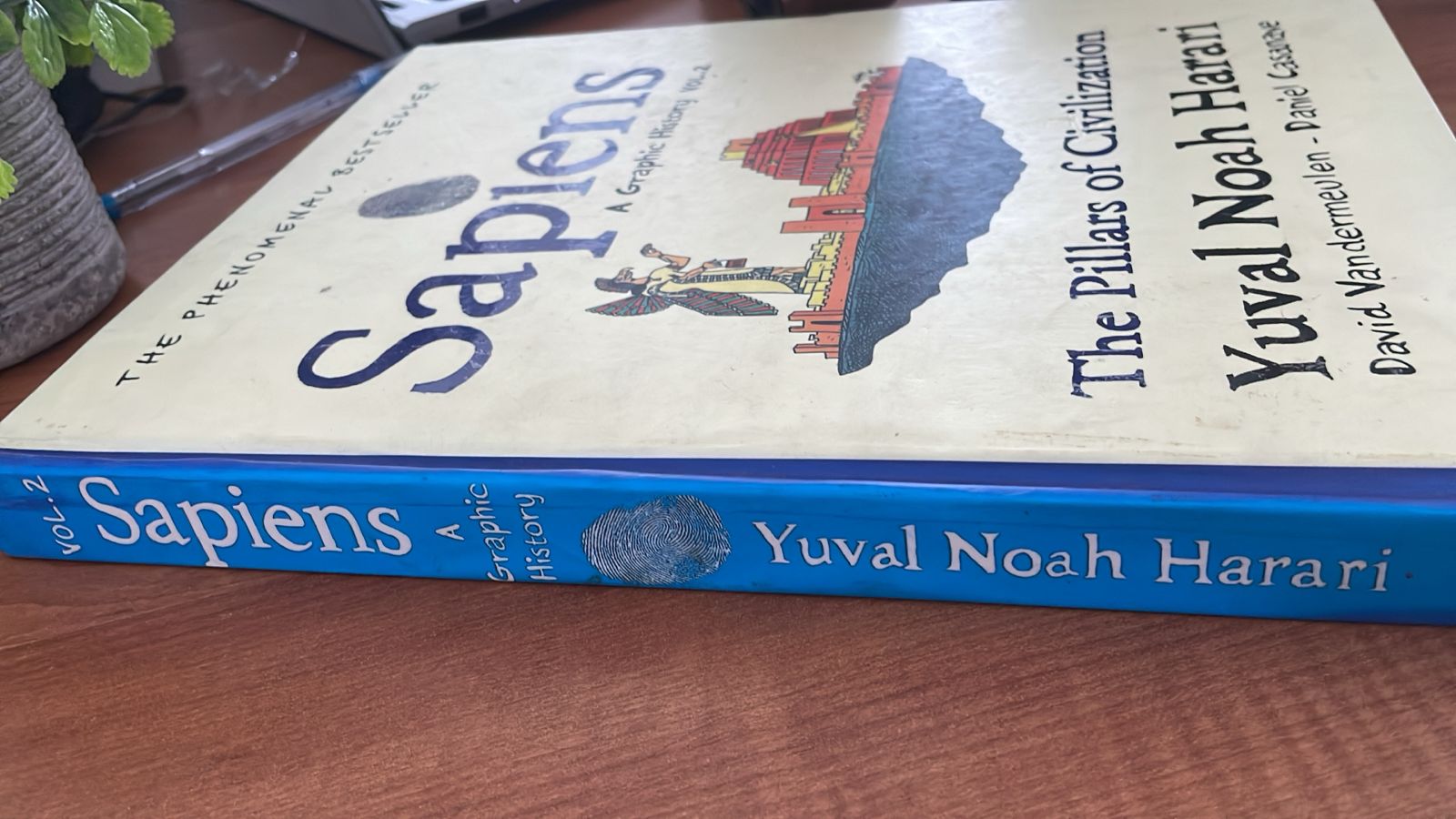




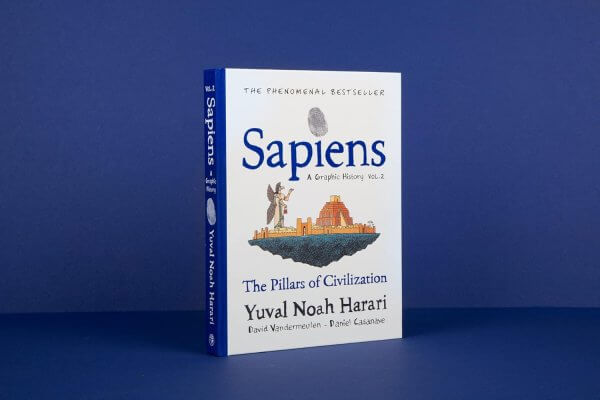
Sapiens A Graphic History Volume 2 (Hardcover) by Yuval Noah Harari


රු2,400.00
3 X Rs. 800.00 or 8% Cashback with


or 3 X රු800.00 with


or up to 4 X රු600.00 with


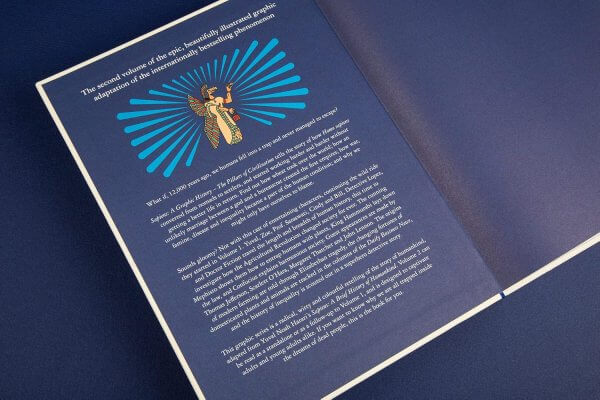
A vivid and engaging graphic adaptation of Yuval Noah Harari’s global bestseller, exploring the rise of agriculture and the roots of modern civilization through bold illustrations and powerful storytelling.
🧠 Engaging Adaptation of a Global Bestseller – A visual retelling of Sapiens by Yuval Noah Harari, making complex ideas accessible and entertaining.
🌾 Focus on the Agricultural Revolution – Explores how the shift from foraging to farming reshaped human society and sparked civilization.
📚 Explains the Origins of Modern Systems – Covers the emergence of religion, politics, money, and social hierarchies in early societies.
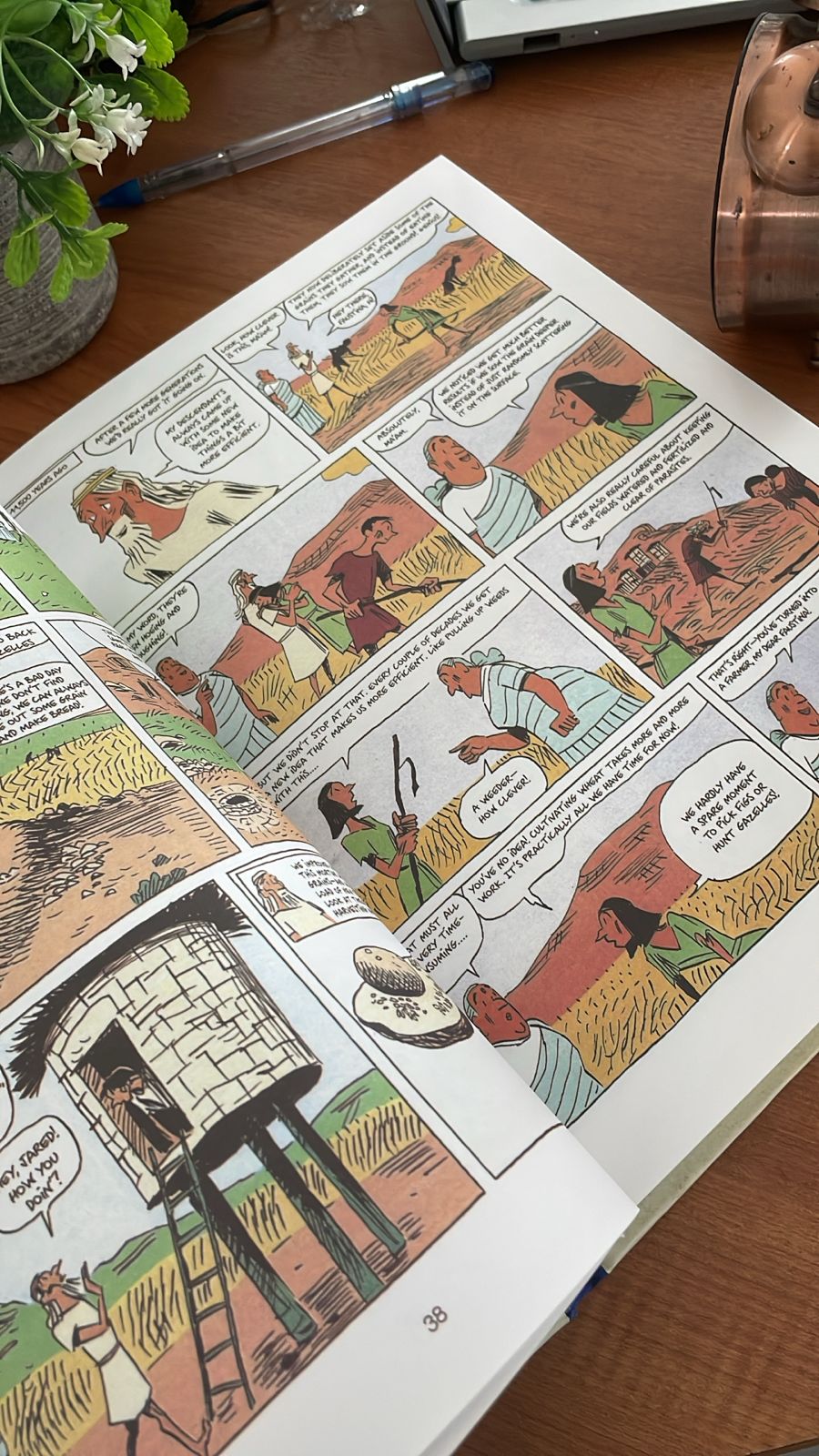
🎨 Visually Stunning Illustrations – Bold and humorous artwork by Daniel Casanave and David Vandermeulen brings history to life.
💡 Ideal for Visual Learners and Younger Audiences – Combines education and entertainment, perfect for both teens and adults.
🗣️ Witty Dialogue and Storytelling – Infused with humor and relatable commentary while staying informative and thought-provoking.
🌍 A Fresh Take on Human History – Challenges traditional views and encourages readers to think critically about civilization’s foundations.
📖 Part of a Series – Volume 2 in the Sapiens: A Graphic History series, continuing the journey that began in Volume 1 (The Birth of Humankind).
2 in stock
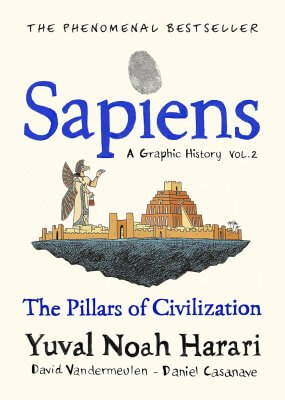
Sapiens: A Graphic History, Volume 2 – The Pillars of Civilization
Sapiens Graphic History Volume 2 continues Yuval Noah Harari’s fascinating illustrated journey through the history of humankind.
This volume explores how farming, social structures, empires, inequality, religion, and organized societies transformed human life.
Instead of presenting history through long academic explanations, the book uses colourful illustrations, humour, fictional characters, and visual storytelling.
The result is an accessible introduction to some of the biggest questions in human history.
About Sapiens Graphic History Volume 2
Sapiens Graphic History Volume 2 is titled The Pillars of Civilization.
It continues the graphic adaptation of ideas originally explored in Harari’s bestselling Sapiens: A Brief History of Humankind.
The book focuses especially on the Agricultural Revolution.
Thousands of years ago, humans gradually moved from hunting and gathering toward farming and permanent settlements.
This transformation changed the way people lived, worked, organized communities, and interacted with the natural world.
The book asks whether this development actually improved human life as much as we often assume.
The Rise of Agriculture
One of the central ideas in this volume is the rise of farming.
Humans began cultivating plants and domesticating animals on a much larger scale.
Wheat became particularly important.
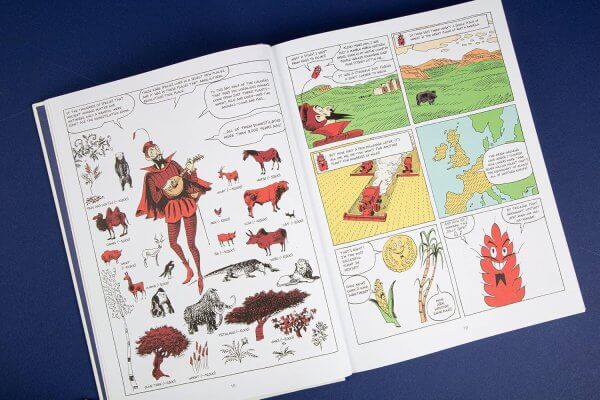
Rather than simply saying that humans domesticated wheat, the book playfully asks whether wheat might have domesticated humans.
People began spending more time planting, harvesting, protecting fields, and building permanent settlements.
Food production increased, but daily life could also become harder and more repetitive.
7 Powerful Insights from the Book
1. Farming Changed Human Society
Agriculture allowed larger groups of people to live together.
Villages eventually became towns, cities, kingdoms, and empires.
This transformation created new opportunities.
It also created new problems.
2. More Food Did Not Always Mean Better Lives
Producing more food could support larger populations.
However, individual farmers often worked harder than hunter-gatherers.
Their diets could become less varied.
They also became more dependent on a small number of crops.
3. Inequality Became More Organized
As societies grew, resources were not always distributed equally.
Some groups gained greater wealth, land, authority, or social status.
Hierarchies became increasingly important.
These systems influenced people’s opportunities and responsibilities.
4. Shared Beliefs Helped Large Societies Cooperate
Large groups of strangers need ways to cooperate.
Shared stories, laws, religions, traditions, and institutions helped make this possible.
People could work together because they believed in common systems.
These shared ideas became important foundations of civilization.
5. Bureaucracy Became Essential
Larger societies needed ways to organize information.
Taxes, land, food, labour, and property all had to be recorded.
Writing and administration became increasingly important.
Bureaucracy helped societies manage enormous numbers of people.
6. Empires Changed the World
Empires brought different peoples, languages, traditions, and territories under larger political systems.
They could spread technology, ideas, laws, and culture across large regions.
At the same time, empire building frequently involved violence and conquest.
This creates one of the many complicated questions explored throughout the book.
7. Progress Can Have Unexpected Costs
Sapiens Graphic History Volume 2 repeatedly challenges simple ideas about progress.
A development that helps a society grow may not necessarily improve every individual’s life.
More food can create larger populations.
More powerful governments can create stability while also increasing control.
The book encourages readers to examine both sides of historical change.
History Told Through Graphic Storytelling
The graphic format makes complex ideas easier to follow.
Historical concepts are transformed into visual scenes, conversations, newspaper-style reports, dramatic performances, and humorous situations.
This is not simply a shortened version of Sapiens with pictures added.
The ideas have been creatively adapted for the graphic-novel format.
Characters guide readers through different periods and concepts.
This approach makes the book especially approachable for visual learners.
The Pillars of Civilization
The subtitle The Pillars of Civilization reflects the book’s focus on the systems that helped create organized human societies.
Agriculture was one important foundation.
Religion, political systems, bureaucracy, social hierarchies, and shared beliefs also played major roles.
Together, these developments allowed humans to cooperate in increasingly large groups.
They also created inequalities and conflicts that became part of human history.
Who Should Read This Book?
Sapiens Graphic History Volume 2 is suitable for readers interested in history, anthropology, civilization, society, and human behaviour.
It is also a strong option for people who find traditional history books difficult or too text-heavy.
The illustrations make many complex concepts easier to understand.
Young adults and adult readers can both enjoy its visual approach.
Fans of the original Sapiens may also appreciate seeing familiar ideas presented in a completely different format.
About the Creators
Yuval Noah Harari is a historian and author known internationally for books including Sapiens, Homo Deus, and 21 Lessons for the 21st Century.
For this graphic series, Harari worked with writer David Vandermeulen and illustrator Daniel Casanave.
Together, they transform large historical ideas into an engaging illustrated narrative.
Readers can learn more about the series on the official Yuval Noah Harari Sapiens: A Graphic History page.
Product Details
Title: Sapiens: A Graphic History, Volume 2
Subtitle: The Pillars of Civilization
Author: Yuval Noah Harari
Co-writer: David Vandermeulen
Illustrator: Daniel Casanave
Format: Hardcover
Genre: History / Graphic Non-Fiction / Anthropology
Language: English
Series: Sapiens: A Graphic History
Volume: 2
Explore More History Books
Sapiens Graphic History Volume 2 offers a creative way to explore some of the most important transformations in human civilization.
It examines agriculture, inequality, bureaucracy, shared beliefs, empires, and the systems that allowed increasingly large societies to function.
The colourful artwork and humorous storytelling make complicated historical ideas much easier to approach.
Readers interested in similar titles can explore more History Books at Bargain Books.
For readers who enjoy history but prefer a visual and entertaining presentation, this graphic history offers an engaging way to understand how civilization developed.
Be the first to review “Sapiens A Graphic History Volume 2 (Hardcover) by Yuval Noah Harari”
Related products

Out of stock
Fiction & Literature
රු1,750.00
3 X Rs. 583.33 or 8% Cashback with
or 3 X රු583.33 with
or up to 4 X රු437.50 with
-22%

Out of stock
Fiction & Literature
Original price was: රු2,300.00.රු1,800.00Current price is: රු1,800.00.
3 X Rs. 600.00 or 8% Cashback with
or 3 X රු600.00 with
or up to 4 X රු450.00 with
-22%

Classics & Literary Fiction
Original price was: රු2,250.00.රු1,750.00Current price is: රු1,750.00.
3 X Rs. 583.33 or 8% Cashback with
or 3 X රු583.33 with
or up to 4 X රු437.50 with

Out of stock
Children & Young Adult
රු3,200.00
3 X Rs. 1,066.67 or 8% Cashback with
or 3 X රු1,066.67 with
or up to 4 X රු800.00 with
-11%

Out of stock
Classics & Literary Fiction
Original price was: රු1,800.00.රු1,600.00Current price is: රු1,600.00.
3 X Rs. 533.33 or 8% Cashback with
or 3 X රු533.33 with
or up to 4 X රු400.00 with
-20%

Classics & Literary Fiction
Original price was: රු2,450.00.රු1,950.00Current price is: රු1,950.00.
3 X Rs. 650.00 or 8% Cashback with
or 3 X රු650.00 with
or up to 4 X රු487.50 with
-29%

Classics & Literary Fiction
Original price was: රු2,100.00.රු1,500.00Current price is: රු1,500.00.
3 X Rs. 500.00 or 8% Cashback with
or 3 X රු500.00 with
or up to 4 X රු375.00 with

Out of stock
Classics & Literary Fiction
රු1,750.00
3 X Rs. 583.33 or 8% Cashback with
or 3 X රු583.33 with
or up to 4 X රු437.50 with
Reviews
There are no reviews yet.