
No products in the cart.
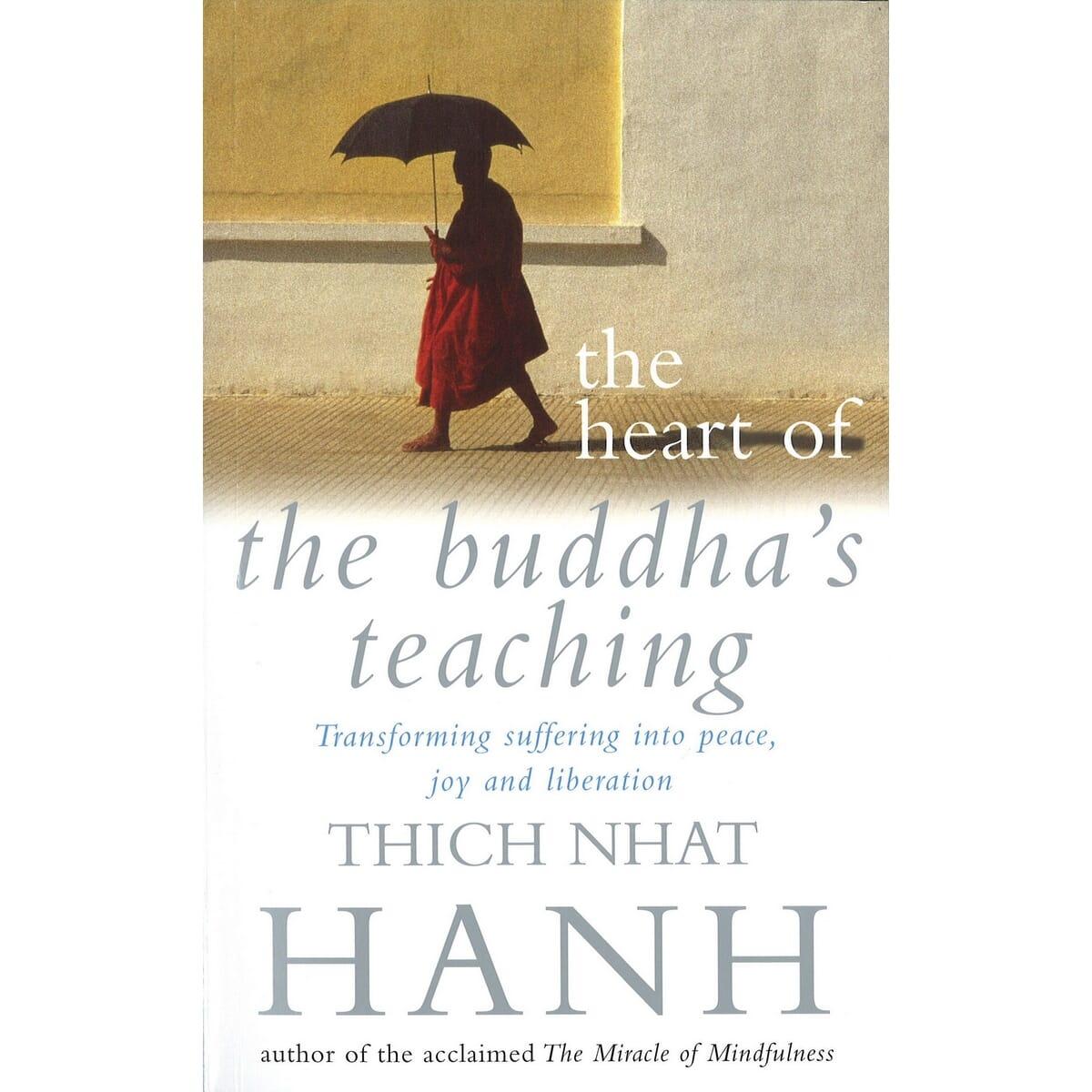
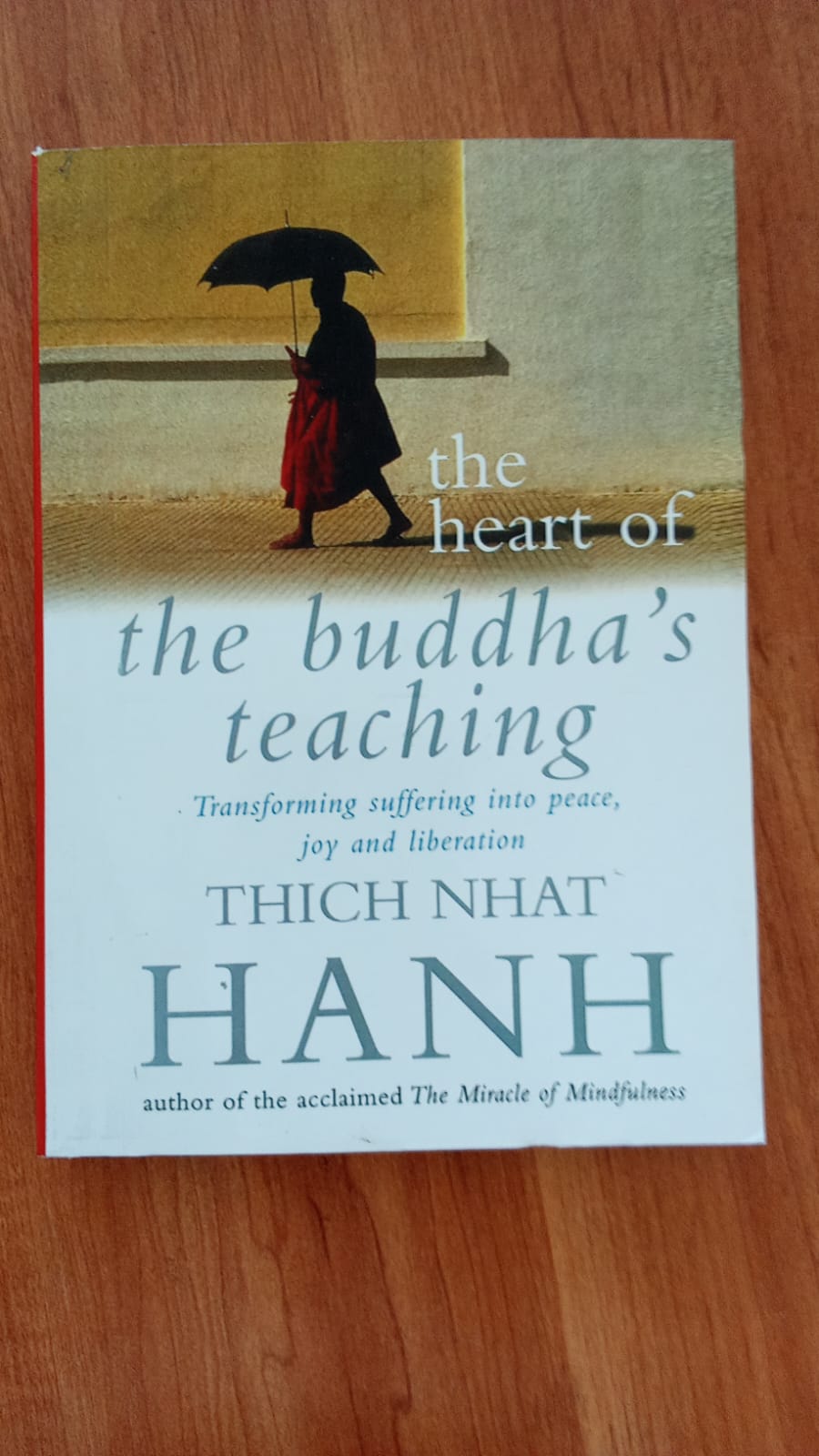

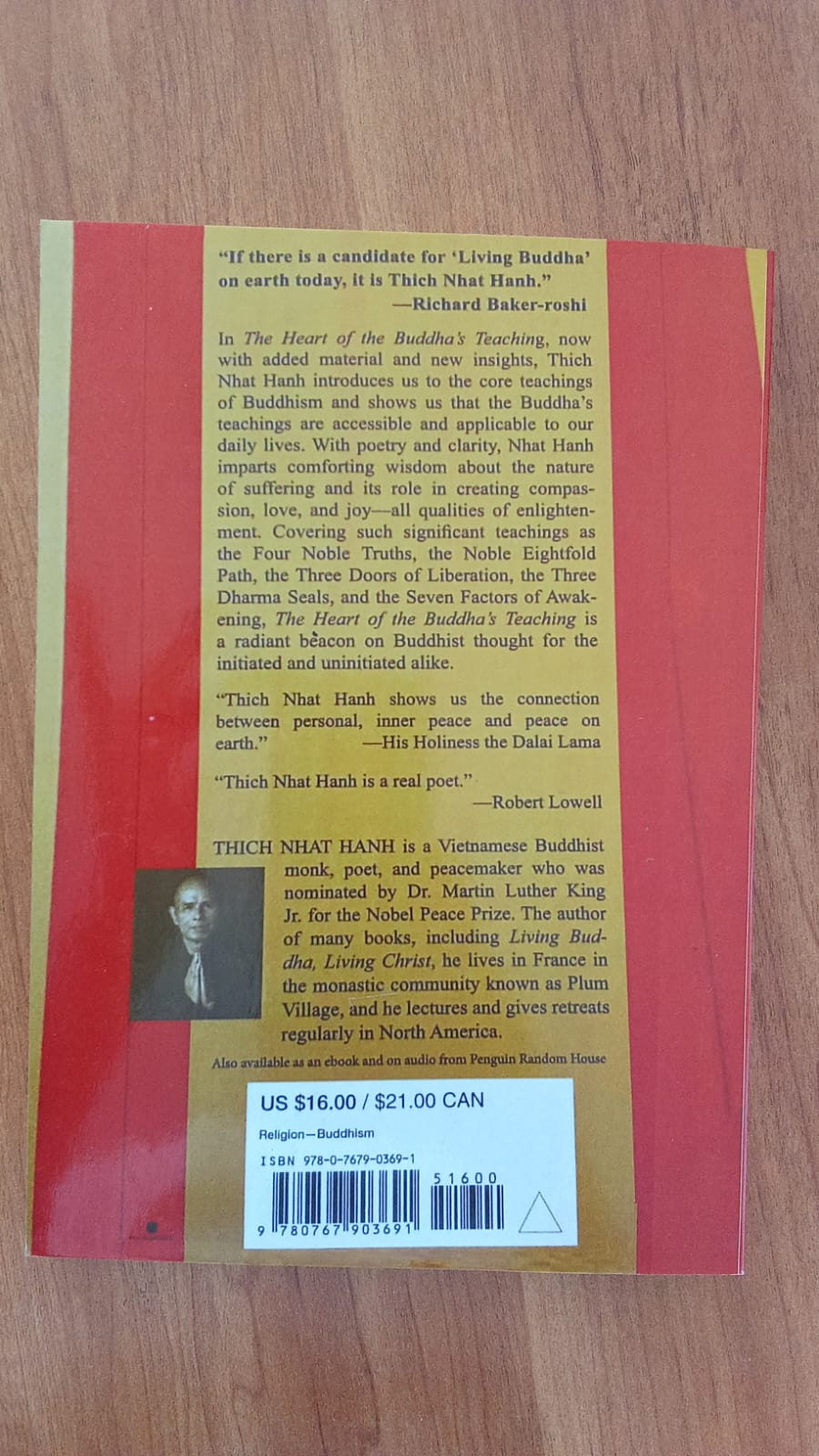
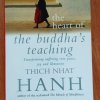

Heart Of The Buddha’s Teaching by Thich Nhat Hanh

රු1,850.00
3 X Rs. 616.67 or 8% Cashback with


or 3 X රු616.67 with


or up to 4 X රු462.50 with


The Heart of the Buddha’s Teaching by Thích Nhất Hạnh is a clear and practical introduction to the core teachings of Buddhism. The book explains essential concepts such as the Four Noble Truths and the Eightfold Path in a way that is easy to understand and apply in everyday life.
It focuses on transforming suffering into peace through mindfulness, compassion, and awareness, making it one of the most accessible and influential modern books on Buddhist philosophy.
Out of stock
Email when stock available
The Heart of the Buddha’s Teaching by Thich Nhat Hanh is an accessible and thoughtful introduction to the essential teachings of Buddhism. Written with clarity, compassion, and practical wisdom, the book explains important Buddhist ideas in a way that can be understood and applied to everyday life.
Thich Nhat Hanh was widely known for teaching mindfulness, compassion, peaceful living, and awareness of the present moment. In this book, he introduces readers to central Buddhist concepts while showing how these teachings can support greater understanding, emotional balance, and inner peace.
Rather than presenting Buddhism only as a philosophy or religious tradition, the book encourages readers to experience its teachings through daily practice.
The Heart of the Buddha’s Teaching – Book Overview
The Heart of the Buddha’s Teaching explores some of the most important foundations of Buddhist thought.
Thich Nhat Hanh explains concepts such as the Four Noble Truths, the Noble Eightfold Path, mindfulness, compassion, suffering, liberation, and interconnectedness.
These ideas are presented not simply as theories to memorize but as practical tools for understanding ourselves and the world around us.
The book encourages readers to look carefully at their thoughts, emotions, relationships, and reactions.
By becoming more aware of what is happening in the present moment, people can begin to understand the causes of suffering and respond to life with greater clarity.
Understanding the Four Noble Truths
One of the central teachings discussed in The Heart of the Buddha’s Teaching is the Four Noble Truths.
These teachings explore the nature of suffering, its causes, the possibility of transformation, and the path toward greater freedom.
Thich Nhat Hanh explains that acknowledging suffering does not mean becoming negative or pessimistic.
Instead, recognizing pain honestly can be the first step toward understanding and healing.
When people understand the causes of their difficulties, they may be better able to respond with wisdom rather than reacting automatically.
The book presents suffering as something that can become a source of insight when approached with awareness and compassion.
The Noble Eightfold Path
Another major topic in The Heart of the Buddha’s Teaching is the Noble Eightfold Path.
This path includes areas such as right understanding, right thinking, right speech, right action, right livelihood, right effort, right mindfulness, and right concentration.
These practices encourage people to bring awareness into many different parts of life.
They are not limited to meditation.
They can influence how people speak, work, make decisions, treat others, and respond to difficult emotions.
Thich Nhat Hanh shows how these principles can become part of ordinary daily life rather than remaining abstract spiritual ideas.
Mindfulness and Present-Moment Awareness
Mindfulness is one of the strongest themes in The Heart of the Buddha’s Teaching.
Mindfulness means becoming fully aware of what is happening in the present moment.
Many people spend large parts of their lives thinking about the past or worrying about the future.
This can make it difficult to notice what is happening right now.
The book encourages readers to return attention to simple experiences such as breathing, walking, eating, listening, and communicating.
These ordinary activities can become opportunities to practise awareness.
Mindfulness can also help people notice emotions without immediately reacting to them.
By creating a small space between an emotion and a response, people may be able to act with greater wisdom and compassion.
Compassion and Understanding
Compassion is another essential idea in The Heart of the Buddha’s Teaching.
Thich Nhat Hanh explains that understanding and compassion are closely connected.
When people understand the causes behind someone else’s behaviour, they may be less likely to respond only with anger or judgment.
This does not mean accepting harmful behaviour without boundaries.
Instead, it means trying to understand suffering more deeply.
The same principle can be applied to ourselves.
People often treat themselves with harsh criticism after making mistakes.
The book encourages a more compassionate approach that recognizes difficulty while still supporting personal responsibility and growth.
Transforming Difficult Emotions
The Heart of the Buddha’s Teaching also explores how people can relate differently to emotions such as anger, fear, sadness, jealousy, and frustration.
Instead of treating difficult emotions as enemies, the book encourages readers to observe them with mindfulness.
Emotions can provide information about needs, fears, expectations, or past experiences.
When people understand where emotions come from, they may become easier to handle.
Thich Nhat Hanh encourages readers to care for painful emotions with the same patience they might offer someone who is suffering.
This approach can help reduce impulsive reactions and create greater emotional stability.
Interconnectedness
Another important teaching in The Heart of the Buddha’s Teaching is the idea that nothing exists completely independently.
People depend on families, communities, nature, food, water, air, and countless other conditions.
Recognizing this interconnectedness can change the way people view themselves and others.
It can encourage gratitude, responsibility, compassion, and respect for the environment.
The book suggests that understanding connection can reduce the feeling of isolation that often contributes to suffering.
When people recognize that their actions affect others, everyday choices can become more meaningful.
Applying Buddhist Wisdom to Daily Life
One of the strengths of The Heart of the Buddha’s Teaching is its practical approach.
The book does not require readers to withdraw from ordinary life.
Instead, it encourages them to bring mindfulness into daily routines.
Simple practices may include:
- Paying attention to breathing
- Walking mindfully
- Listening carefully to others
- Speaking with greater awareness
- Observing difficult emotions
- Practising gratitude
- Developing compassion
- Becoming more aware of habits
- Creating moments of stillness
- Reflecting before reacting
These practices can help readers turn Buddhist ideas into everyday habits.
Why Read The Heart of the Buddha’s Teaching?
The Heart of the Buddha’s Teaching is a valuable choice for readers who want a clear introduction to Buddhist philosophy and mindfulness.
The book can help readers explore:
- The Four Noble Truths
- The Noble Eightfold Path
- Mindfulness
- Meditation
- Compassion
- Emotional awareness
- Inner peace
- Suffering and transformation
- Interconnectedness
- Personal growth
Thich Nhat Hanh’s writing style makes complex ideas feel approachable without removing their depth.
Who Should Read This Book?
The Heart of the Buddha’s Teaching may appeal to readers interested in:
- Buddhism
- Mindfulness
- Meditation
- Spiritual growth
- Personal development
- Inner peace
- Compassion
- Emotional well-being
- Philosophy
- Self-awareness
It can be suitable for beginners who want to understand Buddhist teachings as well as experienced readers looking for a thoughtful reminder of foundational principles.
The book may also appeal to people who are not practising Buddhists but are interested in mindfulness, peaceful living, and greater emotional awareness.
A Powerful Guide to Mindful Living
The Heart of the Buddha’s Teaching offers readers a compassionate introduction to Buddhist wisdom and practical mindfulness.
Thich Nhat Hanh shows that Buddhist teachings are not only about understanding philosophical ideas.
They are also about learning how to live with greater awareness, compassion, patience, and freedom.
Through mindfulness, readers are encouraged to become more present with themselves and the people around them.
Through understanding, they can begin to relate differently to suffering.
Through compassion, they can create healthier relationships with themselves and others.
For readers seeking practical wisdom, emotional balance, mindfulness, and a deeper understanding of Buddhist teachings, The Heart of the Buddha’s Teaching is a meaningful and inspiring guide.
Learn more about The Heart of the Buddha’s Teaching by Thich Nhat Hanh on the official Penguin Random House website.
Explore more philosophy and spiritual books at Bargain Books.
Be the first to review “Heart Of The Buddha’s Teaching by Thich Nhat Hanh”
Related products

Christianity
රු1,400.00
3 X Rs. 466.67 or 8% Cashback with
or 3 X රු466.67 with
or up to 4 X රු350.00 with
-9%

Non-Fiction & Knowledge
Original price was: රු1,750.00.රු1,600.00Current price is: රු1,600.00.
3 X Rs. 533.33 or 8% Cashback with
or 3 X රු533.33 with
or up to 4 X රු400.00 with
-21%
Out of stock
Non-Fiction & Knowledge
Original price was: රු2,400.00.රු1,900.00Current price is: රු1,900.00.
3 X Rs. 633.33 or 8% Cashback with
or 3 X රු633.33 with
or up to 4 X රු475.00 with
-20%

Out of stock
Contemporary romance
The Forty Rules of Love Paperback – A Captivating Novel by Elif Shafak on Love and Spirituality
Original price was: රු2,000.00.රු1,600.00Current price is: රු1,600.00.
3 X Rs. 533.33 or 8% Cashback with
or 3 X රු533.33 with
or up to 4 X රු400.00 with
Out of stock
රු1,600.00
3 X Rs. 533.33 or 8% Cashback with
or 3 X රු533.33 with
or up to 4 X රු400.00 with
Reviews
There are no reviews yet.