
No products in the cart.
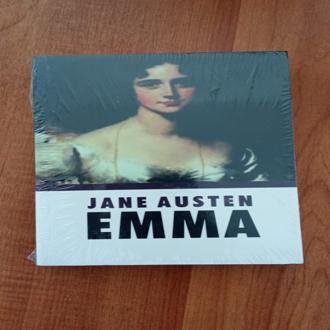
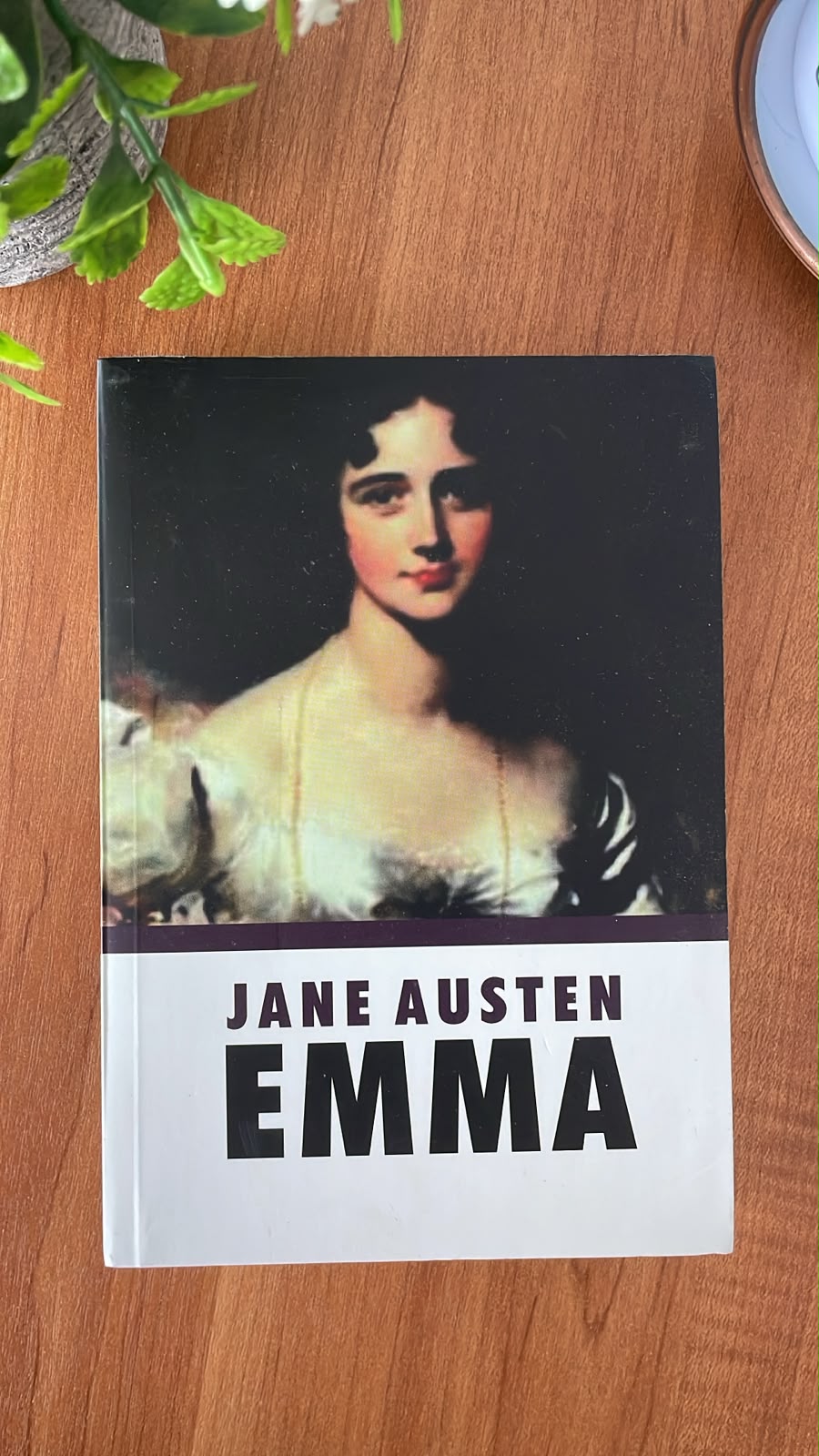
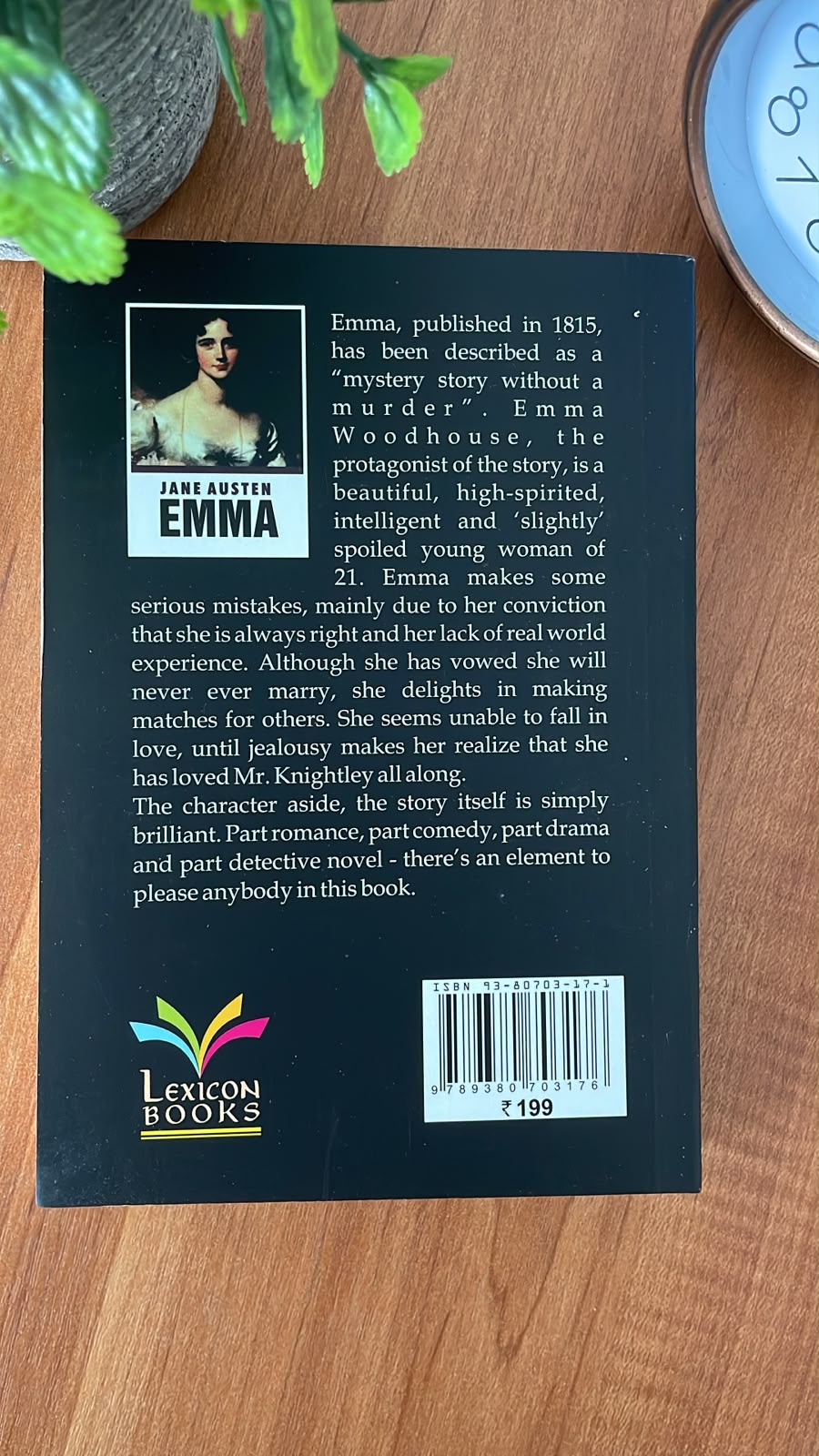






Emma by Jane austen

රු1,950.00
3 X Rs. 650.00 or 8% Cashback with


or 3 X රු650.00 with


or up to 4 X රු487.50 with


Emma is a witty and insightful novel that follows Emma Woodhouse, a confident young woman who enjoys matchmaking but often misunderstands people around her. Through humor and social observation, the story explores love, self-awareness, and personal growth, making it one of Jane Austen’s most beloved works.
2 in stock
Purchase & earn 20 points!
Category: Classics & Literary Fiction
Emma by Jane Austen is a witty and charming classic novel about love, matchmaking, friendship, social expectations and learning to understand both yourself and the people around you.
At the centre of the story is Emma Woodhouse.
Emma is young, wealthy, intelligent and independent.
Unlike many women in her social world, she does not believe she needs marriage to secure her future.
But while Emma has little interest in arranging her own romantic life, she becomes extremely interested in arranging everyone else’s.
That confidence soon creates problems.
When Emma attempts to find the perfect match for her new friend Harriet Smith, her plans begin to unravel.
Relationships are misunderstood.
Feelings are misread.
And Emma gradually discovers that understanding love is much more complicated than she imagined.
Why Read Emma?
Emma is an excellent choice for readers who enjoy classic romance with intelligent humour and memorable characters.
Jane Austen does not simply tell a love story.
She creates a comedy of misunderstandings.
Emma believes she understands everyone around her.
She analyzes conversations.
She interprets behaviour.
She predicts romantic relationships.
And she is frequently wrong.
That gap between what Emma believes and what is actually happening creates much of the novel’s humour. Penguin describes the book as a comedy of errors built around misunderstandings and misguided plans.
Emma and the Art of Matchmaking
Matchmaking drives much of the story.
Emma believes she has a special ability to understand romantic compatibility.
After seeing one successful marriage happen around her, she becomes increasingly confident in her talent.
Harriet Smith soon becomes the main subject of Emma’s matchmaking plans.
Emma wants to help.
But good intentions do not guarantee good judgment.
She begins influencing Harriet’s decisions based on assumptions about love, status and suitability.
This creates one of the novel’s central lessons:
People are more complicated than the stories we create about them.
Penguin Random House’s reading guide identifies matchmaking as the central device of the novel and highlights the different successful and unsuccessful relationships Austen uses throughout the story.
Meet Emma Woodhouse
Emma Woodhouse is one of Jane Austen’s most distinctive heroines.
She is confident.
Clever.
Privileged.
Generous in some situations.
Frustrating in others.
She wants to help people, but her confidence can become arrogance.
She often assumes she understands situations better than she actually does.
That imperfection makes Emma interesting.
The protagonist does not begin the novel with perfect judgment.
She has to grow.
Penguin describes Emma as an imperfect but charming heroine whose mistakes form part of the novel’s enduring appeal.
Emma and Harriet Smith
Harriet Smith becomes one of Emma’s closest companions.
She is less socially secure than Emma and therefore more vulnerable to Emma’s influence.
Emma begins trying to improve Harriet’s romantic prospects.
But her ideas about what Harriet deserves are strongly affected by social class.
Emma believes she can identify a more prestigious match.
This creates consequences.
Harriet begins questioning feelings and opportunities that might otherwise have been straightforward.
Through their relationship, Emma explores friendship, influence and the danger of believing you always know what is best for someone else.
Mr. Knightley in Emma
Mr. Knightley plays an important role in Emma’s development.
Unlike people who simply agree with her, he is willing to challenge her.
He questions her decisions.
He criticizes her mistakes.
And he recognizes when her matchmaking has gone too far.
That honesty makes their relationship especially important.
Emma is surrounded by people who often admire or indulge her.
Mr. Knightley provides something different.
Perspective.
His willingness to disagree helps Emma confront aspects of herself that she might otherwise ignore.
The publisher specifically identifies Mr. Knightley as the friend whose warnings Emma disregards while pursuing her matchmaking plans.
Emma and Self-Discovery
Although romance is central to the novel, Emma is also about personal growth.
Emma needs to learn that intelligence does not automatically equal wisdom.
Being confident does not mean being correct.
Wanting to help does not mean you understand what another person needs.
She gradually begins recognizing her own mistakes.
That development gives the novel emotional depth.
The story is not simply about discovering who loves whom.
It is also about Emma learning to see herself more accurately.
Love Is Difficult to Predict
Emma believes love can be managed.
Someone appears suitable.
Another person seems interested.
A relationship should therefore work.
But people do not behave according to perfect plans.
Attraction can be hidden.
Friendship can change.
People misunderstand their own feelings.
Someone who appears uninterested may care deeply.
Emma repeatedly demonstrates that human relationships cannot be organized as easily as pieces on a board.
Emma and Social Class
Social class strongly affects the characters’ choices.
Marriage in Austen’s world is not simply about attraction.
Family.
Money.
Reputation.
Social position.
All matter.
Emma’s matchmaking decisions are influenced by these assumptions.
She evaluates who she believes is suitable for whom.
Harriet’s uncertain social position becomes particularly important.
Through these situations, Austen examines how class influences both personal judgment and romantic relationships.
Friendship in Emma
Friendship is another major theme.
Emma does care about Harriet.
But caring about someone does not automatically mean giving them good advice.
Sometimes friendship requires listening instead of directing.
Sometimes helping another person means allowing them to make their own choices.
The relationship between Emma and Harriet demonstrates how easily affection and influence can become mixed together.
It also gives Emma an opportunity to learn about responsibility.
Emma and Misunderstandings
Misunderstandings make Emma entertaining.
Characters interpret signals incorrectly.
Feelings remain hidden.
Conversations are misunderstood.
Assumptions become mistaken conclusions.
Emma herself becomes one of the biggest sources of confusion because she is so confident in her interpretations.
Readers can often recognize problems before Emma does.
That dramatic irony creates humour while also allowing Austen to explore self-deception.
Frank Churchill and Jane Fairfax
Two other significant characters are Frank Churchill and Jane Fairfax.
Their presence adds mystery and complexity to the social world surrounding Emma.
Emma makes assumptions about both characters.
But appearances can be misleading.
Their storyline reinforces one of the book’s central ideas:
You rarely know everything happening inside another person’s life.
The relationships involving Emma, Mr. Knightley, Harriet, Mr. Martin, Jane Fairfax and Frank Churchill are all highlighted in Penguin Random House’s reading guide as important contrasts within the novel.
Emma and Pride
Emma is privileged.
She knows she is intelligent.
She is accustomed to having influence.
These advantages contribute to her confidence.
But they can also prevent her from seeing situations clearly.
Pride becomes dangerous when it prevents self-reflection.
Emma needs to recognize that she can be wrong.
That realization is one of the most important stages in her development.
Learning From Mistakes
One reason Emma remains relatable is that its heroine makes genuine mistakes.
She misjudges people.
She gives poor advice.
She misunderstands feelings.
Sometimes she hurts others without fully understanding the consequences.
But the novel also allows her to change.
Recognizing a mistake is the beginning.
Taking responsibility matters more.
That progression transforms Emma from simply a clever heroine into a more thoughtful person.
Romance in Emma
Romance develops gradually throughout Emma.
The novel does not depend only on immediate attraction.
Instead, relationships grow through conversation, friendship, misunderstanding and discovery.
Characters may not understand their own feelings immediately.
That makes the romantic development feel closely connected to character growth.
Emma needs to understand herself before she can fully understand love.
Emma and Independence
Emma is unusual because she does not begin the novel desperately searching for marriage.
She already has wealth and social security.
She is comfortable with the idea of remaining unmarried.
Penguin’s descriptions emphasize that Emma considers herself perfectly content and sees no need for marriage.
That independence gives Austen an interesting starting point.
Emma spends so much time studying everyone else’s romantic possibilities partly because she believes romance has little relevance to her own future.
Naturally, life becomes more complicated.
Humour in Emma
Jane Austen’s humour is one of the novel’s greatest strengths.
It often comes from observation.
A character says something revealing without realizing it.
Emma confidently reaches the wrong conclusion.
Social conversations hide tensions beneath polite language.
Readers are invited to notice these contradictions.
The humour is subtle rather than constantly dramatic.
That makes Emma especially rewarding for readers who enjoy clever dialogue and social satire.
Emma as a Comedy of Manners
The novel is often described as a comedy of manners because it explores relationships inside a tightly connected social community.
Visits matter.
Invitations matter.
Conversations matter.
Reputation matters.
Small social decisions can produce surprisingly large consequences.
The fictional village of Highbury and its surrounding social world give Austen the perfect environment for examining how people judge one another.
7 Amazing Reasons to Read Emma
- An Unforgettable Heroine – Emma Woodhouse is intelligent, confident, flawed and capable of meaningful growth.
- Clever Romance – Romantic relationships develop through friendship, misunderstanding and gradual realization.
- Witty Humour – Jane Austen transforms ordinary social situations into sharp comedy.
- Matchmaking Chaos – Emma’s attempts to arrange other people’s love lives create entertaining complications.
- Memorable Characters – Harriet Smith, Mr. Knightley, Frank Churchill and Jane Fairfax add depth to the story.
- Powerful Themes – Emma explores love, class, friendship, pride, independence and self-awareness.
- Personal Growth – Emma’s mistakes eventually force her to understand both herself and others more clearly.
What You Can Expect From Emma
Readers can expect:
- Jane Austen
- Emma Woodhouse
- Mr. Knightley
- Harriet Smith
- Matchmaking
- Classic romance
- Friends-to-lovers elements
- Social satire
- Misunderstandings
- British literature
- Personal growth
- Friendship
- Social class
- Pride
- Love
- Humour
- Self-discovery
- Regency-era society
Who Should Read Emma?
Emma is ideal for readers who enjoy classic literature.
Fans of Jane Austen will recognize her characteristic combination of romance, humour and social observation.
Readers who enjoy slow-building relationships may particularly appreciate the romantic storyline.
It is also suitable for readers who like flawed protagonists.
Emma is not perfect.
That is exactly why her development is interesting.
Readers of Pride and Prejudice, Sense and Sensibility and other classic romances may also enjoy the combination of wit and emotional growth found in Emma.
A Charming Jane Austen Classic
Emma is a story about a young woman who believes she understands love better than everyone around her.
She is intelligent.
Independent.
Privileged.
And completely confident in her matchmaking abilities.
Then reality begins proving her wrong.
Her plans for Harriet create complications.
Mr. Knightley challenges her judgment.
Other relationships develop in ways she fails to predict.
And eventually Emma is forced to examine feelings much closer to home.
Penguin describes the novel as a witty exploration of relationships centered on an imperfect but charming heroine.
For readers who love Jane Austen, classic romance, clever humour, memorable characters and stories about learning from your own mistakes, Emma is an essential addition to any classic literature collection.
Book Details
Title: Emma
Author: Jane Austen
Genre: Classic Literature / Romance / Comedy of Manners
Main Character: Emma Woodhouse
Setting: Highbury and the surrounding estates in England.
Original Publication: The novel was first published in late 1815, with an 1816 date on its title page.
Edition Note
Emma has many paperback and hardcover editions, so ISBN, page count and dimensions vary considerably.
For example, the Modern Library paperback edition is listed with:
ISBN: 9780375757426
Pages: 384
Dimensions: approximately 5-3/16 × 8 inches.
Do not use these edition details unless your physical copy matches that ISBN.
Image Alt Text
Emma by Jane Austen classic romance novel featuring Emma Woodhouse
Suggested Product Tags
Emma, Jane Austen, Emma by Jane Austen, Emma Woodhouse, Mr Knightley, Jane Austen Books, Classic Romance, Classic Literature, British Classics, Romance Classics, Matchmaking Romance, Regency Romance, Literary Classics, Classic Fiction
Emma
Focus Keyword
Emma
SEO Title
Emma: 7 Amazing Reasons to Read Jane Austen’s Timeless Classic
URL / Slug
emma
SEO Meta Description
Emma by Jane Austen is a witty classic novel about love, matchmaking, friendship, social class and Emma Woodhouse’s unforgettable journey of self-discovery.
Product Description
Emma by Jane Austen is a witty and charming classic novel about romance, friendship, matchmaking, social class and personal growth.
At the centre of the story is Emma Woodhouse, a wealthy, intelligent and confident young woman who believes she understands people extremely well.
Emma has little interest in getting married herself.
Instead, she enjoys arranging romantic matches for the people around her.
Unfortunately, her confidence is greater than her understanding.
Her attempts to manage other people’s relationships soon create misunderstandings, disappointment and unexpected consequences.
Through humour, romance and clever social observation, Emma becomes a story about learning to understand both other people and yourself.
Why Read Emma?
Emma is one of Jane Austen’s most entertaining novels.
It combines romance with comedy and social criticism.
Emma Woodhouse is not a perfect heroine.
She is intelligent but sometimes arrogant.
She is generous but can also be insensitive.
She wants to help others but often assumes she knows what is best for them.
These flaws make her character development much more interesting.
As the story progresses, Emma slowly begins recognizing her mistakes.
Emma and Matchmaking
Matchmaking is at the heart of Emma.
Emma believes she has a talent for bringing the right people together.
Her confidence increases when she believes she has helped create one successful marriage.
Soon she turns her attention to Harriet Smith.
Harriet becomes Emma’s friend and the main subject of her matchmaking plans.
Emma believes Harriet should marry someone with higher social standing.
But her interference creates confusion.
Feelings are misunderstood.
Relationships become complicated.
And Emma discovers that love cannot be controlled as easily as she imagined.
Meet Emma Woodhouse
Emma Woodhouse is one of Jane Austen’s most memorable heroines.
She is wealthy.
Independent.
Clever.
Confident.
She does not need marriage for financial security, which gives her more freedom than many women around her.
However, her privileged position also contributes to her mistakes.
Emma often believes her judgment is better than everyone else’s.
Throughout Emma, she must learn that intelligence does not automatically mean wisdom.
Harriet Smith in Emma
Harriet Smith is kind, impressionable and uncertain about her own social position.
Emma quickly becomes interested in improving Harriet’s prospects.
She offers advice about friendship, love and marriage.
But Emma’s influence causes Harriet to question her own feelings.
Their friendship becomes an important part of the novel.
It demonstrates how even well-intentioned advice can cause problems when one person assumes they always know what is best.
Mr. Knightley in Emma
Mr. Knightley is one of the most important characters in the story.
He knows Emma well.
Unlike many people around her, he is willing to challenge her.
He tells Emma when she is wrong.
He questions her decisions.
He refuses to simply agree with her.
This honesty becomes important to Emma’s personal growth.
Mr. Knightley helps her recognize mistakes she might otherwise ignore.
Emma and Self-Discovery
Although Emma is famous as a romance, it is also a story about self-discovery.
Emma spends much of the novel analyzing other people.
She tries to understand who loves whom.
She predicts relationships.
She interprets conversations.
Yet she often fails to understand her own feelings.
Eventually, she must turn that attention inward.
She begins recognizing her weaknesses.
She understands how her actions have affected other people.
And she slowly becomes more thoughtful and emotionally mature.
Emma and Social Class
Social class plays a major role throughout Emma.
Characters constantly consider:
Family background.
Money.
Reputation.
Marriage prospects.
Social position.
Emma’s matchmaking decisions are strongly influenced by these ideas.
She often evaluates relationships according to whether she believes two people are socially suitable.
Jane Austen uses these situations to explore how class influences personal relationships and judgment.
Romance in Emma
The romance in Emma develops gradually.
There is no simple love-at-first-sight story.
Instead, relationships develop through friendship, misunderstanding and emotional discovery.
Characters do not always understand their own feelings immediately.
This gives the romantic storyline greater depth.
Emma must mature before she can fully recognize what love means to her.
Emma and Friendship
Friendship is another important theme.
Emma genuinely cares about Harriet.
But caring about someone does not automatically mean giving them good advice.
Sometimes friendship means listening.
Sometimes it means respecting another person’s decisions.
Emma gradually learns that friendship should not be about controlling another person’s life.
Misunderstandings in Emma
Much of the humour in Emma comes from misunderstandings.
Emma confidently interprets situations incorrectly.
Characters hide their feelings.
Conversations have double meanings.
Romantic intentions are mistaken.
The reader can sometimes see the truth before Emma does.
This makes the story both funny and engaging.
Emma and Personal Growth
Emma makes mistakes.
Sometimes serious ones.
She misjudges people.
She interferes in relationships.
She hurts others without intending to.
But she is capable of learning.
That is one of the strongest elements of the novel.
Her mistakes eventually teach her humility.
She learns to reconsider her assumptions.
She becomes more aware of how her behaviour affects others.
Pride and Judgment
Emma’s confidence can easily become pride.
She knows she is intelligent.
She knows she has wealth and influence.
But those advantages sometimes prevent her from seeing people clearly.
Emma demonstrates how pride can distort judgment.
The more certain Emma becomes, the more likely she is to overlook important details.
Growth begins when she accepts that she can be wrong.
Emma and Independence
Emma is unusually independent for a heroine in a classic romance.
She does not begin the novel searching desperately for a husband.
She already has financial security.
She feels comfortable with the possibility of remaining unmarried.
This makes her romantic journey more interesting.
Love becomes something she eventually recognizes rather than something she is chasing from the beginning.
Jane Austen’s Humour
Jane Austen fills Emma with clever humour.
The comedy often comes from conversation and observation.
Characters reveal more than they intend.
Emma reaches the wrong conclusion with complete confidence.
Social situations become more complicated because everyone is trying to behave properly.
The result is subtle but highly entertaining.
7 Amazing Reasons to Read Emma
- Memorable Heroine – Emma Woodhouse is intelligent, confident, flawed and capable of genuine growth.
- Charming Romance – Love develops slowly through friendship and emotional discovery.
- Clever Matchmaking Story – Emma’s attempts to arrange relationships create entertaining complications.
- Witty Humour – Jane Austen turns ordinary social situations into brilliant comedy.
- Strong Character Development – Emma learns from her mistakes throughout the novel.
- Timeless Themes – The story explores love, friendship, pride, class and self-awareness.
- Classic Literature Essential – Emma remains one of Jane Austen’s most loved novels.
What You Can Expect From Emma
Readers can expect:
- Emma Woodhouse
- Mr. Knightley
- Harriet Smith
- Jane Austen
- Matchmaking
- Classic romance
- Friendship
- Social class
- Misunderstandings
- Personal growth
- Humour
- Pride
- Self-discovery
- British literature
- Slow-burn romance
- Social satire
Who Should Read Emma?
Emma is perfect for readers who enjoy classic literature.
Fans of Jane Austen will appreciate the clever dialogue and social observation.
Romance readers may enjoy the gradual development of relationships.
Readers who prefer flawed heroines may especially enjoy Emma Woodhouse.
It is also a great choice for readers who enjoyed Pride and Prejudice, Sense and Sensibility, or other classic British romances.
A Timeless Jane Austen Classic
Emma is a clever and entertaining novel about a young woman who believes she understands love better than everyone else.
Emma Woodhouse is intelligent and independent.
But her confidence leads her into mistakes.
Her matchmaking creates confusion.
Her assumptions prove unreliable.
And eventually she discovers that understanding your own heart can be much harder than understanding someone else’s.
With memorable characters, witty dialogue, romance and meaningful personal growth, Emma remains an essential Jane Austen classic.
Book Details
Title: Emma
Author: Jane Austen
Genre: Classic Literature / Romance / Comedy of Manners
Main Character: Emma Woodhouse
Major Characters: Mr. Knightley, Harriet Smith, Frank Churchill, Jane Fairfax
Original Publication: 1815–1816
Language: English
Edition Note: Emma has been published in many paperback and hardcover editions, so ISBN, page count and dimensions vary. Check the ISBN on your physical copy before adding edition-specific details.
Be the first to review “Emma by Jane austen” Cancel reply
Related products
Out of stock
Classics & Literary Fiction
රු2,590.00
Purchase & earn 26 points!
3 X Rs. 863.33 or 8% Cashback with
or 3 X රු863.33 with
or up to 4 X රු647.50 with
Classics & Literary Fiction
රු1,850.00
Purchase & earn 19 points!
3 X Rs. 616.67 or 8% Cashback with
or 3 X රු616.67 with
or up to 4 X රු462.50 with
-19%
Out of stock
Classics & Literary Fiction
3 X Rs. 700.00 or 8% Cashback with
or 3 X රු700.00 with
or up to 4 X රු525.00 with
-29%
Classics & Literary Fiction
3 X Rs. 500.00 or 8% Cashback with
or 3 X රු500.00 with
or up to 4 X රු375.00 with
-14%

Classics & Literary Fiction
3 X Rs. 516.67 or 8% Cashback with
or 3 X රු516.67 with
or up to 4 X රු387.50 with
Out of stock
Classics & Literary Fiction
රු1,700.00
Purchase & earn 17 points!
3 X Rs. 566.67 or 8% Cashback with
or 3 X රු566.67 with
or up to 4 X රු425.00 with
-20%
Classics & Literary Fiction
3 X Rs. 650.00 or 8% Cashback with
or 3 X රු650.00 with
or up to 4 X රු487.50 with
Out of stock
Classics & Literary Fiction
රු1,750.00
Purchase & earn 18 points!
3 X Rs. 583.33 or 8% Cashback with
or 3 X රු583.33 with
or up to 4 X රු437.50 with
Reviews
There are no reviews yet.