No products in the cart.
-10%
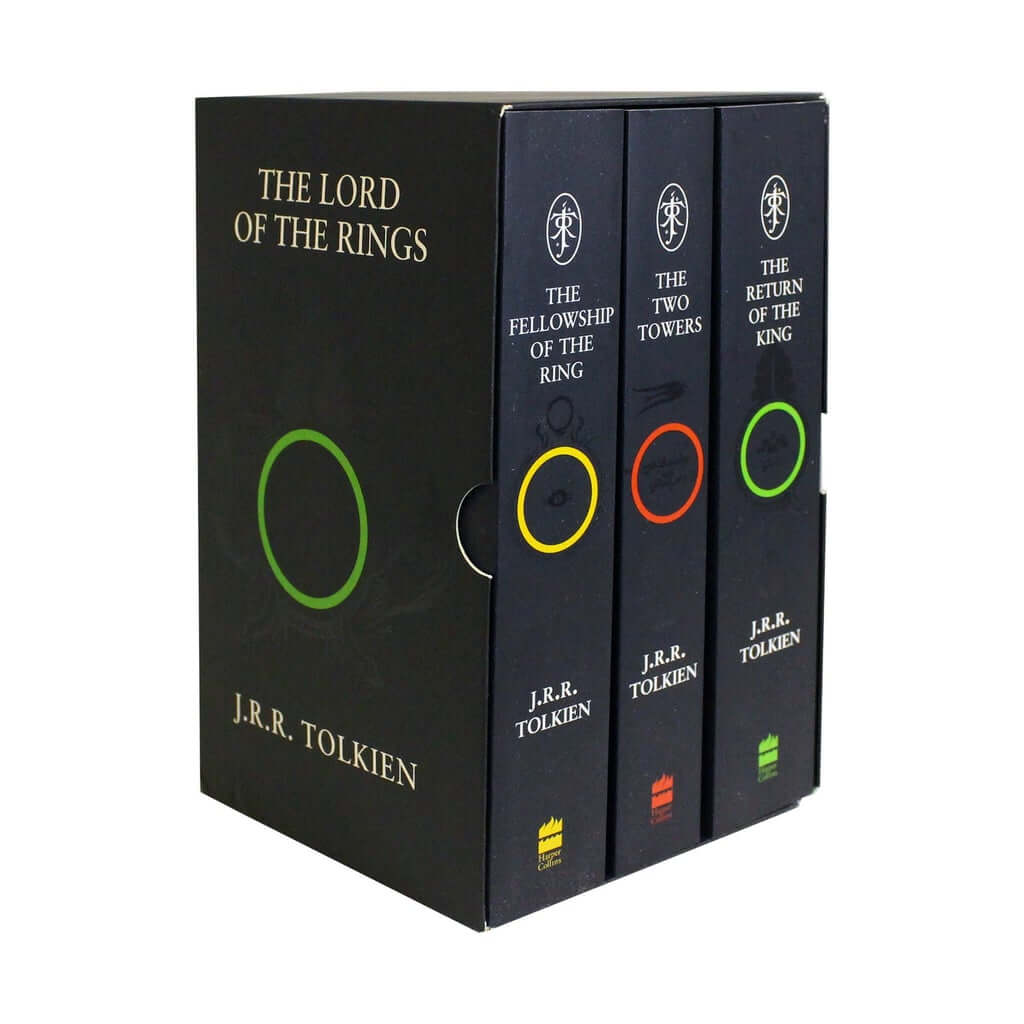
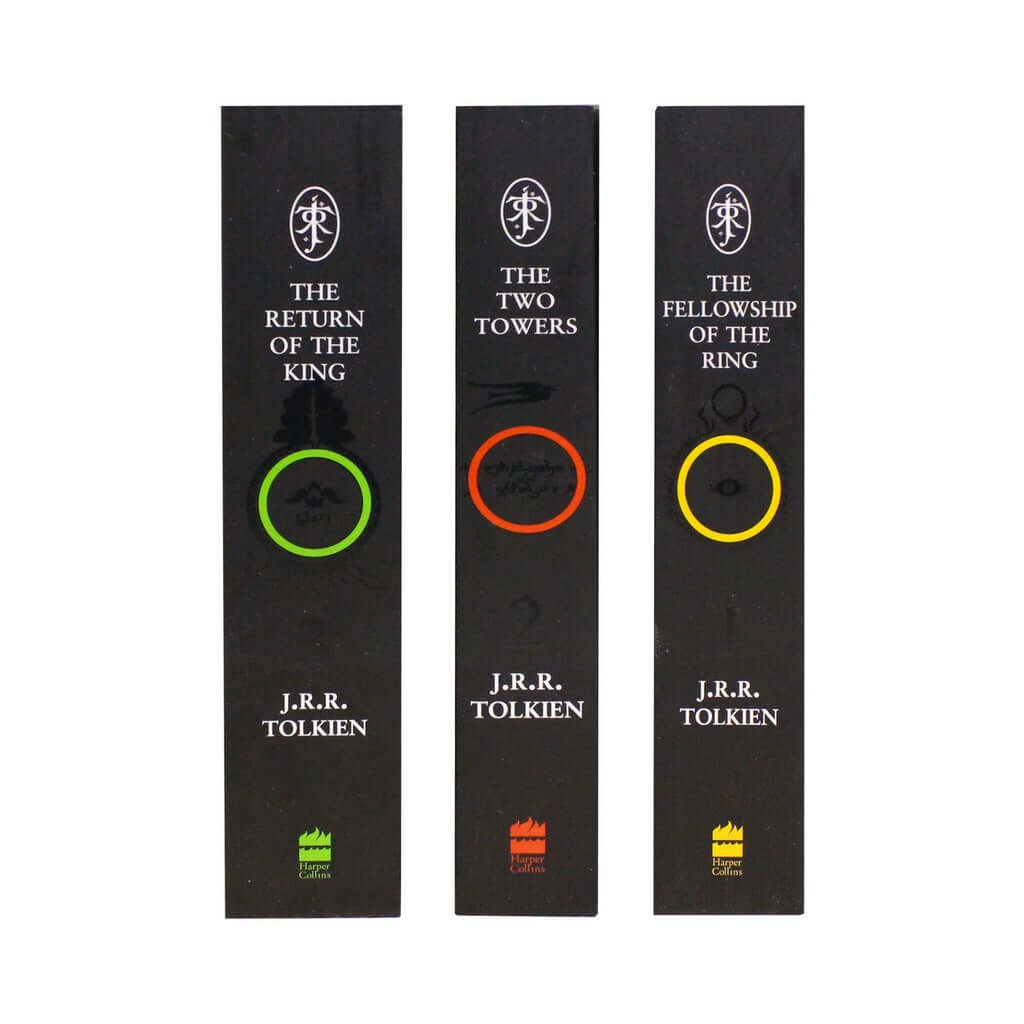
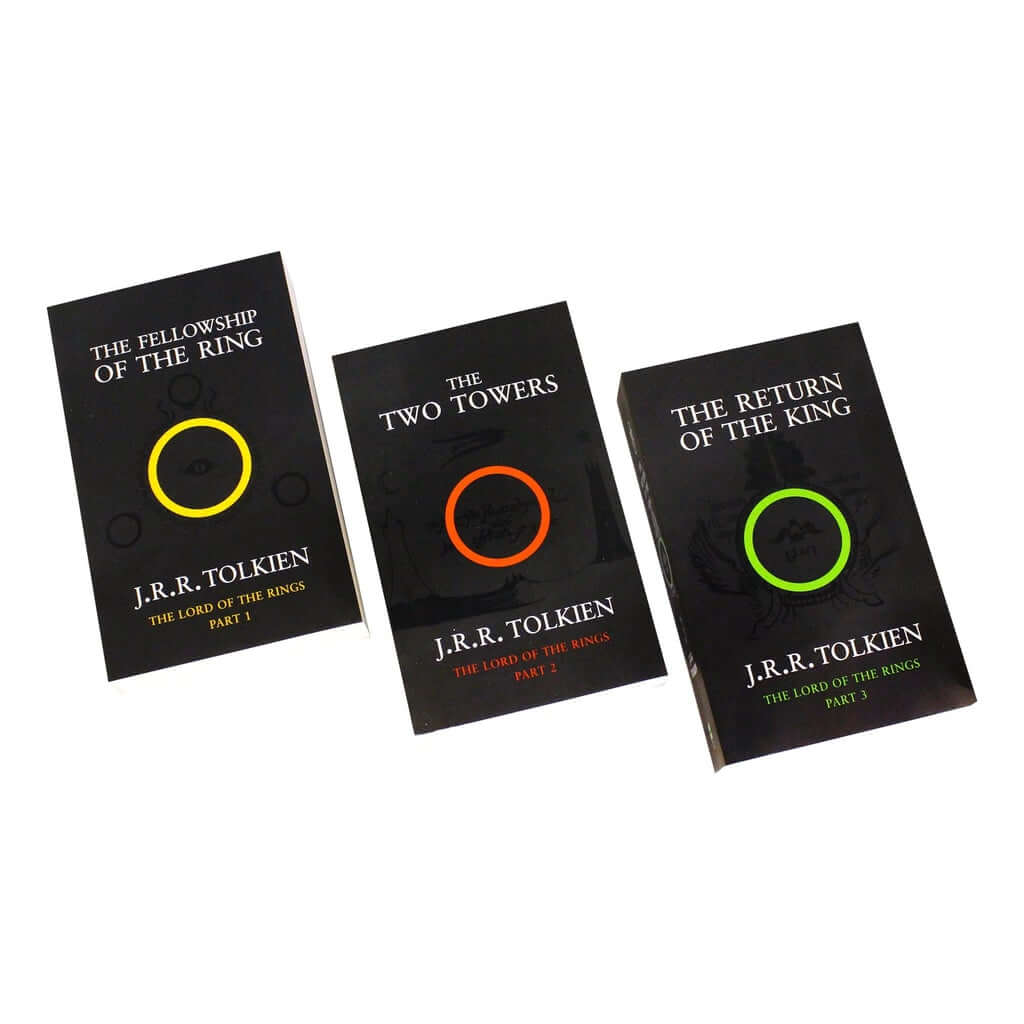
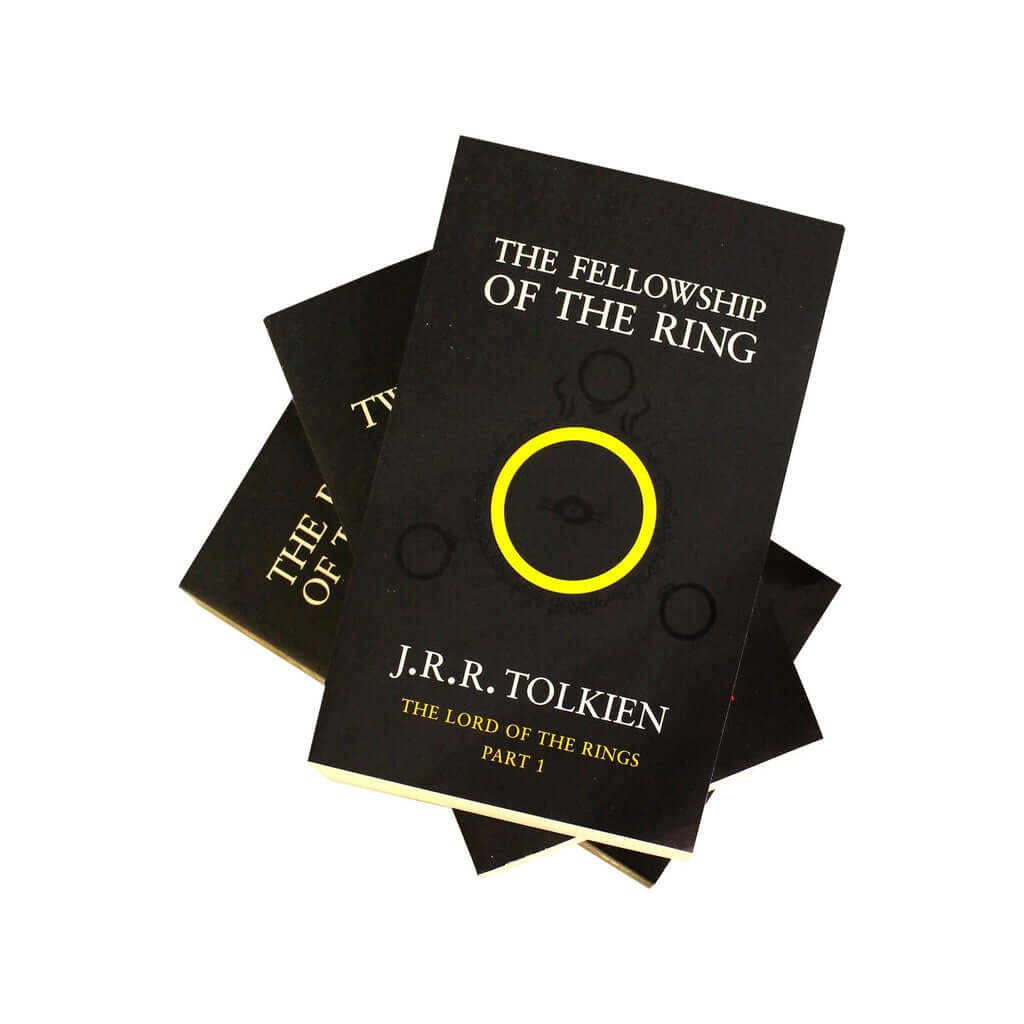



Lord of the rings triology by J. R. R. Tolkiens
Original price was: රු5,000.00.රු4,500.00Current price is: රු4,500.00.
3 X Rs. 1,500.00 or 8% Cashback with


or 3 X රු1,500.00 with

or up to 4 X රු1,125.00 with


The Lord of the Rings Trilogy by J.R.R. Tolkien brings together the three legendary volumes The Fellowship of the Ring, The Two Towers, and The Return of the King. Follow Frodo Baggins, Samwise Gamgee, Gandalf, Aragorn, Legolas, Gimli and the Fellowship on an unforgettable journey across Middle-earth to destroy the One Ring and resist the Dark Lord Sauron. Filled with epic adventure, friendship, courage, sacrifice, unforgettable battles and extraordinary worldbuilding, this classic trilogy is essential reading for fantasy fans.
3 in stock
The Lord of the Rings Trilogy by J.R.R. Tolkien is one of the most influential and beloved fantasy adventures ever written, taking readers across the extraordinary world of Middle-earth through a story of friendship, courage, sacrifice, loyalty, temptation and the struggle between good and evil.
The trilogy contains three legendary books:
1. The Fellowship of the Ring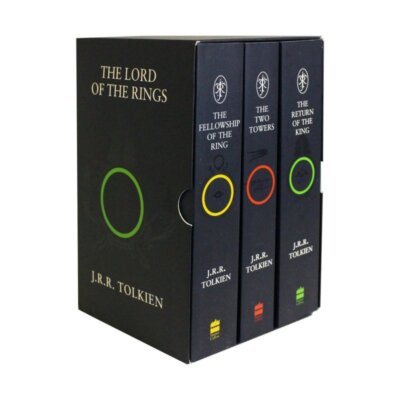
2. The Two Towers
3. The Return of the King
At the heart of the story is a seemingly ordinary hobbit named Frodo Baggins.
Frodo lives peacefully in the Shire.
He has no desire to become a warrior.
He does not seek power.
He does not dream of conquering kingdoms.
But everything changes when he inherits a mysterious ring from his cousin Bilbo Baggins.
This is no ordinary ring.
It is the One Ring.
Created by the Dark Lord Sauron, the Ring contains terrible power and is connected to Sauron’s ability to dominate Middle-earth.
If Sauron recovers it, the free peoples of Middle-earth may have little hope of resisting him.
The Ring cannot simply be hidden forever.
It must be destroyed.
And there is only one place where that can happen:
Mount Doom, deep inside the enemy land of Mordor.
Frodo is given a task that appears almost impossible.
Carry the Ring into Mordor.
Resist its corrupting influence.
Reach Mount Doom.
Destroy it.
His journey becomes the foundation of The Lord of the Rings Trilogy by J.R.R. Tolkien.
The Lord of the Rings Trilogy by J.R.R. Tolkien – Book Overview
The Lord of the Rings Trilogy by J.R.R. Tolkien tells one continuous epic story across three volumes.
The adventure moves through:
The peaceful Shire.
Rivendell.
Moria.
Lothlórien.
Rohan.
Gondor.
Mordor.
And many other unforgettable places.
Readers meet:
Hobbits.
Elves.
Dwarves.
Wizards.
Kings.
Warriors.
Orcs.
Ents.
Nazgûl.
And ancient powers whose histories stretch far beyond the main story.
What makes the trilogy extraordinary is the combination of enormous scale with deeply personal characters.
The fate of kingdoms matters.
But so does the friendship between two hobbits.
Book 1 – The Fellowship of the Ring
The Fellowship of the Ring begins the main journey.
Frodo discovers the true nature of the Ring he inherited.
The wizard Gandalf realizes that it is the One Ring created by Sauron.
Remaining in the Shire becomes dangerous.
Frodo must leave.
He is accompanied by his loyal friend Samwise Gamgee, along with fellow hobbits Merry and Pippin.
Their journey eventually leads them to Rivendell.
There, representatives of the free peoples of Middle-earth gather to decide what should be done with the Ring.
The Fellowship
A group is formed to help Frodo.
The Fellowship includes:
Frodo Baggins – Ring-bearer
Samwise Gamgee – Frodo’s loyal companion
Meriadoc “Merry” Brandybuck
Peregrin “Pippin” Took
Gandalf the Grey – wizard
Aragorn – ranger and heir to an ancient royal line
Boromir – warrior of Gondor
Legolas – Elven archer
Gimli – Dwarf warrior
Nine companions set out together.
Their mission is dangerous from the beginning.
Frodo Baggins
Frodo is not a traditional fantasy hero.
He is not the strongest warrior.
He is not a king.
He does not possess extraordinary fighting skills.
His strength comes from:
Courage.
Endurance.
Compassion.
Responsibility.
That makes him an important kind of hero.
Ordinary People Can Do Extraordinary Things
One of the strongest messages in The Lord of the Rings Trilogy by J.R.R. Tolkien is that enormous historical events can depend on seemingly ordinary individuals.
Frodo is a hobbit.
Hobbits are generally interested in:
Food.
Home.
Gardens.
Comfort.
Community.
Yet one of them becomes responsible for carrying an object capable of determining the future of Middle-earth.
Samwise Gamgee
Sam is one of the most beloved characters in the trilogy.
He begins as Frodo’s gardener and friend.
But as the journey becomes more difficult, Sam demonstrates extraordinary:
Loyalty.
Courage.
Patience.
Hope.
His friendship with Frodo becomes one of the emotional foundations of the entire story.
Friendship
Friendship is central to The Lord of the Rings Trilogy by J.R.R. Tolkien.
The Ring represents enormous power.
Yet the force that repeatedly keeps characters moving is often something much simpler:
Friendship.
Frodo and Sam.
Legolas and Gimli.
Merry and Pippin.
The Fellowship.
Their relationships prove that companionship can become a form of strength.
Gandalf
Gandalf is one of fantasy literature’s most iconic wizards.
He is wise.
Powerful.
Mysterious.
But his greatest importance may be his ability to:
Guide.
Encourage.
Warn.
Inspire.
He understands that people must sometimes make their own choices.
Aragorn
Aragorn begins the story as a mysterious ranger known as Strider.
But his true identity is much more significant.
His journey explores:
Leadership.
Responsibility.
Destiny.
Courage.
Kingship.
He must decide whether he is willing to accept the role history has prepared for him.
Leadership
Aragorn offers a powerful model of leadership.
He does not seek leadership merely for status.
He leads through:
Service.
Courage.
Sacrifice.
Competence.
Responsibility.
He often places himself in danger before asking others to do the same.
Legolas
Legolas is an Elf and a highly skilled archer.
He represents the ancient Elven cultures of Middle-earth.
His friendship with Gimli becomes especially important because Elves and Dwarves have historical tensions.
Gimli
Gimli is a Dwarf warrior.
He is proud.
Loyal.
Brave.
His developing friendship with Legolas demonstrates how personal relationships can overcome inherited prejudice.
Legolas and Gimli
At first, they come from cultures with long-standing suspicion of one another.
Over time, respect grows.
Their friendship becomes a symbol of cooperation between peoples who once distrusted each other.
Boromir
Boromir is a warrior from Gondor.
He is brave and deeply concerned about protecting his people.
But he also believes the Ring might be used as a weapon against Sauron.
This creates one of the trilogy’s most important moral questions.
The One Ring
The Ring is more than a magical object.
It represents:
Power.
Temptation.
Control.
Corruption.
Different characters respond to it differently.
Some fear it.
Some want to use it.
Some believe they could control it.
But the Ring corrupts even good intentions.
Power and Corruption
One of Tolkien’s most powerful themes is that evil does not always begin with obviously evil intentions.
Someone may think:
I will use this power for good.
But absolute power changes the person using it.
This makes the Ring symbolically powerful.
Good Intentions Can Become Dangerous
Boromir does not initially want the Ring because he wants to become evil.
He wants to defend Gondor.
That is precisely what makes the temptation dangerous.
Power can corrupt even when the original goal appears noble.
Book 2 – The Two Towers
The Two Towers expands the story significantly.
The Fellowship has been divided.
Different characters now follow different paths.
Frodo and Sam continue toward Mordor.
Aragorn, Legolas and Gimli pursue another mission.
Merry and Pippin encounter unexpected allies.
The war against Sauron becomes much larger.
Rohan
The kingdom of Rohan becomes central.
Readers meet:
King Théoden.
Éomer.
Éowyn.
The Riders of Rohan.
The kingdom faces internal weakness and external threats.
Its story introduces some of the trilogy’s most memorable battles and characters.
Théoden
King Théoden’s journey explores leadership in a time of crisis.
He must recover:
Confidence.
Authority.
Courage.
His decisions affect the survival of his kingdom.
Éowyn
Éowyn is one of the trilogy’s most memorable female characters.
She is courageous and longs for the freedom to act rather than simply remain behind while others face danger.
Her story explores:
Duty.
Gender expectations.
Courage.
Despair.
Hope.
The Ents
Merry and Pippin encounter the Ents, ancient tree-like beings.
Their leader, Treebeard, becomes one of Tolkien’s most memorable creations.
The Ents highlight another important theme:
The relationship between civilization and nature.
Nature Versus Industrial Destruction
Tolkien repeatedly contrasts living landscapes with destructive industrialization.
Beautiful forests and natural environments face damage from:
War.
Machines.
Exploitation.
This gives the fantasy story an environmental dimension.
Saruman
The wizard Saruman becomes a major threat.
He demonstrates how intelligence can become dangerous when combined with:
Pride.
Ambition.
Desire for control.
His fall is another example of the corrupting influence of power.
Gollum
One of the most psychologically fascinating characters in The Lord of the Rings Trilogy by J.R.R. Tolkien is Gollum.
Long exposure to the Ring has transformed him.
He both loves and hates it.
The Ring has become central to his identity.
Sméagol and Gollum
Gollum was once known as Sméagol.
The division between these identities creates a powerful exploration of:
Addiction.
Corruption.
Memory.
Identity.
Inner conflict.
Frodo sees something important in him.
A possible image of what the Ring could eventually do to Frodo himself.
Compassion
Frodo’s compassion toward Gollum becomes extremely important.
Others may see Gollum only as dangerous.
Frodo recognizes that he is also a victim of the Ring.
This introduces one of the trilogy’s strongest moral ideas:
Mercy can have consequences far beyond what we can predict.
Frodo and Sam’s Journey
As Frodo and Sam move closer to Mordor, the physical landscape becomes increasingly hostile.
The journey tests:
Food supplies.
Strength.
Trust.
Hope.
The burden of the Ring becomes heavier.
The Ring’s Psychological Weight
The Ring does not simply weigh physically.
It affects Frodo emotionally and psychologically.
The closer he gets to Mordor, the harder it becomes to resist its influence.
This makes his mission an internal struggle as well as an external journey.
Book 3 – The Return of the King
The Return of the King brings the major storylines toward their conclusion.
War reaches Gondor.
Sauron’s forces advance.
Aragorn must face his destiny.
Frodo and Sam enter the most dangerous stage of their journey.
Middle-earth approaches a decisive moment.
Gondor
The kingdom of Gondor becomes central to the final conflict.
Its capital, Minas Tirith, faces the forces of Sauron.
The defense of Gondor becomes one of the trilogy’s largest military struggles.
The Battle for Middle-earth
The war is not simply about territory.
If Sauron wins, the future of many peoples is at risk.
Humans.
Elves.
Dwarves.
Hobbits.
All have something to lose.
Aragorn’s Destiny
Aragorn’s journey reaches its most important stage.
He must accept responsibilities that extend far beyond his personal desires.
This makes his storyline one of the great leadership arcs in fantasy literature.
Duty
Duty is central to many characters.
Frodo carries the Ring.
Sam protects Frodo.
Aragorn leads.
Gandalf advises.
Each person has a role.
Heroism often means doing something difficult because it needs to be done.
Courage
The Lord of the Rings Trilogy by J.R.R. Tolkien repeatedly demonstrates that courage does not mean lack of fear.
Characters are often afraid.
They know they may fail.
They continue anyway.
Hope
Hope becomes increasingly important as the situation becomes darker.
Sometimes hope is rational.
Sometimes there is little evidence that success is possible.
Yet characters continue.
This gives the trilogy enormous emotional power.
Sam and Hope
Sam becomes especially important as Frodo’s hope weakens.
Sometimes one person cannot carry hope alone.
A friend may have to carry it temporarily.
That is one reason Sam’s loyalty resonates so strongly with readers.
Sacrifice
Victory requires sacrifice.
Characters give:
Time.
Safety.
Comfort.
Home.
Sometimes life.
The trilogy does not portray courage as cost-free.
Home
The Shire represents home.
It is everything Frodo and Sam are trying to protect.
Home gives the adventure meaning.
They are not fighting because they love war.
They are fighting because there is something peaceful worth protecting.
The Shire
The Shire represents:
Ordinary life.
Food.
Gardens.
Friendship.
Community.
Peace.
Its simplicity contrasts dramatically with Mordor.
Mordor
Mordor is the heart of Sauron’s power.
It is:
Dark.
Industrial.
Dangerous.
Hostile.
As Frodo and Sam enter Mordor, the journey becomes increasingly desperate.
Mount Doom
Mount Doom is the destination toward which the entire Ring quest moves.
The Ring was created there.
Only there can it be destroyed.
Reaching Mount Doom requires extraordinary endurance.
Good Versus Evil
The trilogy contains a clear struggle against Sauron.
But Tolkien’s moral world is more complex than:
Good people never make mistakes.
Characters experience:
Temptation.
Weakness.
Fear.
Pride.
Even good characters can fail.
Evil Can Exploit Weakness
Sauron’s power often works through:
Fear.
Greed.
Pride.
Desire for control.
This makes the conflict psychological as well as military.
Mercy
Mercy may be one of the most important themes in The Lord of the Rings Trilogy by J.R.R. Tolkien.
Bilbo once had the opportunity to kill Gollum.
He did not.
Frodo also shows mercy.
These decisions later matter enormously.
The story suggests we cannot always know the future consequences of compassion.
Free Will
Characters constantly make choices.
Take the Ring.
Reject the Ring.
Fight.
Hide.
Trust.
Betray.
The future of Middle-earth emerges through many individual decisions.
Fellowship
The word fellowship means more than the original nine companions.
It represents cooperation.
People who are different can work toward a shared goal.
Elves.
Dwarves.
Humans.
Hobbits.
Wizards.
Their strength comes partly from unity.
Diversity of Strength
No single character possesses every useful ability.
Aragorn is a leader.
Legolas has extraordinary archery skills.
Gimli is a powerful warrior.
Gandalf possesses wisdom.
Sam offers loyalty.
Frodo carries the burden.
Teamwork requires different strengths.
Loyalty
Loyalty appears throughout the story.
The greatest example is Sam.
His loyalty does not depend on convenience.
It becomes strongest when circumstances are worst.
Leadership Lessons
The Lord of the Rings Trilogy by J.R.R. Tolkien contains many lessons relevant even outside fantasy.
Good leadership involves:
Responsibility.
Service.
Courage.
Patience.
Listening.
Sacrifice.
Aragorn earns loyalty largely because he demonstrates these qualities.
The Danger of Pride
Pride contributes to the downfall or poor decisions of several characters.
Confidence can be valuable.
But believing yourself immune to corruption can become dangerous.
Wisdom
Some of the wisest characters understand their own limitations.
Gandalf does not simply take the Ring and use its power.
He understands that even someone trying to do good could eventually be corrupted.
True wisdom includes knowing what power you should refuse.
Middle-earth
One reason readers love The Lord of the Rings Trilogy by J.R.R. Tolkien is the extraordinary depth of Middle-earth.
It feels like a world with a history extending thousands of years before Frodo begins his journey.
Tolkien developed:
Languages.
Histories.
Genealogies.
Legends.
Cultures.
Poetry.
Geography.
This depth makes Middle-earth feel unusually real.
Elves
The Elves represent an ancient civilization.
They possess:
Wisdom.
Beauty.
Memory.
Long life.
But their age is gradually passing.
Their story adds themes of:
Loss.
Change.
Mortality.
Dwarves
Dwarves possess their own rich history and traditions.
Through Gimli, readers see:
Pride.
Loyalty.
Craftsmanship.
Heritage.
His friendship with Legolas helps bridge ancient cultural divisions.
Men
Human kingdoms face another challenge.
Humans are vulnerable to:
Fear.
Corruption.
Death.
Yet they also have enormous potential for courage.
Hobbits
Hobbits may be the most important people precisely because they appear least important.
They do not begin as kings or warriors.
Their strength comes from simpler qualities.
Small People, Great Courage
One of Tolkien’s enduring messages is that history can depend on individuals others overlook.
Power is not the only source of strength.
Sometimes:
Kindness.
Persistence.
Humility.
Loyalty.
matter more.
The Hobbit Connection
Readers who want to experience Middle-earth chronologically should consider reading The Hobbit before the trilogy.
The Hobbit follows Bilbo Baggins and explains how he originally comes into possession of the Ring.
It also introduces:
Gandalf.
Gollum.
The Shire.
Middle-earth.
However, The Lord of the Rings Trilogy by J.R.R. Tolkien can still be understood on its own.
Recommended Reading Order
For readers beginning Tolkien’s main Middle-earth adventures, a simple reading order is:
1. The Hobbit
2. The Fellowship of the Ring
3. The Two Towers
4. The Return of the King
Readers interested in deeper mythology can later explore The Silmarillion and other Tolkien works.
Do You Need to Read The Hobbit First?
No.
It is recommended but not required.
The opening sections of The Fellowship of the Ring provide enough context to understand the main story.
However, reading The Hobbit first adds more meaning to:
Bilbo.
The Ring.
Gollum.
Gandalf.
The Shire.
J.R.R. Tolkien
J.R.R. Tolkien was an English writer, scholar and philologist.
His knowledge of languages, mythology and ancient literature strongly influenced Middle-earth.
His work helped shape modern fantasy literature.
Many later fantasy writers were influenced by the worldbuilding traditions associated with Tolkien.
Language
Tolkien’s invented languages are one of the most distinctive features of Middle-earth.
Languages such as Quenya and Sindarin were developed with considerable linguistic depth.
For Tolkien, languages and cultures were deeply connected.
Mythology
The trilogy draws inspiration from many traditions, including:
Northern European myth.
Old English literature.
Heroic legends.
Folklore.
But Tolkien combines these influences into a world with its own identity.
War
War plays a major role in the trilogy.
But the story does not glorify war as something inherently exciting.
War causes:
Death.
Destruction.
Loss.
Separation.
The heroes fight because peace is threatened.
Peace
Peace is the goal.
The characters want to return to:
Home.
Family.
Gardens.
Food.
Ordinary life.
This is important.
The story values the peaceful world that heroic action protects.
Environmental Themes
Tolkien’s love of nature appears throughout the trilogy.
Forests.
Mountains.
Rivers.
Fields.
Gardens.
are described with affection.
Industrial destruction is often associated with evil or corruption.
Friendship Across Differences
Legolas and Gimli provide one of the clearest examples.
Their peoples have reasons to distrust each other.
Yet personal experience changes their relationship.
The message is powerful:
Inherited prejudice does not have to determine future friendship.
Temptation
Almost everyone who encounters the Ring must respond to temptation.
The Ring offers the possibility of power.
The more someone desires power, the more dangerous it becomes.
Responsibility
Frodo does not choose the situation he receives.
But he chooses what to do next.
This is another enduring lesson.
People cannot always choose their circumstances.
They can choose their response.
The Burden of Leadership
Aragorn’s story demonstrates that genuine leadership can feel like a burden rather than a reward.
A good leader understands that authority creates responsibility.
The Power of Humility
Hobbits repeatedly demonstrate humility.
They do not see themselves as great heroes.
That humility may actually protect them from some forms of temptation.
Cinema Adaptation
The trilogy was famously adapted into Peter Jackson’s three-film series:
The Lord of the Rings: The Fellowship of the Ring
The Lord of the Rings: The Two Towers
The Lord of the Rings: The Return of the King
The films introduced Tolkien’s story to a huge new audience.
Readers who love the movies can discover much more detail in the books.
Books Versus Movies
The books contain:
More worldbuilding.
More history.
Additional characters and scenes.
More poetry and songs.
More insight into cultures.
Differences in characterization and pacing.
The films are acclaimed adaptations, but the novels provide a much deeper exploration of Middle-earth.
Why Read the Trilogy After Watching the Movies?
The books allow readers to understand:
Why characters make certain decisions.
The history behind places.
The cultures of Middle-earth.
Themes that cannot all fit into film.
Even someone who knows the movie storyline can have a very different experience reading Tolkien.
Is The Lord of the Rings a Trilogy?
It is commonly published and referred to as a trilogy because the story is distributed across three volumes.
However, Tolkien conceived The Lord of the Rings as a single continuous work, later divided into three volumes for publication.
For bookstore and customer purposes, describing the three-volume collection as The Lord of the Rings Trilogy is completely clear and widely understood.
Is It Suitable for New Fantasy Readers?
Yes, particularly for readers interested in classic epic fantasy.
However, Tolkien’s writing style is more detailed and traditional than many modern fantasy novels.
Readers should expect:
Detailed descriptions.
Songs.
History.
Worldbuilding.
A slower beginning.
The reward is an exceptionally immersive world.
Content Considerations
The Lord of the Rings Trilogy by J.R.R. Tolkien includes fantasy violence and some darker themes, including:
- Battles and warfare
- Death and grief
- Threats and imprisonment
- Fantasy monsters
- Weapons
- Psychological corruption
- Fear and despair
- Injury
- Dark supernatural forces
The series does not rely heavily on graphic sexual content or explicit gore.
7 Epic Reasons to Read The Lord of the Rings Trilogy
There are countless reasons to experience The Lord of the Rings Trilogy by J.R.R. Tolkien, but seven stand out:
- Middle-earth is one of fantasy’s most immersive worlds – Its languages, cultures, histories, landscapes and legends create extraordinary depth.
- Frodo and Sam share one of literature’s greatest friendships – Their loyalty, sacrifice and perseverance provide the emotional heart of the journey.
- The One Ring creates a powerful exploration of temptation and corruption – Tolkien shows how even good intentions can become dangerous when combined with absolute power.
- The trilogy contains unforgettable heroes – Gandalf, Aragorn, Legolas, Gimli, Éowyn, Merry and Pippin each contribute something unique to the struggle.
- The story combines huge battles with deeply personal choices – The fate of kingdoms ultimately depends on decisions made by individuals.
- Its themes remain timeless – Friendship, courage, hope, mercy, leadership, sacrifice and resistance to corruption remain relevant far beyond fantasy.
- It is foundational reading for fantasy fans – Tolkien’s work had an enormous influence on how later generations imagined epic fantasy worlds.
Why Read The Lord of the Rings Trilogy by J.R.R. Tolkien?
The Lord of the Rings Trilogy by J.R.R. Tolkien is an excellent choice for readers interested in:
- J.R.R. Tolkien books
- The Lord of the Rings
- Fantasy
- Epic fantasy
- Middle-earth
- Frodo Baggins
- Samwise Gamgee
- Gandalf
- Aragorn
- Legolas
- Gimli
- Sauron
- The One Ring
- Classic fantasy
- Adventure
- Friendship
- Heroic fantasy
- Fantasy trilogies
- Worldbuilding
- Books adapted into movies
It is especially suitable for readers who want an epic adventure with unforgettable characters and a richly developed fantasy world.
Who Should Read This Trilogy?
The Lord of the Rings Trilogy by J.R.R. Tolkien may especially appeal to:
- Fantasy readers
- Tolkien fans
- Adventure readers
- Readers who loved The Hobbit
- Fans of the Lord of the Rings movies
- Readers interested in mythology
- Readers who enjoy detailed worldbuilding
- Readers who love friendship stories
- Fans of epic quests
- Collectors of classic literature
- Young adult and adult fantasy readers
- Readers interested in influential fantasy fiction
- Gift buyers looking for a classic fantasy collection
One Ring, One Fellowship and an Unforgettable Journey
The Lord of the Rings Trilogy by J.R.R. Tolkien begins in one of the quietest places imaginable.
The Shire.
A peaceful home.
A small hobbit.
A mysterious ring.
From that simple beginning grows an enormous adventure involving:
Ancient kingdoms.
Wizards.
Elves.
Dwarves.
Massive armies.
Dark powers.
Lost kings.
And the future of Middle-earth.
Yet despite the enormous scale, Tolkien never loses sight of the small things that make the journey meaningful.
Friendship.
Home.
Food.
Gardens.
Promises.
Mercy.
Hope.
Frodo may carry the Ring.
But he does not carry the burden alone.
Sam remains beside him.
Aragorn accepts responsibility.
Gandalf guides others.
Legolas and Gimli overcome old divisions.
Merry and Pippin grow from playful hobbits into courageous participants in history.
The story reminds readers that heroism does not belong only to the strongest.
Sometimes the greatest courage comes from ordinary people who continue when the task seems impossible.
That is why The Lord of the Rings Trilogy by J.R.R. Tolkien remains such an enduring fantasy classic.
It is not simply a story about destroying a magical ring.
It is a story about what people choose when confronted with:
Power.
Fear.
Responsibility.
Temptation.
Loss.
And hope.
For readers interested in epic fantasy, adventure, friendship, Middle-earth, extraordinary worldbuilding and timeless stories of courage and sacrifice, The Lord of the Rings Trilogy by J.R.R. Tolkien is an essential collection and a journey worth experiencing from beginning to end.
Learn more about Loonshots by Safi Bahcall on Safi Bahcall’s official website.
Explore more business and innovation books at Bargain Books.
| Author | J. R. R. Tolkiens |
|---|---|
| Language | English |
| Type | Paperback Printed Book (Second Quality Copy) |
Be the first to review “Lord of the rings triology by J. R. R. Tolkiens”
Related products
-21%
Out of stock
Contemporary Fiction
Original price was: රු2,400.00.රු1,900.00Current price is: රු1,900.00.
3 X Rs. 633.33 or 8% Cashback with
or 3 X රු633.33 with
or up to 4 X රු475.00 with
Out of stock
Children & Young Adult
රු3,200.00
3 X Rs. 1,066.67 or 8% Cashback with
or 3 X රු1,066.67 with
or up to 4 X රු800.00 with
-26%
Contemporary romance
Original price was: රු1,950.00.රු1,450.00Current price is: රු1,450.00.
3 X Rs. 483.33 or 8% Cashback with
or 3 X රු483.33 with
or up to 4 X රු362.50 with
-20%

Fiction & Literature
Original price was: රු2,500.00.රු1,990.00Current price is: රු1,990.00.
3 X Rs. 663.33 or 8% Cashback with
or 3 X රු663.33 with
or up to 4 X රු497.50 with
-23%
Contemporary Fiction
Original price was: රු2,200.00.රු1,700.00Current price is: රු1,700.00.
3 X Rs. 566.67 or 8% Cashback with
or 3 X රු566.67 with
or up to 4 X රු425.00 with
Out of stock
Classics & Literary Fiction
රු1,800.00
3 X Rs. 600.00 or 8% Cashback with
or 3 X රු600.00 with
or up to 4 X රු450.00 with
Contemporary romance
රු1,850.00
3 X Rs. 616.67 or 8% Cashback with
or 3 X රු616.67 with
or up to 4 X රු462.50 with
-24%
Out of stock
Contemporary romance
Original price was: රු2,100.00.රු1,600.00Current price is: රු1,600.00.
3 X Rs. 533.33 or 8% Cashback with
or 3 X රු533.33 with
or up to 4 X රු400.00 with
Reviews
There are no reviews yet.