
No products in the cart.
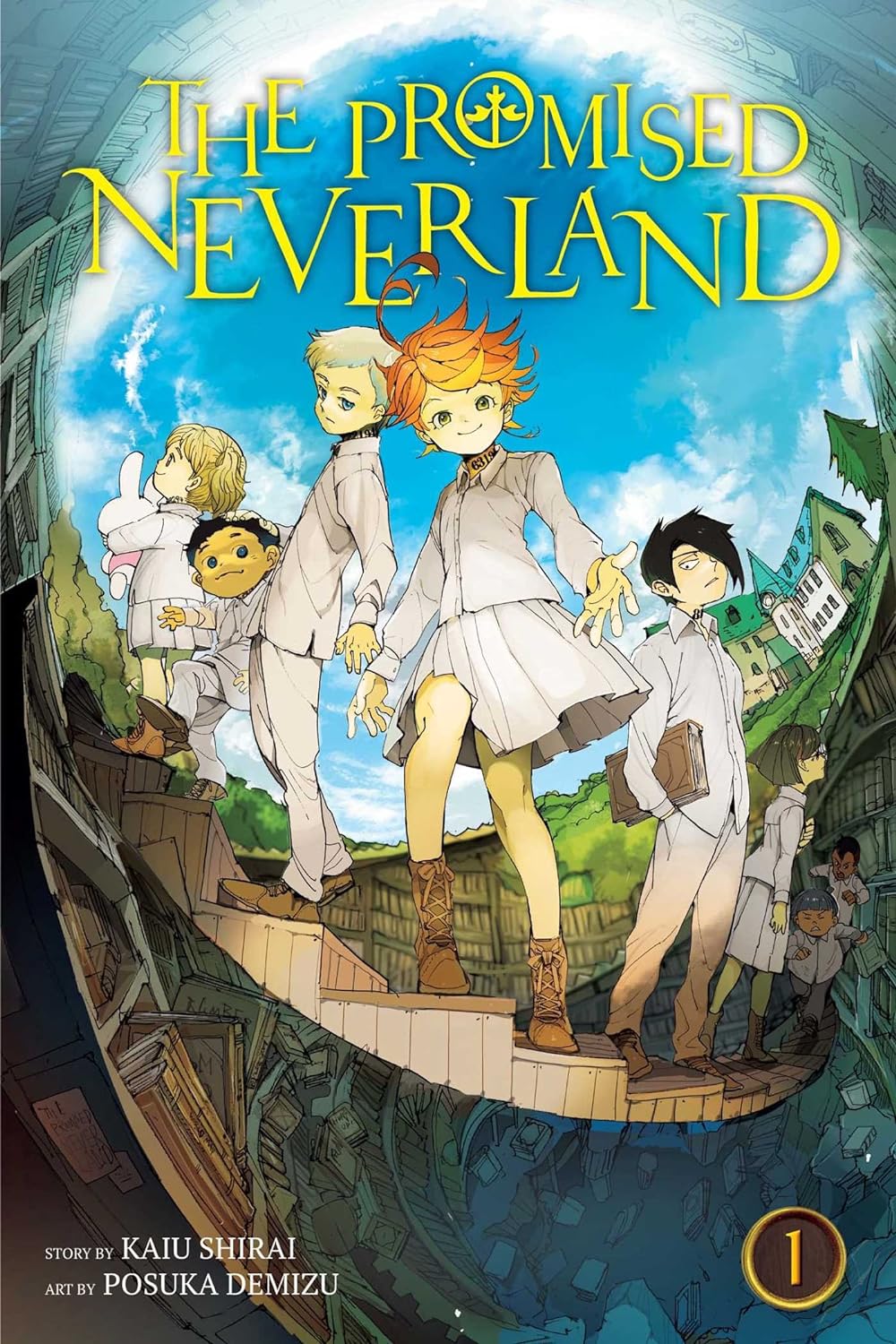
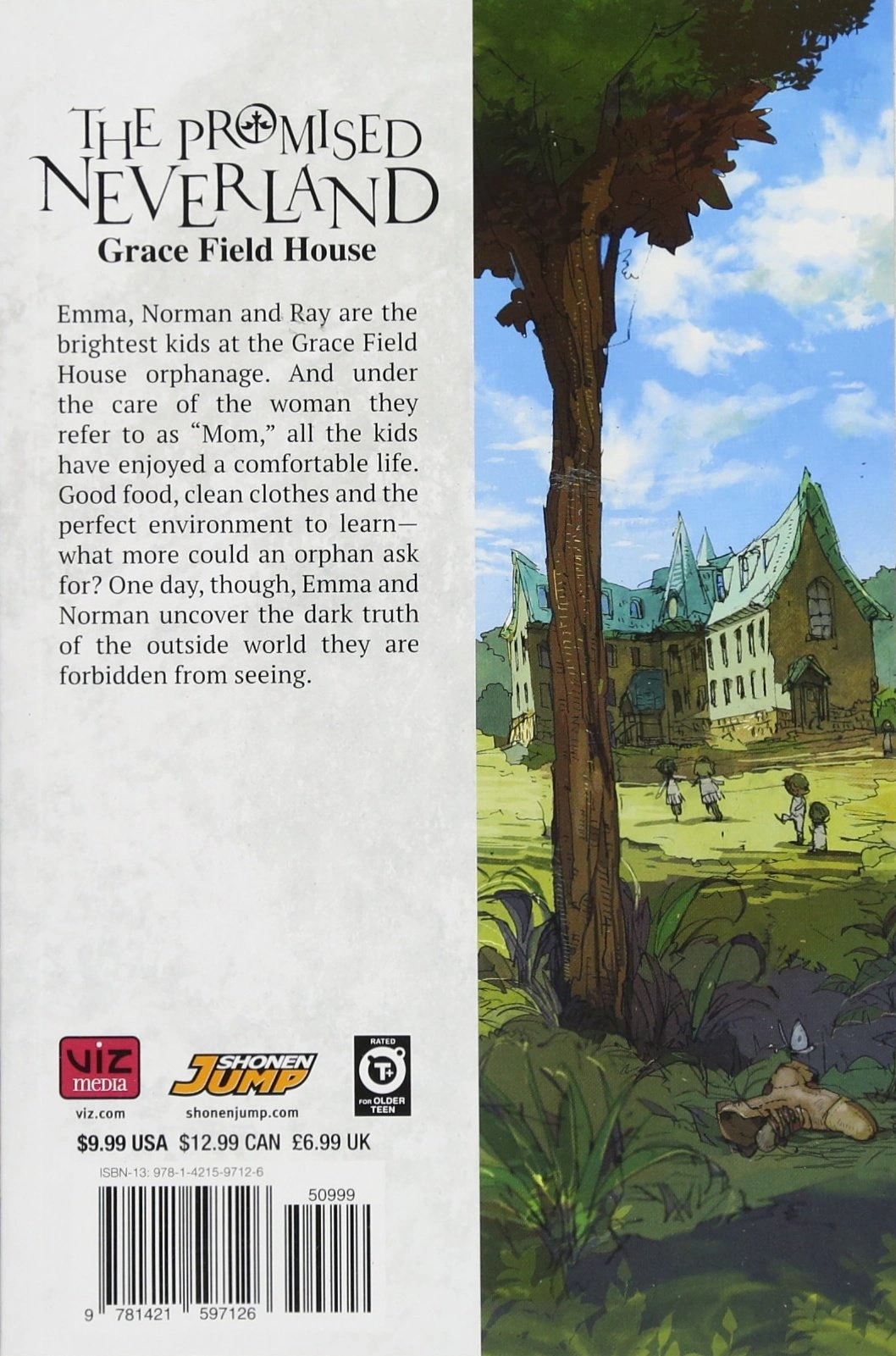
The Promised Neverland, Vol. 1 by Kaiu Shirai
රු1,600.00
3 X Rs. 533.33 or 8% Cashback with


or 3 X රු533.33 with


or up to 4 X රු400.00 with


“The Promised Neverland, Vol. 1” by Kaiu Shirai is the captivating first installment of a dark fantasy manga series. It follows the story of Emma, Norman, and Ray, three orphans living in the seemingly idyllic Grace Field House, who uncover a horrifying secret about their home. This discovery sets them on a thrilling quest for freedom and survival.
Out of stock
Email when stock available
The Promised Neverland Vol 1 by Kaiu Shirai and Posuka Demizu begins one of manga’s most suspenseful battles of intelligence, survival and freedom.
Grace Field House appears to be the perfect orphanage.
The children have:
Comfortable beds.
Good food.
Clean clothes.
Time to play.
Excellent education.
And a kind caretaker they lovingly call Mom.
Among the children are three exceptionally bright friends:
Emma
Norman
and
Ray.
Their lives seem peaceful.
There is only one strange rule.
The children are never allowed to leave the grounds.
They do not know what lies beyond the gate.
They assume that eventually they will be adopted and begin happy new lives outside Grace Field House.
Then one evening, Emma and Norman discover something they were never supposed to see.
In a single terrifying moment, everything they believed about their home changes.
Grace Field House is not what it appears to be.
Their future is not what they were promised.
And suddenly the children realize that escaping may be the only way to survive.
The Promised Neverland Vol 1 transforms what initially appears to be a warm story about children growing up together into an intense psychological thriller filled with secrets, strategy, deception and danger.
The Promised Neverland Vol 1 – Manga Overview
The Promised Neverland Vol 1 introduces readers to Grace Field House and the children who live there.
The setting initially feels safe.
Almost ideal.
The children are healthy.
They receive affection.
They study.
They play outside.
They eat together.
But the perfect appearance hides something horrifying.
VIZ describes the series as a dystopian fantasy thriller, following children who discover the terrible truth behind Grace Field House and must find a way to escape their fate.
Emma
Emma is one of the central characters in The Promised Neverland Vol 1.
She is energetic, compassionate and fiercely loyal to the other children.
Emma is intelligent, but her strongest quality may be her ability to care deeply about people.
When danger appears, she does not think only about saving herself.
She thinks about:
Norman.
Ray.
The younger children.
Everyone at Grace Field House.
That compassion creates both her greatest strength and one of her greatest challenges.
Emma’s Idea of Family
The children at Grace Field House are not biologically related.
But emotionally, they are family.
They eat together.
Learn together.
Play together.
Grow up together.
For Emma, abandoning the younger children is almost impossible to imagine.
This turns escape from a practical problem into a moral one.
It would be easier to save only a few of the oldest and smartest children.
Emma wants something much more difficult.
Norman
Norman is exceptionally intelligent.
He is calm.
Analytical.
Strategic.
Where Emma sometimes reacts emotionally, Norman often begins calculating possibilities.
What information do they have?
What does the enemy know?
What options exist?
What could go wrong?
His ability to think several moves ahead becomes essential.
Intelligence as a Weapon
Many action manga focus on:
Physical strength.
Special attacks.
Weapons.
Supernatural abilities.
The Promised Neverland Vol 1 approaches conflict differently.
The children’s most important weapons are:
Observation.
Planning.
Memory.
Logic.
Deception.
Teamwork.
This creates a suspenseful battle where thinking can matter more than fighting.
Ray
Ray is the third member of the central trio.
He is intelligent, quiet and highly observant.
Emma, Norman and Ray all perform exceptionally well academically, but their personalities differ considerably.
Those differences become important because surviving Grace Field House requires different ways of thinking.
Three Different Strengths
Emma brings extraordinary compassion and determination.
Norman brings strategy and calm reasoning.
Ray brings knowledge, skepticism and careful observation.
Their combined strengths create an effective team.
The story therefore reinforces an important idea:
Being intelligent does not mean everyone needs to think in exactly the same way.
Grace Field House
Grace Field House is one of the most memorable settings in modern manga.
At first glance, it feels peaceful.
Children run across open fields.
Meals are shared.
Lessons take place.
Mom smiles.
But after readers discover the truth, every familiar location becomes suspicious.
The gate.
The forest.
The house.
Mom’s room.
The walls surrounding the property.
Everything may contain information.
A Perfect Place That Feels Wrong
One reason The Promised Neverland Vol 1 is so effective is the contrast between appearance and reality.
Nothing looks like a traditional prison.
The children are not kept in dark cells.
They appear happy.
That makes the hidden reality much more disturbing.
Isabella – “Mom”
The woman the children call Mom is Isabella.
She appears loving, calm and attentive.
She knows every child.
She takes care of them.
She teaches them.
But once Emma and Norman learn the truth, their relationship with Mom changes completely.
Every smile becomes suspicious.
Every question may have another meaning.
Psychological Warfare
The conflict in The Promised Neverland Vol 1 quickly becomes psychological.
The children cannot simply announce:
“We know the truth.”
They must hide what they know.
At the same time, they need to determine:
What does Mom know?
Does she suspect them?
How closely are they being watched?
Can they trust everyone?
This creates intense suspense.
Keeping a Secret
Keeping information hidden becomes extremely difficult when you live with the person you are trying to deceive.
Emma and Norman still have to:
Eat normally.
Study normally.
Play normally.
Smile normally.
One wrong reaction could reveal everything.
The Importance of Observation
Small details suddenly matter.
Who went where?
Who heard something?
What changed?
Why did Mom react that way?
The manga encourages readers to observe the environment alongside the characters.
Escape
The first major objective is simple to describe:
Escape Grace Field House.
Actually accomplishing it is much harder.
The children do not fully understand the outside world.
They do not know exactly what waits beyond the walls.
They have younger children to protect.
They have limited resources.
And an intelligent adult is watching them.
Planning
A successful escape requires answers.
How do they leave?
When?
Who comes?
How do they avoid detection?
What lies outside?
How much time do they have?
Every answer creates another problem.
That is part of what makes The Promised Neverland Vol 1 so addictive.
Time Pressure
The children cannot take forever to create the perfect plan.
Their situation contains deadlines they cannot ignore.
That forces them to balance:
Preparation
against
speed.
Too little preparation is dangerous.
Too much waiting may be even worse.
Information Is Power
The person who knows more often has the advantage.
Emma and Norman know a secret.
Mom knows much more about Grace Field House.
The children therefore need information almost as badly as they need a physical escape route.
What Is Outside?
This question creates one of the series’ biggest mysteries.
The children have spent their lives inside Grace Field House.
They know very little about the world beyond it.
Escaping one danger may mean entering another.
But remaining is not an option.
Trust
Trust becomes one of the biggest themes in The Promised Neverland Vol 1.
Who can be trusted?
Should every child know the escape plan?
Could someone accidentally reveal too much?
Could someone deliberately betray them?
These questions create tension even between people who care about one another.
Leadership
Emma, Norman and Ray are among the oldest and most capable children.
That gives them responsibility.
Leadership is not simply making the smartest decision for yourself.
It means considering how your decision affects others.
Saving Everyone
Emma’s desire to save everyone sounds admirable.
It is also strategically difficult.
Younger children:
Move more slowly.
Need more help.
May not understand danger.
Could reveal the plan accidentally.
This creates conflict between what is emotionally right and what is practically safest.
Idealism Versus Realism
Emma represents an idealistic position.
No one gets left behind.
Other characters may look at the same situation more pragmatically.
How many people can realistically escape?
The story does not treat this debate as simple.
Both positions contain logic.
Growing Up Suddenly
The children lose their innocence almost instantly.
One discovery changes how they understand:
Mom.
Their home.
Adoption.
The outside world.
Their own future.
Growing up normally happens gradually.
For Emma and Norman, it happens in one terrifying moment.
Childhood and Horror
The combination of children and psychological horror gives the series its distinctive tone.
The characters are young.
But the problems they face are frighteningly adult.
They must think about:
Death.
Deception.
Sacrifice.
Responsibility.
Survival.
Dystopian Fantasy
The Promised Neverland Vol 1 combines several genres.
It is:
Manga.
Dystopian fantasy.
Psychological thriller.
Mystery.
Horror.
Science-fantasy.
The mixture allows the story to constantly shift between emotional moments and tense strategic planning.
Not a Typical Battle Manga
The manga was serialized under Shonen Jump, but its early conflict is very different from many famous shonen series.
There is no immediate tournament.
No constant fistfighting.
No hero training to unlock a special attack.
Instead, the characters are trapped inside a puzzle.
The challenge is to outthink the adults controlling them.
Strategy
Readers who enjoy strategic stories may especially appreciate The Promised Neverland Vol 1.
Plans need:
Backup plans.
Misdirection.
Observation.
Timing.
Information control.
Characters frequently try to predict what another person will do next.
Chess-Like Conflict
The early story can almost feel like chess.
If we do this, what will Mom do?
If she does that, what does it reveal?
Can we make her believe something false?
Every move contains risk.
Suspense
Suspense comes from knowing the danger without knowing exactly when it will arrive.
The children must continue ordinary life while constantly thinking about escape.
Readers understand that one mistake could have enormous consequences.
Posuka Demizu’s Artwork
The artwork by Posuka Demizu plays a major role in the atmosphere.
The children can look cheerful and innocent in one panel.
A few pages later, expressions, shadows and composition can create genuine horror.
This contrast makes the darker moments especially effective.
Character Expressions
Because much of the story involves deception, facial expressions matter enormously.
A smile may hide fear.
A calm face may hide suspicion.
Someone who appears relaxed may actually be calculating.
The artwork helps readers participate in this psychological game.
Kaiu Shirai’s Story
The story is written by Kaiu Shirai, while Posuka Demizu provides the artwork. VIZ officially credits Shirai for the story and Demizu for the art.
Their collaboration combines strategic plotting with a distinctive visual style that shifts effectively between childhood warmth and disturbing horror.
Is The Promised Neverland Vol 1 the First Book?
Yes.
The Promised Neverland Vol 1 is the correct starting point for the manga series.
You do not need to read anything before it.
Begin here.
Correct Reading Order
Start with:
The Promised Neverland Vol 1
Then continue:
The Promised Neverland Vol 2
The Promised Neverland Vol 3
and onward numerically.
The main manga contains 20 volumes in total. VIZ’s complete box set confirms that the full saga consists of all 20 volumes.
Is Volume 1 a Standalone?
No.
Volume 1 begins the larger story.
The immediate events are compelling, but major mysteries, escape plans and character arcs continue through later volumes.
Readers should plan to continue with Volume 2.
How Many Volumes Are There?
The complete main manga series has:
20 volumes.
VIZ released a complete box set containing all 20 volumes, plus additional premium material.
Is There an Anime?
Yes.
The Promised Neverland was adapted into an anime series.
Readers who discovered Emma, Norman and Ray through the anime can return to The Promised Neverland Vol 1 to experience the original manga storyline and Posuka Demizu’s artwork.
Manga Versus Anime
Reading the manga lets fans experience:
Original panel composition.
The creators’ pacing.
Character expressions.
Narration.
Visual details.
The original source material.
For readers intending to experience the entire story, the manga provides the complete original narrative across all 20 volumes.
Is It Suitable for Children?
Despite the young protagonists, this is not a children’s manga.
VIZ gives Volume 1 a Teen Plus age rating.
The story contains disturbing themes and psychological horror.
Parents should not assume the cute cover art means the content is light.
Content Considerations
The Promised Neverland Vol 1 contains potentially disturbing material including:
- Child endangerment
- Death
- Threats to children
- Psychological manipulation
- Disturbing discoveries
- Horror imagery
- Fear and anxiety
- Deception
- Implied violence
- Themes involving children being treated as commodities
- Intense suspense
VIZ officially rates the English edition Teen Plus.
Official English Edition Details
The VIZ paperback edition is:
Title: The Promised Neverland, Vol. 1
Story: Kaiu Shirai
Art: Posuka Demizu
Series: The Promised Neverland
ISBN-13: 9781421597126
Publisher: VIZ Media
Imprint: SHONEN JUMP
Pages: 192
English Release Date: December 5, 2017
Age Rating: Teen Plus
Genre: Dystopian Fantasy Thriller / Manga
Important Themes
The Promised Neverland Vol 1 explores:
- Survival
- Freedom
- Family
- Friendship
- Intelligence
- Strategy
- Trust
- Betrayal
- Childhood
- Loss of innocence
- Leadership
- Sacrifice
- Deception
- Hope
- Fear
- Escape
- Responsibility
- Observation
- Power
- Courage
7 Thrilling Reasons to Read The Promised Neverland Vol 1
- The premise changes completely when the truth is revealed. What begins as a peaceful orphanage story suddenly becomes an intense survival thriller.
- Emma, Norman and Ray are intelligent protagonists. Their strongest weapon is not physical strength but their ability to observe, plan and predict their opponent’s moves.
- The psychological battle is incredibly tense. The children must behave normally while secretly planning an escape under the watch of someone who may already suspect them.
- Grace Field House is a brilliant setting. A place that initially appears warm and safe gradually becomes frightening because readers understand what lies beneath its perfect appearance.
- The story asks difficult moral questions. Is saving everyone possible? Should leaders choose the safest plan or the most compassionate one? The characters constantly balance idealism against survival.
- Posuka Demizu’s artwork strengthens the horror. Cute character designs and bright childhood imagery contrast sharply with the darker revelations, making the unsettling moments even more effective.
- It begins a complete 20-volume manga story. Readers who become invested in Emma, Norman and Ray can continue through a fully completed main series.
Why Read The Promised Neverland Vol 1?
The Promised Neverland Vol 1 is an excellent choice for readers interested in psychological manga, dystopian stories, survival thrillers, intelligent protagonists, mystery, horror and strategic battles.
It may particularly appeal to readers who enjoy stories where characters must think rather than simply fight.
The central conflict asks readers to consider:
How would you escape if the person watching you were smarter than you expected?
How much information would you reveal?
Who would you trust?
Would you save yourself first?
Or risk everything to save your entire family?
Those questions make the manga much more than a simple escape story.
Who Should Read This Manga?
The Promised Neverland Vol 1 may especially appeal to:
- Manga readers
- Shonen Jump fans
- Psychological thriller fans
- Dystopian fiction readers
- Mystery readers
- Anime fans
- Readers who enjoy strategic protagonists
- Fans of dark fantasy
- Readers who enjoy survival stories
- Teen Plus and adult manga readers
- Readers who prefer suspense over constant combat
- Collectors beginning The Promised Neverland series
The Promised Neverland Vol 1 – What If Your Perfect Home Was a Lie?
The Promised Neverland Vol 1 begins with happiness.
Grace Field House looks safe.
Emma loves her family.
Norman is brilliant.
Ray is always thinking.
Mom takes care of everyone.
The children believe their futures are waiting beyond the gate.
Then one discovery destroys everything.
Suddenly the food tastes different.
The house feels different.
Mom’s smile feels different.
The gate is no longer simply somewhere they are forbidden to visit.
It represents freedom.
But knowing the truth does not automatically make escape possible.
Emma and Norman cannot simply run.
They have younger children with them.
They do not understand the outside world.
They do not know how closely they are being watched.
And they have no idea whether the person smiling across the dinner table already knows exactly what they are planning.
That is what makes The Promised Neverland Vol 1 so gripping.
The characters are not simply trying to escape a building.
They are trying to escape an entire system.
To survive, they must learn faster than the people controlling them.
They must hide fear.
Gather information.
Test assumptions.
Protect one another.
And decide how much they are willing to risk for the people they call family.
For readers who enjoy manga filled with mystery, strategy, psychological tension and unforgettable twists, The Promised Neverland Vol 1 is an excellent beginning to Kaiu Shirai and Posuka Demizu’s dark 20-volume saga.
Learn more about The Promised Neverland Vol. 1 by Kaiu Shirai and Posuka Demizu on the official VIZ Media website.
Explore more manga books at Bargain Books.
| Author | Kaiu Shirai |
|---|---|
| Type | Paperback Brand new Printed (Indian Locally published) |
| ISBN/ISSN | 1421597128 |
| Language | English |
| Pages | 192 |
Be the first to review “The Promised Neverland, Vol. 1 by Kaiu Shirai”
Related products
Out of stock
රු1,200.00
3 X Rs. 400.00 or 8% Cashback with
or 3 X රු400.00 with
or up to 4 X රු300.00 with
රු5,550.00
3 X Rs. 1,850.00 or 8% Cashback with
or 3 X රු1,850.00 with
or up to 4 X රු1,387.50 with
Out of stock
රු1,250.00
3 X Rs. 416.67 or 8% Cashback with
or 3 X රු416.67 with
or up to 4 X රු312.50 with
-9%
Out of stock
Original price was: රු1,750.00.රු1,600.00Current price is: රු1,600.00.
3 X Rs. 533.33 or 8% Cashback with
or 3 X රු533.33 with
or up to 4 X රු400.00 with
Out of stock
රු1,600.00
3 X Rs. 533.33 or 8% Cashback with
or 3 X රු533.33 with
or up to 4 X රු400.00 with
-15%
Out of stock
Original price was: රු2,350.00.රු1,990.00Current price is: රු1,990.00.
3 X Rs. 663.33 or 8% Cashback with
or 3 X රු663.33 with
or up to 4 X රු497.50 with
රු1,600.00
3 X Rs. 533.33 or 8% Cashback with
or 3 X රු533.33 with
or up to 4 X රු400.00 with
Out of stock
රු1,490.00
3 X Rs. 496.67 or 8% Cashback with
or 3 X රු496.67 with
or up to 4 X රු372.50 with
Reviews
There are no reviews yet.