
No products in the cart.
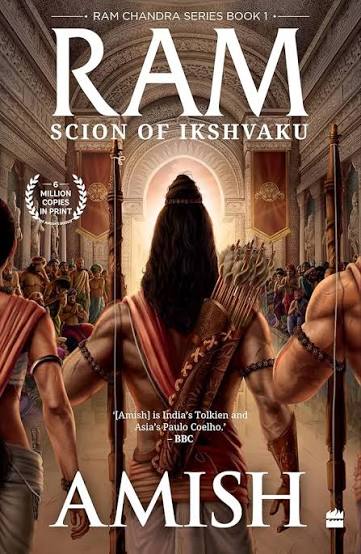
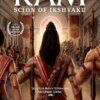
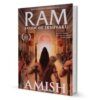
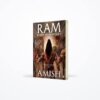
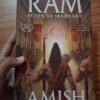
Ram: Scion of Ikshvaku by Amish Tripathi – Ram Chandra Series Book 1


රු1,700.00
3 X Rs. 566.67 or 8% Cashback with


or 3 X රු566.67 with


or up to 4 X රු425.00 with


Begin Amish Tripathi’s epic Ram Chandra Series with Ram: Scion of Ikshvaku.
Set in a fictionalised ancient India, the novel follows Ram, prince of Ayodhya, as he faces war, political division, personal struggle and difficult questions about law, duty, leadership and destiny.
Perfect for readers who enjoy Indian mythology, historical fantasy, epic adventure, philosophy and Ramayana-inspired fiction.
Author: Amish Tripathi
Series: Ram Chandra Series #1
Format: Paperback
Pages: 500
Genre: Mythological Fiction / Historical Fantasy
2 in stock
Ram: Scion of Ikshvaku by Amish Tripathi – Ram Chandra Series Book 1
Begin the Epic Ram Chandra Series
Ram: Scion of Ikshvaku by Amish Tripathi is the first book in the bestselling Ram Chandra Series, an epic work of mythological and historical fantasy inspired by the story of Ram.
The novel takes readers into a fictionalised ancient India where kingdoms struggle with war, economic decline, political divisions and questions about leadership.
At the centre of the story is Ram, prince of Ayodhya.
But this is not simply a story about a celebrated prince.
Amish presents Ram as a man who must grow into leadership while facing rejection, responsibility, personal loss and difficult questions about justice.
The author’s official synopsis places the story in 3400 BCE India, with Ayodhya weakened after war and the Sapt Sindhu struggling under economic pressure associated with Raavan’s powerful trading empire.
A Prince Born Into a Troubled Kingdom
Ayodhya is no longer the powerful kingdom it once was.
War has damaged its strength.
Society is divided.
Poverty and corruption are spreading.
The kingdom needs leadership.
But Ram’s own life is complicated from the beginning.
Rather than growing up with unquestioned admiration, he must deal with suspicion and criticism from those around him.
This shapes the way he thinks about:
- Duty
- Law
- Leadership
- Justice
- Loyalty
- Personal sacrifice
Ram gradually develops a strong belief that society requires rules that apply consistently.
For him, leadership is not simply about power.
It is about responsibility.
Ram
Amish portrays Ram as disciplined, principled and deeply committed to law.
He believes that a stable society depends on people following agreed rules, even when those rules are personally inconvenient.
This can make him appear strict.
But it also creates one of the book’s central philosophical questions:
Should a leader always follow the law, even when circumstances are complicated?
Ram’s journey explores the tension between:
- Law and compassion
- Duty and personal desire
- Individual freedom and social stability
- Leadership and sacrifice
Sita
Sita is an important figure in the series and plays a significant role in Ram’s life.
She is not presented simply as a passive romantic character.
Within Amish’s fictional world, Sita is intelligent, capable and politically aware.
Her relationship with Ram develops alongside larger questions about leadership, society and responsibility.
Readers who want to understand her full individual journey should continue with:
Sita: Warrior of Mithila – Ram Chandra Series Book 2
Lakshman, Bharat and Shatrughan
Ram’s brothers also play important roles.
Lakshman
Loyal, passionate and fiercely protective of Ram.
Bharat
Thoughtful and capable, with his own views about leadership and society.
Shatrughan
The youngest of the brothers and another important member of the royal family.
Their relationships give the novel a strong family dimension alongside its political and philosophical themes.
Raavan
Raavan, ruler of Lanka, represents a growing threat to the kingdoms of the Sapt Sindhu.
In this first volume, his power is felt through economics, politics and memories of conflict.
Amish later explores Raavan’s individual story in much greater depth in:
Raavan: Enemy of Aryavarta – Book 3
This means readers gradually encounter the larger conflict from several different perspectives before the narrative lines come together.
Mythology Reimagined as Fiction
Ram: Scion of Ikshvaku is inspired by the Ramayana but should be categorised as mythological fiction, not as a direct translation of the religious epic.
Amish reimagines characters, political systems, technology, social structures and events for a modern fictional narrative.
This allows the novel to explore questions such as:
- What makes a good leader?
- What is the purpose of law?
- When should traditions change?
- Can a perfect society really exist?
- Is personal sacrifice necessary for leadership?
- How should power be used?
Readers familiar with the Ramayana will recognise many names and broad story elements while encountering a significantly reinterpreted fictional world.
A Story About Leadership
One of the strongest themes of the novel is leadership.
Ram does not become respected simply because he is born a prince.
He must learn.
He must make mistakes.
He must deal with criticism.
And he must decide what principles he is willing to defend even when doing so carries a personal cost.
The story repeatedly examines whether a leader should follow popular opinion or remain committed to principles.
Law and Dharma
Questions around dharma, responsibility and law appear throughout the novel.
Characters often disagree about what is right.
Amish uses those disagreements to explore different political and philosophical positions.
Some characters favour strict rules.
Others believe circumstances matter more.
The resulting debates give the novel a philosophical dimension beyond its adventure story.
Ancient India Reimagined
The book creates a large fictional world inspired by ancient Indian geography, mythology and culture.
Readers encounter locations and groups connected to:
- Ayodhya
- Mithila
- Lanka
- Sapt Sindhu
- Malayaputras
- Suryavanshis
The setting combines mythology with speculative historical fiction rather than attempting to function as an academic historical reconstruction.
Adventure and Political Conflict
Although philosophical questions are important, Ram: Scion of Ikshvaku also contains plenty of action.
Readers can expect:
- Battles
- Political rivalry
- Kingdoms in conflict
- Military strategy
- Dangerous journeys
- Family rivalry
- Romance
- Betrayal
- Mythological elements
- Questions of destiny
The result combines epic fantasy with political and historical adventure.
Major Themes
Leadership
Ram must learn what responsible leadership requires.
Dharma
Characters struggle with questions of duty, morality and right action.
Law
The story examines whether law should remain fixed or adapt to circumstances.
Family
Relationships between Ram, his brothers and the royal family shape much of the narrative.
Love
Ram and Sita’s relationship becomes increasingly important.
Society
The novel explores inequality, corruption, prejudice and social organisation.
Sacrifice
Leadership often requires personal choices that carry significant costs.
Destiny
Ram gradually moves toward a role much larger than his position as prince.
Is Ram: Scion of Ikshvaku Part of a Series?
Yes.
It is Book 1 of the Ram Chandra Series.
Reading Order
1. Ram: Scion of Ikshvaku
2. Sita: Warrior of Mithila
3. Raavan: Enemy of Aryavarta
4. War of Lanka
Amish’s official website currently presents these four books as the Ram Chandra Series and offers a four-book box set containing all four.
Do You Need to Read Another Book First?
No.
This is the starting point for the series.
Who Will Enjoy This Book?
This title may especially appeal to readers interested in:
- Indian mythology
- Mythological fiction
- Historical fantasy
- Epic fantasy
- Ramayana-inspired fiction
- Ancient India
- Political fiction
- Philosophy
- Leadership stories
- Adventure
- Amish Tripathi
- The Shiva Trilogy
About Amish Tripathi
Amish Tripathi, commonly known as Amish, is an Indian author known for retelling mythological and philosophical stories through popular fiction.
His major works include:
- The Immortals of Meluha
- The Secret of the Nagas
- The Oath of the Vayuputras
- Ram: Scion of Ikshvaku
- Sita: Warrior of Mithila
- Raavan: Enemy of Aryavarta
- War of Lanka
- Legend of Suheldev
- The Chola Tigers: Avengers of Somnath
His official website describes him as an author, broadcaster and former diplomat, and states that his books have sold millions of copies and been translated into numerous languages.
For Sri Lankan readers who enjoy Indian mythology, epic fantasy, adventure, philosophy and historical fiction, Ram: Scion of Ikshvaku is the ideal starting point for Amish’s Ram Chandra Series.
Be the first to review “Ram: Scion of Ikshvaku by Amish Tripathi – Ram Chandra Series Book 1”
Related products
-18%

Out of stock
Fiction & Literature
Original price was: රු2,750.00.රු2,250.00Current price is: රු2,250.00.
3 X Rs. 750.00 or 8% Cashback with
or 3 X රු750.00 with
or up to 4 X රු562.50 with

Classics & Literary Fiction
රු1,650.00
3 X Rs. 550.00 or 8% Cashback with
or 3 X රු550.00 with
or up to 4 X රු412.50 with
-29%

Classics & Literary Fiction
Original price was: රු2,100.00.රු1,500.00Current price is: රු1,500.00.
3 X Rs. 500.00 or 8% Cashback with
or 3 X රු500.00 with
or up to 4 X රු375.00 with
-28%

Out of stock
Classics & Literary Fiction
Original price was: රු1,800.00.රු1,300.00Current price is: රු1,300.00.
3 X Rs. 433.33 or 8% Cashback with
or 3 X රු433.33 with
or up to 4 X රු325.00 with
-48%

Classics & Literary Fiction
Original price was: රු3,000.00.රු1,550.00Current price is: රු1,550.00.
3 X Rs. 516.67 or 8% Cashback with
or 3 X රු516.67 with
or up to 4 X රු387.50 with
-19%

Out of stock
Classics & Literary Fiction
Original price was: රු2,600.00.රු2,100.00Current price is: රු2,100.00.
3 X Rs. 700.00 or 8% Cashback with
or 3 X රු700.00 with
or up to 4 X රු525.00 with

Out of stock
Adventure Fiction
Death on the Nile – Film Tie-In Edition | Agatha Christie Paperback
රු2,400.00
3 X Rs. 800.00 or 8% Cashback with
or 3 X රු800.00 with
or up to 4 X රු600.00 with

Classics & Literary Fiction
රු1,650.00
3 X Rs. 550.00 or 8% Cashback with
or 3 X රු550.00 with
or up to 4 X රු412.50 with
Reviews
There are no reviews yet.