
No products in the cart.
-33%
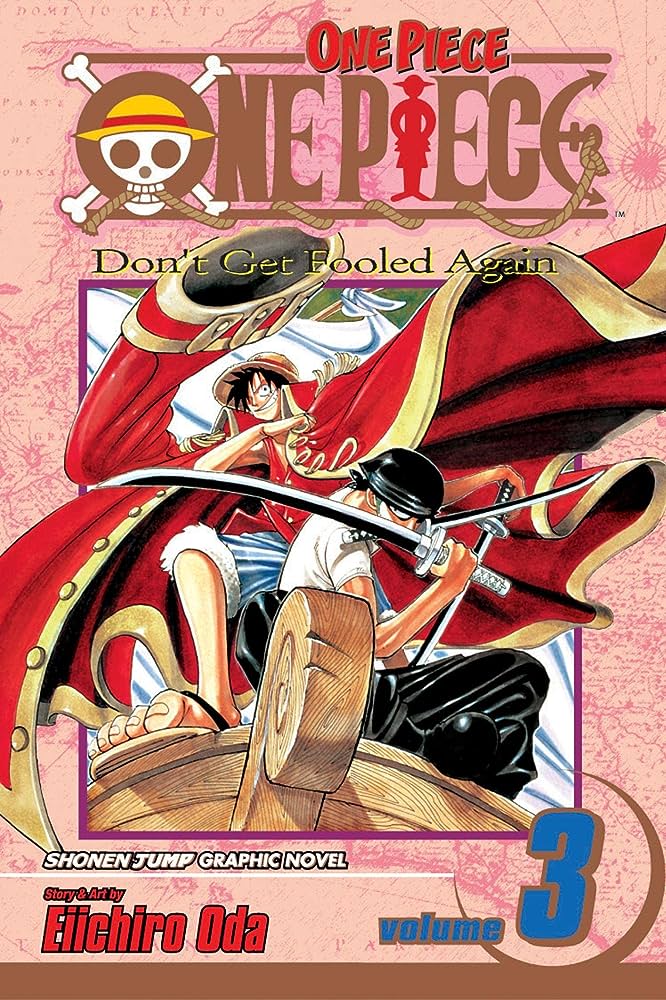


One Piece 03: Don’t Get Fooled Again: Volume 3 by Eiichiro Oda


Original price was: රු2,400.00.රු1,600.00Current price is: රු1,600.00.
3 X Rs. 533.33 or 8% Cashback with


or 3 X රු533.33 with


or up to 4 X රු400.00 with


One Piece Volume 3 by Eiichiro Oda continues Monkey D. Luffy’s adventure to become King of the Pirates. After facing Buggy the Clown alongside Zoro and Nami, Luffy’s journey introduces him to Usopp, an imaginative village storyteller who claims to be a fearsome pirate captain. Packed with action, comedy, Devil Fruit powers, friendship and the early formation of Luffy’s crew, Volume 3 is an essential continuation for readers following the One Piece manga in order.
Out of stock
Email when stock available
One Piece Volume 3 by Eiichiro Oda continues Monkey D. Luffy’s hilarious and action-packed journey to become the King of the Pirates and find the legendary treasure known as the One Piece.
Luffy has already begun gathering unusual companions.
There is Roronoa Zoro, the incredibly skilled swordsman with dreams of becoming the world’s greatest swordsman.
There is Nami, a clever navigator and thief whose relationship with pirates is much more complicated than Luffy initially understands.
And then there is Luffy himself.
Fearless.
Impulsive.
Hungry.
Unpredictable.
And completely serious about becoming King of the Pirates.
But before Luffy can even think seriously about reaching the dangerous Grand Line, he must finish dealing with Buggy the Clown, a bizarre and dangerous pirate captain whose Devil Fruit ability allows his body to separate into pieces.
Then Luffy’s journey takes him toward another strange character:
Usopp.
Usopp is famous in his small village for telling outrageous stories and shouting warnings about pirates that nobody believes.
He likes to describe himself as a terrifying pirate captain.
Reality is slightly different.
Yet beneath the lies and comedy is a young man with genuine courage—and a dream that may eventually pull him toward the sea.
One Piece Volume 3 is an important early installment because it continues building the group of characters who will eventually become the Straw Hat Pirates while expanding the world beyond Luffy’s first adventures.
One Piece Volume 3 – Book Overview
One Piece Volume 3 continues the East Blue portion of Eiichiro Oda’s enormous pirate adventure.
At this stage, the crew is still forming.
Luffy has ambition.
Zoro has joined him.
Nami is travelling with them.
But they are far from being the famous Straw Hat crew readers later come to know.
The early volumes therefore have a special charm.
Readers are watching relationships form for the first time.
Every new island can introduce:
A new enemy.
A new friend.
A new mystery.
Or a future crew member.
Monkey D. Luffy
Luffy remains one of manga’s most recognizable protagonists because his personality is simple in some ways and surprisingly deep in others.
His goal is clear:
Become the King of the Pirates.
But Luffy does not seem obsessed with ruling other people.
For him, being Pirate King is closely connected with freedom.
The sea represents possibility.
Adventure.
Friendship.
Discovery.
Luffy wants to live without allowing fear to decide his path.
The Gum-Gum Devil Fruit
As a child, Luffy accidentally ate a mysterious Devil Fruit.
The result gave his body rubber-like properties.
He can:
Stretch.
Bounce.
Absorb certain impacts.
Attack from unusual distances.
But Devil Fruit powers come with a serious weakness.
Luffy loses the ability to swim.
For someone determined to spend life at sea, that is quite a problem.
Roronoa Zoro
Zoro is Luffy’s first true crewmate.
He is a powerful swordsman with a goal almost as ambitious as Luffy’s.
He wants to become the greatest swordsman in the world.
Zoro’s seriousness creates a perfect contrast with Luffy’s chaotic personality.
Luffy may make a ridiculous decision.
Zoro may complain.
Yet when danger arrives, both are completely committed.
Three-Sword Style
Zoro is famous for using three swords.
One in each hand.
And one held in his mouth.
It sounds impossible.
That is exactly the kind of larger-than-life idea that makes One Piece memorable.
Oda takes something ridiculous and makes it genuinely cool.
Nami
Nami is intelligent, practical and far more financially motivated than Luffy.
She has an exceptional understanding of navigation.
She also has a complicated relationship with pirates.
Unlike Luffy, who sees piracy as adventure and freedom, Nami has reasons to distrust pirates.
At this stage of the story, readers are still discovering who she really is.
Early Crew Chemistry
One of the pleasures of One Piece Volume 3 is watching these personalities collide.
Luffy acts.
Zoro reacts.
Nami tries to keep situations under control.
Sometimes nobody succeeds.
This balance between comedy and danger becomes one of the series’ defining strengths.
Buggy the Clown
Buggy is one of the first major pirate villains Luffy faces.
He looks ridiculous.
A clown pirate.
Red nose.
Wild personality.
But underestimating him is a mistake.
Buggy possesses his own Devil Fruit power that allows him to separate and control parts of his body.
This creates battles unlike ordinary sword fights.
Devil Fruits
Buggy’s abilities also teach readers something important about the world of One Piece.
Luffy is not the only person with strange powers.
Devil Fruits can produce wildly different abilities.
As the series continues, they become one of its most creative sources of:
Combat.
Comedy.
Strategy.
Mystery.
Fighting Buggy
The conflict with Buggy gives Luffy an early chance to demonstrate what kind of pirate he intends to become.
Not all pirates share the same values.
Some use freedom as an excuse to hurt others.
Luffy may call himself a pirate, but his choices reveal a strong moral instinct when people are being mistreated.
What Makes a Pirate?
One Piece quickly complicates the simple idea that:
Pirates are bad.
Marines are good.
The world contains people whose morality cannot be understood only through their official title.
That becomes increasingly important throughout the series.
The Grand Line
The Grand Line is the dangerous sea route connected with the greatest pirates and the search for the One Piece.
For Luffy, reaching it is essential.
But the early East Blue adventures show how much he still needs first.
A crew.
A ship.
A navigator.
Experience.
And probably some planning.
Although planning is not Luffy’s strongest skill.
Usopp
One of the most important developments in One Piece Volume 3 is the introduction of Usopp.
Usopp lives in a peaceful village and has developed a reputation as a liar.
He tells exaggerated stories.
Claims pirates are attacking.
Imagines himself as a great captain.
His stories are so common that people rarely take him seriously.
The Boy Who Cried Pirates
Usopp’s character intentionally resembles the classic idea of the boy who cried wolf.
If you lie constantly, eventually nobody believes you.
That becomes dangerous when the threat becomes real.
His comedy therefore connects directly with a meaningful question:
What happens when the liar finally tells the truth?
Usopp’s Imagination
Usopp’s lies are not always simply selfish deception.
Many come from:
Imagination.
Loneliness.
Dreaming about adventure.
Wanting life to feel larger than it currently is.
He creates stories because stories allow him to experience a version of himself that feels braver and more exciting.
Courage and Fear
Usopp becomes especially interesting because he experiences fear very openly.
Luffy often runs toward danger.
Zoro rarely appears intimidated.
Usopp is different.
He can be genuinely terrified.
That makes his courageous moments especially meaningful.
Courage is not necessarily:
Not feeling fear.
Sometimes courage is doing something while desperately wanting to run away.
Syrup Village
The introduction of Usopp brings the story to Syrup Village.
It initially appears peaceful.
Almost boring compared with pirate battles.
But appearances can be misleading.
The village becomes the setting for a new mystery involving people whose true intentions may not match the identities they present publicly.
Kaya
Kaya is an important character connected with Usopp’s story.
She is wealthy but physically unwell and spends much of her life isolated.
Usopp’s stories provide her with entertainment and companionship.
This shows a softer side of him.
The same imagination that causes trouble can also bring comfort to someone else.
Stories Can Help People
This becomes an interesting theme.
A lie can deceive.
But a fictional story can also:
Entertain.
Encourage.
Provide hope.
Help someone escape temporarily from pain.
The difference often lies in purpose.
Kuro and Hidden Identities
Without giving away too much of the volume’s mystery, One Piece Volume 3 begins revealing that the peaceful village may be connected to a much more dangerous pirate threat.
A person who appears respectable may be hiding another identity.
This becomes another recurring One Piece idea:
Do not judge people entirely by reputation or appearance.
Friendship
Friendship becomes increasingly important as Luffy travels.
Luffy has an unusual ability to decide very quickly that someone matters to him.
Once he considers someone a friend, he is often willing to take enormous risks to help them.
That loyalty gradually becomes one of the emotional foundations of the entire series.
Dreams
Almost every important character in One Piece has a dream.
Luffy wants to become Pirate King.
Zoro wants to become the world’s greatest swordsman.
Other characters gradually reveal their own ambitions.
These dreams give the adventure direction.
The crew does not exist only to help Luffy.
Each person has a reason to sail.
Freedom
Freedom is perhaps the largest theme in the entire series.
Luffy hates seeing people controlled.
Oppressed.
Manipulated.
Or prevented from living according to their own choices.
This attitude is visible even in the early volumes.
Loyalty
Luffy may seem foolish.
But when someone needs help, his priorities become extremely clear.
He does not need complicated philosophical arguments.
If someone hurts his friends, Luffy reacts.
That direct emotional honesty makes him easy to understand.
Comedy
One Piece Volume 3 balances serious conflict with absurd comedy.
The humor may come from:
Luffy misunderstanding something obvious.
Zoro losing patience.
Nami reacting to their stupidity.
Buggy’s ridiculous appearance.
Usopp’s exaggerated stories.
Oda rarely allows the adventure to become serious for too long before introducing another joke.
Action
The manga also delivers energetic action.
Luffy’s rubber powers make ordinary fighting impossible.
Zoro’s sword techniques create a completely different visual style.
Devil Fruit powers allow enemies to break the normal rules of combat.
This variety helps keep fights creative.
Eiichiro Oda’s Artwork
Eiichiro Oda is both the writer and artist of One Piece.
His artwork combines:
Cartoon exaggeration.
Highly expressive faces.
Fast action.
Detailed environments.
Visual jokes.
Distinctive character silhouettes.
Even minor characters often look immediately recognizable.
Visual Storytelling
One advantage of reading the manga instead of only watching the anime is experiencing Oda’s original panel composition.
Action.
Comedy.
Character reactions.
Surprises.
All are controlled through page layout.
That rhythm is part of the original storytelling.
Manga Reading Direction
English editions of One Piece preserve traditional manga reading direction.
Pages are generally read from:
Right to left.
New manga readers may need a few pages to adjust.
After that, it usually becomes natural.
Is One Piece Volume 3 the Correct Third Book?
Yes.
One Piece Volume 3 is the third collected volume of the main One Piece manga.
For the correct reading order:
One Piece Volume 1
One Piece Volume 2
One Piece Volume 3
One Piece Volume 4
and continue numerically.
Do You Need to Read Volumes 1 and 2 First?
Yes, strongly recommended.
One Piece Volume 3 continues events and relationships established in the first two books.
New readers should begin with Volume 1.
The manga is one continuous long-form adventure rather than independent episodic books.
What Comes After One Piece Volume 3?
Continue directly with:
One Piece Volume 4
The storyline involving Usopp and Syrup Village continues beyond this volume, so readers should continue in numerical order.
Is One Piece Volume 3 Part of the East Blue Saga?
Yes.
This volume belongs to the early East Blue Saga, where Luffy begins forming his crew before entering the Grand Line.
For first-time readers, these early volumes establish the personalities, dreams and relationships that become fundamental later.
Is the One Piece Anime Based on This Manga?
Yes.
Eiichiro Oda’s manga is the original source material for the One Piece anime.
Reading the manga allows fans to experience the story through Oda’s original artwork and pacing.
Manga vs Anime
Anime fans may enjoy reading One Piece Volume 3 because manga offers:
Oda’s original panels.
Faster self-controlled pacing.
Original visual jokes.
No anime filler.
The exact source material behind the adaptation.
Both versions have their strengths, but the manga is where the story began.
Is One Piece Volume 3 Suitable for Teen Readers?
VIZ officially rates the English edition Teen.
Readers should expect fantasy pirate violence, sword fighting, threats, comic injuries and some darker character situations, but the overall tone combines adventure, humor, friendship and optimism.
Official Edition Details
The standard VIZ Media paperback edition is:
Title: One Piece, Vol. 3
Story and Art: Eiichiro Oda
Series: One Piece
Publisher: VIZ Media
Imprint: SHONEN JUMP
ISBN-13: 9781591161844
Pages: 200
Format: Trade Paperback
Release Date: June 8, 2004
Age Rating: Teen
Category: Manga / Action-Adventure / Fantasy
If your physical stock carries another ISBN, use the number printed on that particular edition because regional and omnibus editions can differ.
Content Considerations
One Piece Volume 3 contains:
- Fantasy pirate violence
- Sword fighting
- Physical combat
- Threats and attempted harm
- Weapons
- Villainous schemes
- Comic violence
- Some injury and blood
- Mild crude humor
- Dangerous situations involving younger characters
The overall tone remains adventurous and comedic.
Important Themes
One Piece Volume 3 explores:
- Adventure
- Friendship
- Pirates
- Dreams
- Courage
- Loyalty
- Freedom
- Honesty and lying
- Trust
- Reputation
- Hidden identities
- Teamwork
- Determination
- Treasure
- Devil Fruits
- The Grand Line
- Finding a crew
- Helping others
- Fear
- Becoming brave
7 Epic Reasons to Read One Piece Volume 3
- Usopp enters the story – One of the future series’ most important characters is introduced as a wildly imaginative village liar with much more courage than he initially realizes.
- The Straw Hat crew begins taking shape – Luffy, Zoro and Nami continue developing their chemistry while the possibility of another companion begins emerging.
- The world becomes larger – The Grand Line, pirate reputations and new threats make it clear that Luffy’s first battles are only the beginning.
- Comedy and action are perfectly balanced – Buggy, Luffy and Usopp generate plenty of humor while the story continues delivering genuine danger and pirate battles.
- Usopp introduces an interesting idea about courage – Unlike fearless heroes, he openly experiences fear, making his brave choices more relatable.
- Oda begins layering deeper themes into the adventure – Lies, reputation, friendship and hidden identities become important beneath the playful pirate surface.
- It continues one of manga’s greatest long-form adventures – Volume 3 is still extremely early in Luffy’s journey, making it exciting to watch characters and ideas appear before the world expands dramatically.
Why Read One Piece Volume 3?
One Piece Volume 3 is an excellent choice for readers interested in:
One Piece.
Eiichiro Oda.
Monkey D. Luffy.
Roronoa Zoro.
Nami.
Usopp.
Buggy the Clown.
Pirate manga.
Shonen Jump.
Action manga.
Adventure manga.
Fantasy.
Anime source material.
Friendship.
Comedy.
Devil Fruits.
Manga collecting.
It is especially suitable for readers who have completed Volumes 1 and 2 and want to continue Luffy’s journey in the proper reading order.
Who Should Read This Manga?
One Piece Volume 3 may especially appeal to:
- One Piece anime fans
- Manga beginners
- Shonen manga readers
- Teen readers
- Action and adventure fans
- Pirate-story fans
- Readers collecting the complete One Piece manga
- Fans of funny protagonists
- Readers who enjoy long-form character development
- Fans interested in Usopp’s introduction
- Readers continuing directly after Volume 2
One Piece Volume 3 – Every Great Crew Starts Somewhere
One Piece Volume 3 captures something special about the early One Piece story.
Luffy is not yet captain of a legendary pirate crew.
He does not have a famous ship.
He has not reached the Grand Line.
He is simply a young pirate with an impossible dream and an unusual ability to convince strange people to travel with him.
That simplicity makes the early volumes memorable.
The adventure feels open.
Every island could change everything.
Every person Luffy meets could become:
An enemy.
A friend.
Or perhaps a future crewmate.
Usopp is a perfect example.
At first glance, he does not resemble the kind of legendary pirate Luffy might need.
He exaggerates.
He lies.
He gets scared.
Yet beneath all of that is someone who wants to become braver than he currently feels.
That gap between who someone is and who they dream of becoming sits at the heart of One Piece.
Luffy already behaves as though his dream will happen.
Zoro trains toward his.
Usopp is still trying to believe he deserves one.
As the journey continues, these different dreams begin travelling together.
For readers following Luffy from the beginning, One Piece Volume 3 is an essential early chapter filled with pirate action, comedy, new friendships and the introduction of another character who will become deeply important to the adventure ahead.
Learn more about One Piece Vol. 3 by Eiichiro Oda on the official VIZ Media website.
Explore more manga books at Bargain Books.

| Author | Eiichiro Oda |
|---|---|
| Type | Paperback Printed Book |
| ISBN/ISSN | 1591161843, 978-1591161844 |
| Language | English |
| Pages | 200 |
Be the first to review “One Piece 03: Don’t Get Fooled Again: Volume 3 by Eiichiro Oda”
Related products
Out of stock
රු2,750.00
3 X Rs. 916.67 or 8% Cashback with
or 3 X රු916.67 with
or up to 4 X රු687.50 with
Out of stock
රු1,200.00
3 X Rs. 400.00 or 8% Cashback with
or 3 X රු400.00 with
or up to 4 X රු300.00 with
Out of stock
රු1,250.00
3 X Rs. 416.67 or 8% Cashback with
or 3 X රු416.67 with
or up to 4 X රු312.50 with
Out of stock
රු1,200.00
3 X Rs. 400.00 or 8% Cashback with
or 3 X රු400.00 with
or up to 4 X රු300.00 with
-37%
Out of stock
Original price was: රු19,000.00.රු11,900.00Current price is: රු11,900.00.
3 X Rs. 3,966.67 or 8% Cashback with
or 3 X රු3,966.67 with
or up to 4 X රු2,975.00 with
රු5,550.00
3 X Rs. 1,850.00 or 8% Cashback with
or 3 X රු1,850.00 with
or up to 4 X රු1,387.50 with

Out of stock
රු6,150.00
3 X Rs. 2,050.00 or 8% Cashback with
or 3 X රු2,050.00 with
or up to 4 X රු1,537.50 with
රු15,500.00
3 X Rs. 5,166.67 or 8% Cashback with
or 3 X රු5,166.67 with
or up to 4 X රු3,875.00 with
Reviews
There are no reviews yet.