
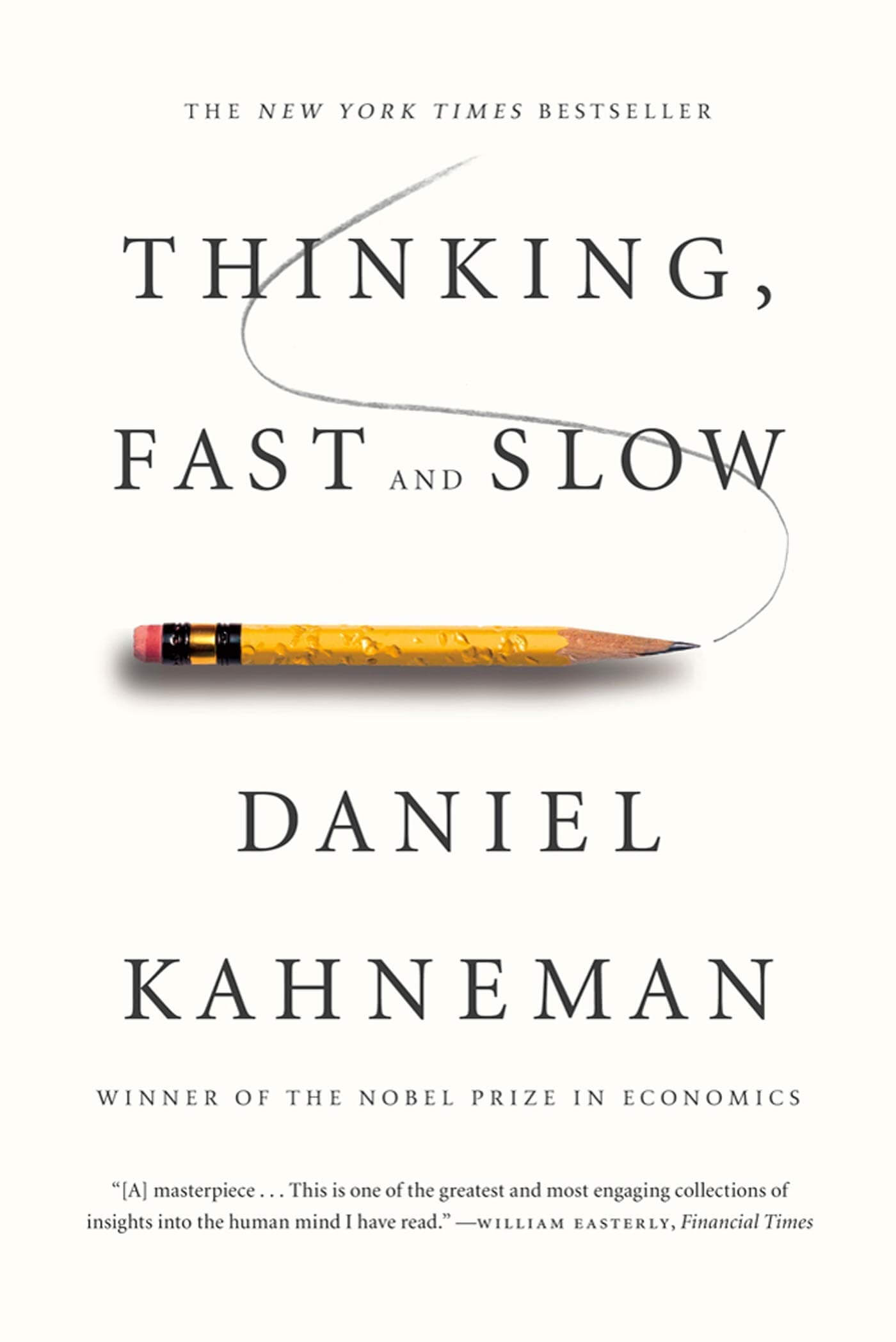
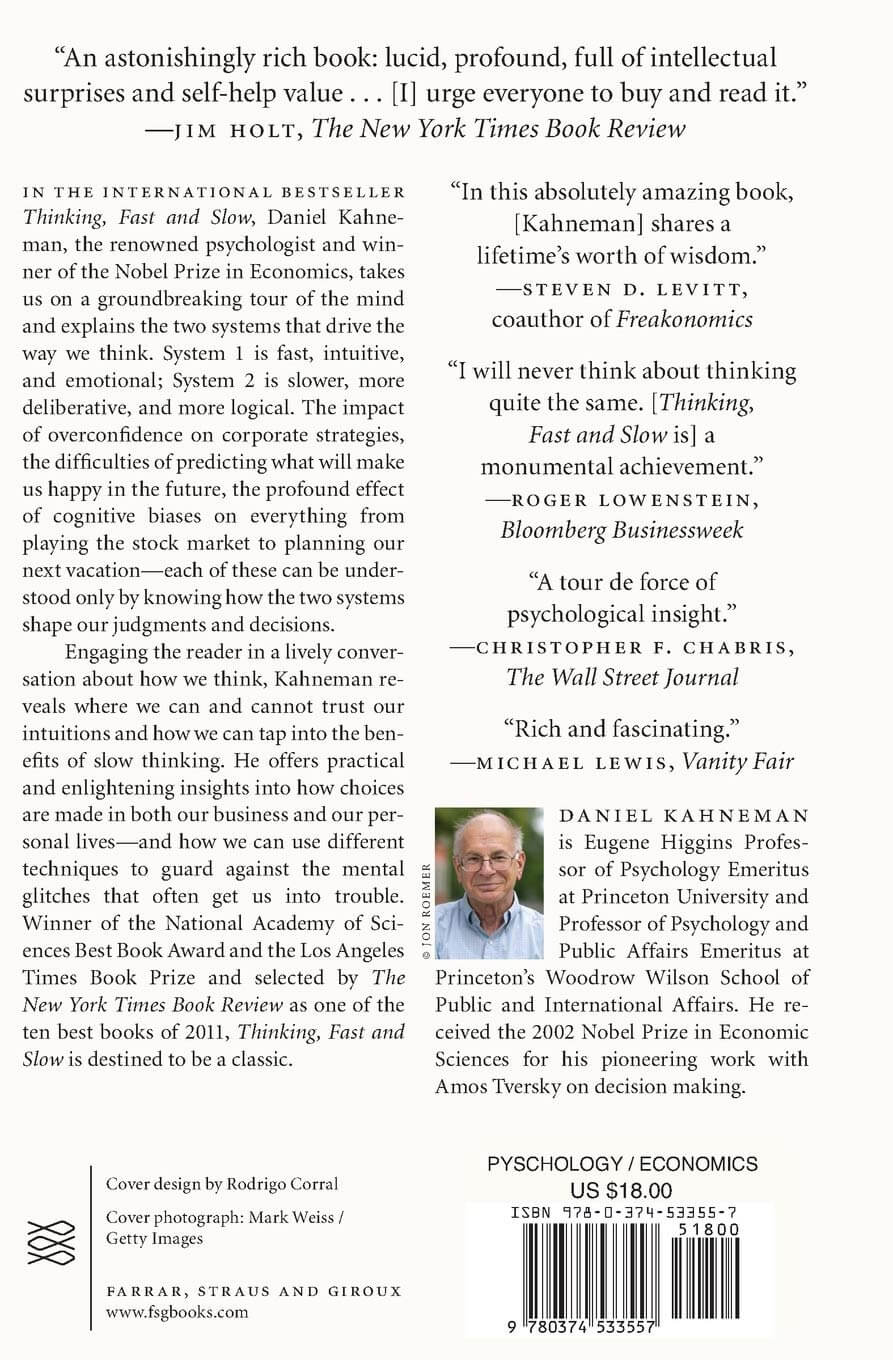


Thinking, Fast and Slow by Daniel Kahneman is a groundbreaking nonfiction book that explores how the human mind makes decisions. Written by Nobel Prize–winning psychologist Daniel Kahneman, the book examines the mental processes behind judgment, choice, and behavior. It challenges readers to understand why people often think irrationally, even when they believe they are being logical.
At the core of Thinking, Fast and Slow by Daniel Kahneman is the idea that the human brain operates using two distinct systems. System 1 is fast, automatic, and emotional. It allows people to make quick decisions with little effort, such as recognizing faces or reacting to danger. System 2 is slow, deliberate, and analytical. It is responsible for complex thinking, problem-solving, and careful reasoning.
Kahneman explains that while System 1 is efficient and useful, it is also prone to errors. Many of the mistakes people make in judgment and decision-making come from relying too heavily on fast thinking. System 2, although more accurate, requires effort and concentration, which people often avoid. This imbalance leads to cognitive biases that influence everyday decisions.
One of the most important contributions of Thinking, Fast and Slow by Daniel Kahneman is its detailed explanation of cognitive biases. The book explores biases such as overconfidence, loss aversion, anchoring, and confirmation bias. These mental shortcuts affect how people assess risk, evaluate information, and make choices in areas such as finance, business, relationships, and health.
The book also discusses the concept of loss aversion, which explains why people fear losses more than they value gains. Kahneman shows that individuals are more likely to avoid losses than pursue equivalent rewards. This insight has significant implications for economics, investing, and consumer behavior, helping explain why people sometimes make irrational financial decisions.
Thinking, Fast and Slow by Daniel Kahneman also examines how people perceive happiness and well-being. The book distinguishes between the “experiencing self” and the “remembering self,” showing how memory often distorts reality. According to Kahneman, people remember experiences based on peak moments and endings rather than overall duration, which affects how they evaluate life events.
Another key theme in the book is overconfidence. Kahneman explains that humans tend to believe they understand the world better than they actually do. This illusion of understanding leads to poor predictions and faulty planning. The book highlights how professionals, including experts, frequently underestimate uncertainty and overestimate their ability to predict outcomes.
The writing style of Thinking, Fast and Slow by Daniel Kahneman is thoughtful and analytical, yet accessible. Although the book presents complex psychological research, Kahneman uses examples, experiments, and real-life scenarios to make the ideas understandable. Readers are encouraged to reflect on their own thinking patterns and recognize when their minds may be misleading them.
The book has had a major influence on fields such as psychology, economics, behavioral finance, and decision science. It reshaped how experts understand human rationality and earned widespread recognition for its insights into human behavior.
Thinking, Fast and Slow by Daniel Kahneman is ideal for readers interested in psychology, critical thinking, decision-making, and self-awareness. It is especially valuable for professionals, students, and anyone who wants to make better choices by understanding how the mind works.
Overall, Thinking, Fast and Slow by Daniel Kahneman is a powerful and eye-opening book that teaches readers to question their instincts, recognize mental biases, and think more clearly. It reveals that while the mind is an extraordinary tool, it is also deeply flawed—and understanding those flaws is the first step toward better decisions.
| Author | Daniel Kahneman |
|---|---|
| Language | English |
| Type | Paperback Printed Book (Second Quality Copy) |
Be the first to review “Thinking Fast & Slow by Daniel Kahneman”
Related products
-23%

Non-fiction
Original price was: රු2,200.00.රු1,700.00Current price is: රු1,700.00.
3 X Rs. 566.67 or 8% Cashback with


or 3 X රු566.67 with


or up to 4 X රු425.00 with

-33%

Self-Help
Original price was: රු2,300.00.රු1,550.00Current price is: රු1,550.00.
3 X Rs. 516.67 or 8% Cashback with
or 3 X රු516.67 with
or up to 4 X රු387.50 with

Out of stock
Self-Help
රු1,600.00
3 X Rs. 533.33 or 8% Cashback with
or 3 X රු533.33 with
or up to 4 X රු400.00 with
-34%

Non-fiction
Original price was: රු2,250.00.රු1,490.00Current price is: රු1,490.00.
3 X Rs. 496.67 or 8% Cashback with
or 3 X රු496.67 with
or up to 4 X රු372.50 with
-13%

Out of stock
Non-fiction
Original price was: රු3,900.00.රු3,400.00Current price is: රු3,400.00.
3 X Rs. 1,133.33 or 8% Cashback with
or 3 X රු1,133.33 with
or up to 4 X රු850.00 with
Non-fiction
රු2,250.00
3 X Rs. 750.00 or 8% Cashback with
or 3 X රු750.00 with
or up to 4 X රු562.50 with
Non-fiction
රු1,500.00
3 X Rs. 500.00 or 8% Cashback with
or 3 X රු500.00 with
or up to 4 X රු375.00 with
-24%
Original price was: රු2,100.00.රු1,600.00Current price is: රු1,600.00.
3 X Rs. 533.33 or 8% Cashback with
or 3 X රු533.33 with
or up to 4 X රු400.00 with
Reviews
There are no reviews yet.