

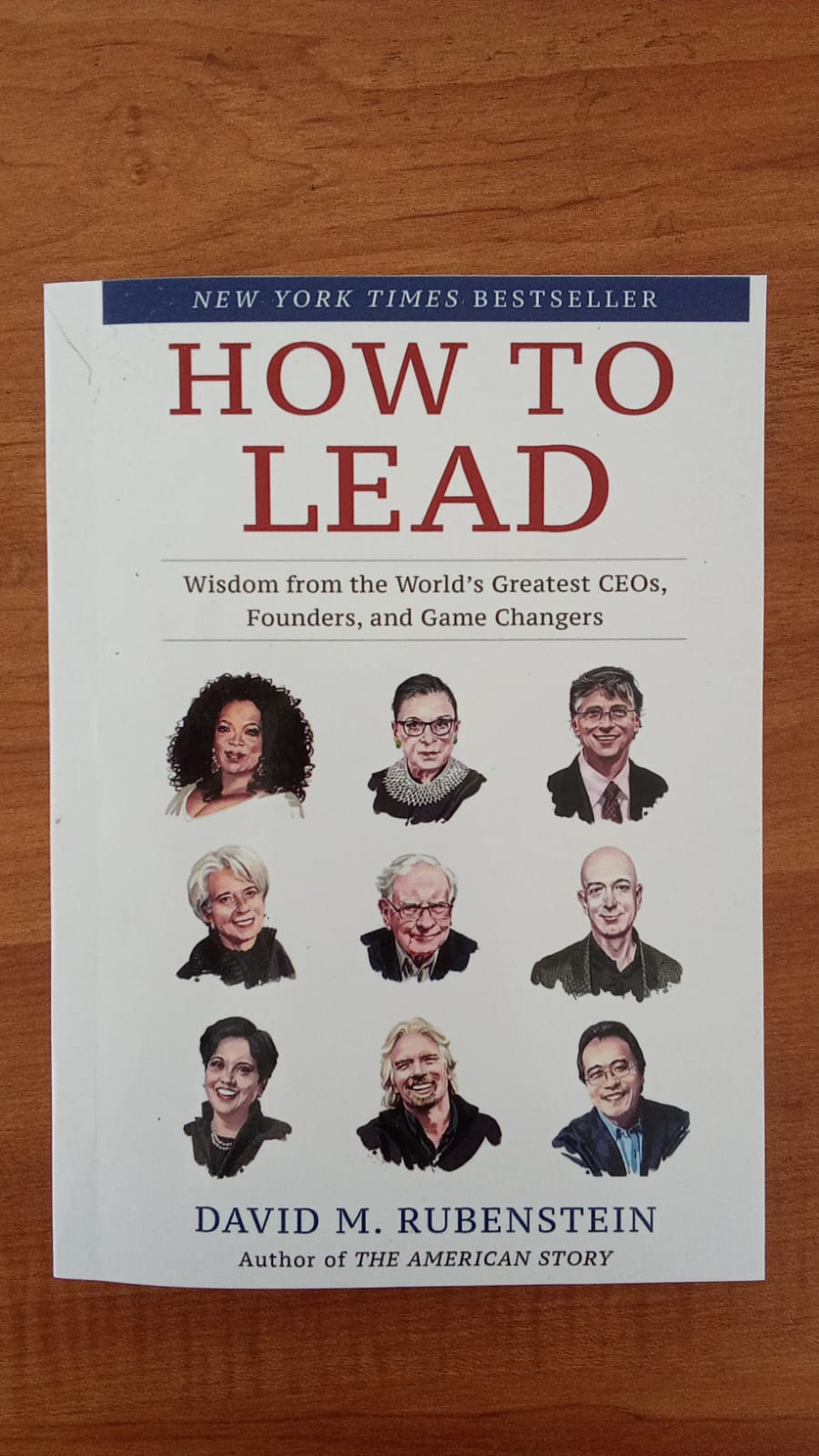







How to Lead by David M. Rubenstein
How to Lead is an insightful leadership and business book that brings together lessons from some of the world’s most successful leaders. Based on interviews with CEOs, founders, public figures, and innovators, the book explores what it truly takes to lead effectively in today’s complex world.
The central idea of How to Lead is that leadership is not something people are simply born with. It is a skill that can be learned, shaped, and improved through experience, discipline, and reflection. Rather than following a single formula, readers learn that there are many paths to effective leadership.
Leadership Begins With Self-Awareness
One of the earliest lessons in How to Lead is self-understanding. Great leaders are aware of their strengths, weaknesses, and values.
David M. Rubenstein highlights that leadership starts from within. When individuals understand themselves, they make better decisions and communicate more clearly.
Without self-awareness, even talented individuals can struggle to lead effectively.
Learning from Real-World Leaders
A key principle in How to Lead is learning from experience. The book is built on interviews with successful leaders from different industries and backgrounds.
Each leader shares their journey, challenges, and lessons learned along the way. These real-world insights provide practical understanding rather than abstract theory.
Readers gain access to diverse perspectives on what makes leadership successful.
The Leadership Lessons Explained
The book organizes its insights into key qualities and habits that define effective leadership. Each lesson reflects real experiences from influential figures.
Readers learn how to:
- Build discipline and work ethic
- Communicate clearly and confidently
- Make difficult decisions
- Adapt to change and challenges
- Inspire and motivate others
Because these lessons come from real-life experiences, How to Lead feels practical and relatable.
Communication and Influence
A major strength of How to Lead is its focus on communication. Many leadership challenges arise from unclear messaging or poor listening.
The book emphasizes the importance of speaking clearly, listening actively, and connecting with people on a human level.
By improving communication, leaders can build trust and guide teams more effectively.
Handling Challenges and Pressure
No leadership role is free from difficulty. How to Lead explores how successful individuals handle pressure, failure, and uncertainty.
The leaders featured in the book share how they overcame obstacles and stayed focused during challenging times.
This shows that resilience and persistence are key parts of leadership.
Leadership in the Modern World
In today’s fast-changing environment, leadership requires adaptability. How to Lead highlights how modern leaders must respond to global challenges, technological change, and evolving expectations.
The book encourages flexibility and continuous learning, showing that leadership is an ongoing process.
Because of this, How to Lead feels highly relevant for today’s professionals.
Building Long-Term Impact
Beyond short-term success, the book focuses on creating lasting impact. Great leaders think beyond immediate results and consider the long-term effects of their decisions.
David M. Rubenstein shows that leadership is not just about authority—it is about responsibility and influence over time.
Who Should Read This Book
This book is ideal for:
- Business leaders and managers
- Entrepreneurs and professionals
- Students interested in leadership
- Anyone looking to improve decision-making and communication
The lessons also apply to personal growth and everyday leadership situations.
Explore More Business & Leadership Books
Explore more here:
Here is the Wikipedia link for How to Lead author David M. Rubenstein
https://en.wikipedia.org/wiki/David_Rubenstein
This page includes his full biography, career, books, and contributions to business and leadership.
Lasting Impact
After reading How to Lead, many readers gain a clearer understanding of what effective leadership looks like. Instead of relying on theory, they learn from real experiences.
Ultimately, How to Lead teaches that leadership grows from self-awareness, communication, resilience, and the ability to learn continuously.
Be the first to review “How To Lead by David M. Rubenstein”
Related products







Non-fiction



Business

Non-fiction

Self-Help
Non-fiction
Reviews
There are no reviews yet.