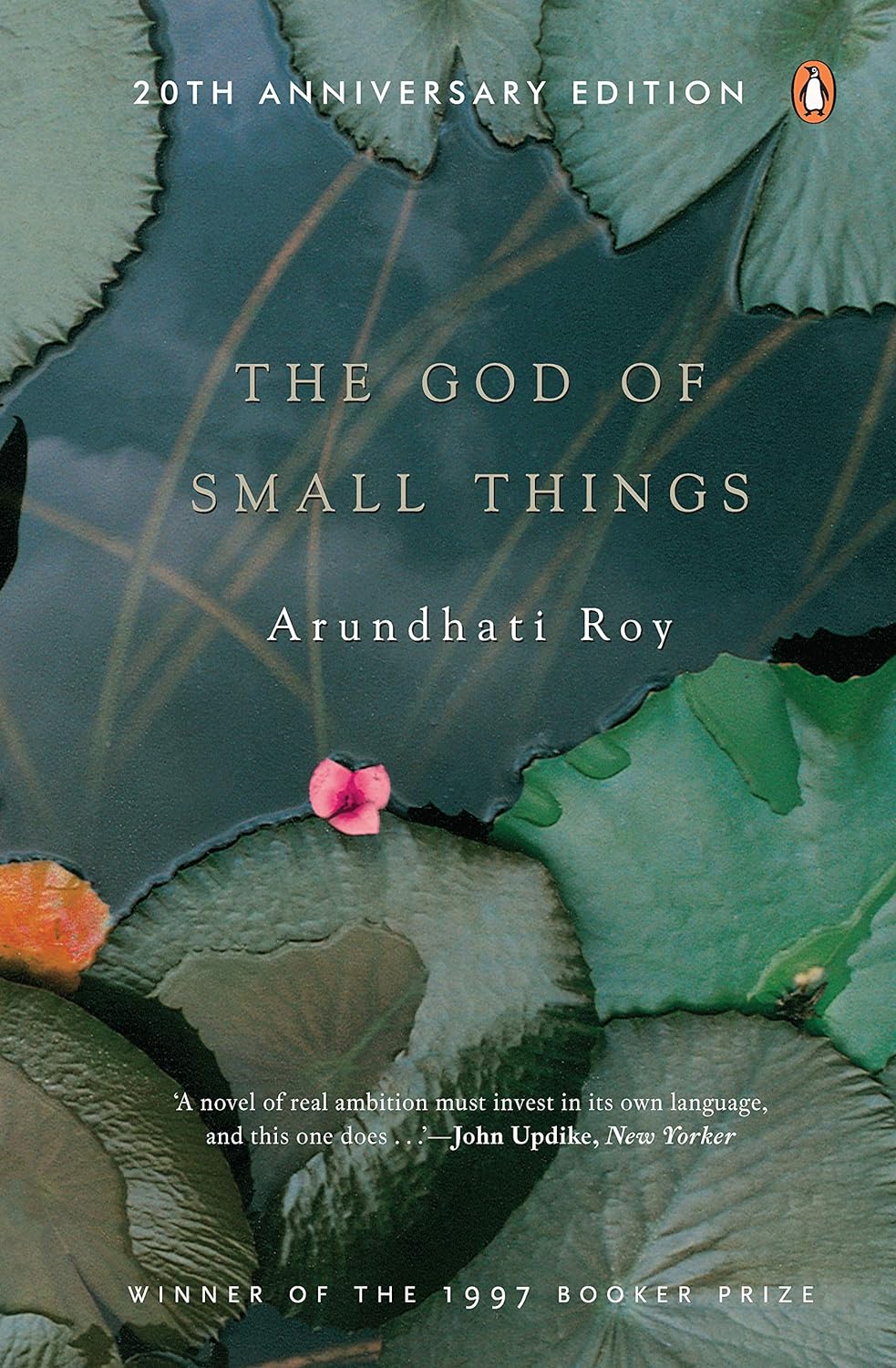
Introduction to The God of Small Things
The God of Small Things by Arundhati Roy is a Booker Prize–winning novel and one of the most celebrated works of modern Indian literature. First published in 1997, this powerful literary novel explores themes of love, loss, caste, family, and social injustice within the deeply layered context of postcolonial India. Set primarily in Kerala, the story unfolds through richly poetic language and a non-linear narrative that captures both the beauty and brutality of human experience.
This novel established Arundhati Roy as a major literary voice and continues to be widely read and studied around the world for its emotional depth, social commentary, and innovative storytelling.
Setting and Narrative Structure
The story is set in the lush, humid landscape of Ayemenem, a small town in Kerala, India. The environment plays a vital role in the novel, influencing mood, memory, and identity. Roy’s vivid descriptions bring the setting to life, making nature an active participant in the narrative.
The God of Small Things is told through a non-linear structure, moving back and forth between past and present. This fragmented storytelling mirrors the characters’ memories and trauma, gradually revealing the events that shaped their lives. While unconventional, this narrative style enhances the emotional impact of the story.
The Story of Estha and Rahel
At the center of the novel are fraternal twins Estha and Rahel, whose childhood experiences form the emotional core of the book. Through their eyes, readers witness a series of events that lead to irreversible consequences. Their bond reflects innocence, vulnerability, and shared trauma.
The novel explores how a single tragic incident affects not only the twins but their entire family. Silence, separation, and emotional distance become recurring motifs, emphasizing the long-lasting effects of childhood pain.
Themes of Love and Forbidden Relationships
One of the most powerful aspects of The God of Small Things is its exploration of forbidden love. Arundhati Roy examines relationships constrained by rigid social rules, including caste hierarchies and moral codes. These “Love Laws,” as described in the novel, dictate who should be loved, how, and how much.
The book challenges these laws by exposing their cruelty and hypocrisy. Through deeply personal stories, Roy critiques social structures that prioritize tradition and power over compassion and humanity.
Caste, Class, and Social Injustice
The novel offers a sharp critique of the Indian caste system and social inequality. Roy portrays how deeply ingrained hierarchies shape lives, limit choices, and enforce silence. Characters who challenge these structures face severe consequences, revealing the harsh realities of social oppression.
By intertwining personal tragedy with systemic injustice, The God of Small Things highlights how societal norms can destroy individual lives. This social commentary gives the novel enduring relevance and depth.
Language, Style, and Literary Innovation
Arundhati Roy’s writing style is poetic, inventive, and emotionally resonant. She plays with language, rhythm, and repetition, creating a unique narrative voice. Small details, everyday moments, and sensory descriptions carry significant emotional weight.
The novel’s title reflects its focus on the “small things”—minor moments, gestures, and memories that shape destinies. This attention to detail makes the story deeply intimate and powerful.
Emotional Impact and Critical Acclaim
The God of Small Things received widespread critical acclaim and won the Booker Prize in 1997. Critics praised its originality, emotional intensity, and fearless exploration of difficult themes. The novel has been translated into multiple languages and remains a staple in literature courses worldwide.
Readers often describe the book as haunting, beautiful, and heartbreaking. Its emotional impact lingers long after the final page, encouraging reflection and discussion.
Indian Locally Published Edition and Reader Suitability
This edition of The God of Small Things by Arundhati Roy is an Indian locally published copy, offering affordability while preserving the complete original content. It is suitable for literature enthusiasts, students, and readers who appreciate thoughtful, character-driven narratives.
The book is ideal for academic study, book clubs, and readers interested in Indian literature, social themes, and literary fiction.

Hobbit and lord of the rings by J. R. R. Tolkiens

Terms & Conditions by Lauren Asher
Steve Jobs by Walter Issaccson (574)
Plot Twist: A Novel (The Hollywood Series Book 2) by Erin La Rosa | Contemporary Romance with Hollywood Drama (515)

A Game of Retribution by Scarlett St. Clair Game of Retribution: Unleash Your Creativity - Transform Your Life with Creative Thinking (Paperback) (398)

Beach Read by Emily Henry 


Reviews
There are no reviews yet.