
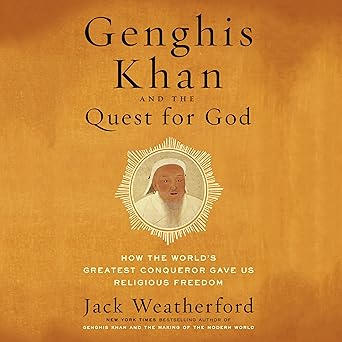
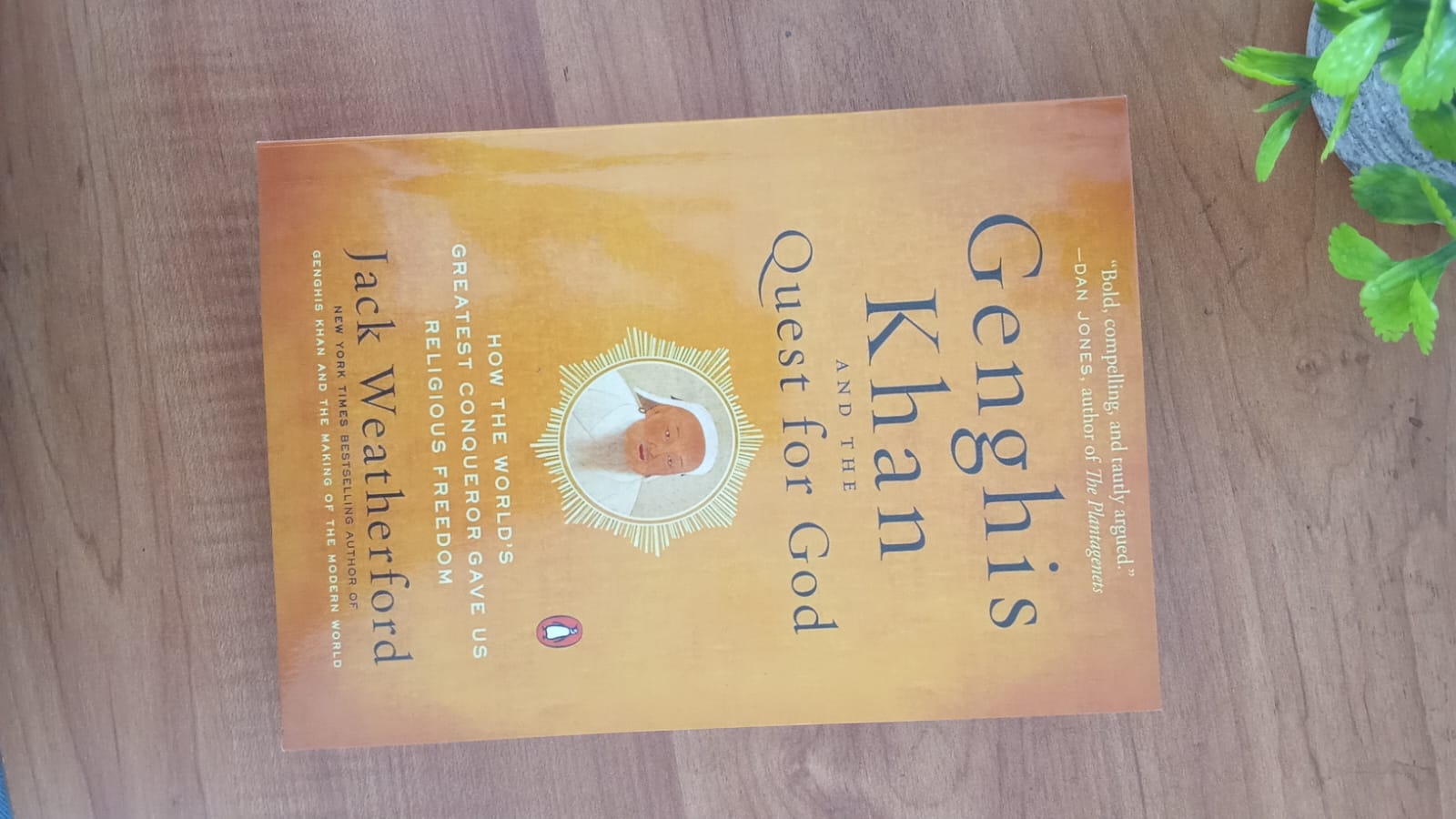




Genghis khan and the quest for god by Jack Weatherford
රු2,100.00






A powerful historical exploration of Genghis Khan that goes beyond conquest to reveal his role in promoting religious freedom and cultural unity. In Genghis Khan and the Quest for God, Jack Weatherford presents a new perspective on leadership, showing how tolerance, law, and vision helped shape one of history’s greatest empires
6 in stock
Genghis Khan and the Quest for God – Jack Weatherford
Genghis Khan and the Quest for God by Jack Weatherford is a historical and cultural exploration that reveals a lesser-known side of Genghis Khan. Rather than portraying him only as a conqueror, the book explains how his rule helped shape religious freedom, cultural exchange, and global connections in the medieval world. The central idea of Genghis Khan and the Quest for God is that his empire was not just built on warfare, but also on tolerance, law, and a vision that allowed different beliefs to coexist.
Instead of focusing only on battles and destruction, readers discover how Genghis Khan created one of the first systems that protected religious diversity. The book presents him as a leader who believed that faith should not be forced, and that people should be free to follow their own spiritual paths.
Leadership Begins With Vision
One of the earliest lessons in Genghis Khan and the Quest for God is the importance of vision. Many rulers in history tried to control belief systems to maintain power. However, Genghis Khan took a different approach by allowing religious leaders from different traditions to live and work freely within his empire.
Jack Weatherford explains that this openness helped strengthen the Mongol Empire rather than weaken it. When people felt respected, they were more loyal and cooperative. This idea shows that leadership is not only about control, but about understanding and inclusion.
The Principles of Religious Freedom
The book highlights how Genghis Khan established policies that supported multiple religions. His empire included:
- Buddhists
- Muslims
- Christians
- Taoists
Rather than favoring one belief, he encouraged dialogue and mutual respect. Genghis Khan and the Quest for God explains that religious leaders were even exempt from taxes and military service, allowing them to focus on spiritual guidance.
Because of this system, the Mongol Empire became a place where ideas, cultures, and beliefs could move freely across regions.
Cultural Exchange and Unity
A major strength of Genghis Khan and the Quest for God is its focus on cultural exchange. As the Mongol Empire expanded, it connected East and West in ways never seen before.
Trade routes like the Silk Road became safer and more active. Along with goods, knowledge and beliefs also traveled. The book shows that this exchange helped shape global history, influencing science, religion, and communication.
Readers learn that unity does not mean sameness — it means creating space for differences to exist peacefully.
Law, Order, and Fairness
The book also explores how Genghis Khan built a system of law known as the Yassa. This legal structure emphasized fairness and discipline across the empire.
Instead of ruling through fear alone, he introduced rules that applied to everyone. This created stability in a vast and diverse empire. Jack Weatherford highlights that justice and organization were key reasons for the empire’s long-term success.
Through this, readers understand that strong systems are just as important as strong leaders.
Relevance in the Modern World
Modern societies continue to face challenges related to religious conflict and cultural differences. Genghis Khan and the Quest for God offers a surprising historical perspective on these issues.
The book reminds readers that tolerance and cooperation are not new ideas — they have been successfully practiced in the past. By learning from history, societies today can build more inclusive and peaceful communities.
Because of this, the book feels highly relevant even in today’s globalized world.
Legacy Beyond Conquest
Beyond military achievements, the book explores the lasting legacy of Genghis Khan. His policies influenced future empires and contributed to the development of international trade and diplomacy.
Readers learn that his greatest impact may not have been conquest, but connection — bringing different parts of the world closer together.
The book challenges common perceptions and encourages a deeper understanding of history.
Who Should Read This Book
This book is ideal for:
- Readers interested in world history
- Those curious about leadership and governance
- Anyone exploring cultural and religious studies
- Readers who enjoy thought-provoking historical narratives
The lessons also apply to modern leadership, diversity, and global cooperation.
Explore More
Explore more history and non-fiction books here:
https://bargainbooks.lk
Lasting Impact
After reading Genghis Khan and the Quest for God, many readers gain a new perspective on one of history’s most misunderstood figures. Instead of seeing only a conqueror, they discover a leader who valued tolerance, structure, and unity.
Be the first to review “Genghis khan and the quest for god by Jack Weatherford”
Related products

Non-fiction

Non-fiction
Non-fiction

Non-fiction

Non-fiction

Non-fiction

Non-fiction
Reviews
There are no reviews yet.