

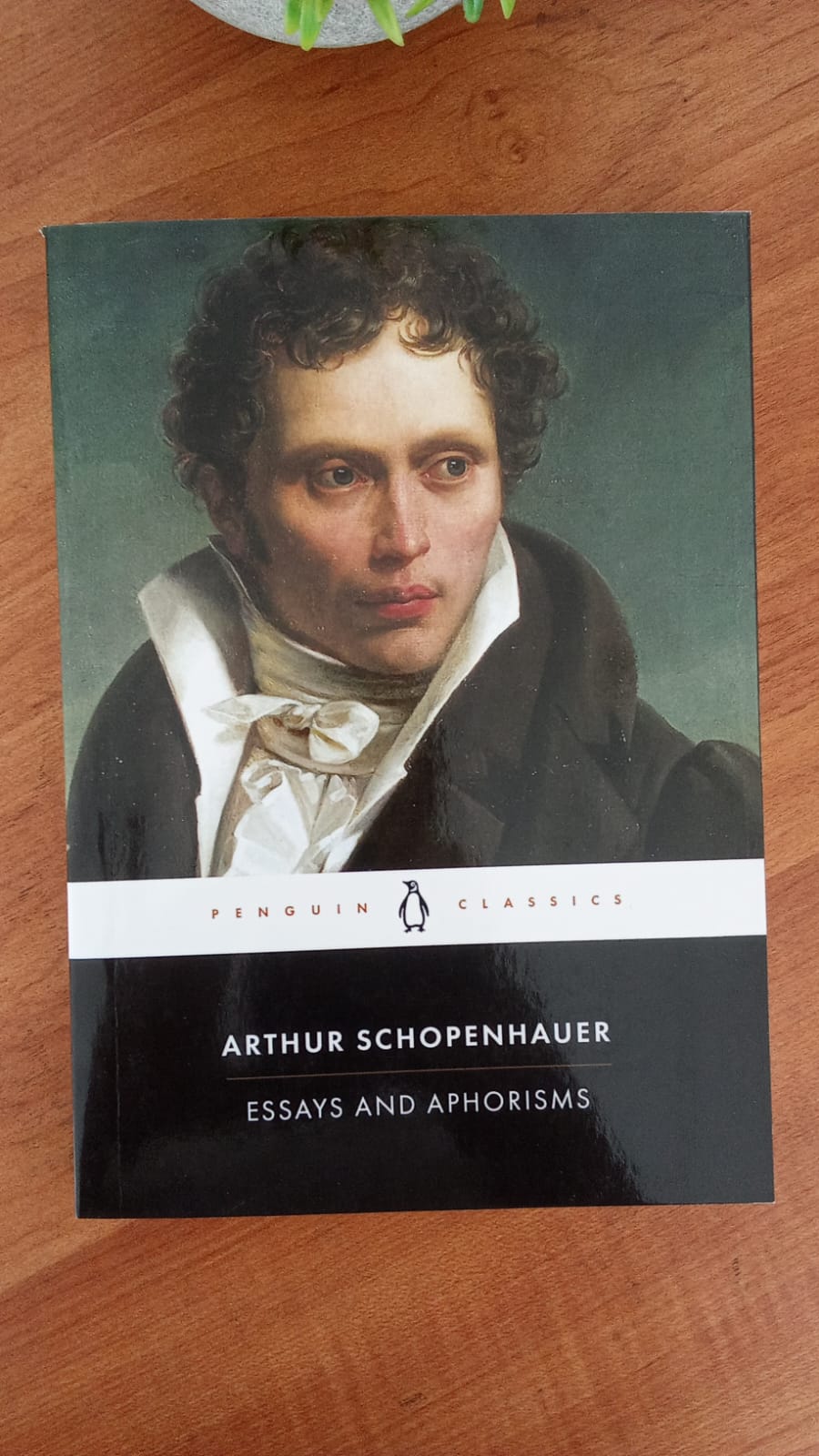
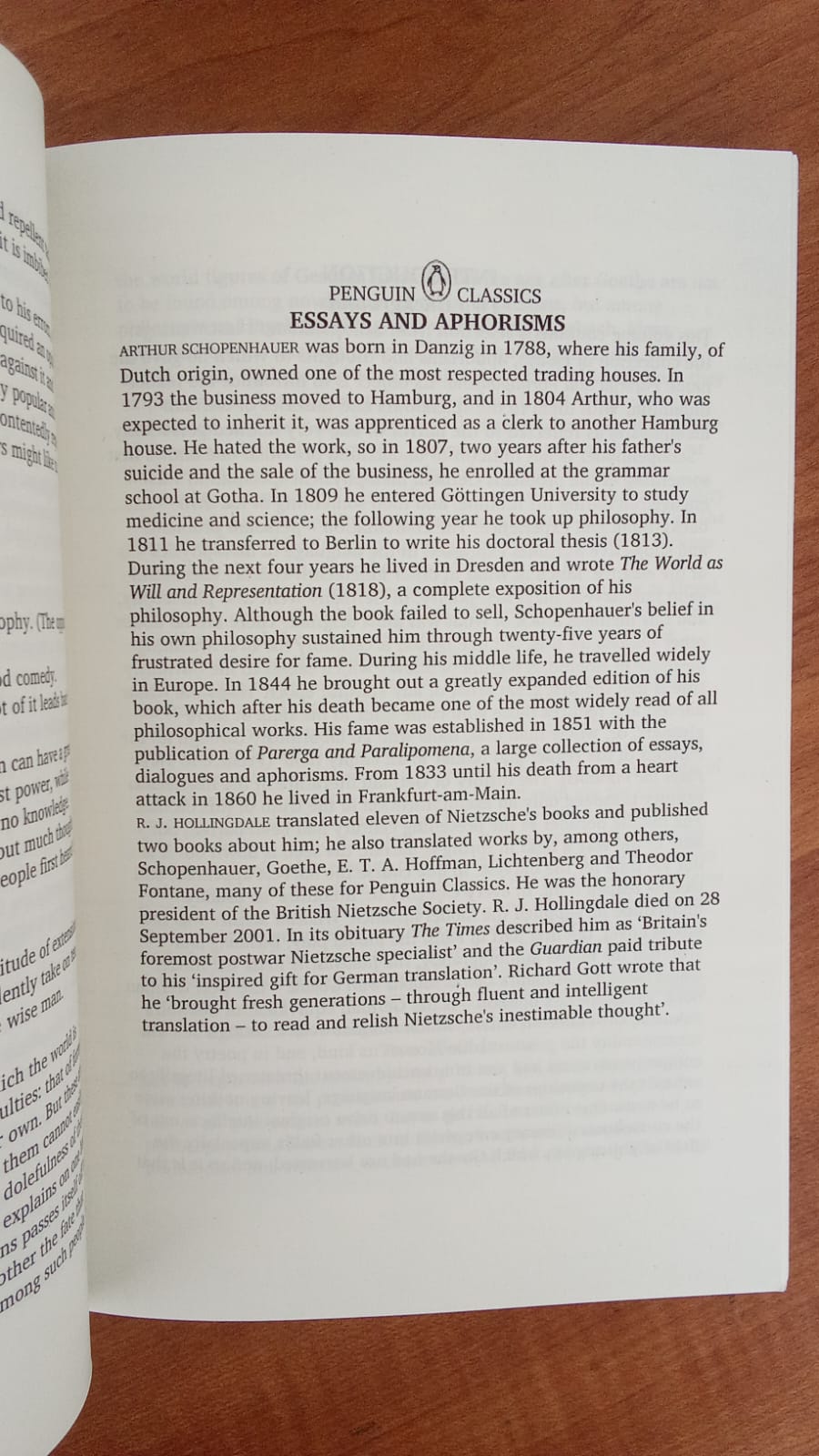
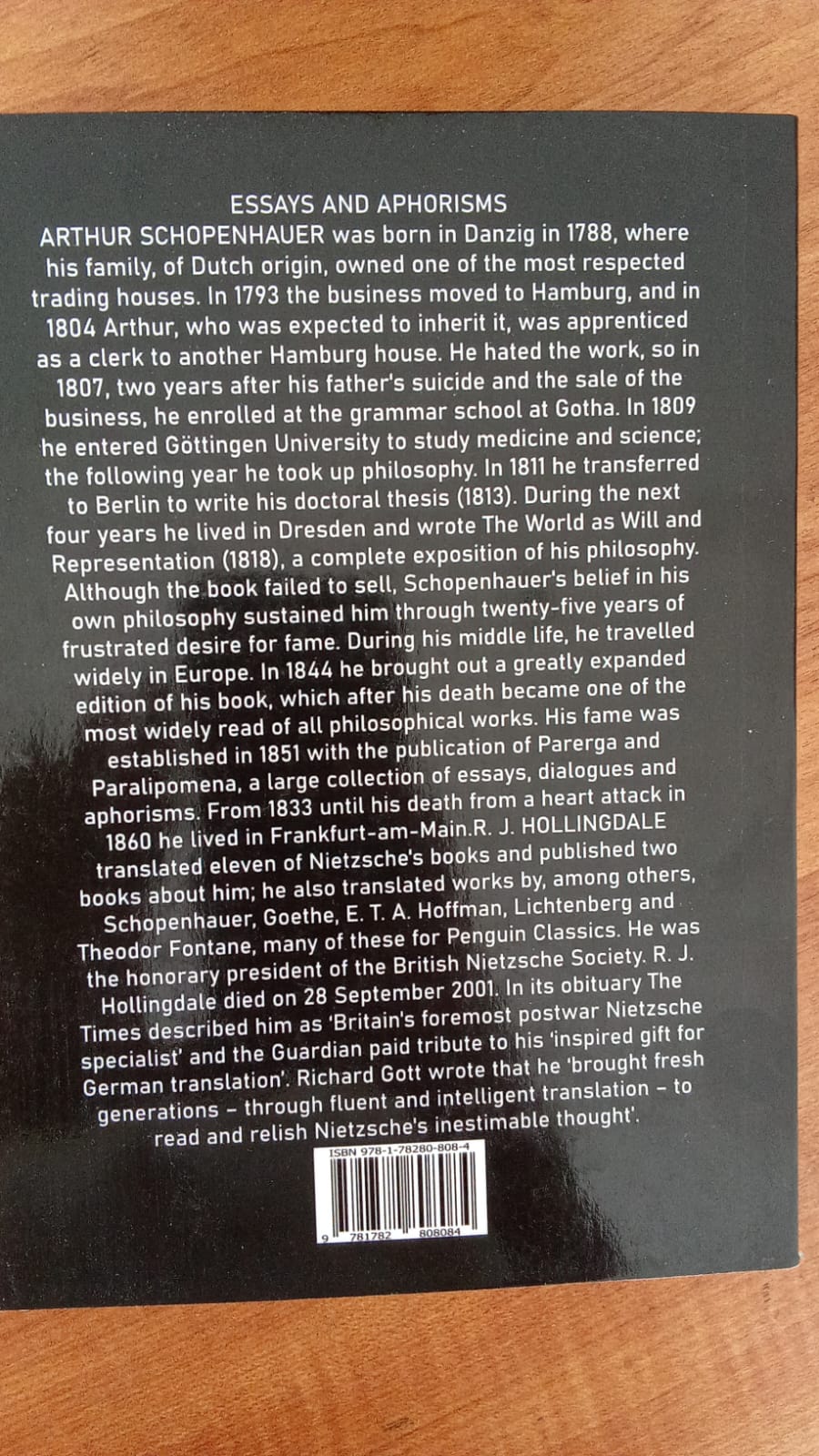


Essays And Aphorisms by Arthur Schopenhauer


රු1,950.00






Product Description:
Essays and Aphorisms by Arthur Schopenhauer is a thought-provoking philosophical classic that explores human nature, happiness, and the realities of life. Through a collection of short essays and powerful reflections, the book offers deep insights into desire, suffering, and independent thinking. It encourages readers to develop self-awareness, question societal norms, and find peace through simplicity and understanding. Ideal for readers interested in philosophy and personal reflection, this book provides timeless wisdom for navigating life with clarity and depth.
4 in stock
Essays and Aphorisms by Arthur Schopenhauer
A Practical Guide to Understanding Human Nature, Philosophy, and the Realities of Life
Essays and Aphorisms by Arthur Schopenhauer is a timeless philosophical work that explores human behavior, happiness, suffering, and the nature of existence. Rather than offering simple advice, the book presents deep reflections on life through short essays and powerful aphorisms. The central idea of Essays and Aphorisms is that understanding human nature and accepting life’s realities leads to wisdom and inner clarity.
Understanding Life Begins With Awareness
One of the earliest lessons in this book is self-awareness. Schopenhauer emphasizes that much of human suffering comes from desire, ego, and unrealistic expectations.
He explains that when individuals understand their own nature and limitations, they become less controlled by emotions and external pressures. This awareness creates a more stable and thoughtful approach to life.
The Nature of Happiness and Suffering
A major strength of Essays and Aphorisms is its honest perspective on happiness.
Readers learn:
- Happiness is often temporary
- Desire leads to dissatisfaction
- Simplicity brings peace
- Reducing expectations reduces suffering
Because of this, the book encourages readers to find contentment within rather than chasing external success.
The Power of Independent Thinking
The book strongly promotes independent thinking. Schopenhauer warns against blindly following society’s beliefs and opinions.
Readers discover how to:
- Think critically
- Question common ideas
- Value personal insight
- Avoid social pressure
This approach helps individuals develop a stronger and more independent mindset.
Human Nature and Behavior
Another key theme is understanding people. The book explores how human behavior is often driven by selfishness, competition, and desire.
By recognizing these patterns, readers can:
- Handle relationships more wisely
- Avoid unnecessary conflict
- Set realistic expectations of others
This makes the book highly practical despite its philosophical depth.
Wisdom Through Simplicity
Schopenhauer’s writing shows that wisdom does not require complexity. His aphorisms are short but powerful, making deep ideas easy to remember.
The book teaches that:
- A simple life can be a peaceful life
- Less dependence on others leads to freedom
- Solitude can strengthen the mind
These lessons remain relevant in any era.
Life in the Modern World
Even though it was written in the 19th century, Essays and Aphorisms feels highly relevant today.
Modern life is filled with comparison, pressure, and constant distraction. The book reminds readers to slow down, think deeply, and focus on what truly matters.
Long-Term Wisdom and Personal Growth
Unlike many modern self-help books, this work focuses on long-term understanding rather than quick solutions.
Readers learn that wisdom develops gradually through reflection, experience, and observation.
Who Should Read This Book
This book is ideal for:
- Readers interested in philosophy
- Individuals seeking deeper life understanding
- Thinkers who enjoy reflective writing
- Anyone exploring human behavior and emotions
The lessons apply to both personal growth and everyday life.
Explore More Philosophy & Self-Growth Books
Find more books like this at: https://bargainbooks.lk
Learn more about the author: https://en.wikipedia.org/wiki/Arthur_Schopenhauer
Lasting Impact
After reading Essays and Aphorisms, many readers gain a clearer and more realistic understanding of life. Instead of chasing constant happiness, they learn to accept life with balance and wisdom.
Ultimately, the book teaches that true peace comes from self-awareness, simplicity, and understanding the nature of existence.
Be the first to review “Essays And Aphorisms by Arthur Schopenhauer”
Related products

Non-fiction

Non-fiction
Non-fiction

Non-fiction
Non-fiction

Non-fiction
Non-fiction
Reviews
There are no reviews yet.