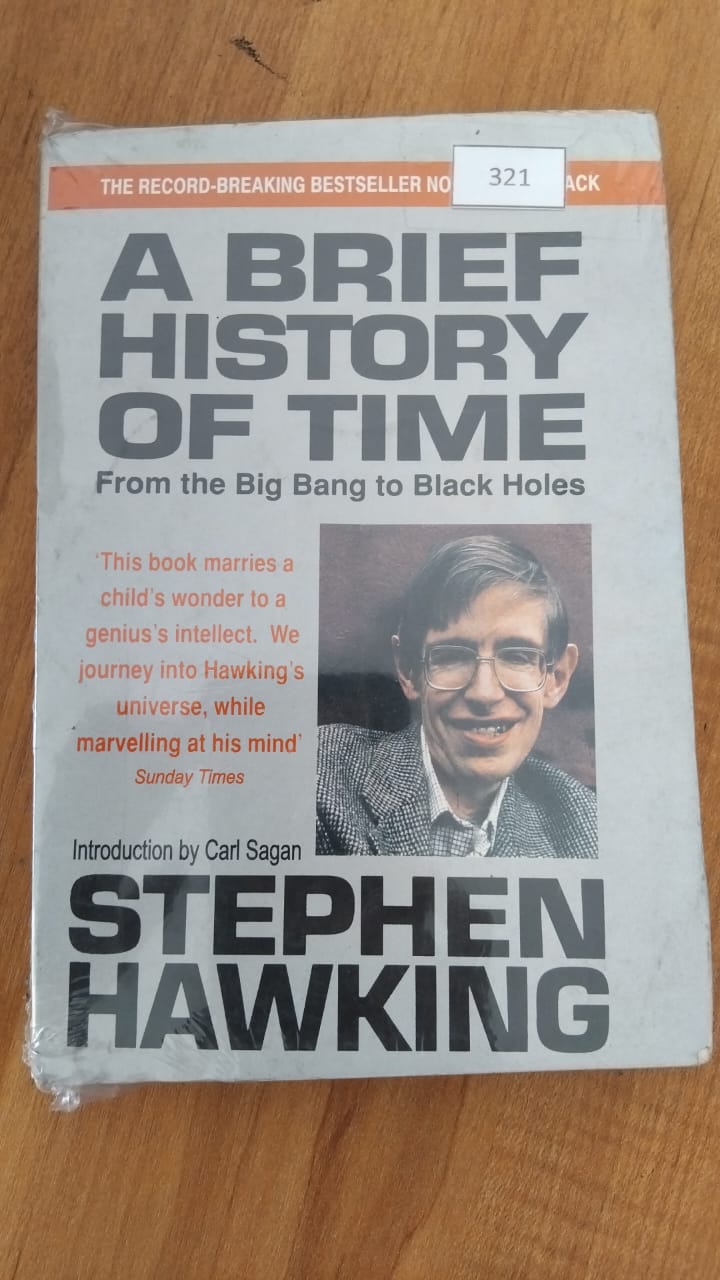
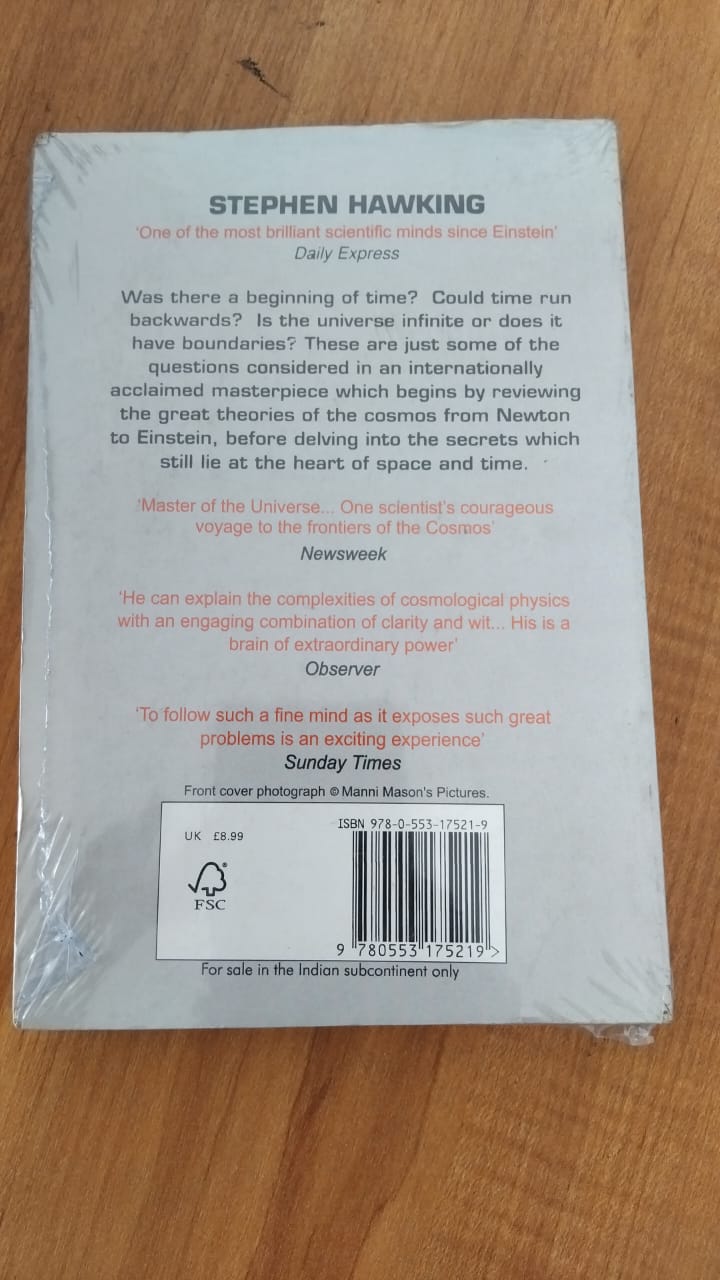
A Brief History of Time by Stephen Hawking is one of the most influential science books ever written, offering readers a fascinating journey through the universe. First published in 1988, the book explores complex scientific ideas such as the origin of the universe, the nature of time, black holes, and the laws that govern reality, all explained in a way intended for non-scientists.
At the heart of A Brief History of Time is humanity’s quest to understand the universe. Stephen Hawking begins by examining how our understanding of the cosmos has evolved, from ancient beliefs to modern scientific discoveries. He explains how thinkers like Aristotle, Galileo, Newton, and Einstein shaped our understanding of space and time. This historical foundation helps readers appreciate how scientific ideas develop over centuries.
One of the central topics in A Brief History of Time is the Big Bang theory. Hawking explains how the universe began from an extremely hot and dense point and has been expanding ever since. He discusses evidence such as cosmic background radiation and redshift, helping readers grasp why scientists believe the universe had a beginning.
Time itself is a major theme throughout the book. Stephen Hawking explores what time is, how it flows, and whether it can move backward. He introduces the concept of the “arrow of time,” explaining why time seems to move in one direction—from past to future—despite the laws of physics often working the same way forward and backward.
Black holes are another key focus of A Brief History of Time. Hawking explains how black holes form when massive stars collapse under their own gravity. He describes their extreme properties, including event horizons and singularities. One of the most groundbreaking ideas discussed in the book is Hawking radiation, which suggests that black holes are not completely black but slowly emit energy and can eventually evaporate.
The book also explores the relationship between quantum mechanics and general relativity. These two theories explain the universe at very different scales—quantum mechanics at the smallest levels and general relativity at cosmic scales. Hawking discusses the challenge of unifying these theories into a single framework, often referred to as a “theory of everything.”
A Brief History of Time also addresses the possibility of multiple universes. Hawking introduces the idea that our universe may be just one of many, each with different physical laws. This concept helps explain why the universe appears finely tuned for life, a topic that has fascinated scientists and philosophers alike.
Despite dealing with highly complex topics, Stephen Hawking’s goal was to make science accessible. He minimizes the use of mathematical equations and instead relies on analogies and clear explanations. This approach made A Brief History of Time popular among general readers, even though some concepts remain challenging.
The book also raises deep philosophical questions. Hawking explores whether the universe has a purpose, whether time had a beginning, and what role humans play in the vast cosmos. He challenges readers to think beyond everyday experience and consider the universe on its largest and smallest scales.
Stephen Hawking’s personal story adds depth to the book’s impact. Writing while living with a severe physical disability, Hawking became a symbol of intellectual perseverance. His ability to communicate profound ideas despite physical limitations inspired millions of readers worldwide.
A Brief History of Time has been praised for sparking public interest in cosmology and theoretical physics. While it may require careful reading and reflection, the book rewards readers with a deeper appreciation of the universe and humanity’s place within it.
The book is ideal for curious readers who want to explore science beyond basic concepts. Students, science enthusiasts, and anyone interested in the mysteries of existence will find value in its pages. It does not require advanced scientific training, only curiosity and patience.
Overall, A Brief History of Time by Stephen Hawking is a landmark work that bridges science and philosophy. It invites readers to explore the deepest questions about time, space, and reality. Decades after its publication, the book remains relevant, inspiring new generations to look up at the stars and wonder about the universe.

The Forty Rules of Love Paperback – A Captivating Novel by Elif Shafak on Love and Spirituality

The Catcher in the Rye by J.D. Salinger (340)

Limitless by Jim Kwik (482) 


Reviews
There are no reviews yet.