
No products in the cart.
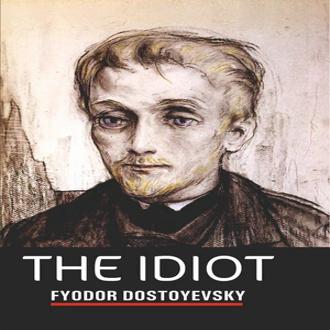
The Idiot by Fyodor Dostoyevsky


රු2,500.00
3 X Rs. 833.33 or 8% Cashback with


or 3 X රු833.33 with


or up to 4 X රු625.00 with


The Idiot follows Prince Myshkin, a kind and innocent man whose honesty and compassion set him apart in a complex and often selfish society. Through deep psychological insight, the novel explores love, morality, and the challenges of remaining good in a flawed world.
5 in stock
The Idiot by Fyodor Dostoevsky
The Idiot is a profound psychological and philosophical novel that explores innocence, morality, and the complexity of human nature. Set in Russia, the story follows Prince Myshkin, a kind and honest man whose pure-hearted nature sets him apart in a society driven by ego, ambition, and materialism. The central idea of The Idiot is that true goodness and sincerity are often misunderstood or even rejected in a flawed world. Dostoevsky presents a powerful question: Can a completely good person survive in society without being destroyed by it?
Innocence in a Corrupt World
One of the most striking themes in The Idiot is the contrast between innocence and societal corruption. Prince Myshkin’s honesty and compassion make him appear “foolish” to others, which is why he is often called an “idiot.”
Dostoevsky shows that:
- Society often values intelligence and power over kindness
- Genuine goodness can be misunderstood as weakness
- Pure intentions do not always lead to positive outcomes
Through this contrast, the novel challenges readers to rethink what true intelligence and strength mean.
The Complexity of Human Emotions
The novel deeply explores emotions such as love, jealousy, pride, and obsession. Relationships in The Idiot are intense and often unstable, reflecting the unpredictability of human behavior.
Readers experience:
- Romantic conflict and emotional tension
- Jealousy leading to destructive actions
- The struggle between love and self-interest
These emotional layers make the story rich and psychologically engaging.
Moral Philosophy and Goodness
Prince Myshkin represents moral purity, but his goodness does not protect him from suffering. Instead, it exposes him to exploitation and misunderstanding.
The novel suggests that:
- Being morally good does not guarantee happiness
- Society can be harsh toward those who are different
- True kindness requires strength, not weakness
This philosophical depth is what makes The Idiot a timeless classic.
Society and Social Expectations
Dostoevsky presents a detailed view of Russian society, where reputation, wealth, and status play major roles in people’s lives.
The book highlights:
- The pressure to conform to social norms
- The importance placed on appearances
- The conflict between personal values and societal expectations
Through these elements, the novel critiques superficial social behavior.
Tragedy and Human Nature
As the story unfolds, the consequences of emotional instability and misunderstanding become clear. The novel moves toward a tragic conclusion, emphasizing the fragile nature of human relationships.
Dostoevsky illustrates that:
- Miscommunication can lead to irreversible outcomes
- Emotional extremes often result in suffering
- Human nature is both beautiful and flawed
Why This Book Still Matters Today
Even today, The Idiot remains highly relevant. It explores themes that are universal and timeless.
The novel reminds readers that:
- Kindness is often undervalued in modern society
- Emotional intelligence is as important as logic
- Understanding others requires empathy and patience
Who Should Read This Book
This book is ideal for:
- Readers interested in deep psychological fiction
- Fans of philosophical and classic literature
- Students studying Russian literature
- Anyone exploring human behavior and morality
Find More Books
Explore more classics here:
https://bargainbooks.lk
Be the first to review “The Idiot by Fyodor Dostoyevsky”
Related products
-19%

Out of stock
Original price was: රු2,600.00.රු2,100.00Current price is: රු2,100.00.
3 X Rs. 700.00 or 8% Cashback with
or 3 X රු700.00 with
or up to 4 X රු525.00 with
Out of stock
රු1,700.00
3 X Rs. 566.67 or 8% Cashback with
or 3 X රු566.67 with
or up to 4 X රු425.00 with
-21%

Out of stock
Original price was: රු2,400.00.රු1,900.00Current price is: රු1,900.00.
3 X Rs. 633.33 or 8% Cashback with
or 3 X රු633.33 with
or up to 4 X රු475.00 with
-22%

Out of stock
Fiction
Original price was: රු2,250.00.රු1,750.00Current price is: රු1,750.00.
3 X Rs. 583.33 or 8% Cashback with
or 3 X රු583.33 with
or up to 4 X රු437.50 with
-48%

Out of stock
Fiction
Original price was: රු3,000.00.රු1,550.00Current price is: රු1,550.00.
3 X Rs. 516.67 or 8% Cashback with
or 3 X රු516.67 with
or up to 4 X රු387.50 with
-10%
Out of stock
Original price was: රු5,000.00.රු4,500.00Current price is: රු4,500.00.
3 X Rs. 1,500.00 or 8% Cashback with
or 3 X රු1,500.00 with
or up to 4 X රු1,125.00 with
-17%

Contemporary romance
Original price was: රු2,400.00.රු1,990.00Current price is: රු1,990.00.
3 X Rs. 663.33 or 8% Cashback with
or 3 X රු663.33 with
or up to 4 X රු497.50 with
-25%

Out of stock
Original price was: රු2,000.00.රු1,500.00Current price is: රු1,500.00.
3 X Rs. 500.00 or 8% Cashback with
or 3 X රු500.00 with
or up to 4 X රු375.00 with
Reviews
There are no reviews yet.