
No products in the cart.
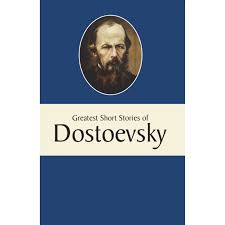

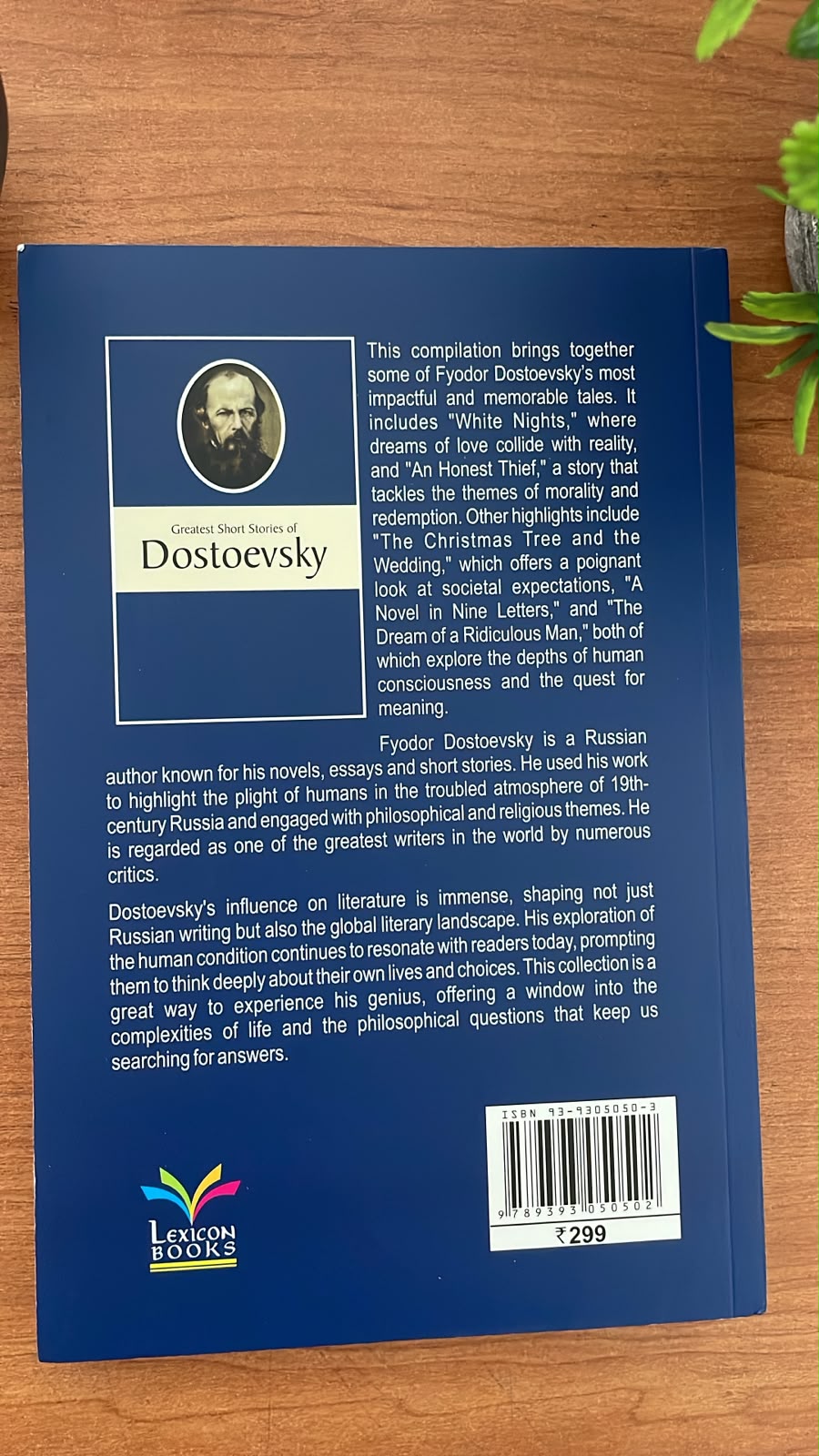
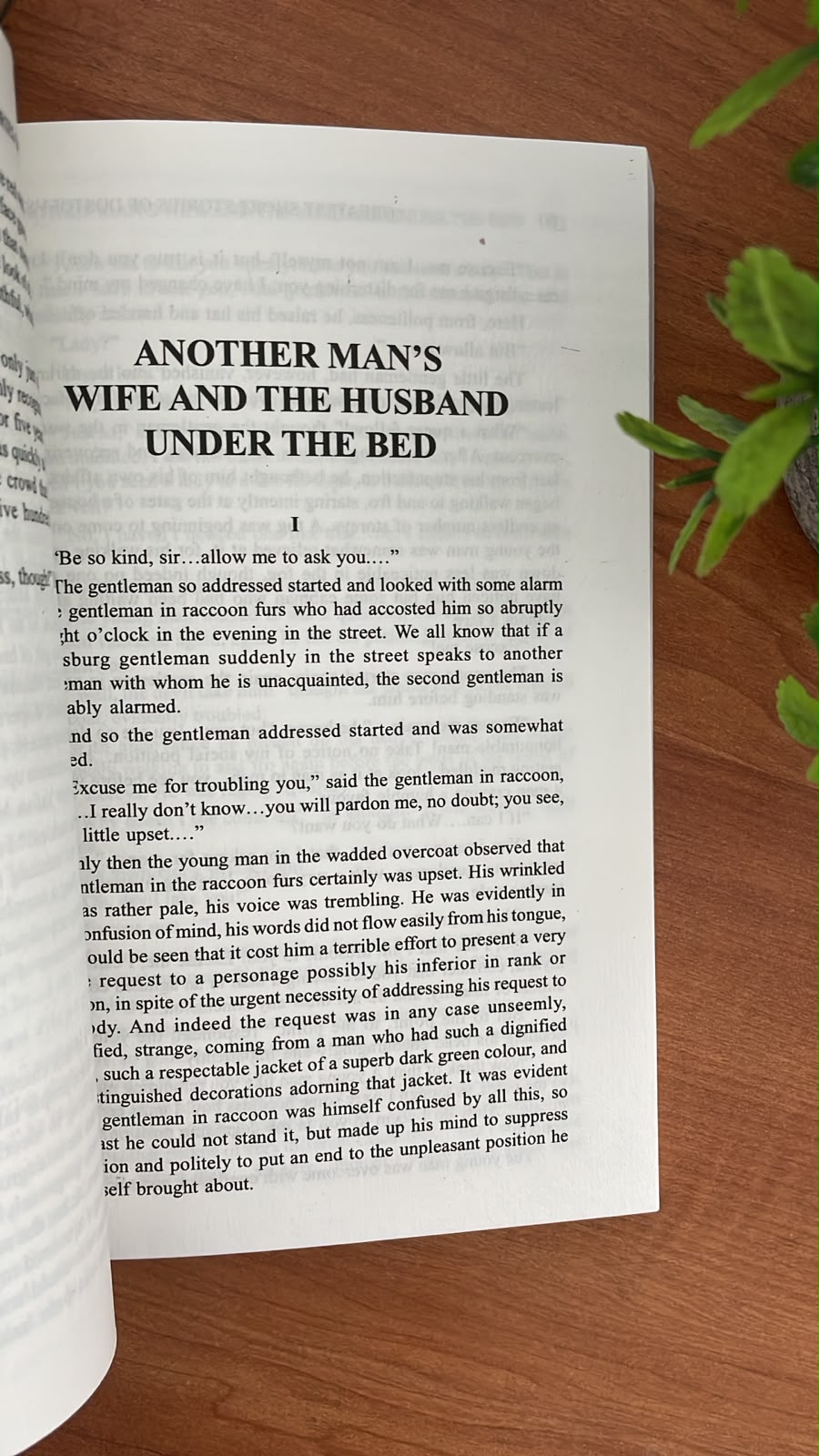





Greatest Short Stories Of Fyodor Dostoevsky by Fyodor Dostoevsky


රු1,400.00
3 X Rs. 466.67 or 8% Cashback with


or 3 X රු466.67 with


or up to 4 X රු350.00 with


Greatest Short Stories of Fyodor Dostoevsky by Fyodor Dostoevsky
Greatest Short Stories of Fyodor Dostoevsky is a profound collection that captures the psychological depth and philosophical intensity of one of Russia’s most legendary writers. While Dostoevsky is famous for his massive novels like Crime and Punishment, this collection proves that he was equally a master of the shorter form, using it to explore the darkest corners of the human soul and the complexities of moral redemption.
1 in stock
Greatest Short Stories Of Fyodor Dostoevsky
Greatest Short Stories Of Fyodor Dostoevsky is a fascinating collection for readers who want to explore the psychological depth, emotional intensity and philosophical questions that made Fyodor Dostoevsky one of the greatest writers in world literature.
Best known for masterpieces such as Crime and Punishment, The Brothers Karamazov, The Idiot and Notes from Underground, Dostoevsky had an extraordinary ability to explore the deepest and sometimes darkest areas of the human mind.
His characters struggle with loneliness, poverty, guilt, pride, love, faith, morality and the consequences of their choices.
This collection brings many of those powerful themes into shorter works, making it an excellent introduction for readers who want to discover Dostoevsky without immediately committing to one of his longer novels.
Why Read Greatest Short Stories Of Fyodor Dostoevsky?
One of the biggest reasons to read Greatest Short Stories Of Fyodor Dostoevsky is the author’s remarkable understanding of human psychology.
Dostoevsky was fascinated by what people think and feel when they are placed under emotional or moral pressure.
What happens when guilt becomes impossible to escape?
Why do people knowingly make decisions that hurt themselves?
Can suffering transform someone?
Can a person who has made serious mistakes find redemption?
And why do people sometimes desperately want human connection while simultaneously pushing others away?
These questions appear throughout Dostoevsky’s writing.
His stories rarely provide simple answers. Instead, they place readers inside the minds of complicated characters and allow us to experience their fears, contradictions and internal conflicts.
Explore the Human Mind
Fyodor Dostoevsky is famous for psychological storytelling.
His characters do not simply perform actions.
They think intensely about those actions.
They question themselves.
They justify their behaviour.
They regret decisions.
They become angry, ashamed, hopeful, jealous or frightened.
This makes even an apparently simple situation feel emotionally complex.
A conversation between two people can reveal pride, insecurity, desire or resentment.
A small decision can become an enormous moral struggle.
This psychological depth is one reason Dostoevsky’s fiction continues to appeal to modern readers.
The societies surrounding his characters may be very different from ours, but many of the emotions they experience remain instantly recognizable.
Stories About Morality and Guilt
Morality is one of the strongest themes in Greatest Short Stories Of Fyodor Dostoevsky.
Dostoevsky was deeply interested in questions of right and wrong.
However, his stories rarely divide characters into simple heroes and villains.
A person may behave badly while believing they have a reasonable justification.
Another character may do something kind for selfish reasons.
Someone else may feel enormous guilt over a decision that appeared unavoidable.
This complexity makes his fiction especially interesting.
Readers are encouraged to ask not only what a character did but also why they did it.
What circumstances influenced them?
What did they believe?
What were they afraid of?
And what psychological consequences followed?
These questions give Dostoevsky’s stories a philosophical depth that extends beyond ordinary fiction.
Poverty and Human Dignity
Poverty appears frequently throughout Dostoevsky’s work.
Financial difficulty was something he understood personally, and his stories often examine how a lack of money affects dignity, relationships and personal decisions.
His poor characters are never simply background figures.
They have ambitions.
They have pride.
They want respect.
They sometimes feel humiliated by circumstances beyond their control.
Some respond with anger.
Others become desperate.
And some struggle to maintain their dignity even during extremely difficult situations.
Through these characters, Dostoevsky asks important questions about how society treats people who have less wealth or social power.
These themes remain relevant even today.
Love and Loneliness
Although Dostoevsky is often associated with dark themes, his stories also contain powerful explorations of love and human connection.
His characters often desperately want someone to understand them.
Some fall deeply in love.
Some experience unreturned affection.
Others become emotionally attached to an idealized version of another person.
Loneliness is particularly important.
A character can live among many people yet still feel completely isolated.
Because of this loneliness, even a small moment of kindness can become extremely meaningful.
Readers who enjoy emotionally complex character-driven fiction may particularly appreciate these stories.
Faith, Doubt and Redemption
Faith and doubt are also important subjects throughout Greatest Short Stories Of Fyodor Dostoevsky.
Dostoevsky frequently explored whether people can change after making serious mistakes.
Can suffering lead to personal growth?
Can someone forgive themselves?
Can one person genuinely forgive another?
Is redemption possible?
His characters often move between hope and despair.
Some search for spiritual meaning.
Others question whether suffering has any purpose.
Rather than turning these questions into simple arguments, Dostoevsky examines them through human experiences.
This allows readers with different philosophical perspectives to interpret the stories in their own way.
Crime, Punishment and Consequences
Readers familiar with Crime and Punishment will recognize Dostoevsky’s fascination with the psychological consequences of wrongdoing.
External punishment is only part of the story.
A person may escape legal punishment but still experience guilt.
Fear can become a punishment.
Isolation can become a punishment.
Shame can become a punishment.
Dostoevsky is interested in what happens inside the mind after someone crosses a moral boundary.
This psychological approach makes his work very different from a traditional crime story.
The central question is rarely simply:
“Who committed the crime?”
Instead, Dostoevsky asks:
“Why did they do it, and what happened to them psychologically afterward?”
Existential and Philosophical Questions
Dostoevsky’s writing is often associated with existential philosophy because his characters repeatedly confront questions about freedom, responsibility, suffering and meaning.
Are people genuinely free to make their own choices?
How much are decisions influenced by poverty, society or emotion?
What gives life meaning?
Can people create their own values?
Is suffering unavoidable?
These are enormous questions.
But Dostoevsky does not explore them through academic lectures.
He explores them through characters experiencing real emotional conflicts.
That makes the philosophical ideas feel personal.
Readers encounter them through relationships, conversations, mistakes and difficult decisions.
A Great Introduction to Fyodor Dostoevsky
One of the biggest advantages of Greatest Short Stories Of Fyodor Dostoevsky is that it can serve as an accessible introduction to his writing.
Dostoevsky’s major novels are famous but can also be intimidating.
Books such as The Brothers Karamazov, The Idiot and Crime and Punishment require a substantial reading commitment.
A short-story collection allows readers to experience his themes and style in smaller sections.
You can read one story, reflect on it and return later for another.
This makes the collection suitable for readers discovering classic Russian literature for the first time.
It is equally valuable for established Dostoevsky fans who want to explore more of his shorter fiction.
One of the Great Writers of Russian Literature
Fyodor Dostoevsky was born in Moscow in 1821 and became one of the most influential writers of the nineteenth century.
His writing has influenced generations of novelists, philosophers, psychologists and thinkers.
His famous works include:
- Crime and Punishment
- The Brothers Karamazov
- The Idiot
- Notes from Underground
- Demons
- Poor Folk
Although these longer works are usually the first titles associated with him, his shorter fiction also contains many of the themes that made his writing extraordinary.
Readers can discover his fascination with human behaviour without beginning with a massive novel.
Short Stories With Powerful Ideas
The shorter length of the stories does not mean that the ideas are small.
A short Dostoevsky story can leave readers thinking about a character long after finishing the final page.
His fiction encourages us to reconsider our judgments.
Someone who initially appears ridiculous may later deserve sympathy.
A character who seems innocent may reveal selfish motivations.
A person who behaves badly may still possess qualities that make readers understand their suffering.
This refusal to create simple characters gives Dostoevsky’s work enormous emotional depth.
Who Should Read Greatest Short Stories Of Fyodor Dostoevsky?
This collection is an excellent choice for readers interested in:
- Classic literature
- Russian literature
- Short stories
- Psychological fiction
- Philosophy
- Existentialism
- Human psychology
- Morally complex characters
- Guilt and redemption
- Love and loneliness
- Faith and doubt
- Crime and morality
- Nineteenth-century literature
- Fyodor Dostoevsky books
It is also an excellent option for students or readers who want to start exploring Russian classics.
Is Greatest Short Stories Of Fyodor Dostoevsky Worth Reading?
If you have always wanted to read Dostoevsky but are unsure where to begin, Greatest Short Stories Of Fyodor Dostoevsky provides an accessible starting point.
The stories allow readers to experience his greatest strengths: psychological insight, morally complicated characters, emotional intensity and philosophical depth.
His characters face problems that still feel familiar today.
They worry about money.
They struggle with relationships.
They make poor decisions.
They feel ashamed.
They search for acceptance.
They question their purpose.
And sometimes they hope for a chance to change.
These universal human experiences explain why Dostoevsky remains one of the world’s most widely discussed classic writers.
Buy Greatest Short Stories Of Fyodor Dostoevsky in Sri Lanka
If you are searching for Greatest Short Stories Of Fyodor Dostoevsky in Sri Lanka, this collection is an excellent addition to any classic-fiction, Russian-literature or philosophy bookshelf.
Explore stories filled with psychological depth, complex emotions and challenging questions about morality, love, guilt, suffering and redemption.
Whether you are discovering Dostoevsky for the first time or already admire novels such as Crime and Punishment and The Brothers Karamazov, this collection offers another opportunity to experience his extraordinary understanding of human nature.
Greatest Short Stories Of Fyodor Dostoevsky is an excellent choice for readers who want fiction that does more than entertain.
These stories challenge readers to think about people, morality and the difficult questions that shape human life.
Learn more about Fyodor Dostoevsky and his literary works through the Encyclopaedia Britannica.
Explore more classic literature books at Bargain Books.
Be the first to review “Greatest Short Stories Of Fyodor Dostoevsky by Fyodor Dostoevsky”
Related products
Classics & Literary Fiction
රු1,850.00
3 X Rs. 616.67 or 8% Cashback with
or 3 X රු616.67 with
or up to 4 X රු462.50 with
-16%
Classics & Literary Fiction
Original price was: රු3,100.00.රු2,600.00Current price is: රු2,600.00.
3 X Rs. 866.67 or 8% Cashback with
or 3 X රු866.67 with
or up to 4 X රු650.00 with
Out of stock
Classics & Literary Fiction
රු1,700.00
3 X Rs. 566.67 or 8% Cashback with
or 3 X රු566.67 with
or up to 4 X රු425.00 with
-48%

Out of stock
Classics & Literary Fiction
Original price was: රු3,000.00.රු1,550.00Current price is: රු1,550.00.
3 X Rs. 516.67 or 8% Cashback with
or 3 X රු516.67 with
or up to 4 X රු387.50 with

Out of stock
Classics & Literary Fiction
රු4,300.00
3 X Rs. 1,433.33 or 8% Cashback with
or 3 X රු1,433.33 with
or up to 4 X රු1,075.00 with
-28%

Out of stock
Classics & Literary Fiction
Original price was: රු1,800.00.රු1,300.00Current price is: රු1,300.00.
3 X Rs. 433.33 or 8% Cashback with
or 3 X රු433.33 with
or up to 4 X රු325.00 with
Out of stock
Classics & Literary Fiction
රු1,600.00
3 X Rs. 533.33 or 8% Cashback with
or 3 X රු533.33 with
or up to 4 X රු400.00 with
-20%

Classics & Literary Fiction
Original price was: රු2,000.00.රු1,600.00Current price is: රු1,600.00.
3 X Rs. 533.33 or 8% Cashback with
or 3 X රු533.33 with
or up to 4 X රු400.00 with
Reviews
There are no reviews yet.