
No products in the cart.
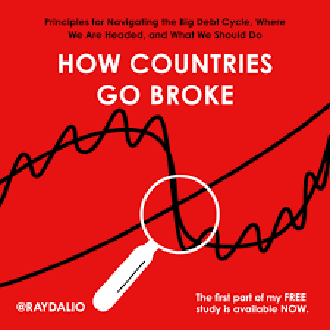
How Countries Go Broke by Ray Dalio
රු2,200.00
3 X Rs. 733.33 or 8% Cashback with


or 3 X රු733.33 with


or up to 4 X රු550.00 with


The Big Debt Cycle Explained
At the core of How Countries Go Broke is Dalio’s concept of the “Big Debt Cycle.” This is a long-term economic pattern (often 50–100 years) where countries gradually accumulate debt until it becomes unsustainable.
The process begins with economic growth and borrowing. Over time, governments, businesses, and individuals take on more debt to fuel expansion. Eventually, debt levels become too high to manage, leading to financial stress, inflation, or crisis.
Dalio explains that these cycles repeat throughout history, affecting even the most powerful nations.
5 in stock
Purchase & earn 22 points!
Category: Economics
How Countries Go Broke by Ray Dalio is a powerful economics and investing book that explains how countries accumulate excessive debt, what happens when those debts become difficult to manage, and why major debt problems can reshape economies, currencies, markets, governments, and even the global balance of power.
Drawing on decades of experience studying markets and economic history, Ray Dalio explores what he calls the Big Debt Cycle.
Countries, unlike individuals or ordinary companies, do not necessarily go broke by simply running out of money.
Governments can raise taxes.
They can borrow.
Central banks can create money.
They can change interest rates.
They can restructure debt.
They can also reduce the real value of debt through inflation or currency depreciation.
These tools give governments extraordinary flexibility.
However, they do not eliminate economic limits.
How Countries Go Broke by Ray Dalio examines what can happen when governments repeatedly borrow more money than they can comfortably repay and when the cost of servicing debt begins competing with other national priorities.
How Countries Go Broke by Ray Dalio – Book Overview
How Countries Go Broke by Ray Dalio attempts to answer several important economic questions.
How much debt is too much?
Can a country with a major reserve currency really face a debt crisis?
What happens when government interest payments become extremely large?
Why do central banks sometimes create more money?
How can debt problems affect inflation, interest rates, currencies, investments, and living standards?
Dalio approaches these questions by examining recurring historical patterns.
His argument is that economies often move through recognizable cycles.
Borrowing can initially help create growth.
Credit allows governments, businesses, and individuals to spend more than they could using current income alone.
But debt also creates future obligations.
Eventually, borrowers must repay principal and interest.
When debt grows faster than the income available to support it, problems can begin.
The Big Debt Cycle
The central concept in How Countries Go Broke by Ray Dalio is the Big Debt Cycle.
Debt itself is not automatically harmful.
Borrowing can finance productive investments.
Governments may borrow for infrastructure, emergencies, wars, economic stabilization, or development.
Businesses borrow to expand.
Individuals borrow to purchase homes or invest in education.
Problems become more serious when debt continually grows faster than the resources available to repay it.
Eventually, larger portions of income must be used for interest payments.
That can reduce the money available for other priorities.
Governments may then borrow even more to cover previous obligations.
This can create a cycle that becomes increasingly difficult to manage.
Government Debt
Government debt is one of the biggest themes in How Countries Go Broke by Ray Dalio.
Governments frequently spend more than they collect in taxes.
The difference is usually financed by borrowing.
Moderate deficits may be manageable.
But repeated large deficits can cause total public debt to grow dramatically.
As debt grows, interest payments can become a larger part of government spending.
This creates difficult choices.
Governments may need to:
- Increase taxes
- Reduce spending
- Borrow even more
- Lower interest rates
- Create additional money
- Restructure obligations
- Accept higher inflation
None of these choices is completely painless.
That is why debt management becomes such an important political and economic issue.
Interest Rates and Debt Service
Interest rates are crucial in How Countries Go Broke by Ray Dalio.
When interest rates are low, large amounts of debt may appear affordable.
Governments can borrow at relatively low cost.
But if interest rates rise, refinancing old debt can become much more expensive.
A country that seemed financially stable during a low-rate period may suddenly face much larger annual interest expenses.
This means investors and policymakers should not look only at the total amount of debt.
They also need to consider the cost of servicing it.
High debt combined with high interest rates can create much greater pressure than high debt with extremely low borrowing costs.
Central Banks and Money Creation
Central banks play a major role in How Countries Go Broke by Ray Dalio.
When debt problems become severe, governments and central banks may attempt to reduce financial pressure by increasing the supply of money.
This can help make debt easier to service in nominal terms.
However, creating too much money can reduce the purchasing power of the currency.
That can contribute to inflation.
Inflation effectively changes the real value of money.
If prices rise significantly, the same amount of currency buys fewer goods and services.
This means a government may technically repay debt while creditors receive money that is worth less in real terms.
Inflation and Currency Value
Inflation is closely connected to debt in How Countries Go Broke by Ray Dalio.
When governments have very large financial obligations, allowing moderate inflation can reduce the real burden of fixed-value debt.
But excessive inflation creates serious problems.
Consumers lose purchasing power.
Savings may lose value.
Businesses face uncertainty.
Investors may demand higher interest rates.
Confidence in the currency can weaken.
If people begin believing that a currency will lose value rapidly, they may attempt to move their wealth into other assets or currencies.
This can increase financial instability.
Reserve Currencies
One especially important topic in How Countries Go Broke by Ray Dalio is reserve currency status.
Some currencies are widely used internationally for trade, savings, and financial reserves.
This creates important advantages for the country issuing that currency.
Global demand can make it easier for that government to borrow.
However, reserve currency status is not guaranteed forever.
Dalio connects debt problems to broader historical changes in economic and geopolitical power.
If investors gradually lose confidence in a country’s currency or financial system, they may begin seeking alternatives.
That process can happen slowly before becoming much more noticeable.
Politics and Debt
Debt is not purely an economic issue.
How Countries Go Broke by Ray Dalio also examines the political forces surrounding government finance.
Reducing debt usually requires difficult choices.
Governments may need to cut spending or raise taxes.
Both can be politically unpopular.
Different groups may strongly disagree about who should pay more or receive less.
As debt pressure grows, political conflict may increase.
Wealth inequality can add further tension.
People may feel that economic systems are unfair.
This can create stronger divisions between political groups and make long-term solutions more difficult to implement.
Geopolitics and Economic Power
How Countries Go Broke by Ray Dalio connects government debt to larger changes in the world order.
Economic strength influences geopolitical strength.
Countries with strong economies can finance military power, infrastructure, research, technology, and international influence.
Debt problems can weaken those capabilities.
At the same time, competition between major powers can increase government spending.
Wars, defence programs, trade conflicts, and geopolitical tensions can all create financial costs.
Dalio argues that debt cycles therefore cannot be understood completely without also considering international competition and changing global power.
Technology and Artificial Intelligence
Technology is another force discussed in How Countries Go Broke by Ray Dalio.
Artificial intelligence and other technological advances could significantly improve productivity.
Higher productivity can increase economic growth.
That could make debt easier to manage.
But technological change can also create disruption.
Some jobs may disappear.
New industries may develop.
Wealth may become more concentrated.
Governments may need to respond through education, regulation, taxation, or social programs.
Technology therefore has the potential to improve economic conditions while also creating new social and political challenges.
Natural Events and Unexpected Shocks
Economic cycles are not influenced only by financial decisions.
How Countries Go Broke by Ray Dalio also considers external shocks.
Pandemics.
Floods.
Droughts.
Wars.
Natural disasters.
Unexpected crises can require governments to spend enormous amounts of money very quickly.
A country with strong finances may be able to manage these shocks more easily.
A heavily indebted country may have fewer options.
This demonstrates why financial resilience matters even during periods when conditions appear stable.
Investors and Debt Cycles
The ideas in How Countries Go Broke by Ray Dalio are particularly relevant for investors.
Government debt conditions can influence:
- Bond prices
- Interest rates
- Inflation
- Currency values
- Stock markets
- Gold and commodities
- Real estate
- International capital flows
- Economic growth
- Business profitability
Understanding these relationships can help investors think more carefully about risk.
For example, an investment that performs well during low inflation may behave differently when inflation rises.
A strong currency environment may create different opportunities from a weakening currency environment.
Dalio encourages readers to think in terms of economic systems rather than isolated investments.
The Importance of Historical Patterns
History plays a major role in How Countries Go Broke by Ray Dalio.
Countries have experienced debt crises for centuries.
The details change.
Currencies change.
Technology changes.
Political systems change.
But certain financial patterns repeat.
Borrowing increases.
Debt service becomes more difficult.
Political conflict rises.
Governments attempt different solutions.
Currencies and asset prices react.
By studying earlier examples, Dalio believes people can better understand what may happen when similar conditions develop again.
History does not repeat perfectly, but recurring patterns can still provide useful guidance.
The Overall Big Cycle
Debt is only one part of a larger system in How Countries Go Broke by Ray Dalio.
Dalio connects debt problems with other major forces, including:
- Internal political conflict
- Wealth inequality
- International competition
- Geopolitical conflict
- Natural events
- Technological change
- Artificial intelligence
- Currency systems
- Global economic power
Together, these forces contribute to what Dalio describes as the Overall Big Cycle.
This broader perspective helps explain why economic problems rarely exist in isolation.
A debt crisis can become political.
Political instability can affect investment.
Geopolitical conflict can increase government spending.
Technology can increase productivity or disruption.
Everything interacts.
Why Read How Countries Go Broke by Ray Dalio?
How Countries Go Broke by Ray Dalio is a strong choice for readers interested in:
- Economics
- Government debt
- Investing
- Inflation
- Interest rates
- Central banks
- Monetary policy
- Financial crises
- Global markets
- Reserve currencies
- Geopolitics
- Economic history
- Artificial intelligence
- World order
- Public policy
The book provides a framework for thinking about financial problems that affect entire countries rather than only individuals or companies.
Who Should Read This Book?
How Countries Go Broke by Ray Dalio may especially appeal to:
- Investors
- Entrepreneurs
- Business owners
- Economics students
- Finance students
- Policymakers
- Business leaders
- Market analysts
- Financial professionals
- Readers of Ray Dalio
- Readers interested in global affairs
- Readers interested in debt and inflation
- Anyone trying to understand economic crises
Readers who enjoyed Principles for Dealing with the Changing World Order or Principles for Navigating Big Debt Crises may find this book particularly relevant.
A Powerful Guide to Understanding National Debt
How Countries Go Broke by Ray Dalio explains why even powerful countries cannot increase debt forever without consequences.
Governments have more tools than ordinary borrowers.
They can tax.
They can borrow.
They can influence interest rates.
They can create money.
But every solution creates trade-offs.
Too much borrowing can increase interest costs.
Too much money creation can weaken currency value.
Higher taxes can create political resistance.
Spending cuts can affect citizens and public services.
The challenge is finding a sustainable balance before financial pressure becomes severe.
By combining economic history, debt-cycle analysis, monetary policy, politics, geopolitics, and investment thinking, How Countries Go Broke by Ray Dalio gives readers a framework for understanding why national debt matters and how debt problems can influence the future of economies and global markets.
For readers interested in finance, economics, investing, inflation, government debt, global power, and understanding how major economic crises develop, this book offers an important and thought-provoking guide.
Learn more about How Countries Go Broke by Ray Dalio on the official Simon & Schuster website.
Explore more business and economics books at Bargain Books.
:::
Be the first to review “How Countries Go Broke by Ray Dalio” Cancel reply
Related products
රු1,950.00
Purchase & earn 20 points!
3 X Rs. 650.00 or 8% Cashback with
or 3 X රු650.00 with
or up to 4 X රු487.50 with
Economics
රු1,950.00
Purchase & earn 20 points!
3 X Rs. 650.00 or 8% Cashback with
or 3 X රු650.00 with
or up to 4 X රු487.50 with
Reviews
There are no reviews yet.