No products in the cart.
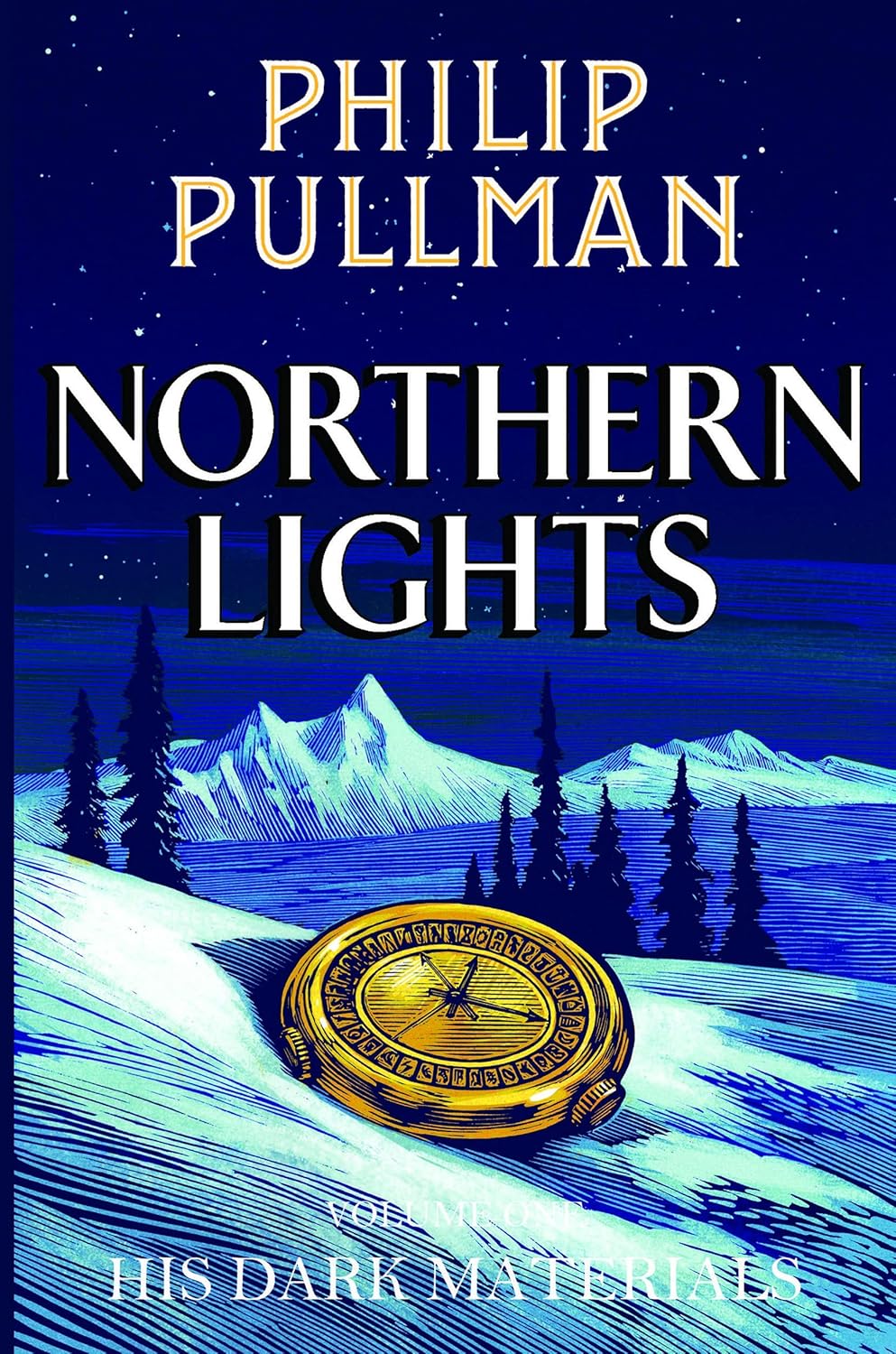
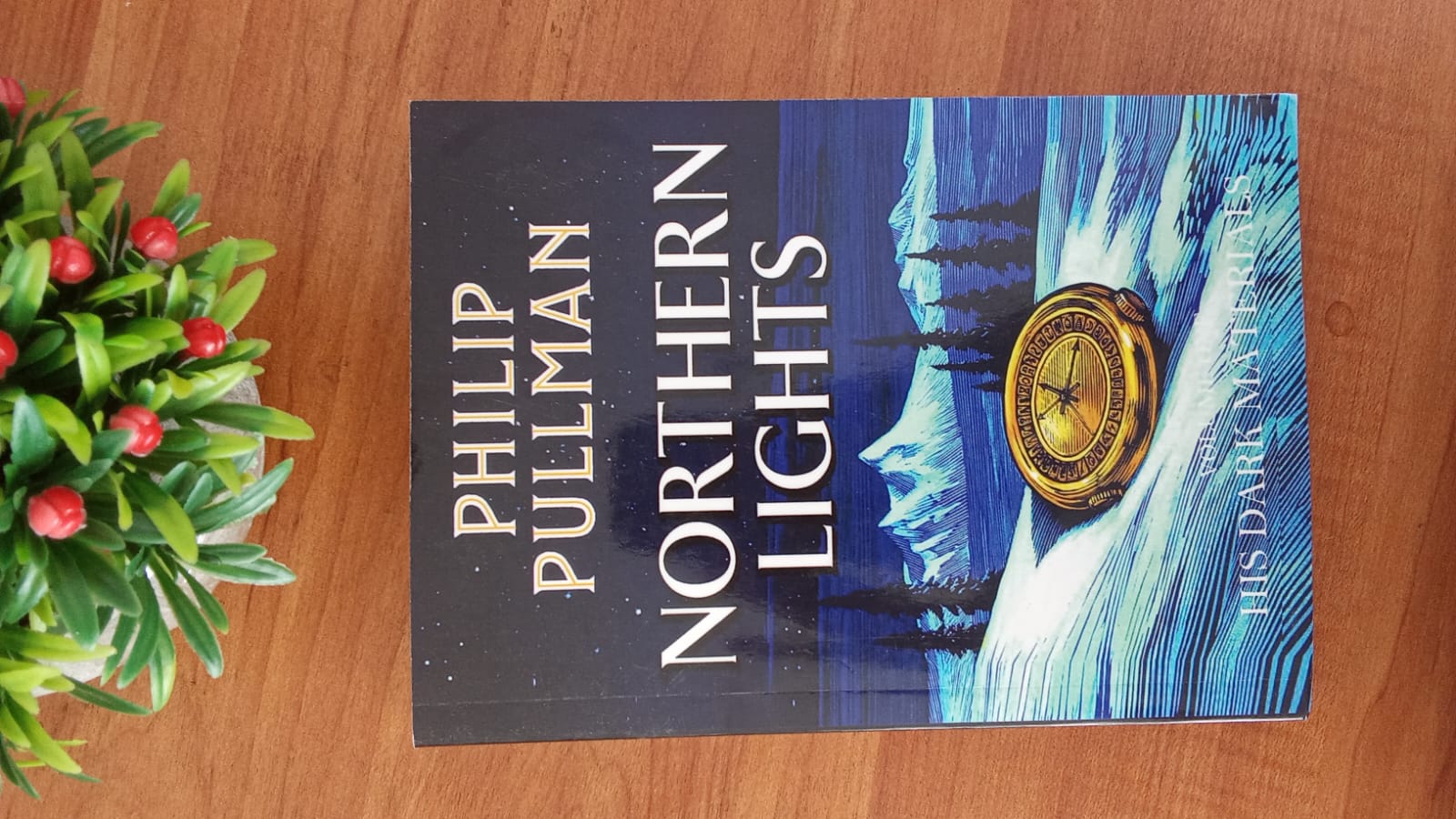
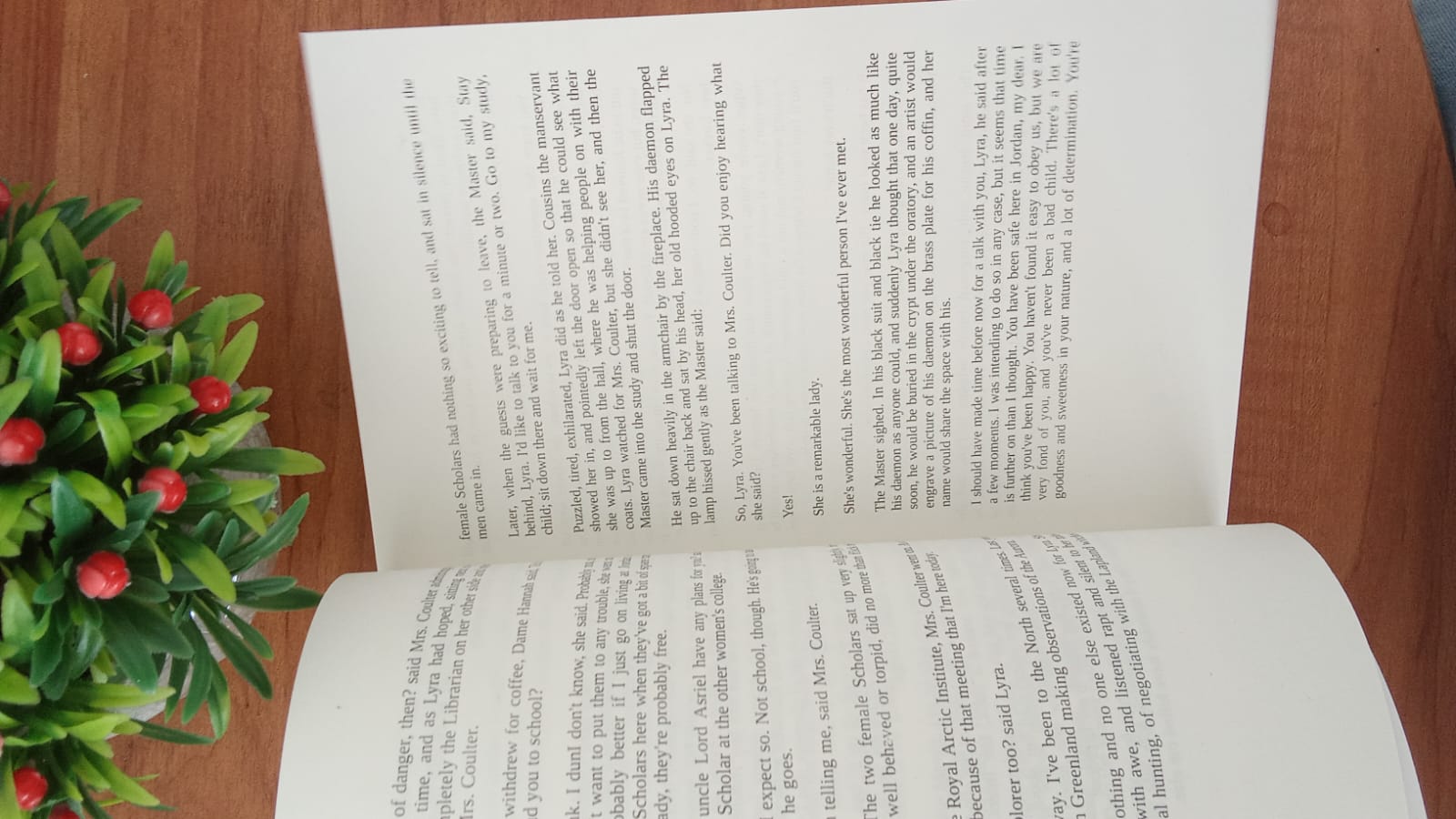
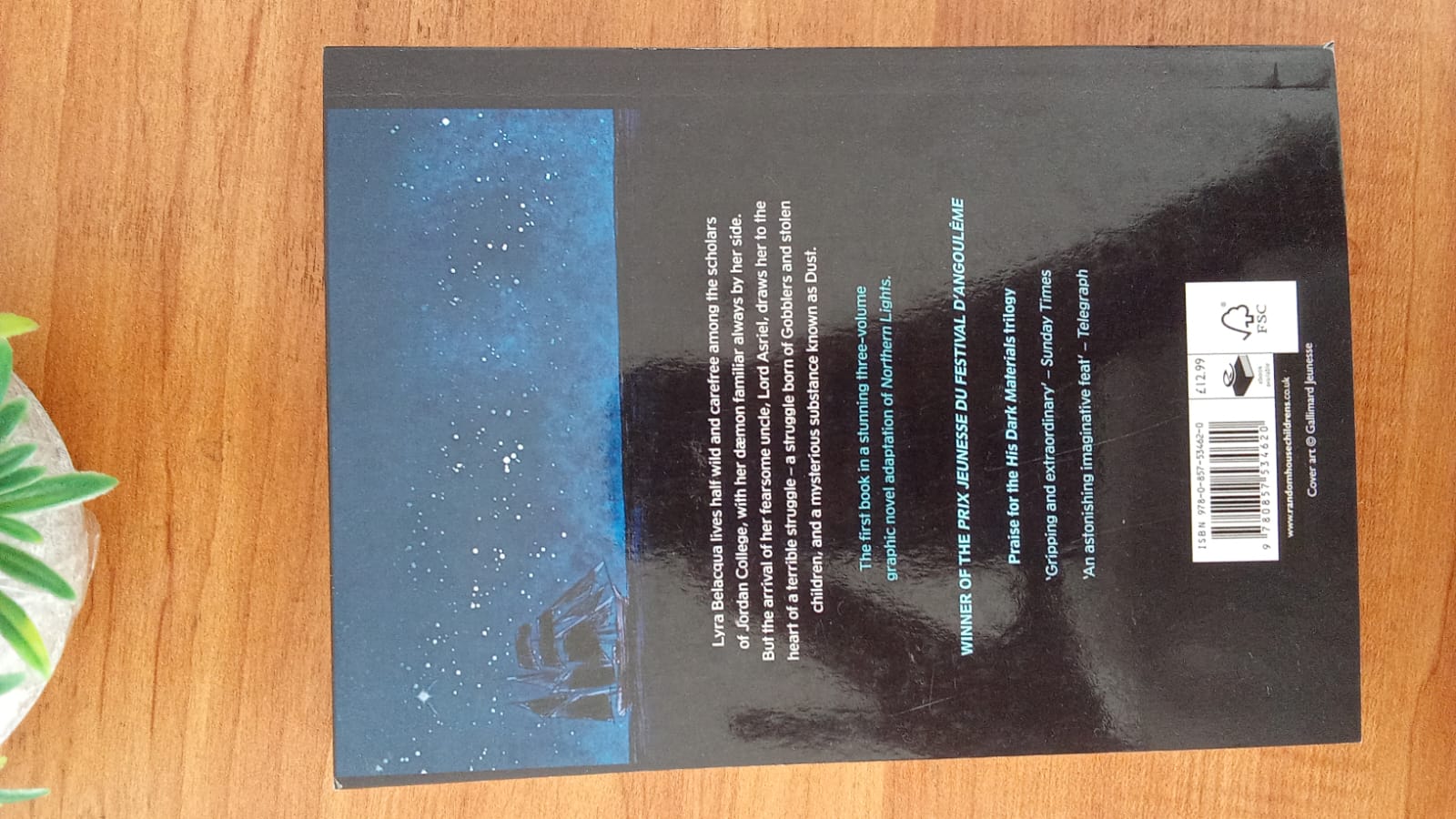
Northern Lights by Philip Pullman
රු2,200.00
3 X Rs. 733.33 or 8% Cashback with


or 3 X රු733.33 with


or up to 4 X රු550.00 with


Product Short Description:
Northern Lights by Philip Pullman is a thrilling fantasy adventure that follows Lyra Belacqua on a dangerous journey into the Arctic to uncover a mysterious truth. Set in a unique parallel world filled with daemons, armored bears, and hidden secrets, the story explores courage, friendship, and the power of curiosity. Perfect for readers who enjoy magical worlds with deeper meaning, this book is the unforgettable first part of the His Dark Materials trilogy.
4 in stock
Northern Lights by Philip Pullman is the spellbinding first novel in the His Dark Materials trilogy, following the fearless young Lyra Belacqua on an extraordinary journey through a world of animal daemons, mysterious Dust, kidnapped children, witches, armoured bears and dangerous secrets.
Lyra lives among the scholars of Jordan College, Oxford, in a world that resembles our own but is fundamentally different.
Every human has a daemon—an animal companion connected deeply to that person’s identity and inner self.
Lyra’s daemon is Pantalaimon, often called Pan.
Together, Lyra and Pan spend their days exploring the college, breaking rules and discovering things adults would prefer them not to know.
Then children begin disappearing.
Whispers spread about mysterious kidnappers known as the Gobblers.
When someone close to Lyra vanishes, what begins as curiosity becomes a dangerous personal mission.
Her journey carries her away from Oxford and toward the frozen North, where witches fly through the skies, armoured bears rule with tremendous strength, and scientists are conducting disturbing experiments connected to children and their daemons.
At the centre of everything lies a mysterious substance called Dust.
Adults are frightened by it.
Powerful institutions want to understand it.
Others want to control it.
Lyra does not yet understand why Dust matters—but discovering the truth will change far more than her own life.
Northern Lights by Philip Pullman combines fantasy, adventure, mystery, philosophy and coming-of-age storytelling to create a world that feels both magical and unsettling.
Northern Lights by Philip Pullman
Northern Lights by Philip Pullman is the correct starting point for Philip Pullman’s original His Dark Materials trilogy.
The novel introduces:
Lyra Belacqua.
Pantalaimon.
Lord Asriel.
Mrs Coulter.
The alethiometer.
Daemons.
Dust.
Armoured bears.
Witches.
Jordan College.
And the larger mystery that develops across all three books.
The story begins as an adventure about a curious girl who wants to rescue missing children, but the questions eventually become much larger.
What is Dust?
Why are powerful adults so frightened by it?
What connects different worlds?
And who can Lyra actually trust?
Lyra Belacqua
Lyra is one of the great strengths of Northern Lights by Philip Pullman.
She is not a perfectly behaved fantasy heroine.
She is:
Curious.
Impulsive.
Brave.
Stubborn.
Clever.
Sometimes dishonest.
Extremely adventurous.
Lyra frequently acts before she fully understands the danger.
That makes her mistakes believable.
She is courageous, but not because she never feels fear.
She simply refuses to let fear stop her from investigating what matters.
Jordan College
Lyra grows up among scholars at Jordan College in Oxford.
The setting feels familiar while also belonging to an alternate world.
Academic tradition.
Old buildings.
Servants.
Scholars.
Secrets.
Politics.
Jordan College initially feels almost like Lyra’s entire universe.
But the story quickly reveals that the world beyond it is far larger and more dangerous.
Daemons
One of the most distinctive concepts in Northern Lights by Philip Pullman is the daemon.
Every human in Lyra’s world has an animal daemon.
A daemon is not simply a pet.
The connection is much deeper.
Daemon and human are inseparable parts of the same existence.
Children’s daemons can change shape.
One moment a daemon may appear as a bird.
Another moment as a cat.
Another as a mouse.
As people mature, their daemons eventually settle into a permanent form.
Pantalaimon
Lyra’s daemon is Pantalaimon.
Pan acts as:
Friend.
Companion.
Conscience.
Advisor.
Emotional support.
He sometimes agrees with Lyra.
Sometimes warns her.
Sometimes becomes frightened when Lyra is reckless.
Their relationship gives readers a fascinating external representation of internal conversation.
What Would Your Daemon Be?
One reason readers remember the book so strongly is because the daemon concept immediately invites imagination.
What animal would your daemon become?
Would its personality resemble yours?
Would it show a side of you that other people cannot see?
The idea turns personality into something visible.
The Gobblers
Children begin disappearing under mysterious circumstances.
People whisper about the Gobblers.
At first, these disappearances sound almost like frightening rumours.
Then they become personal.
Lyra realizes that something serious is happening and becomes determined to discover where the missing children are being taken.
Roger
Lyra’s friendship with Roger, a kitchen boy at Jordan College, gives the disappearance storyline emotional urgency.
The missing children are not simply statistics.
They are someone’s:
Friend.
Son.
Daughter.
Brother.
Sister.
That personal connection pushes Lyra toward action.
Mrs Coulter
One of the novel’s most memorable characters is Mrs Coulter.
She is elegant.
Intelligent.
Powerful.
Charismatic.
And immediately fascinating to Lyra.
Mrs Coulter represents something Lyra has rarely experienced before: access to a sophisticated adult world filled with travel, influence and knowledge.
But appearances are rarely simple in Northern Lights by Philip Pullman.
Charm and Power
The novel repeatedly asks readers to distinguish between:
Charm and goodness.
Authority and truth.
Knowledge and wisdom.
A person can be:
Beautiful.
Educated.
Powerful.
Persuasive.
and still be dangerous.
This becomes an important lesson for Lyra.
Lord Asriel
Lyra’s formidable uncle, Lord Asriel, is another major figure.
He is ambitious, intelligent and intensely interested in mysterious scientific questions.
His research connects directly with Dust.
Lord Asriel represents the kind of person willing to challenge established beliefs even when the consequences are enormous.
Dust
Dust is one of the central mysteries of His Dark Materials.
In the first book, readers learn about it gradually.
It appears connected to:
Adults.
Consciousness.
Daemons.
Other worlds.
Religious authority.
Scientific investigation.
The important thing for first-time readers is not to know everything immediately.
The mystery is designed to unfold across the trilogy.
Science and Fantasy
Northern Lights by Philip Pullman is interesting because its magic often sits beside scientific language.
Scholars investigate unusual phenomena.
Explorers gather evidence.
Instruments measure things.
The characters do not necessarily think of their world as magical.
To them, daemons and other strange phenomena are simply reality.
This gives the fantasy world an unusual texture.
The Alethiometer
Lyra eventually gains access to an extraordinary instrument called an alethiometer.
It resembles a complex compass or watch filled with symbolic images.
The device can reveal truth—but understanding its answers requires unusual intuition.
The alethiometer becomes one of the most iconic objects in the series.
Truth
Truth is one of the major themes in Northern Lights by Philip Pullman.
This is especially interesting because Lyra herself can be an excellent liar.
She tells stories.
Invents explanations.
Manipulates situations.
Yet she also possesses a remarkable ability to understand the alethiometer, an instrument associated with truth.
This contradiction makes her more interesting.
Lies Can Sometimes Protect
The novel does not treat every lie as equally immoral.
Sometimes Lyra lies to avoid punishment.
Sometimes she lies because she wants attention.
Sometimes deception becomes a survival tool.
Context matters.
Readers are repeatedly asked to think about intention rather than accepting simple moral labels.
The North
Eventually, Lyra’s journey takes her into the frozen North.
The atmosphere changes dramatically.
Snow.
Ice.
Dangerous landscapes.
Remote settlements.
Witches.
Armoured bears.
Everything becomes larger and stranger.
The North feels almost mythical, even within Lyra’s already extraordinary world.
Armoured Bears
The panserbjørne, or armoured bears, are among the most memorable fantasy creations in Northern Lights by Philip Pullman.
These bears are intelligent, powerful and deeply connected with their armour.
For them, armour carries enormous personal meaning.
Iorek Byrnison
Iorek Byrnison becomes one of Lyra’s most important allies.
He is an armoured bear with enormous strength, but reducing him to physical power would miss what makes him compelling.
Iorek possesses:
Pride.
Intelligence.
Loyalty.
A strong sense of identity.
His friendship with Lyra becomes one of the emotional highlights of the novel.
Lee Scoresby
Lyra also encounters Lee Scoresby, a Texan aeronaut.
His balloon and practical experience add another type of adventure to the story.
Scoresby brings:
Humour.
Experience.
Loyalty.
Common sense.
His presence helps balance some of the stranger and darker elements of the world.
Witches
Witches are real in Lyra’s world.
They have their own:
Societies.
History.
Politics.
Knowledge.
And relationship with the natural world.
Their involvement reveals that Lyra’s journey may matter far beyond one rescue mission.
Serafina Pekkala
The witch Serafina Pekkala becomes particularly important.
Through the witches, readers begin to understand that older forces and prophecies may be connected to Lyra.
But Pullman avoids giving readers all the answers at once.
Destiny
Fantasy often involves prophecy.
But Northern Lights by Philip Pullman asks an interesting question:
If someone is part of a prophecy but does not know it, are they acting freely?
Lyra makes decisions because they seem right to her.
That tension between:
Choice.
Destiny.
Knowledge.
becomes increasingly important.
Children and Adults
The novel frequently contrasts children with adults.
Children can be:
Curious.
Flexible.
Imaginative.
Adults often control institutions and information.
But Pullman does not simply claim that every child is good and every adult is bad.
Instead, the story examines how power changes people and how growing up affects understanding.
Growing Up
Because children’s daemons can change shape while adults’ daemons have settled, growing up has a visible symbol.
Childhood means possibility.
Adulthood means greater stability—but perhaps also limitation.
That makes the daemon system central not only to worldbuilding but also to the novel’s coming-of-age themes.
Authority
Northern Lights by Philip Pullman repeatedly questions authority.
Who should be trusted?
A parent?
A scholar?
A scientist?
A religious institution?
Someone with political power?
The novel encourages readers not to assume that a title automatically makes someone right.
Institutional Power
Large institutions can achieve extraordinary things.
They can also hide wrongdoing.
When organizations control:
Knowledge.
Education.
Religion.
Money.
Law.
they gain enormous influence over what people believe.
This becomes one of the trilogy’s major philosophical concerns.
Religion and Philosophy
Religious themes are important in His Dark Materials.
Pullman explores questions involving:
Authority.
Sin.
Free will.
Consciousness.
Knowledge.
Institutional religion.
These themes become more explicit as the trilogy develops.
Readers should therefore expect fantasy that contains philosophical ideas rather than a purely action-focused adventure.
Free Will
Lyra frequently acts because she wants to know the truth.
That curiosity can be dangerous.
But the novel treats the desire to understand as something powerful.
Knowledge can threaten systems built on unquestioned authority.
Curiosity
Curiosity is one of Lyra’s greatest strengths.
It is also one of the reasons she repeatedly enters dangerous situations.
This gives the novel a balanced message.
Curiosity can lead to discovery.
But curiosity without caution can also create risk.
Friendship
Lyra’s loyalty to friends is one of the qualities that pushes her forward.
She does not begin her adventure because she wants to save the universe.
She begins for reasons that are much more personal.
Someone she cares about needs help.
That makes the larger story emotionally believable.
Loyalty
Throughout Northern Lights by Philip Pullman, characters must decide who deserves loyalty.
Family?
Friends?
Institutions?
Ideas?
Themselves?
The answers are not always obvious.
Courage
Lyra’s bravery is not based on physical strength.
She is a child in a world controlled largely by adults.
Her strengths include:
Quick thinking.
Observation.
Persuasion.
Improvisation.
Loyalty.
Her courage comes from acting even when she lacks traditional power.
Intelligence
Lyra is not academically impressive in the conventional sense.
But she possesses a different kind of intelligence.
She understands:
People.
Stories.
Emotion.
Social situations.
She improvises quickly.
That makes her resourceful in ways adults sometimes underestimate.
The Importance of Storytelling
Lyra’s ability to invent stories often becomes useful.
Storytelling can:
Entertain.
Persuade.
Distract.
Protect.
Manipulate.
Again, Pullman presents language as a form of power.
Betrayal
Trust and betrayal are important parts of Northern Lights by Philip Pullman.
Lyra discovers that people are not always what they appear to be.
Someone who seems trustworthy may hide dangerous intentions.
Someone initially frightening may become loyal.
This forces her to become more careful in judging people.
Family
Family in the novel is complicated.
Biological connection does not automatically guarantee:
Love.
Safety.
Honesty.
Loyalty.
Chosen relationships can sometimes become just as important as traditional family bonds.
Identity
Lyra begins with a relatively simple understanding of herself.
As she learns more about:
Her history.
Her family.
Her world.
Dust.
that identity becomes more complicated.
Growing up often involves discovering that adults did not tell you the whole story.
Parallel Worlds
One of the defining ideas of the wider His Dark Materials trilogy is the existence of parallel worlds.
The first novel gradually introduces the possibility that reality is far larger than Lyra initially understood.
This becomes increasingly important in later books.
Is Northern Lights the Same as The Golden Compass?
Yes.
This is extremely important for customers.
Northern Lights is the original UK title.
In the United States, the same novel was published as The Golden Compass.
Philip Pullman’s official site confirms that His Dark Materials begins with Northern Lights, known in the USA as The Golden Compass.
They are not two different stories.
Do not buy both expecting separate novels unless you specifically want different editions.
Is Northern Lights Book 1?
Yes.
Northern Lights by Philip Pullman is Book 1 of His Dark Materials. Scholastic identifies it as the first volume of the trilogy.
His Dark Materials Reading Order
The correct main-trilogy order is:
- Northern Lights – Book 1
- The Subtle Knife – Book 2
- The Amber Spyglass – Book 3
This trilogy should ideally be read in order because the characters, mysteries and worldbuilding continue directly between books. Philip Pullman’s official site confirms the sequence: Northern Lights in 1995, The Subtle Knife in 1997 and The Amber Spyglass in 2000.
Do You Need to Read The Book of Dust First?
No.
Begin with Northern Lights by Philip Pullman if you are starting His Dark Materials.
The Book of Dust is another trilogy set in the same broader universe, but it is not required before the original trilogy.
Is Northern Lights a Standalone?
Not really.
The novel tells a substantial adventure, but the larger story continues directly into The Subtle Knife.
Several important mysteries are intentionally unresolved because they belong to the full trilogy.
Is Northern Lights a Children’s Book?
It was published for younger readers and won major children’s-literature recognition, including the Carnegie Medal.
However, its themes are sophisticated enough to attract many adult readers.
That makes it a strong crossover fantasy.
Your current BargainBooks categorization under Children & Young Adult > Young Adult Fiction plus Fiction & Literature > Fantasy is suitable.
Is Northern Lights Fantasy?
Yes.
It combines:
Fantasy.
Adventure.
Coming-of-age fiction.
Philosophical themes.
Alternative-world science.
It contains witches, daemons and talking armoured bears, but the story also explores ideas about consciousness, authority and free will.
Is It Similar to Harry Potter?
There are some surface similarities.
Both feature young protagonists in richly imagined British fantasy worlds.
But the stories are very different.
Northern Lights by Philip Pullman focuses much more heavily on:
Parallel worlds.
Philosophy.
Institutional authority.
Consciousness.
Religion.
Daemons.
It is not a magical-school story.
Film Adaptation
The novel was adapted into the 2007 film The Golden Compass.
The movie uses the American title of the book.
It brought characters such as Lyra, Mrs Coulter, Lord Asriel and Iorek Byrnison to the screen.
His Dark Materials TV Series
The trilogy later received a major television adaptation titled His Dark Materials, produced by the BBC and HBO.
The first season primarily adapts Northern Lights, while later seasons continue through The Subtle Knife and The Amber Spyglass.
Scholastic specifically identifies the book as the first volume behind the television adaptation.
Should You Read the Book Before Watching the Series?
For the richest introduction, yes.
The novel gives readers more direct access to:
Lyra’s thoughts.
Worldbuilding.
Daemon relationships.
The alethiometer.
The gradual discovery of Dust.
The screen adaptation can then be enjoyed as another interpretation.
Philip Pullman
Philip Pullman is an acclaimed British author best known for the His Dark Materials trilogy.
His work has received major literary recognition, including the Carnegie Medal, and his fantasy universe has been translated widely around the world. Penguin describes His Dark Materials as an acclaimed modern classic.
First Published in 1995
Northern Lights by Philip Pullman was first published in 1995.
The novel’s success launched the trilogy and established Lyra’s world as one of the most recognizable modern fantasy settings.
Edition Note
Many editions of the book exist.
Page count, ISBN, cover design and dimensions can differ between:
UK editions.
US editions.
Anniversary editions.
Illustrated editions.
Ebooks.
Audiobooks.
Your store currently has multiple listings/categorizations for the title, but the retrieved catalogue snippets do not show an ISBN for the physical product. Therefore, use the ISBN printed on the exact copy you are selling rather than copying an ISBN from another edition.
Content Considerations
Northern Lights by Philip Pullman contains potentially sensitive material including child kidnapping and endangerment, frightening experiments involving children, fantasy violence, death and grief, threats, institutional abuse of power, separation-related distress, dangerous animals and combat, and philosophical/religious themes that some readers may find challenging.
The novel is adventurous rather than graphic horror, but parts of the story become emotionally intense.
Important Themes
Northern Lights by Philip Pullman explores identity, childhood, growing up, friendship, loyalty, truth, deception, curiosity, freedom, authority, family, courage, knowledge, morality, consciousness, destiny, free will, institutional power, science, religion, parallel worlds and the meaning of the bond between humans and daemons.
7 Magical Reasons to Read Northern Lights by Philip Pullman
- Lyra is an unforgettable heroine. She is brave, mischievous, intelligent and imperfect, which makes her feel like a real child rather than an idealized fantasy hero.
- The daemon concept is extraordinary. Giving every person an animal companion connected to their inner identity creates one of the most imaginative ideas in modern fantasy.
- The world combines magic with mystery and science. Dust, the alethiometer, parallel worlds and academic investigation give the fantasy unusual intellectual depth.
- The Arctic adventure is unforgettable. Witches, snow, mysterious experiments and armoured bears transform the North into one of the novel’s most exciting settings.
- Iorek Byrnison is one of fantasy’s most memorable allies. The armoured bear brings strength, dignity and loyalty to Lyra’s journey.
- The novel asks serious questions without abandoning adventure. Readers can enjoy chases, mysteries and dangerous journeys while also thinking about truth, freedom, authority and growing up.
- It begins an acclaimed complete trilogy. Readers who enjoy Lyra’s first adventure can continue directly with The Subtle Knife and The Amber Spyglass.
Why Read Northern Lights by Philip Pullman?
Northern Lights by Philip Pullman is an excellent choice for readers interested in epic fantasy, young adult fantasy, adventure, parallel worlds, magical companions, coming-of-age stories, witches, mysterious artefacts, armoured bears and philosophical fiction.
It is especially appealing to readers who want fantasy that works on more than one level.
A younger reader can follow Lyra’s adventure.
An older reader may also notice the novel’s deeper questions about:
Authority.
Truth.
Consciousness.
Freedom.
Religion.
Knowledge.
That ability to operate on several levels is one reason the story has remained widely read since its original publication.
Who Should Read This Book?
Northern Lights by Philip Pullman may especially appeal to young adult fantasy readers, older children ready for more complex fantasy, adult fantasy readers, His Dark Materials television fans, readers who enjoy imaginative worldbuilding, fans of strong young heroines, readers interested in philosophical fantasy, and anyone wanting to begin Philip Pullman’s His Dark Materials trilogy from the correct first book.
Northern Lights by Philip Pullman – Where Lyra’s Extraordinary Journey Begins
Northern Lights by Philip Pullman begins with a girl hiding where she should not be.
That small act of curiosity opens the door to something enormous.
Lyra’s world contains secrets she never imagined.
Adults she trusted know more than they told her.
Children are disappearing.
Scholars are investigating something called Dust.
Powerful organizations want control.
And somewhere beyond the familiar walls of Jordan College lies a frozen North filled with witches, armoured bears and answers that may be more dangerous than the questions.
What makes the story powerful is that Lyra does not begin as someone trying to change the universe.
Her motivation is personal.
A friend is missing.
She wants to help.
That one decision pulls her into a struggle much larger than she understands.
Along the way, Lyra learns that courage is not simply fighting.
Sometimes courage means questioning authority.
Sometimes it means trusting someone others fear.
Sometimes it means recognizing that a charming person may be dangerous.
Sometimes it means continuing even after discovering that the world is much more complicated than you believed.
And that complexity is exactly what makes Northern Lights by Philip Pullman so memorable.
The novel offers everything readers expect from a great fantasy adventure:
Mystery.
Danger.
Unusual creatures.
Frozen landscapes.
Powerful enemies.
Friendship.
But underneath the adventure is a deeper story about knowledge.
Who controls it?
Who fears it?
Who decides what children are allowed to understand?
And what happens when one curious girl refuses to stop asking questions?
For readers who love imaginative fantasy with strong characters, unforgettable worldbuilding and ideas that remain interesting long after the final page, Northern Lights by Philip Pullman is an outstanding beginning to His Dark Materials.
Learn more about Northern Lights by Philip Pullman on the official Penguin website.
Explore more fantasy books at Bargain Books.
Be the first to review “Northern Lights by Philip Pullman”
Related products
Out of stock
රු2,000.00
3 X Rs. 666.67 or 8% Cashback with
or 3 X රු666.67 with
or up to 4 X රු500.00 with
Fantasy
රු2,400.00
3 X Rs. 800.00 or 8% Cashback with
or 3 X රු800.00 with
or up to 4 X රු600.00 with
-15%
Out of stock
Contemporary romance
A Touch of Darkness: Greek mythology, contemporary romance, and dark fantasy by Scarlett St. Clair
Original price was: රු3,400.00.රු2,900.00Current price is: රු2,900.00.
3 X Rs. 966.67 or 8% Cashback with
or 3 X රු966.67 with
or up to 4 X රු725.00 with

Out of stock
රු2,500.00
3 X Rs. 833.33 or 8% Cashback with
or 3 X රු833.33 with
or up to 4 X රු625.00 with
Out of stock
රු1,900.00
3 X Rs. 633.33 or 8% Cashback with
or 3 X රු633.33 with
or up to 4 X රු475.00 with
Out of stock
Children & Young Adult
රු1,750.00
3 X Rs. 583.33 or 8% Cashback with
or 3 X රු583.33 with
or up to 4 X රු437.50 with
Out of stock
රු1,800.00
3 X Rs. 600.00 or 8% Cashback with
or 3 X රු600.00 with
or up to 4 X රු450.00 with
-49%
Out of stock
Children & Young Adult
Original price was: රු3,400.00.රු1,750.00Current price is: රු1,750.00.
3 X Rs. 583.33 or 8% Cashback with
or 3 X රු583.33 with
or up to 4 X රු437.50 with
Reviews
There are no reviews yet.