
No products in the cart.
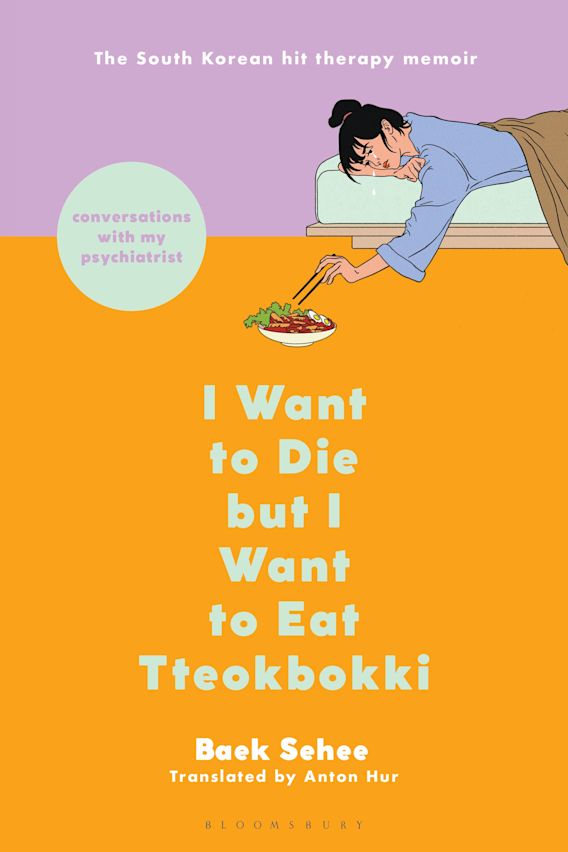
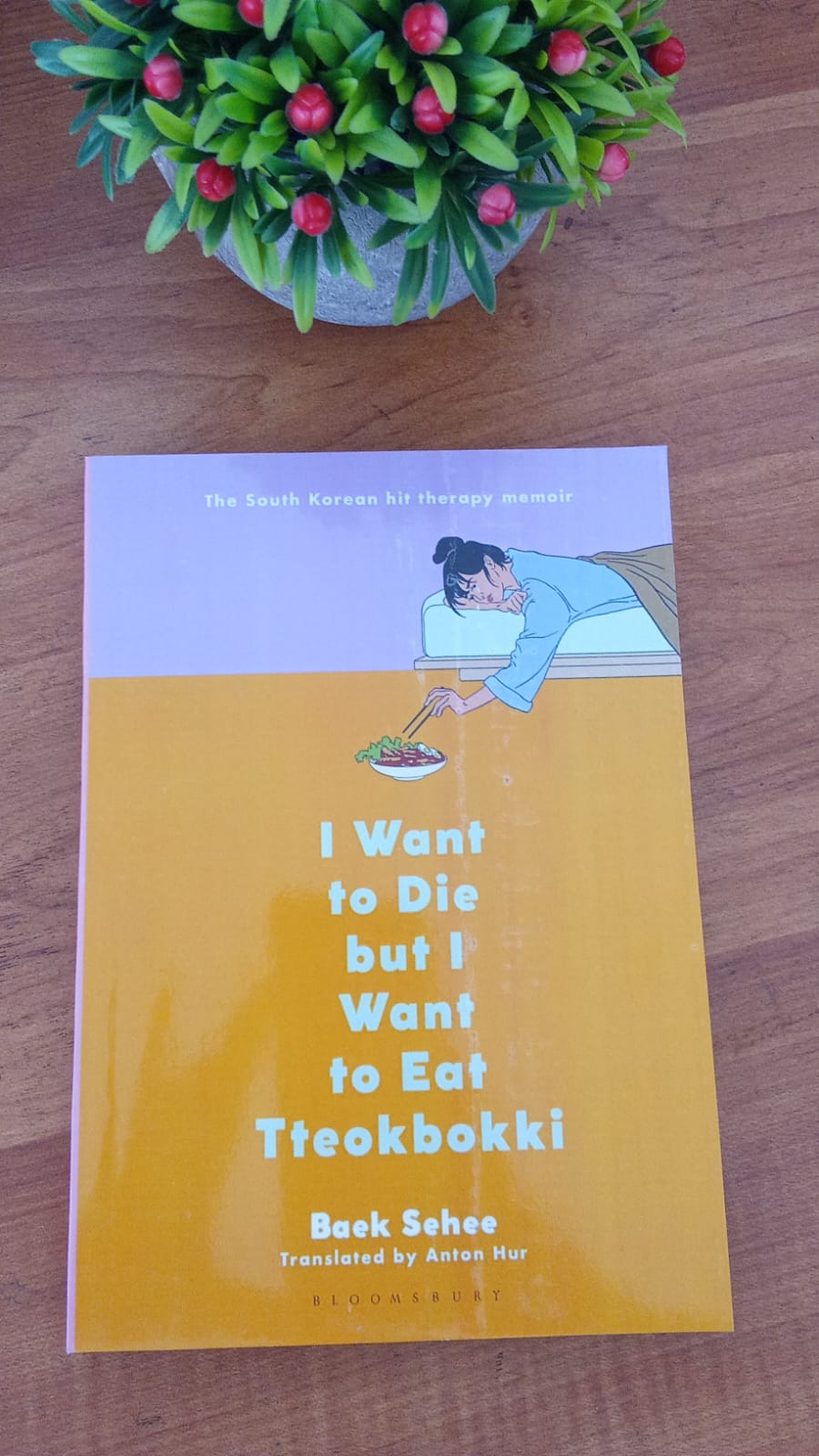
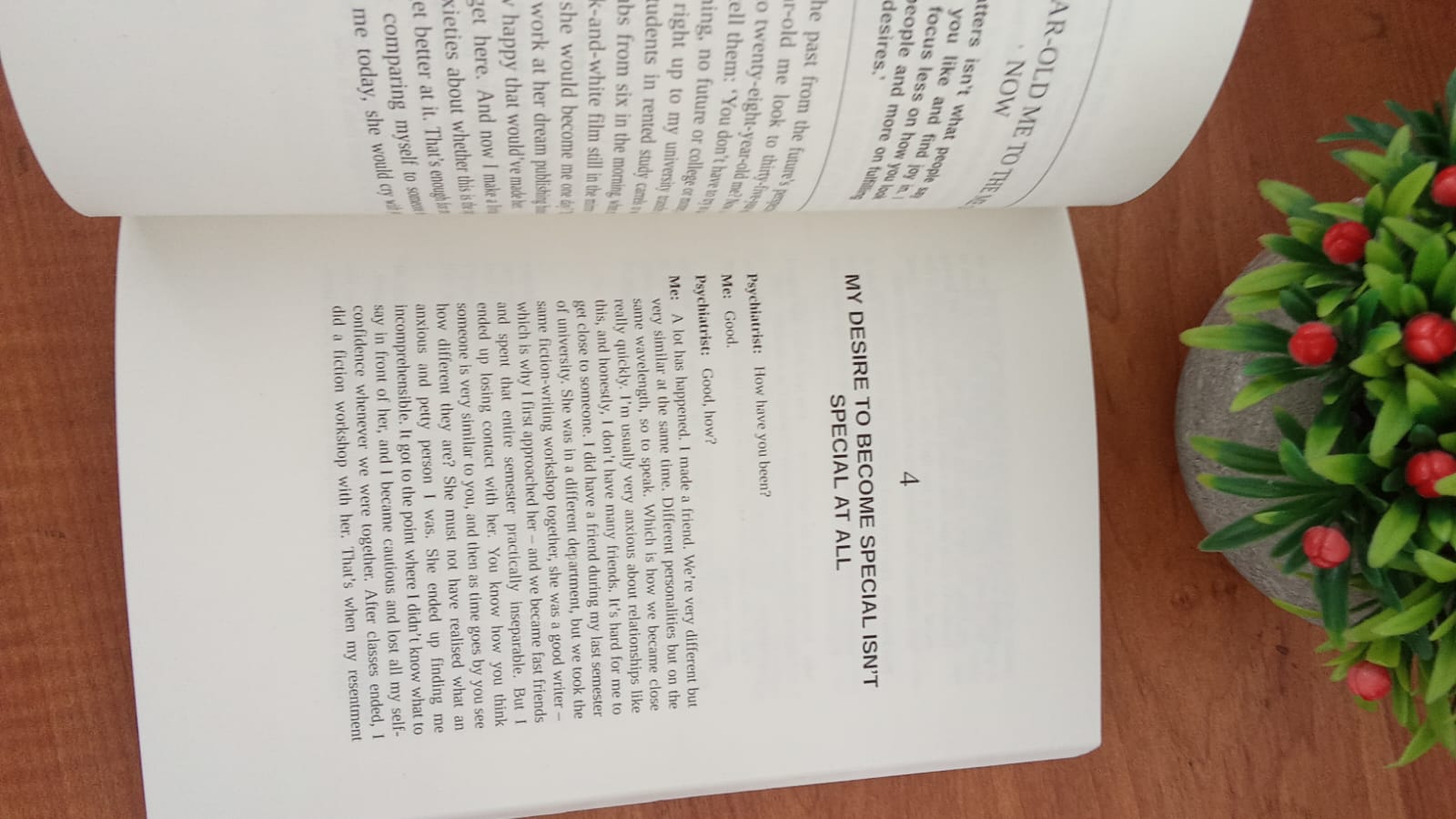
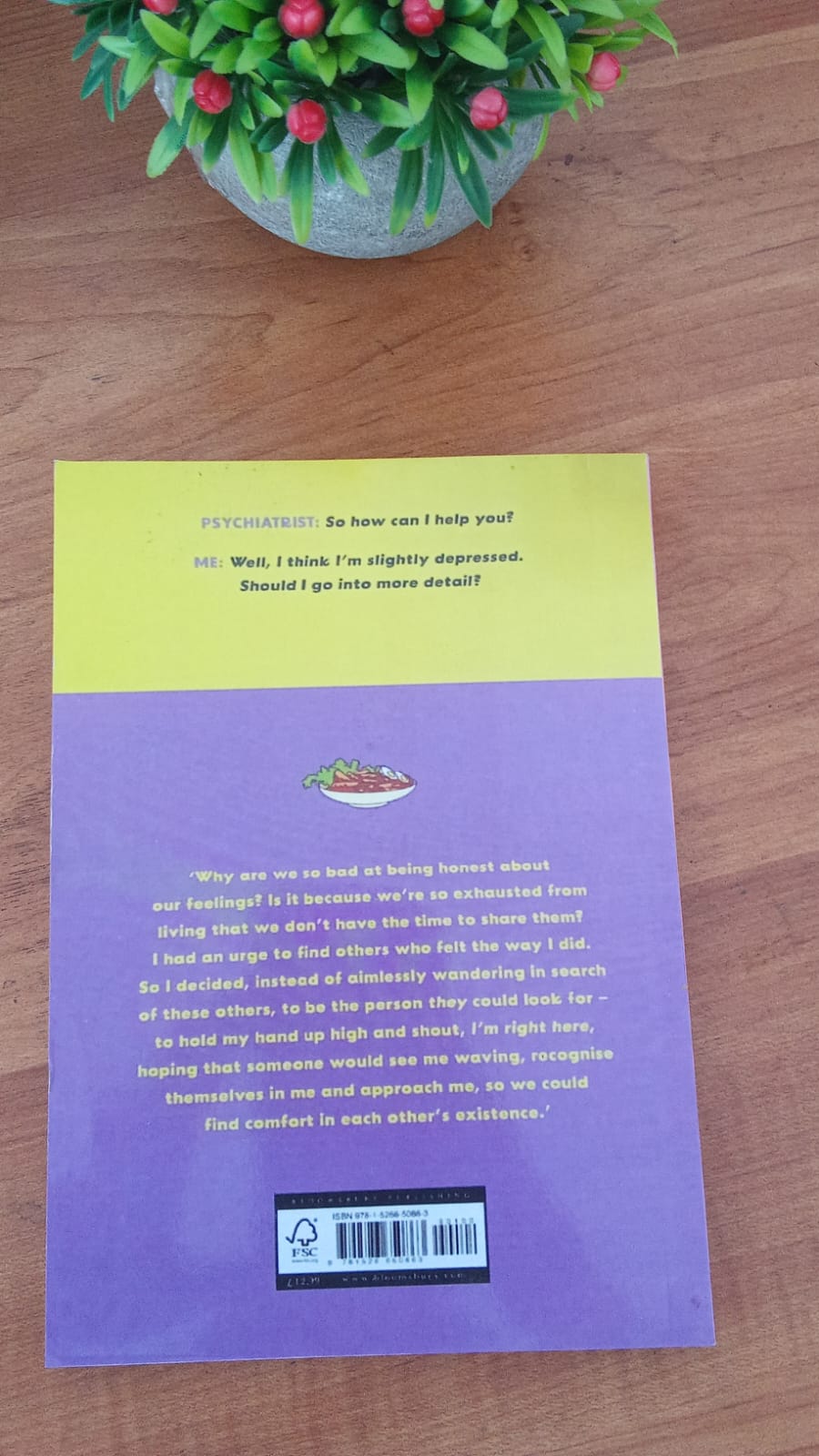
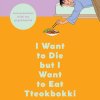
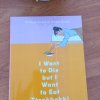


I Want to Die but I Want to Eat Tteokbokki by Baek Sehee is an intimate and deeply honest memoir about depression, dysthymia, anxiety, self-esteem, relationships, therapy, perfectionism, loneliness, and the complicated emotional contradictions of everyday life.
Baek Sehee appears to have a fairly ordinary life.
She works.
She socializes.
She has relationships.
She laughs.
She eats food she enjoys.
From the outside, nothing may appear dramatically wrong.
But inside, she struggles with persistent sadness, insecurity, self-criticism, anxiety, and a feeling that something is missing.
She begins therapy with a psychiatrist.
What follows is not a dramatic transformation story.
Instead, I Want to Die but I Want to Eat Tteokbokki by Baek Sehee presents conversations between Baek and her psychiatrist as she tries to understand why she feels the way she does.
Why does she care so much about what other people think?
Why does one small criticism ruin her day?
Why does she compare herself constantly?
Why can she feel deeply unhappy and still want to eat something delicious?
The title captures the emotional contradiction at the heart of the book.
A person can feel hopeless and still want comfort.
They can experience sadness while still enjoying small moments.
They can want life to stop and simultaneously want another meal, another conversation, another tomorrow.
This contradiction makes the memoir relatable to many readers.
I Want to Die but I Want to Eat Tteokbokki by Baek Sehee – Book Overview
I Want to Die but I Want to Eat Tteokbokki by Baek Sehee is structured largely around Baek’s conversations with her psychiatrist.
These conversations explore her thoughts, behaviours, fears, and relationships.
Baek questions herself constantly.
Am I good enough?
Do people actually like me?
Why do I care so much about approval?
Why do I feel unhappy when nothing seems obviously wrong?
Why am I jealous?
Why do I compare myself to others?
Her psychiatrist helps her examine these thoughts from different perspectives.
The result is a memoir that feels both personal and conversational.
Readers do not receive a list of perfect solutions.
Instead, they witness someone learning how to notice her own emotional patterns.
Dysthymia
A major topic in I Want to Die but I Want to Eat Tteokbokki by Baek Sehee is dysthymia, also known as persistent depressive disorder.
Unlike dramatic episodes that may be obvious to others, persistent low mood can exist alongside everyday functioning.
Someone may still:
Go to work.
Meet friends.
Eat.
Smile.
Complete responsibilities.
Yet internally, they may struggle with low self-worth, sadness, fatigue, emptiness, and negative thoughts.
This helps explain why Baek’s emotional struggles can remain invisible to people around her.
When Everything Looks Fine From the Outside
One of the most relatable aspects of I Want to Die but I Want to Eat Tteokbokki by Baek Sehee is the contrast between external appearance and internal experience.
Someone can look successful while feeling inadequate.
They can laugh with friends while feeling lonely.
They can complete work while feeling emotionally exhausted.
This difference matters because people sometimes assume mental-health struggles must always be visible.
Baek’s memoir challenges that assumption.
Not every difficult experience announces itself clearly.
Therapy
Therapy is central to the memoir.
Baek speaks openly with her psychiatrist about thoughts she might otherwise hide.
Jealousy.
Insecurity.
Appearance.
Romantic relationships.
Friendships.
Fear of judgment.
Self-hatred.
These conversations create opportunities to examine her beliefs.
Instead of simply accepting a thought such as:
“Everyone dislikes me,”
the psychiatrist may encourage her to ask whether that conclusion is actually supported by evidence.
I Want to Die but I Want to Eat Tteokbokki by Baek Sehee shows how therapy can help create distance between an emotion and the assumptions attached to it.
Thoughts Are Not Always Facts
One of the most useful ideas throughout the book is that thoughts can feel true without necessarily being accurate.
For example:
“I made one mistake, so I am a failure.”
“They did not reply quickly, so they dislike me.”
“She is prettier than me, so I am less valuable.”
These thoughts can become automatic.
I Want to Die but I Want to Eat Tteokbokki by Baek Sehee encourages readers to examine how quickly the mind turns small events into large conclusions.
A thought deserves examination.
Not automatic obedience.
Self-Esteem
Self-esteem is one of Baek’s greatest struggles.
She often evaluates herself through other people.
Do they like me?
Do they think I am attractive?
Do they respect me?
Did I disappoint them?
When self-worth depends entirely on external approval, emotions can become unstable.
One compliment creates confidence.
One criticism destroys it.
I Want to Die but I Want to Eat Tteokbokki by Baek Sehee explores the challenge of building a sense of worth that does not completely depend on other people’s reactions.
The Need for Approval
Most people want to be liked.
That is normal.
But the desire becomes exhausting when every decision is shaped by fear of rejection.
Should I say this?
Will they think I am strange?
Did I talk too much?
Did I sound stupid?
Baek frequently analyses how others might see her.
The book demonstrates how approval-seeking can create constant anxiety.
Living entirely according to other people’s imagined opinions can make it difficult to understand what you actually want.
Comparison
Comparison is another major theme.
Someone else appears:
More beautiful.
More successful.
More confident.
More popular.
More talented.
The mind can quickly translate this into:
“They are better, therefore I am worse.”
But another person’s strength does not automatically reduce your value.
I Want to Die but I Want to Eat Tteokbokki by Baek Sehee explores how comparison can become an emotional habit.
There will always be someone who appears better according to a particular standard.
Constant comparison therefore creates an impossible competition.
Appearance and Body Image
Baek discusses appearance openly.
Beauty.
Weight.
How others see her.
How she sees herself.
These concerns become connected to self-worth.
This is especially relatable in a culture where appearance is constantly evaluated through:
Advertising.
Social media.
Beauty standards.
Comments.
Photographs.
I Want to Die but I Want to Eat Tteokbokki by Baek Sehee encourages readers to question how much power appearance should have over their sense of personal value.
Perfectionism
Perfectionism may look like high standards.
But underneath it can be fear.
Fear of failure.
Fear of criticism.
Fear of rejection.
Fear of not being enough.
The perfectionist believes:
If I do everything correctly, nobody can criticize me.
But perfection is impossible.
That creates constant tension.
I Want to Die but I Want to Eat Tteokbokki by Baek Sehee explores how learning to accept mistakes can become an important form of emotional freedom.
Self-Criticism
Many people speak to themselves harshly.
Much more harshly than they would speak to a friend.
One mistake becomes:
“I am stupid.”
One rejection becomes:
“Nobody will ever love me.”
One bad day becomes:
“My life is terrible.”
Baek often recognizes this pattern in herself.
I Want to Die but I Want to Eat Tteokbokki by Baek Sehee encourages readers to pay attention to their internal language.
Self-compassion does not mean ignoring mistakes.
It means avoiding turning every mistake into proof that you are worthless.
Emotional Extremes
Baek sometimes views situations in extremes.
Good or bad.
Success or failure.
Liked or hated.
Beautiful or ugly.
This black-and-white thinking can make ordinary problems feel enormous.
Real life is usually more complicated.
A person can make a mistake and still be competent.
A friendship can experience conflict without ending.
A difficult day does not mean life is completely hopeless.
I Want to Die but I Want to Eat Tteokbokki by Baek Sehee explores the value of allowing more nuance into the way we judge ourselves.
Relationships
Relationships reveal many of Baek’s insecurities.
Friendships.
Romantic relationships.
Coworkers.
Family.
She worries about how others see her.
She sometimes becomes jealous.
She interprets behaviour personally.
Relationships therefore act almost like mirrors.
They reveal emotional patterns that might otherwise remain hidden.
I Want to Die but I Want to Eat Tteokbokki by Baek Sehee shows how understanding relationships can help people understand themselves.
Friendship
Friendship can provide comfort.
But it can also create insecurity.
Why did they not contact me?
Do they like another friend more?
Am I annoying?
These thoughts can make relationships exhausting.
Baek’s conversations with her psychiatrist encourage her to question whether every action another person takes is really about her.
Sometimes people are simply busy.
Tired.
Distracted.
Dealing with their own problems.
Not everything is personal.
Loneliness
Loneliness does not always mean having no friends.
A person can feel lonely in a crowded room.
They can have social relationships while feeling misunderstood.
They may want closeness but fear vulnerability.
I Want to Die but I Want to Eat Tteokbokki by Baek Sehee captures this emotional contradiction well.
Wanting connection and fearing it can happen simultaneously.
Emotional Dependence
Depending heavily on another person’s approval can create emotional instability.
If they are happy with you, you feel secure.
If they seem distant, you panic.
This gives another person enormous power over your emotional state.
Baek begins examining these patterns through therapy.
The goal is not becoming completely independent from every relationship.
Humans need connection.
The goal is developing a stronger internal foundation.
Jealousy
Jealousy is an emotion many people are embarrassed to admit.
Baek speaks about it honestly.
Jealousy often contains information.
It may reveal insecurity.
Fear of comparison.
Fear of losing someone.
Feelings of inadequacy.
Rather than simply judging the emotion as bad, I Want to Die but I Want to Eat Tteokbokki by Baek Sehee encourages deeper curiosity about what it may represent.
Why Small Things Feel So Big
When self-esteem is already fragile, small events can become enormous.
A negative comment.
A delayed message.
An awkward conversation.
A photograph you dislike.
These moments can trigger much larger emotional responses.
The event itself may be small.
But it touches an existing insecurity.
This is one of the ways I Want to Die but I Want to Eat Tteokbokki by Baek Sehee helps readers understand why emotional reactions sometimes feel disproportionate.
The Meaning of Tteokbokki
Tteokbokki is a popular Korean dish made with chewy rice cakes, commonly served in a spicy sauce.
In the book, it becomes more than food.
It represents ordinary desire.
Comfort.
Pleasure.
Something small to look forward to.
The title captures the idea that contradictory feelings can coexist.
“I want to die.”
“But I also want to eat tteokbokki.”
One feeling does not cancel the other.
I Want to Die but I Want to Eat Tteokbokki by Baek Sehee makes this contradiction central to its message.
Small Joys Matter
Not every reason to continue needs to be enormous.
Sometimes life is made bearable through ordinary things.
Favourite food.
Music.
A friend.
A pet.
A book.
A walk.
A cup of coffee.
A quiet afternoon.
These things may not solve deeper problems.
But they can still matter.
I Want to Die but I Want to Eat Tteokbokki by Baek Sehee gives value to these small pleasures.
You Do Not Need to Feel One Emotion at a Time
People often expect feelings to be consistent.
If I am sad, why am I laughing?
If I am depressed, why did I enjoy dinner?
If I love someone, why am I angry with them?
But human emotions are complicated.
Several can exist simultaneously.
I Want to Die but I Want to Eat Tteokbokki by Baek Sehee normalizes this complexity.
Feeling joy for one moment does not mean your sadness was fake.
Feeling sadness does not mean every moment of your life is without value.
Learning to Accept Yourself
Self-acceptance does not mean believing everything about yourself is perfect.
It means allowing yourself to be imperfect without constant self-hatred.
Baek struggles with this.
She often wants to become a better version of herself before believing she deserves kindness.
But perhaps kindness can come first.
I Want to Die but I Want to Eat Tteokbokki by Baek Sehee suggests that growth does not require hating the person you currently are.
You Do Not Need to Be Exceptional
Modern culture can create pressure to become extraordinary.
Successful.
Beautiful.
Productive.
Popular.
Interesting.
Happy.
But being an ordinary human being is not failure.
I Want to Die but I Want to Eat Tteokbokki by Baek Sehee offers a quieter perspective.
Maybe being okay is enough.
Maybe life does not need to look impressive from the outside to have value.
Emotions Do Not Need Immediate Solutions
People often respond to difficult emotions by trying to eliminate them instantly.
Stop being sad.
Stop worrying.
Think positively.
But emotions may need to be understood before they can change.
The therapy conversations in I Want to Die but I Want to Eat Tteokbokki by Baek Sehee demonstrate the value of examining feelings.
Why am I angry?
What am I afraid of?
Why does this matter so much to me?
Curiosity can be more useful than judgment.
Mental Health Without False Positivity
The book does not suggest that every problem disappears when someone adopts a positive attitude.
It avoids easy slogans.
Instead, it allows Baek to remain complicated.
Some questions return.
Some insecurities remain.
Progress is gradual.
This honesty makes I Want to Die but I Want to Eat Tteokbokki by Baek Sehee appealing to readers who dislike simplistic motivational advice.
Therapy Is a Process
One conversation does not solve everything.
Understanding a behaviour does not always stop it immediately.
Therapy often involves:
Recognition.
Reflection.
Practice.
Setbacks.
New insights.
Repeated conversations.
The book captures this process.
Progress may mean reacting slightly differently.
Recognizing a thought sooner.
Being less cruel to yourself.
Self-Awareness
Self-awareness is uncomfortable.
Sometimes it means recognizing behaviour you do not like.
Jealousy.
Approval-seeking.
Avoidance.
Perfectionism.
But awareness creates choice.
If you do not recognize a pattern, you may repeat it automatically.
Once you recognize it, change becomes possible.
That is one of the strongest messages in I Want to Die but I Want to Eat Tteokbokki by Baek Sehee.
The Difference Between Feeling and Identity
There is an important difference between saying:
“I feel insecure.”
and
“I am worthless.”
One describes an emotion.
The other turns that emotion into identity.
I Want to Die but I Want to Eat Tteokbokki by Baek Sehee encourages a more flexible understanding of feelings.
Emotions change.
They do not have to become permanent definitions of who you are.
Korean Memoir and Global Appeal
Although the book originates from South Korea and contains cultural context connected to Baek’s own life, its emotional themes have resonated with readers internationally.
Why?
Because insecurity is universal.
Comparison is universal.
Loneliness.
Approval.
Self-doubt.
Relationships.
These experiences cross cultural boundaries.
That has helped I Want to Die but I Want to Eat Tteokbokki by Baek Sehee connect with readers around the world.
Conversational Writing Style
The book is accessible because much of it feels like listening to a private conversation.
Baek asks questions.
Her psychiatrist responds.
They explore ideas.
The language is more personal than an academic psychology textbook.
This makes difficult emotional concepts easier to understand.
Readers may recognize their own thoughts inside Baek’s questions.
Not a Clinical Guide
Readers should remember that this is primarily a memoir and record of one person’s therapeutic experiences.
It is not a replacement for professional mental-health treatment.
Baek’s experiences may resonate strongly with some readers and less with others.
That is completely normal.
The value of I Want to Die but I Want to Eat Tteokbokki by Baek Sehee lies in reflection and recognition rather than providing one universal solution.
The Power of Naming Feelings
Sometimes emotional pain becomes harder because it feels vague.
Something is wrong.
But what?
Therapy can help create language.
Sadness.
Anxiety.
Jealousy.
Shame.
Fear.
Loneliness.
When an emotion has a name, it can become easier to examine.
I Want to Die but I Want to Eat Tteokbokki by Baek Sehee demonstrates how language can make internal experiences more understandable.
Progress Can Be Small
People often expect dramatic transformation.
New life.
New personality.
Complete confidence.
But progress may be much quieter.
Recognizing negative thoughts sooner.
Comparing yourself slightly less.
Setting one boundary.
Speaking honestly.
Enjoying an ordinary day.
I Want to Die but I Want to Eat Tteokbokki by Baek Sehee gives importance to this kind of gradual change.
The Sequel
Readers who connect with Baek’s journey can continue with:
I Want to Die but I Still Want to Eat Tteokbokki
The recommended reading order is:
1. I Want to Die but I Want to Eat Tteokbokki
Introduces Baek Sehee’s conversations with her psychiatrist and explores dysthymia, anxiety, self-worth, perfectionism, relationships, and emotional contradictions.
2. I Want to Die but I Still Want to Eat Tteokbokki
Continues her therapeutic journey and goes deeper into self-acceptance, relationships, contentment, and living with emotional complexity.
Readers should begin with I Want to Die but I Want to Eat Tteokbokki by Baek Sehee before moving to the sequel.
7 Powerful Lessons From I Want to Die but I Want to Eat Tteokbokki
I Want to Die but I Want to Eat Tteokbokki by Baek Sehee offers many reflective lessons, but seven stand out:
- Thoughts are not always facts – Negative beliefs can feel completely true while still being distorted or incomplete.
- Small joys still matter – A favourite food, friend, pet, book, or ordinary moment can provide meaningful comfort.
- You do not need everyone’s approval – Building self-worth entirely around other people’s opinions creates emotional instability.
- Comparison can become a trap – Someone else being beautiful, successful, or talented does not automatically reduce your value.
- Self-awareness creates choices – Recognizing emotional patterns is an important first step toward responding differently.
- Healing does not require perfection – Progress can be slow, uneven, and still meaningful.
- Contradictory emotions can coexist – A person can feel deeply sad while still wanting food, connection, laughter, and another day.
Why Read I Want to Die but I Want to Eat Tteokbokki by Baek Sehee?
I Want to Die but I Want to Eat Tteokbokki by Baek Sehee is an excellent choice for readers interested in:
- Mental-health memoirs
- Therapy
- Dysthymia
- Depression
- Anxiety
- Self-esteem
- Self-compassion
- Psychology
- Korean literature
- Personal growth
- Relationships
- Perfectionism
- Loneliness
- Emotional wellbeing
- Reflective nonfiction
It is especially suitable for readers who appreciate honest personal writing instead of overly simplistic motivational advice.
Who Should Read This Book?
I Want to Die but I Want to Eat Tteokbokki by Baek Sehee may especially appeal to:
- Memoir readers
- Psychology readers
- Readers interested in therapy
- Readers interested in Korean literature
- Readers who struggle with overthinking
- Readers interested in self-esteem
- Readers exploring self-compassion
- Readers who enjoy conversational nonfiction
- Readers interested in personal growth
- Readers who often compare themselves with others
- Readers who appreciate emotionally honest books
- Readers planning to continue with the sequel
The book contains discussions of depression, suicidal thoughts, anxiety, low self-worth, and other potentially difficult mental-health themes.
An Honest Memoir About Being Sad and Still Wanting to Live
I Want to Die but I Want to Eat Tteokbokki by Baek Sehee resonates because it refuses to simplify emotional life.
Baek can feel depressed and still laugh.
She can dislike herself and still want people to like her.
She can feel lonely while avoiding closeness.
She can feel hopeless and still want something delicious.
These contradictions do not make her feelings less real.
They make them human.
Through conversations with her psychiatrist, Baek begins examining the thoughts that shape her daily life.
Comparison.
Approval.
Appearance.
Relationships.
Perfectionism.
Self-criticism.
She does not emerge as a completely transformed person with every problem solved.
Instead, she begins understanding herself more clearly.
That is the quieter form of hope at the centre of the book.
Life can remain imperfect.
You can remain imperfect.
And there may still be small reasons to continue.
A favourite meal.
A person.
A conversation.
A better day.
Another chance.
For readers interested in therapy, mental health, emotional wellbeing, Korean memoirs, self-esteem, relationships, self-compassion, and honest reflections on the contradictions of everyday life, I Want to Die but I Want to Eat Tteokbokki by Baek Sehee is a deeply relatable and thought-provoking read.
Learn more about I Want to Die but I Want to Eat Tteokbokki by Baek Sehee on the official Bloomsbury website.
Explore more memoir and personal growth books at Bargain Books.
Be the first to review “I Want To Die But i Want To Eat Tteokbokki by Baek Sehee”
Related products
-19%
Out of stock
Non-Fiction & Knowledge
Original price was: රු2,650.00.රු2,150.00Current price is: රු2,150.00.
3 X Rs. 716.67 or 8% Cashback with


or 3 X රු716.67 with


or up to 4 X රු537.50 with

Non-Fiction & Knowledge
රු2,250.00
3 X Rs. 750.00 or 8% Cashback with
or 3 X රු750.00 with
or up to 4 X රු562.50 with
Out of stock
Self-Help & Psychology
රු1,900.00
3 X Rs. 633.33 or 8% Cashback with
or 3 X රු633.33 with
or up to 4 X රු475.00 with
Out of stock
Self-Help & Psychology
රු1,500.00
3 X Rs. 500.00 or 8% Cashback with
or 3 X රු500.00 with
or up to 4 X රු375.00 with

Out of stock
Non-Fiction & Knowledge
රු1,900.00
3 X Rs. 633.33 or 8% Cashback with
or 3 X රු633.33 with
or up to 4 X රු475.00 with
-24%
Out of stock
Non-Fiction & Knowledge
Original price was: රු2,100.00.රු1,600.00Current price is: රු1,600.00.
3 X Rs. 533.33 or 8% Cashback with
or 3 X රු533.33 with
or up to 4 X රු400.00 with
-13%
Out of stock
Non-Fiction & Knowledge
Original price was: රු3,900.00.රු3,400.00Current price is: රු3,400.00.
3 X Rs. 1,133.33 or 8% Cashback with
or 3 X රු1,133.33 with
or up to 4 X රු850.00 with
Non-Fiction & Knowledge
රු2,450.00
3 X Rs. 816.67 or 8% Cashback with
or 3 X රු816.67 with
or up to 4 X රු612.50 with
Reviews
There are no reviews yet.