
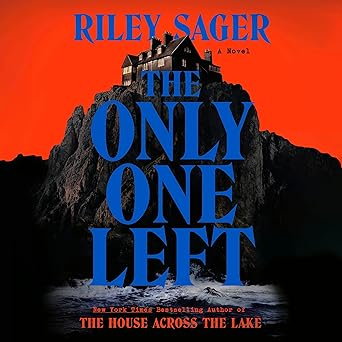
Only one left by Riley Sager


රු2,150.00






A gripping psychological thriller about a caregiver assigned to look after a woman accused of murdering her entire family decades ago. As the mute patient begins revealing her side of the story through a typewriter, dark secrets start to unfold. Filled with suspense, twists, and an eerie atmosphere, Only One Left keeps readers questioning the truth until the very end.
-
Author: Riley Sager
-
Language: English
-
Format: Paperback
-
ISBN-13: 978-0593470620 (may vary by edition)
-
Publisher: Dutton
-
Publication Date: June 2023
-
Number of Pages: 384 pages
-
Item Weight: Approx. 300g
-
Dimensions: 20.3 × 13.2 × 2.5 cm
-
Genre: Thriller / Mystery / Psychological Fiction
Out of stock
A Gripping Tale of Secrets, Survival, and Suspicion – Only One Left by Riley Sager
Only One Left by Riley Sager is a chilling psychological thriller that blends mystery, suspense, and gothic atmosphere into a haunting story about truth, trauma, and the secrets people bury. Set in a decaying cliffside mansion, the novel explores what happens when the past refuses to stay hidden and one woman must uncover the truth before it consumes her too.
Rather than offering a straightforward mystery, Only One Left slowly builds tension through unreliable memories, hidden motives, and unsettling discoveries. The story challenges readers to question everything — what is real, what is remembered, and what is deliberately concealed.
A Caregiver’s Job Turns Into a Dangerous Investigation
At the center of the story is Kit McDeere, a home-care aide assigned to look after Lenora Hope — a woman accused decades ago of murdering her entire family. Though Lenora was never convicted, the whispers never stopped.
Now elderly, mute, and confined to a wheelchair, Lenora communicates by typing on an old typewriter. As Kit begins her job, she expects routine care — but instead, she becomes the audience to a long-buried confession.
As Lenora begins to tell her version of what really happened that night, Kit realizes she may be uncovering a truth that others have tried desperately to keep hidden.
Truth vs. Perception: Who Can Be Trusted?
One of the most compelling aspects of Only One Left is its exploration of unreliable narratives. Lenora’s story contradicts what the world believes, and Kit must decide whether to trust a woman long accused of murder.
Readers are constantly placed in a position of doubt:
- Is Lenora telling the truth now?
- Was she innocent all along?
- Or is this another manipulation?
This uncertainty drives the suspense, making every revelation feel both shocking and questionable.
The Mystery Unfolds Piece by Piece
The novel carefully reveals its secrets through Lenora’s typed confession and Kit’s own discoveries inside the mansion. The house itself becomes a character — filled with locked doors, hidden spaces, and eerie reminders of the past.
As Kit digs deeper, she begins to uncover:
- Inconsistencies in the original story
- Suspicious behavior from those around her
- Evidence that suggests the truth is far more complex
Each clue adds tension, pulling readers further into the mystery while raising the stakes.
Atmosphere and Isolation Create Suspense
Set in a crumbling mansion overlooking the ocean, Only One Left creates a strong sense of isolation. The setting enhances the suspense, making every sound, shadow, and movement feel significant.
The environment reflects the story’s themes:
- Decay mirrors the secrets buried over time
- Isolation increases vulnerability and fear
- The house becomes a prison of memories
This atmospheric storytelling keeps readers on edge throughout the book.
Psychological Depth and Emotional Conflict
Beyond the mystery, the novel explores deeper emotional themes. Kit herself is not without flaws — she carries her own past mistakes and insecurities, which influence how she interprets events.
The story examines:
- Guilt and redemption
- The weight of past decisions
- The human need to be believed
This emotional layer adds depth, making the book more than just a thriller.
Twists That Redefine Everything
Riley Sager is known for unexpected twists, and Only One Left delivers multiple shocking turns. Just when readers feel confident about the truth, new information changes everything.
The twists are:
- Carefully built, not random
- Tied to character motivations
- Designed to challenge assumptions
By the end, readers are forced to reconsider everything they thought they knew.
Who Should Read This Book
This book is ideal for:
- Fans of psychological thrillers
- Readers who enjoy slow-building suspense
- Those who like unreliable narrators
- Anyone who enjoys gothic, atmospheric settings
It also appeals to readers who appreciate layered storytelling with emotional depth.
Lasting Impact
After reading Only One Left, readers are left questioning the nature of truth and memory. The novel reminds us that stories can be shaped, hidden, or misunderstood — and sometimes, the truth is far more complicated than it seems.
Be the first to review “Only one left by Riley Sager”
Related products

Contemporary Fiction

Fiction


Contemporary romance

Contemporary romance


Fiction
Reviews
There are no reviews yet.