
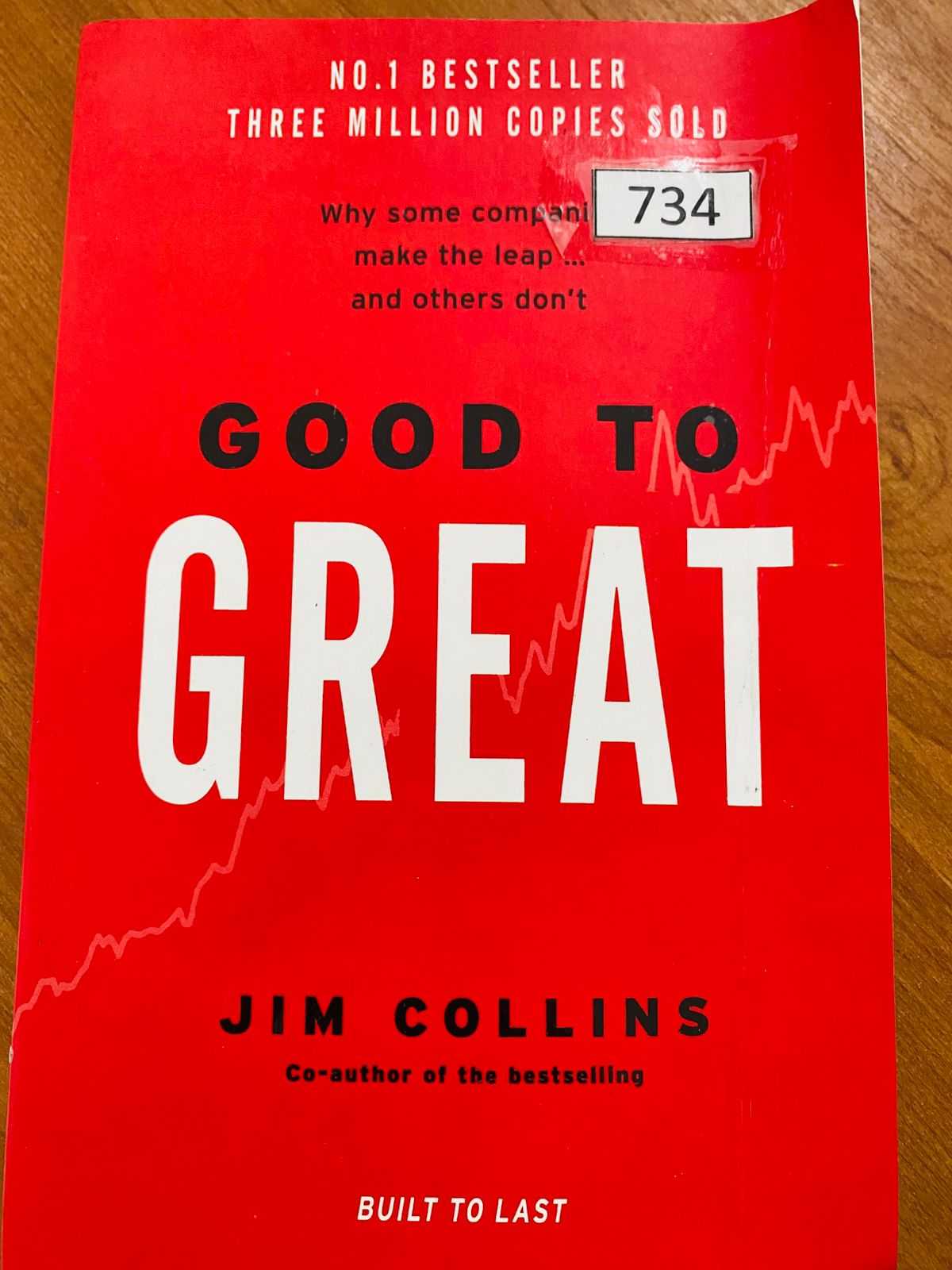

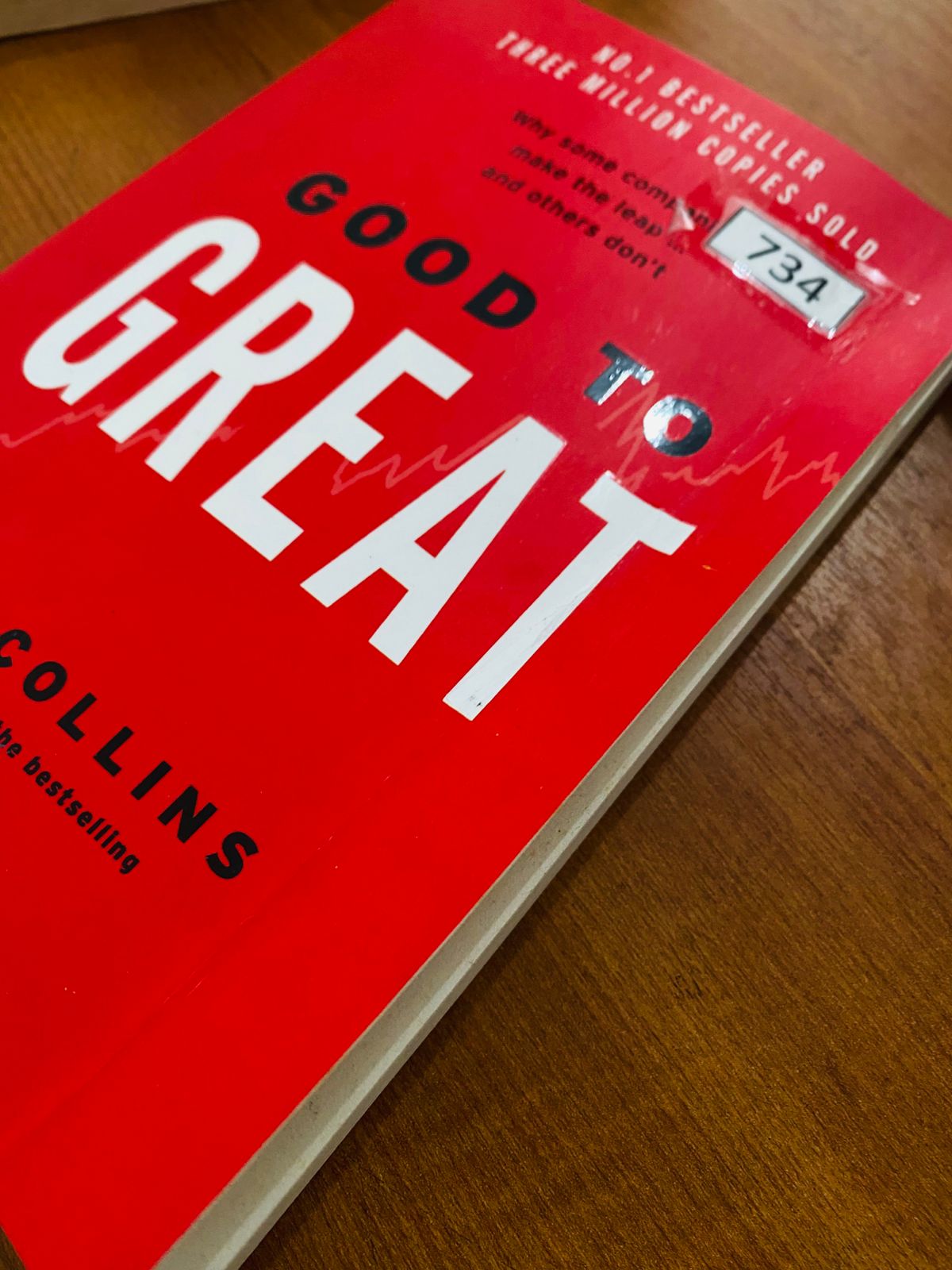








Good to Great by Jim Collins is one of the most influential business and leadership books ever written, offering powerful insights into why some companies make the leap from being merely good to becoming truly great. Based on extensive research spanning more than five years, this book examines what separates average companies from those that achieve sustained excellence.
Jim Collins and his research team analyzed thousands of companies and narrowed their focus to a select group that achieved extraordinary results over a long period of time. These “good to great” companies outperformed the stock market by multiple times, not due to luck or timing, but because of disciplined leadership, clear focus, and consistent execution.
One of the most famous concepts introduced in Good to Great is Level 5 Leadership. Collins explains that the most successful companies are led by leaders who combine personal humility with professional will. These leaders are not driven by ego or celebrity status. Instead, they focus on the long-term success of the organization and give credit to their teams while taking responsibility for failures.
Another key principle discussed in the book is the Hedgehog Concept. This idea encourages companies to focus on what they can be the best in the world at, what drives their economic engine, and what they are deeply passionate about. When these three areas overlap, companies find clarity and direction that leads to sustainable growth.
Good to Great also emphasizes the importance of discipline. Collins introduces the concept of a culture of discipline, where disciplined people engage in disciplined thought and take disciplined action. This does not mean strict control or bureaucracy, but rather a shared commitment to excellence and accountability throughout the organization.
The book challenges the common belief that breakthrough success happens overnight. Instead, Collins describes the Flywheel Effect, showing how small, consistent efforts build momentum over time. Great companies do not rely on dramatic transformations or flashy initiatives. They achieve greatness through steady progress, persistence, and patience.
Technology is another area where Good to Great offers a fresh perspective. Collins argues that technology is not the primary cause of greatness but rather an accelerator of momentum. Companies that already have strong fundamentals use technology effectively, while those without discipline cannot rely on technology alone to save them.
One of the most impactful lessons in the book is the importance of getting the right people on the bus and the wrong people off the bus. Collins stresses that who is on the team matters more than strategy. With the right people in place, companies can adapt to change, overcome challenges, and maintain long-term success.
Good to Great is written in a clear, practical, and engaging style, making complex research accessible to readers at all levels. It is not just a book for CEOs or business owners, but also for managers, entrepreneurs, and anyone interested in leadership, organizational growth, and personal development.
The lessons from Good to Great remain relevant across industries and generations. The principles outlined in the book can be applied not only to businesses but also to personal goals, teams, and institutions seeking long-term excellence.
Overall, Good to Great by Jim Collins is a must-read for anyone who wants to understand what truly drives sustainable success. It teaches that greatness is not a matter of circumstance, but a result of conscious choice, disciplined effort, and unwavering commitment to excellence.
Be the first to review “Good to Great by Jim Collins (734)”
Related products

Contemporary romance






Uncategorized

Uncategorized
Uncategorized

Uncategorized

Uncategorized

Uncategorized

Uncategorized
Reviews
There are no reviews yet.