
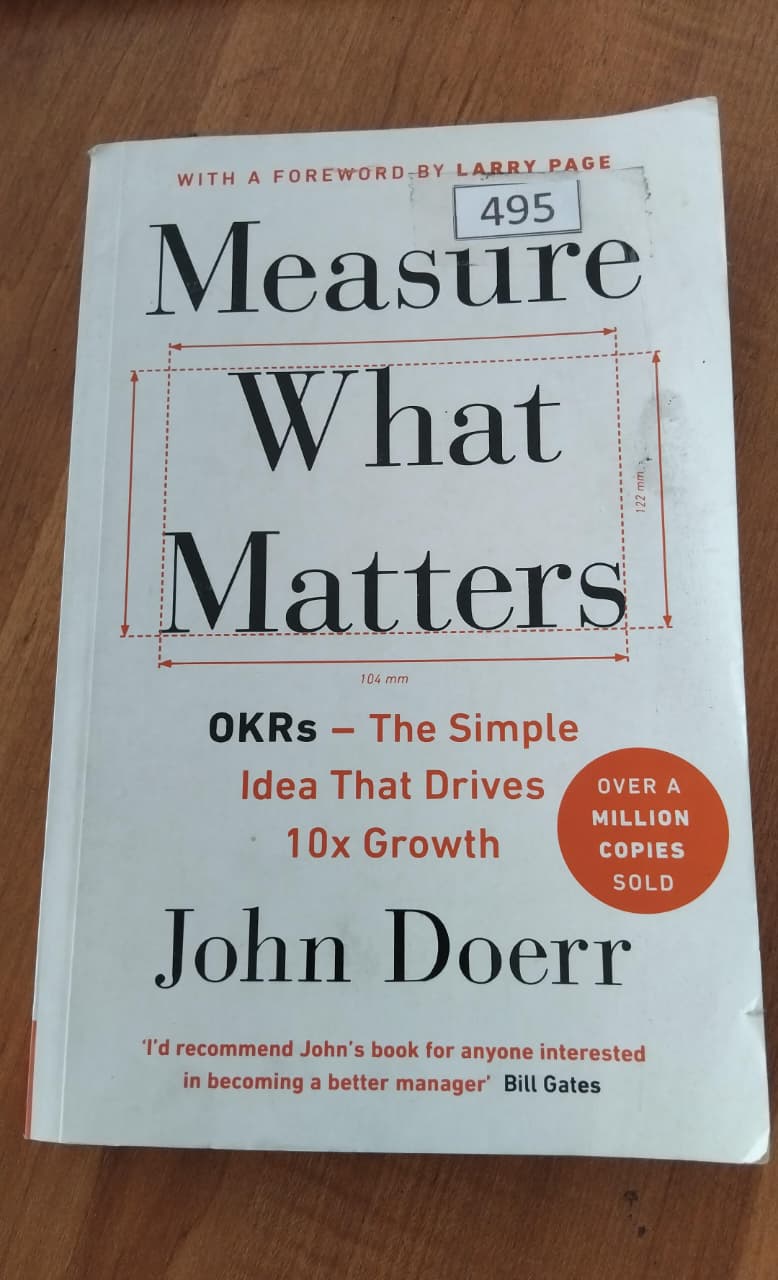
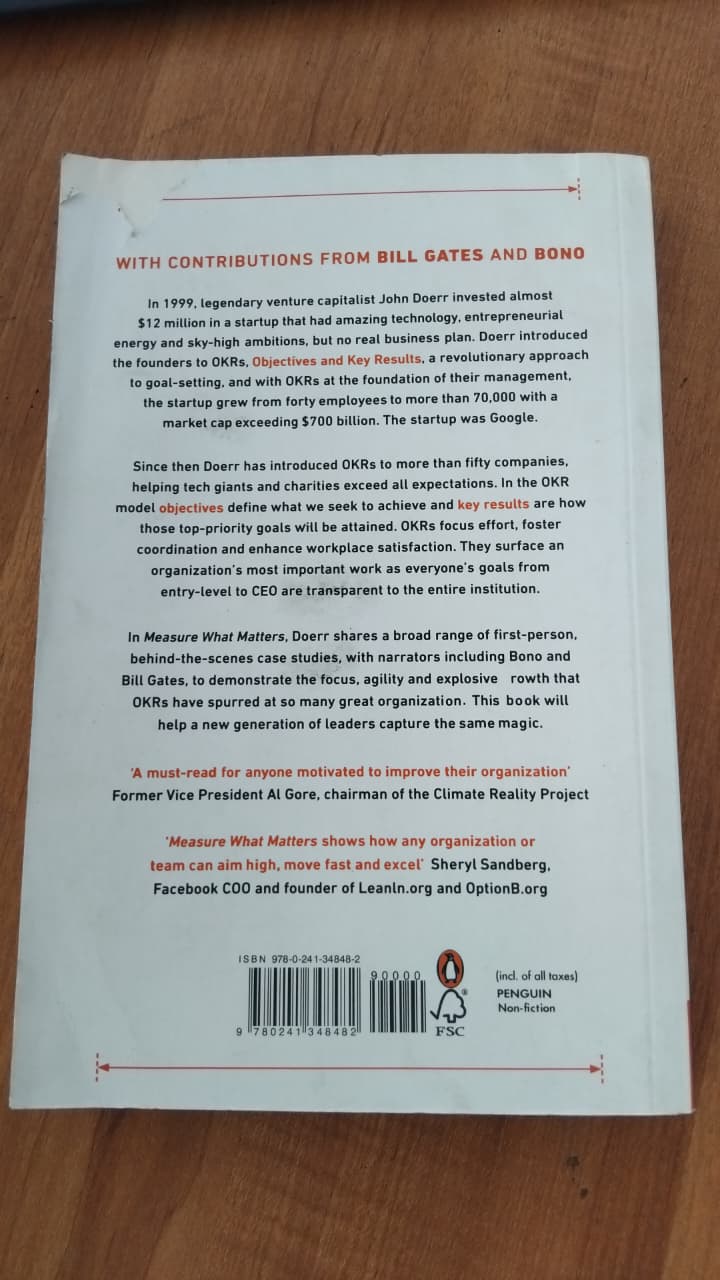



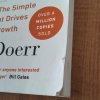


Measure What Matters by John Doerr is a highly influential business and leadership book that introduces and explains the OKR framework—Objectives and Key Results. The book reveals how clear goal-setting, focus, and accountability can drive extraordinary performance in individuals, teams, and organizations. Widely used by companies such as Google, Intel, and many startups, OKRs have become one of the most powerful management tools in modern business.
At the core of Measure What Matters is the idea that success depends on measuring the right things. John Doerr argues that vague goals and unclear priorities lead to wasted effort and poor results. OKRs provide a simple but disciplined system that helps organizations define what they want to achieve (Objectives) and how they will measure progress (Key Results). This clarity enables alignment, transparency, and execution at every level.
John Doerr shares his personal experience of learning OKRs while working at Intel under Andy Grove, who pioneered the system. He later introduced OKRs to Google in its early days, where the framework played a crucial role in the company’s rapid growth. Measure What Matters explains how OKRs helped Google maintain focus while scaling, proving that the system works not only for startups but also for large organizations.
The book clearly defines the structure of OKRs. Objectives are qualitative, inspiring, and time-bound goals that provide direction. Key Results are specific, measurable outcomes that indicate progress toward the objective. This structure ensures that goals are ambitious yet measurable, helping teams stay focused on outcomes rather than activities.
A major theme in Measure What Matters is focus. John Doerr emphasizes that organizations must prioritize a small number of objectives to achieve meaningful progress. Trying to do too many things at once leads to diluted effort and confusion. OKRs force leaders and teams to choose what truly matters.
Another important principle discussed in the book is alignment. Measure What Matters explains how OKRs connect individual goals with team and company objectives. This alignment ensures that everyone is working toward the same priorities, reducing silos and improving collaboration. Transparency plays a key role, as OKRs are typically visible across the organization.
The book also highlights accountability. By defining clear key results, teams can objectively assess progress and identify gaps. Measure What Matters encourages regular check-ins and reviews, allowing teams to learn, adapt, and improve continuously. This creates a culture of learning rather than blame.
John Doerr also discusses the difference between committed OKRs and aspirational OKRs. Committed OKRs are goals that must be achieved, while aspirational OKRs push teams to aim higher, even if full success is not guaranteed. This distinction helps organizations balance execution with innovation.
Measure What Matters goes beyond theory by including real-world case studies from companies like Google, Intel, YouTube, and Bono’s ONE Campaign. These examples demonstrate how OKRs can be applied in different contexts, from technology and business to social impact and nonprofits.
The book also emphasizes the importance of leadership in successful OKR implementation. Leaders must model focus, transparency, and discipline. Measure What Matters warns that OKRs should not be used as performance evaluation tools, as this can discourage ambition and honesty. Instead, they should serve as learning and alignment tools.
John Doerr’s writing style is clear, practical, and engaging. He breaks down complex ideas into simple concepts and reinforces them with stories and examples. The book is accessible to readers without a technical or management background, making it useful for entrepreneurs, managers, students, and professionals alike.
Measure What Matters also highlights the role of culture in goal-setting. OKRs work best in environments that encourage trust, openness, and experimentation. When teams feel safe to set ambitious goals and learn from failure, innovation thrives.
This book is especially valuable for leaders looking to improve execution, clarity, and performance. It is also useful for individuals who want to set better personal or professional goals. The OKR framework can be applied beyond business, helping people stay focused on what truly matters.
Overall, Measure What Matters by John Doerr is a powerful guide to achieving clarity, focus, and measurable progress. It shows that success is not about doing more, but about doing what matters most. By adopting OKRs, individuals and organizations can turn vision into action and drive meaningful, long-term growth.
Be the first to review “Measure What Matters by John Doerr (495)”
Related products

Uncategorized






Uncategorized
Uncategorized

Uncategorized

Contemporary romance

Uncategorized

Uncategorized

Uncategorized
Reviews
There are no reviews yet.