
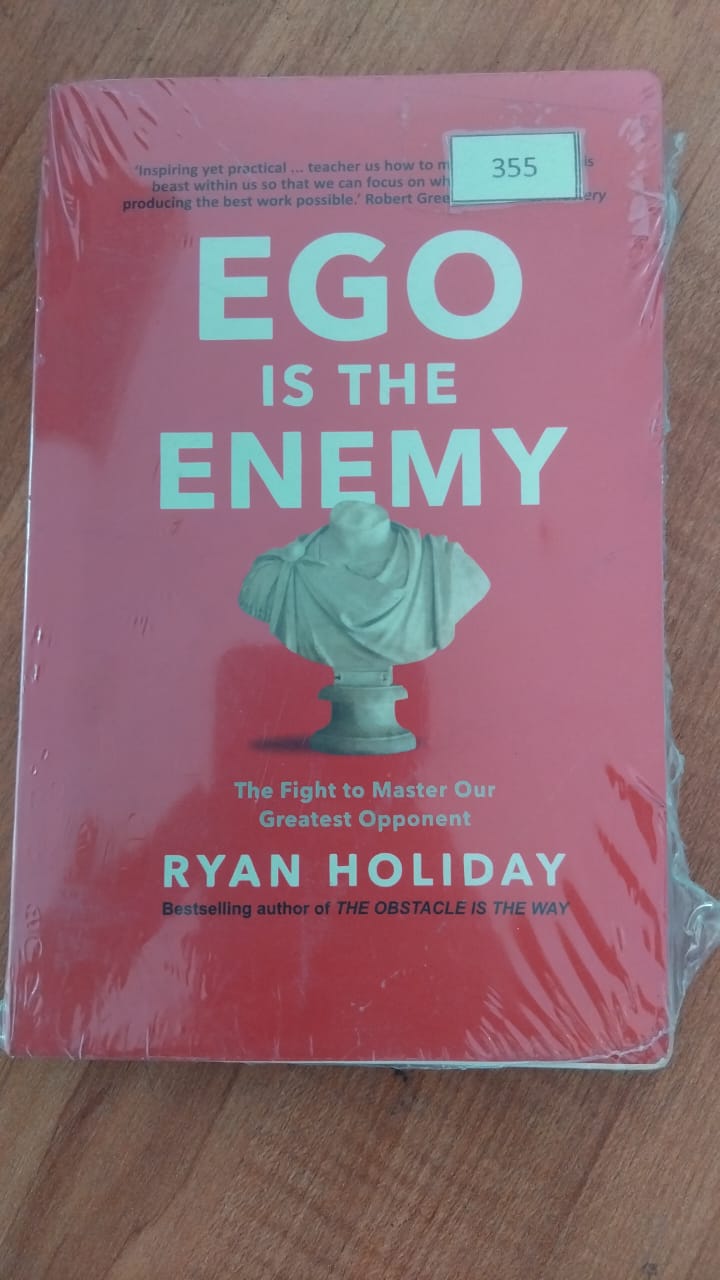
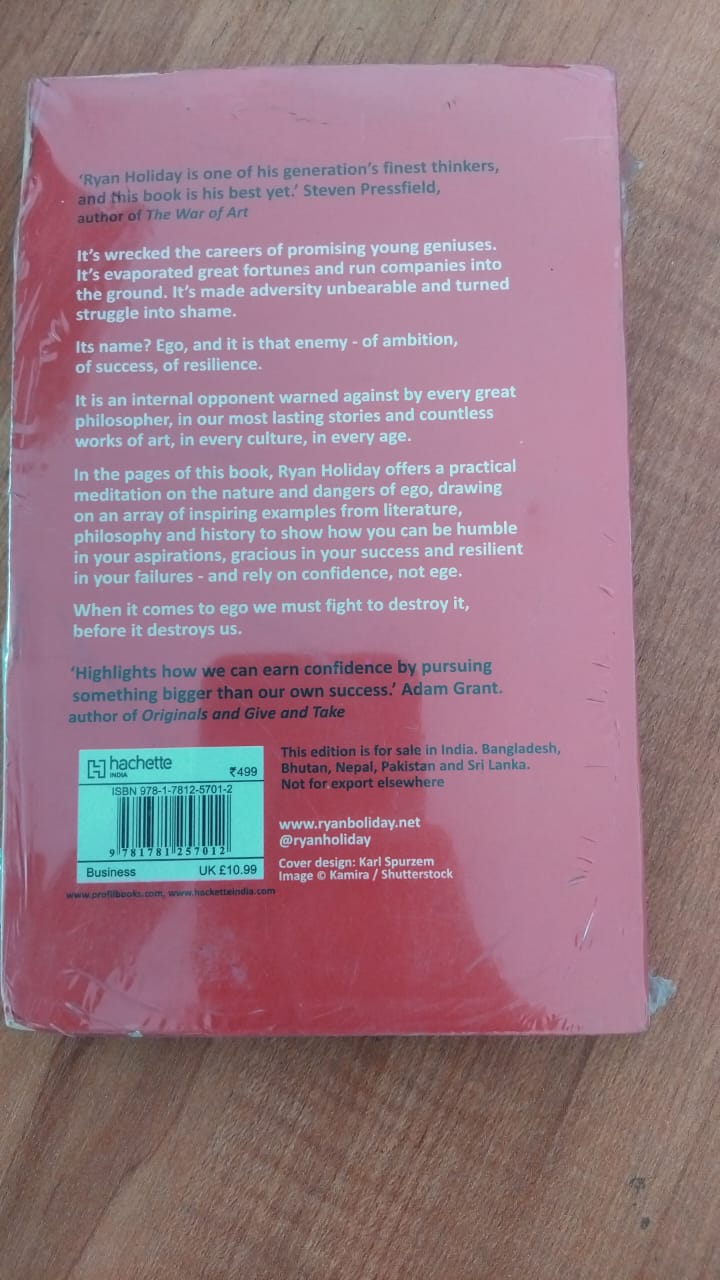




Ego Is the Enemy by Ryan Holiday is a powerful self-development book that explores how ego can be the greatest obstacle to success, growth, and fulfillment. Drawing from Stoic philosophy, historical examples, and modern case studies, Ryan Holiday explains how unchecked ego prevents individuals from learning, improving, and achieving their full potential.
At its core, Ego Is the Enemy focuses on the idea that ego is the voice inside us that inflates our sense of importance, seeks validation, and resists feedback. According to Ryan Holiday, ego often disguises itself as confidence, ambition, or self-belief, but in reality it leads to arrogance, complacency, and poor decision-making. The book argues that mastering ego is essential at every stage of life—whether we are striving for success, achieving it, or trying to sustain it.
Ryan Holiday structures Ego Is the Enemy around three major phases: aspiration, success, and failure. In the aspiration phase, ego convinces people they already know enough, causing them to ignore learning opportunities and mentorship. Holiday emphasizes the importance of humility, curiosity, and patience during this stage. He encourages readers to focus on skill development rather than recognition, reminding them that real growth happens quietly.
In the success phase, ego becomes even more dangerous. When people achieve recognition or power, ego can lead to entitlement, overconfidence, and loss of discipline. Ego Is the Enemy shows how many talented individuals fail because they believe they are beyond criticism or hard work. Ryan Holiday stresses that sustained success requires restraint, gratitude, and continued effort. Success should not be seen as an endpoint, but as a responsibility to remain grounded.
The third phase discussed in Ego Is the Enemy is failure. Ego often makes failure unbearable by tying self-worth to outcomes. Holiday explains that ego resists accountability and seeks excuses, while humility allows learning and recovery. Failure, when approached correctly, becomes a teacher rather than a defeat. The book encourages readers to detach their identity from results and focus instead on improvement.
Throughout Ego Is the Enemy, Ryan Holiday uses historical figures such as Marcus Aurelius, Ulysses S. Grant, and modern athletes, artists, and entrepreneurs to illustrate how humility and discipline lead to lasting success. These examples demonstrate that greatness is built on consistent effort, self-awareness, and emotional control rather than ego-driven ambition.
One of the key lessons of Ego Is the Enemy is the value of self-mastery. Holiday emphasizes that the real battle is internal. Conquering ego requires discipline, silence, and the ability to accept criticism. By focusing on the process instead of applause, individuals can produce better work and develop resilience.
The book also highlights the importance of doing the work without seeking constant validation. Ego craves attention and praise, while true progress comes from dedication and patience. Ryan Holiday encourages readers to let results speak for themselves and to embrace anonymity when necessary.
Ryan Holiday’s writing style in Ego Is the Enemy is clear, direct, and reflective. The book avoids complicated theories and instead delivers practical wisdom that can be applied in everyday life. Each chapter is concise, making it easy for readers to absorb and reflect on the lessons.
Ego Is the Enemy is not about eliminating confidence or ambition. Instead, it teaches balance—how to pursue goals with humility, accept success with grace, and face failure with resilience. The book promotes a mindset of continuous learning and emotional maturity.
This book is ideal for readers interested in self-discipline, leadership, personal growth, and philosophy. Entrepreneurs, creatives, students, and professionals can all benefit from its insights. Ego Is the Enemy is especially valuable for those who feel stuck, overwhelmed by success, or discouraged by setbacks.
Overall, Ego Is the Enemy by Ryan Holiday is a timeless guide to mastering the inner forces that shape our actions. It reminds readers that ego is a constant challenge, but with awareness and discipline, it can be controlled. By overcoming ego, individuals can achieve meaningful success, long-term growth, and personal fulfillment.
Be the first to review “Ego Is the Enemy by Ryan Holiday (355)”
Related products

Uncategorized





Uncategorized
Uncategorized

Uncategorized

Uncategorized

Uncategorized

Uncategorized

Uncategorized
Reviews
There are no reviews yet.